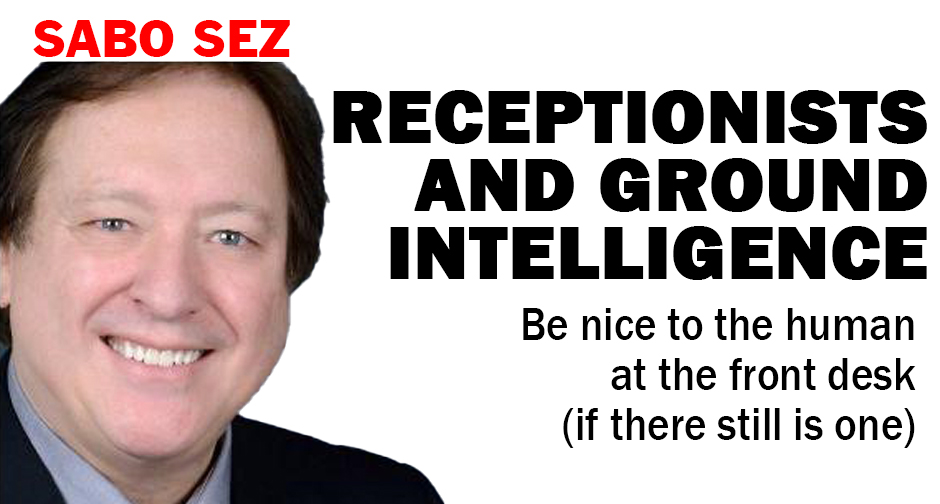

SABO SEZ: The Myth About Wall Street
By Walter Sabo
CEO, Sabo Media Action Partners
A.K.A. Walter M Sterling
Daily host, WPHT Philadelphia
Weekly host, Talk Media Network
 Wall Street investors do not put up money for traditional radio and television stations.
That myth has been a burden within our culture for about 10 years and it just is not true. From a 1980s fast-buck perspective, traditional media does not offer the no-effort returns it once did. But major investors continue to seek opportunities from radio and TV acquisitions. Notably, today the money is much “smarter” than that found in the 1980s.
(Side note, the 1980s rush to radio put the business in the hellish financing we live with today. The new money won’t do that.)
Marc Rowan is the CEO of Apollo Advisors which bought Cox TV and radio. Apollo was first money in Sirius radio. Their escrow check closed the deal for Howard Stern and changed the radio industry. Marc explained to me that Apollo is not an investor, they are “owners.” Apollo has a long game plan as savvy operators with decent, moral standards. Marc actually likes, consumes and celebrates media. Apollo is not a chop shop. They build businesses.
George Soros is about to close on Audacy. Mr. Soros is a brilliant business builder. Like Apollo, he is an owner/operator. Soros represents smart money going into the proven medium of radio.
John Malone, builder of the cable industry, saved Sirius within days of bankruptcy. The company was about to miss payroll, Malone pulled it out the fire and through Liberty holdings he continues to control 83% of SiriusXM. Over the years he has grown, not diminished Liberty’s stake in the satellite company.
Rowan, Soros, and Malone have one thing in common: They are not jokers. They each have robust histories of sober, sane investments which has made them billionaires. While you and I shop the price of milk, the new owners of proven media are model guides for future Wall Streeters.
Walter Sabo has been a C Suite action partner for companies such as SiriusXM, Hearst, Press Broadcasting, Gannett, RKO General and many other leading media outlets. His company HITVIEWS, in 2007, was the first to identify and monetize video influencers.. His nightly show “Walter Sterling Every Damn Night” is heard on WPHT, Philadelphia. His syndicated show, “Sterling On Sunday,” from Talk Media Network, airs 10:00 pm-1:00 am ET, and is now in its 10th year of success. He can be reached by email at sabowalter@gmail.com
 Leonard H. Goldenson was the founder/chairman of ABC, Inc. Before Disney, before Capital Cities, ABC was… ABC and it was run by Mr. Goldenson. He launched the ABC Radio Networks, ABC Television Network, and the original ABC radio and television stations.
 To be an expert in marketing requires expertise in how memory works. Early in my consultant practice, I studied and read every book I could find on the processes of memory. The best book is Effective Frequency: The Relationship Between Frequency and Advertising Effectiveness. Put simply, how many times does a consumer have to hear a message before it has impact? The book, a collection of studies, is the foundation for every qualitative study in the field today.
 Growing a brand is a memory game. Which message will a target consumer value, remember it and take it to the cash register? The answer is not complicated but it is complex.
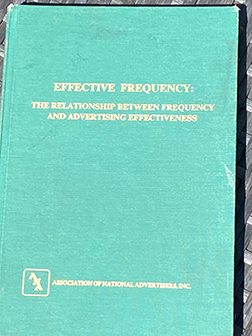 about all the science any of us have been tutored in on the subject of effective frequency.
 It seems every hour Nielsen and Pierre Bouvard of Cumulus fame (formerly of Westwood One) put out a release stating that radio is just fine, thank you. Radio is more persuasive than TV, direct mail, streaming and print. Radio is a proven success for over 100 years. Most of the buildings housing Procter & Gamble were built on radio – not TV – advertising success. Happily, P&G realized radio’s clout and is now a dominant radio advertiser – again!
 1. Financial solvency laws. Consolidation is not the problem; it actually saved the radio industry. The problem is the 1986 rule change that dropped financial solvency requirements for station ownership. Prior to 1986, stations could not be purchased with debt. A potential owner had to prove that they could meet the expenses of a station through the duration of its license. Once the financial efficacy rule was dropped and stations could be purchased with debt, the industry was financially decimated. Prediction: Financial solvency laws will be re-instated.
 Original ideas are golden and rare. Here are five ideas worth stealing because of their novelty, success and oh-wow factor!
 In May 2007, I was enjoying the brand-new app called YouTube. Still independently owned, still relatively unknown. Some of the videos pulled millions of viewers, more viewers than enjoyed by ESPN or any cable network. More interesting, the videos with high counts were not made by NBC or ESPN or any traditional video source. High view count videos were being made by people with no experience in traditional media, they were experimenters producing in their basements and bedrooms.