

FCC’s Gomez Testifies About First Amendment Concerns
At last week’s appearance before the U.S. House Subcommittee on Communications and Technology Committee on Energy and Commerce, FCC Commissioner Anna M. Gomez testified about her concerns with the way the commission is operating. She took issue with FCC Chair Brendan Carr’s interpretation of how the Commission should ensure that licensees operate in the public interest. She stated, “For months, this FCC has asserted an apparent roving mandate to police speech that this Administration does not like, invoking an undefined and unchecked concept known as the ‘public interest’ standard.
Instead of functioning as a principle intended to serve the public, this standard is being treated as a license to weigh in on content, viewpoint, and editorial judgment.
This is not what the FCC was created to do. The Commission’s job is not to police content, root out media bias, or guarantee favorable coverage for any administration. Its responsibility is to regulate communications infrastructure and markets, not censor the speech that flows through them.
The First Amendment protects against government interference with speech, and the Communications Act prohibits the FCC from engaging in censorship. In a free society, the government does not decide what speech is acceptable or aligned with its views. When the government’s media regulator claims the power to judge content or police bias, we move away from oversight and closer toward censorship and control.
That is why it is so important for the FCC to clearly define what it means by the public interest standard, something I have called on it to do repeatedly. It is also why Congress must insist on guardrails that prevent content-based regulation and protect against the FCC acting as an arbiter of speech.”
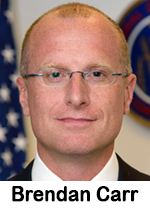 working to empower local broadcasters to serve the public interest and meet the needs of their communities. As Congress, the Supreme Court, and the FCC have all made clear, broadcasters are different than every other distributor of media. Specifically, broadcasters are required by both the Communications Act and the terms of their FCC-issued licenses to operate in the public interest. This sets them apart from cable channels, podcasts, streaming services, social media, and countless other types of distributors that have no public interest obligation. The FCC’s broadcast hoax rule, its news distortion policy, its political equal opportunity regulation, its prohibition on obscene, indecent, and profane content, its localism requirements – all of those and more apply uniquely to broadcasters. Congress has instructed the FCC to enforce public interest requirements on broadcasters. The FCC should do exactly that.