SABO SEZ: Mr. Wonderful Thinks Radio is Wonderful
By Walter Sabo
a.k.a. Walter Sterling, Host
WPHT, Philadelphia, “Walter Sterling Every Damn Night”
TMN syndicated, “Sterling on Sunday”
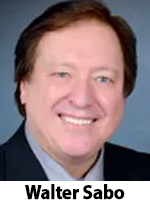 The plague of pessimism about the future of radio is fueled internally by radio employees. Doomsayers are logically found in the sales department. All day, salespeople meet with buyers. A buyer’s job is to negotiate a lower price by arguing radio’s negatives. The wall of negativity thrives within the work environment of a seller. Tough. But there is little or no reason for pessimism.
Kevin O’ Leary (a.k.a. “Mr. Wonderful” on TV’s Shark Tank) is a pragmatic investor. When asked about AI’s impact on radio, he says, “It’s the same phobia we had when television hit radio. ‘Oh, it’s going to decimate radio!’ No, it’s not. The art form exists today, even bigger, terrestrial, and in space. To me, AI is just a tool.” (Variety. January 5, 2026)
Surprising to many, radio’s audience numbers today are virtually the same as they were in 1970.
Radio Listenership Today (2020s)
Weekly Reach: As of 2022–2023, approximately 82% to 88% of Americans aged 12 and older listen to terrestrial (AM/FM) radio in a given week.
Monthly Reach: Nielsen data indicates that AM/FM radio reaches 91% of U.S. adults each month.
Daily Listening: Approximately 66% of U.S. adults listen to broadcast or streaming AM/FM radio on a daily basis.
Resiliency: Despite the rise of podcasts and music streaming, 55% of Gen Z in the U.S. still listen to AM/FM radio every day, and it remains the top reach medium, even exceeding social media.
1970s: The era of AM to FM transition and the peak of top-40 terrestrial radio, with 25 million CB radios also becoming popular in the mid-70s.
Today: While reach is still high, the amount of time spent listening is more fragmented, with radio facing competition from streaming (Spotify/Apple Music) and podcasts, although it remains the dominant ad-supported audio choice in cars.
CB radio, cassettes, 8-tracks, CDs, DVDs, Walkman, iTunes, iPhones, SiriusXM, Spotify, podcasts, Pandora… all terminators of radio. None of them made a dent. The killer of radio will be radio’s odd internal pessimism that while predicting doom that never comes drives actions that are suicidal: Elimination of audience qualitative research. Tracking. More Tracking. (Radio Fracking!) No external marketing. Endless talent cuts. No contests. (A $1,000 national contest WOW!) None of those cuts are good business because they cut potential revenues.
And yet there is a relentless, funded determination to end all FCC ownership caps allowing companies to buy more radio stations to operate with great Panglossian efficiency!
Walter Sabo has been a C-Suite action partner for companies such as SiriusXM, Hearst, Press Broadcasting, Gannett, RKO General, and many other leading media outlets. His company, HITVIEWS, in 2007, was the first to identify and monetize video influencers. His nightly show “Walter Sterling Every Damn Night” is heard on WPHT, Philadelphia. His syndicated show, “Sterling On Sunday,” from Talk Media Network, airs 10:00 pm-1:00 am ET, and is now in its 10th year of success. He can be reached by email at sabowalter@gmail.com.
 competition local radio stations today face for audiences and vital advertising revenues from online and satellite content providers and digital ad platforms not subject to any comparable restrictions on their scale and scope; the dire negative effects that consumer and advertiser substitution of competing digital audio content and advertising for traditional radio has had on the listenership and advertising revenues garnered by local radio stations, including in mid-sized and small markets; and how the retention of asymmetric ownership restrictions has prevented radio broadcasters from gaining local scale to take advantage of important economic efficiencies, obtain investment capital, and better compete for audiences and advertising revenues, and thus enhance – or even maintain – their provision of news, emergency information, and valued entertainment and sports programming in local communities across the country at no cost to the public.” Responding to testimony from musicFirst Coalition and the Future of Music Coalition – referred to as the Coalitions – NAB writes, “First, the fact that the Coalitions continue to hold themselves out as protectors of small, local independent broadcasters not just borders on the absurd but crosses over into full-blown absurdity. The Coalitions represent the interests of the music industry, which is dominated by three consolidated international record labels. Compared to even the largest radio station groups, the giant record labels are the 800-pound gorillas of the music world. Those three labels earn billions more in revenue than the approximately 11,000 full-power commercial AM/FM stations combined. As NAB earlier reported, the three major music companies jointly generated about $2.9 million per hour in 2023. In remarkable contrast, in 2023 and 2024 the vast majority of radio stations garnered less – and often much less – than $2.9 million per year in advertising revenues. Needless to say, the Coalitions have never explained how local radio stations earning such low levels of revenue (and even lower, if any, profits) are supposed to keep talented employees and provide high quality programming, including popular music, sports, and informational programming, such as weather updates and emergency information, OTA and free to the public without achieving increased local scale, greater economic efficiencies, and more robust ad revenues.
 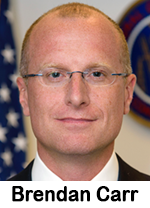 made clear, broadcasters are different than every other distributor of media. Specifically, broadcasters are required by both the Communications Act and the terms of their FCC-issued licenses to operate in the public interest. This sets them apart from cable channels, podcasts, streaming services, social media, and countless other types of distributors that have no public interest obligation. The FCC’s broadcast hoax rule, its news distortion policy, its political equal opportunity regulation, its prohibition on obscene, indecent, and profane content, its localism requirements — all of those and more apply uniquely to broadcasters. Congress has instructed the FCC to enforce public interest requirements on broadcasters. The FCC should do exactly that.” Carr added, “To ensure that broadcasters can meet their public interest obligations, the FCC has taken a number of actions, including seeking public comment for the first time in more than 15 years on the relationship between the large, national programmers on the one hand and the many local broadcast television stations on the other. Comments in that proceeding suggest that many local broadcasters are concerned that the national programmers have amassed enormous power and influence in recent years and have made it more challenging for local broadcasters to fulfill their public interest obligations. The FCC is going to continue its efforts to empower local broadcasters to meet their public interest obligations.”