


The Opportunity Before Radio: Boldness with Balance
By Erik Cudd
 From my teenage years to today, radio has been the career of my adult life. When I first began listening in my teens, I was drawn less to the music and more to the conversation. I tuned into stations not for my favorite songs, but because I enjoyed hearing people talk, debate, and share ideas. Over my lifetime, I have seen many changes in the medium. The news/talk format, in particular, has always fascinated me for its mix of news, commentary, and immediacy.
In such a time as this, because radio is the medium I know best and love most, I write this appeal to those influential in news/talk. My hope is that you will step forward once again as the architects and innovators you have always been, and raise a rallying cry for this unique moment. The freedoms and ambitions that make the format so vital also create challenges. By design, it invites sharp opinions, spirited disagreement, and cultural edge. Those qualities are its strengths. But in our current climate, they also carry the risk of drifting into tribalism and rhetoric that can spill over into something more dangerous.
This is not an implication that I believe news/talk is responsible for the death of Charlie Kirk. I would like to be crystal clear. What I am saying is that a perfect storm has been gathering for many years, and no one can deny the polarized, charged landscape we now inhabit. And that storm is not radio’s sole responsibility. Television, social media, and digital platforms have found their profit margins in spaces that thrive on provocation. Cable news leans on conflict. Social media algorithms reward outrage. Digital outlets chase clicks and controversy. Radio is part of this broader ecosystem, not apart from it. And while no single medium created our current atmosphere, each has a role to play in reflecting on its impact and considering how best to move forward.
This is not about drawing a simple line between “toxic” and “non-toxic” content. Such judgments are rarely clear, and program directors deserve the benefit of the doubt. Yet it may be worth asking whether radio, like all media, could benefit from a renewed look at how editorial choices can help keep conversations as civil and constructive as possible. Debate and controversy will always be part of the medium, but escalation does not need to be the only outcome.
The September 10 tragedy underscored this in more ways than one. Beyond the event itself, the aftermath played out across digital spaces, where ordinary citizens made comments that, while protected speech, resulted in lost jobs, reputational damage, and news coverage. The lesson is not that speech should be curtailed, but that our civic discourse is increasingly fragile. And because radio is one of the most intimate and influential media, its choices ripple outward into that discourse in profound ways.
Audiences are noticing. As someone in my early 50s, squarely within talk radio’s target demographic, I should be a loyal listener. Yet I find myself tuning in less often, not from a lack of loyalty, but because I long to hear more voices who can thoughtfully engage both sides of an issue, giving each perspective a fair hearing and treating every listener as though their view matters. That is why I believe there may be room to pull back a bit, to allow for more variety, nuance, and genuine curiosity in how issues are approached.
Serious does not mean boring. Civility does not mean dull. Across platforms, authenticity and curiosity consistently earn audiences. Podcasts like SmartLess and Armchair Expert succeed not by stoking outrage but by elevating storytelling and connection. Public affairs series such as Frontline and American Experience continue to attract loyal audiences through rigorous, measured reporting. Nonfiction authors like Malcolm Gladwell and Brené Brown demonstrate that thoughtful exploration can reach mass audiences. These examples are proof that depth and balance can succeed when executed with energy and creativity.
Radio is uniquely positioned to do the same. The path forward is not retreat from controversy but innovation. Maybe it begins by encouraging new hosts who bring curiosity, empathy, and an equal openness to both sides of an issue, alongside conviction. It could include piloting alternative formats in off-peak slots where experimentation can thrive. It will require recalibrating success metrics to value loyalty, digital engagement, and cross-platform trust, not just short-term spikes. And it may also mean weaving national voices together with local conversations so that stations strengthen both their reach and their roots.
I do not write this from a high perch. I write as a member of the audience who also walked the halls of the station and still believes in the power of the medium. My words are not meant as accusation but as an open hand in friendship. What I am asking is simple: perhaps it is time for a more purposeful, deliberate engagement of conversation in the conference room. To sit together and ask if everything that airs is doing what it should. To take a long, hard look at whether anything might need to be discussed, reconsidered, or rebalanced in light of what we have all just witnessed.
Radio, because of its intimacy and reach, is uniquely positioned to lead by example. By being more proactive in its own yard, radio could encourage the same self-reflection across media, and even among the public itself. That is not retreat. That is leadership.
Radio still matters. Its intimacy can at times divide, but it can also renew. The question is not whether talk radio will remain bold, it always will, but whether it can channel that boldness in a way that builds the public square rather than fractures it.
The opportunity is here: to prove that freedom and responsibility can coexist, and that doing so is good for the culture, and good for the business.
Erik Cudd has worked in radio and media since 1991. He can be emailed at erik@cudd.us.
 Newsradio was the top-rated station in the Seattle market and one of the ten most highly rated stations nationwide. In 2008, the station transitioned from 710 AM to 97.3 FM, continuing its legacy of innovation.” KIRO-FM is presenting a special edition of “Seattle’s Morning News” today with Bill Yeend – the first morning news anchor back in 1974 – returning for the event. Dave Ross, a fixture at KIRO since 1978, and Ursula Reutin, who has been with the station since 1988, will host the special broadcast. “Ross and Reutin will share the mic with their returning colleagues, offering listeners a nostalgic journey through KIRO’s storied past. The alumni news anchors will each be invited to deliver an up-to-date newscast featuring KIRO Newsradio’s current generation of reporters.”
  Remember the old Gatorade commercial? The “Be like Mike” jingle accompanied a montage of gravity-defying Michael Jordan dunks.
 $145.7 million, down 7.1% year-over-year. Audacy president and CEO David J. Field states, “Audacy’s third quarter net revenues declined 5.6%, in-line with our quarterly guidance as ad market conditions have remained challenging, particularly on national business. Cash operating expenses were down 2%. We gained revenue share in the quarter, most significantly in radio in which we have achieved accelerating share growth since the start of the year. We also delivered solid gains in radio ratings share and digital audience metrics while making important progress on our tech roadmap and meaningful expense savings to improve our current and future business model. Fourth quarter is currently pacing down 9% on an as reported basis and down 4% on a same-station, ex-political basis. We expect Q4 total revenues to decline by high single digits and costs to decline by high single digits. As noted in our recent public filings, we remain in constructive conversations with our lenders to recapitalize the company’s balance sheet to establish a strong financial footing and position the company to capitalize effectively on our growth opportunities. Notwithstanding current challenges, Audacy has established a strong position as a scaled, leading multi-platform audio content and entertainment company distinguished by our exclusive premium content and top positions across the country’s largest markets. We salute our team for their strong work delivering solid growth against our key performance metrics and serving our listeners and customers with excellence.”
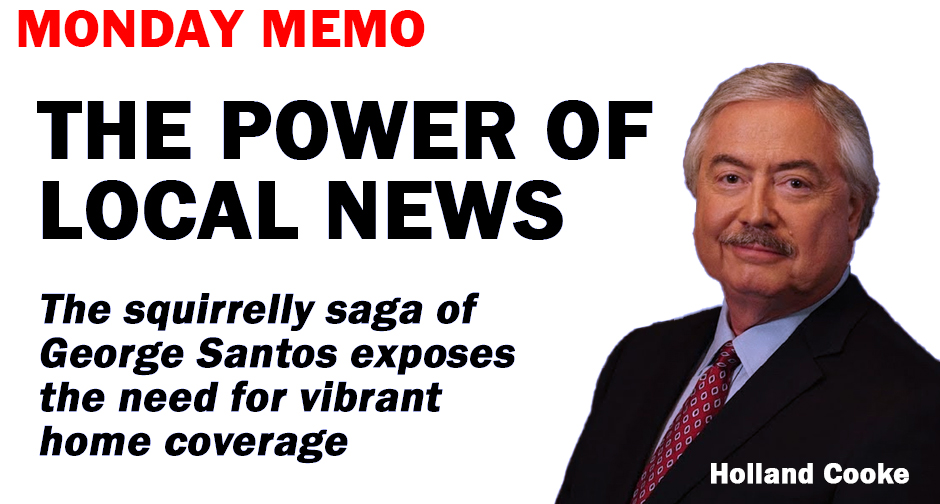
 Why? Done right, it makes you special. Because new-tech audio competitors don’t do local news, and with most broadcast radio hours now robotic.










 FOX News Media Seeks Freelance Radio Anchor. This onsite position in either Los Angeles, Chicago or New York is a freelance radio anchor for the FOX News Audio family as on-air talent for FOX News Radio Network/FOX News Headlines 24/7 Sirius XM Channel 115. In this position, you will work under tight deadlines and deliver top-notch newscasts. You have a passion for breaking news and the flexibility to work on a day’s notice. Learn more about this position