

FCC’s Carr Underscores Agency’s Enforcement of Public Interest Requirements
In testimony before the Subcommittee on Communications and Technology of the United States House of Representatives Committee on Energy and Commerce yesterday (1/14), FCC chairman Brendan Carr addressed a number of issues including ownership caps and broadcasters’ requirement to serve the public interest. In his prepared remarks, Carr anticipated questions about the commission’s role in scrutinizing content and stated, “The FCC is working to empower local broadcasters to serve the public interest and meetthe needs of their communities. As Congress, the Supreme Court, and the FCC have all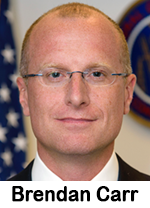 made clear, broadcasters are different than every other distributor of media. Specifically, broadcasters are required by both the Communications Act and the terms of their FCC-issued licenses to operate in the public interest. This sets them apart from cable channels, podcasts, streaming services, social media, and countless other types of distributors that have no public interest obligation. The FCC’s broadcast hoax rule, its news distortion policy, its political equal opportunity regulation, its prohibition on obscene, indecent, and profane content, its localism requirements — all of those and more apply uniquely to broadcasters. Congress has instructed the FCC to enforce public interest requirements on broadcasters. The FCC should do exactly that.” Carr added, “To ensure that broadcasters can meet their public interest obligations, the FCC has taken a number of actions, including seeking public comment for the first time in more than 15 years on the relationship between the large, national programmers on the one hand and the many local broadcast television stations on the other. Comments in that proceeding suggest that many local broadcasters are concerned that the national programmers have amassed enormous power and influence in recent years and have made it more challenging for local broadcasters to fulfill their public interest obligations. The FCC is going to continue its efforts to empower local broadcasters to meet their public interest obligations.”
 working to empower local broadcasters to serve the public interest and meet the needs of their communities. As Congress, the Supreme Court, and the FCC have all made clear, broadcasters are different than every other distributor of media. Specifically, broadcasters are required by both the Communications Act and the terms of their FCC-issued licenses to operate in the public interest. This sets them apart from cable channels, podcasts, streaming services, social media, and countless other types of distributors that have no public interest obligation. The FCC’s broadcast hoax rule, its news distortion policy, its political equal opportunity regulation, its prohibition on obscene, indecent, and profane content, its localism requirements – all of those and more apply uniquely to broadcasters. Congress has instructed the FCC to enforce public interest requirements on broadcasters. The FCC should do exactly that.
 Amendment protects journalistic choices from government intimidation. Nevertheless, this FCC has deployed a vague and ineffective News Distortion policy as a weapon to stretch its licensing authority and pressure newsrooms. The First Amendment is a pillar of our democracy. As federal regulators, we must respect the rule of law, uphold the Constitution, and ensure that a free press is never subjected to regulatory interference by the FCC.” The FCC’s News Distortion Policy was created in 1949 and has been criticized from time to time over the years. It has rarely been invoked until now. A Petition for Special Relief before the FCC signed by 11 people, including former FCC Chairman Thomas E. Wheeler, asks that the Commission repeal the news distortion policy. They cite case law, saying, “In Moody v. NetChoice, LLC, the Supreme Court, applying the First Amendment, reaffirmed that the government has no role in ‘un-biasing’ the media. In direct contradiction to that decision, the news distortion policy seeks to mold the speech of private broadcasters to the FCC’s own view of what is correct, complete, and accurate news. The First Amendment forbids the government from embarking on such a project.”