



Judge Issues Scheduling Order in Cumulus-Nielsen Suit
United States District Court Judge Jeannette Vargas issued a scheduling order last week in the case of Cumulus v Nielsen, in which the former accuses the latter of monopolistic practices. Here’s what lies ahead: The judge sets March 4 as the date for Cumulus to file its response to Nielsen’s Counterclaims, including any motion to dismiss the Counterclaims and March 16 for Nielsen to notify the Court whether it intends to file an amended pleading. If Nielsen doesn’t amend its Counterclaims, then April 3 is the deadline for Nielsen to file its opposition to Cumulus’s
  motion to dismiss the Counterclaims, if any, and April 17 for Cumulus to file a reply, if any. Then, if Nielsen amends its Counterclaims, April 24 is the date for Cumulus to file its response to Nielsen’s amended Counterclaims, including any motion to dismiss the amended Counterclaims. May 15 is the deadline for Nielsen to file its opposition to Cumulus’s motion to dismiss the amended Counterclaims, if any, and May 28 is the deadline for Cumulus to file a reply, if any.
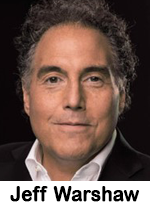 business as CEO upon successful acquisition.” While both parties were doing due diligence on the CMG deal, Warshaw learned that an Audacy majority stake holder was willing to sell its stake in the company. Warshaw says he steered SFM and Del Nin to the deal that made SFM a majority stake holder of the new Audacy in early 2024. Warshaw alleges he was promised he’d be the next CEO of Audacy or that he would get 5% of SFM’s profits from the Audacy acquisition. After that though, Warshaw says Del Nin balked and denied there was ever an agreement, calling any such claims “fabricated.” Now, Soros and Del Nin filed both a Motion to Dismiss saying the “Court lacks personal jurisdiction over Mr. Del Nin under Connecticut’s long-arm statute”; and a Motion to Revise that asks Warshaw to revise his complaint with specific details about his contracts – written or verbal – that he claims were breached, and more. In the Motion to Revise, Soros and Del Nin imply that Warshaw doesn’t have the contractual proof necessary to support his claim.
  stating the Walters was accused of embezzling funds from the Second Amendment Foundation defamed him. No such accusation ever actually took place. In its Motion to Dismiss, Open AI argued several points, including that Georgia is not the proper jurisdiction, but it summarized its argument that Walters’ claims didn’t meet the burden of defamation when it said, “Even more fundamentally, Riehl’s use of ChatGPT did not cause a ‘publication’ of the outputs. OpenAI’s Terms of Use make clear that ChatGPT is a tool that assists the user in the writing or creation of draft content and that the user owns the content they generate with ChatGPT. Riehl agreed to abide by these Terms of Use, including the requirement that users ‘verify’ and ‘take ultimate responsibility for the content being published.’ As a matter of law, this creation of draft content for the user’s internal benefit is not ‘publication.’”
  Amendment Foundation defamed him. No such accusation ever actually took place. In its Motion to Dismiss, Open AI argues several points, including that Georgia is not the proper jurisdiction, but it summarizes its argument that Walters’ claims don’t meet the burden of defamation when it says, “Even more fundamentally, Riehl’s use of ChatGPT did not cause a ‘publication’ of the outputs. OpenAI’s Terms of Use make clear that ChatGPT is a tool that assists the user in the writing or creation of draft content and that the user owns the content they generate with ChatGPT. Riehl agreed to abide by these Terms of Use, including the requirement that users ‘verify’ and ‘take ultimate responsibility for the content being published.’ As a matter of law, this creation of