


The Audience Has an Audience
By Matthew B. Harrison
TALKERS, VP/Associate Publisher
Harrison Media Law, Senior Partner
Goodphone Communications, Executive Producer
“Everybody’s a dreamer / And everybody’s a star.”
Ray Davies, “Celluloid Heroes,” 1972
 My father recently called my attention to something hiding in plain sight. He was watching YouTube and noticed ads for StreamYard, Riverside, Sprizzy and other companies selling tools and services to people who want to produce, distribute, or promote their own media. “They are advertising on consumer venues!” he told me. That was the part that caught his attention.
It sounds obvious until you think about what it means. These companies are not merely advertising to viewers, listeners, and readers. They are advertising to viewers, listeners, and readers who also make things: podcasts, videos, livestreams, newsletters, books, music, and shows. The consumer audience now contains an enormous population of producers.
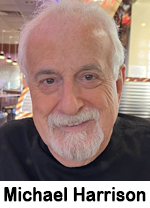
My father, TALKERS founder Michael Harrison, has a phrase for this: “The audience has an audience.” In a July interview about the modern media landscape, he put it even more plainly: “Everybody has a show.” That does not mean everybody has a large show, a profitable show, or even a particularly good show. It means that access to the means of publishing and broadcasting, once scarce and expensive, has become ordinary.
That change created an entire business layer around the aspiring and semi-professional media producer. StreamYard and Riverside sell production capability. Podbean sells hosting, distribution, and monetization tools. Sprizzy sells YouTube promotion. Beyond them are editing platforms, newsletter companies, self-publishing services, PR firms, audience-development businesses and companies willing to help almost anyone build, package and promote a media product.
The money moving around this ecosystem is no longer trivial. The Interactive Advertising Bureau reported that U.S. creator-economy advertising grew from $29.5 billion in 2024 and projected it to reach about $43.9 billion in 2026. In its September 2026 advertising outlook update, IAB reported that 54% of buyers said they were increasing their focus on creator and influencer advertising and partnerships.
For traditional broadcasters, that should change how we think about the people on the other side of the microphone. The butcher, the baker and the candlestick maker may still be members of the audience, but now the butcher has a cooking channel, the baker has a podcast, and the candlestick maker has an Etsy store, a newsletter and 14,000 followers. They may be competitors for attention, but they can also be customers, advertisers, guests, sources, affiliates, and future talent.
This does not erase the distinction between professional media and someone experimenting in a spare bedroom. Scale still matters. Skill matters. Editorial judgment matters. Broadcasters also operate under legal and regulatory obligations that do not simply transfer to someone uploading a video from a phone. But the old wall separating “the media” from “the audience” has become remarkably porous.
That may be the bigger lesson behind all those advertisements. Companies that once would have bought trade advertising to reach broadcasters, publishers or recording professionals can now advertise on consumer platforms and find millions of people with, as Michael puts it, “a toe in showbiz.” The consumer venue has become a trade venue because a meaningful portion of the consumers are also in the trade.
So where exactly is the line between our audience, our competition and our customers? Increasingly, there isn’t a very clean one. When the audience has an audience, the media business is no longer just about reaching consumers. It is about reaching people who are themselves trying to reach somebody else.
Matthew B. Harrison is a media and intellectual property attorney who advises radio hosts, content creators, and creative entrepreneurs. He has written extensively on fair use, AI law, and the future of digital rights. Reach him at Matthew@HarrisonMediaLaw.com or read more at TALKERS.com.
 requires Commission approval after a serious look into whether that arrangement serves the American public and protects our national security. Gomez states, “The American public deserves to know who owns the airwaves that carry their news. I am alarmed by what appears to be an effort to rubber stamp a financial structure that places nearly half of one of America’s largest broadcast and media companies into the hands of foreign governments with documented records of press suppression and a troubling willingness to silence journalists. There are serious, unresolved questions about how this foreign investment may jeopardize national security, and this Commission has a legal obligation to answer them before handing wealthy friends of this administration yet another Billionaire Buddy Bypass on a transaction that strikes at the heart of American journalism.” In her statement, Gomez points out that this deal involves sovereign wealth funds from Saudi Arabia, Qatar, and Abu Dhabi investing in a company that controls CBS broadcast stations, as well as major cable news operations including CNN. According to Paramount’s own filing, total foreign ownership of the combined company upon closing would reach approximately 49.5 percent. Nearly half of one of America’s largest broadcast and media companies would be in foreign hands.
 Carrier Bureau, helping implement the Act. In the webinar titled “30th Anniversary of the 96 Act: What Did We Learn?” panelists will explore how lessons from the past 30 years can drive innovation and competition for consumers today. Topics will include artificial intelligence, media, competition, convergence, access, and cybersecurity. The three separate panels will include Panel 1 looking at “The Legislative Process That Led to the Act; Panel 2 will address “FCC Implementation of the Act”; and Panel 3 will focus on “Today’s Challenges.” Interested parties can join online via the
  TALKERS magazine, the leading trade publication serving America’s professional broadcast talk radio and associated digital communities since 1990, is pleased to participate as the presenting sponsor of the forthcoming Intercollegiate Broadcasting System (IBS) conference for the second consecutive year.
 strategy, cross-platform partnerships, and digital growth to strengthen the company’s competitive position to ensure long-term success.” Beasley Media Group CEO Caroline Beasley comments, “Kevin’s deep experience across broadcast, digital, experiential, podcasting, and sports makes him uniquely qualified to lead our revenue strategy. His proven ability to scale platforms, grow teams, and deliver results on both a national and local level will be instrumental as we continue to evolve and innovate for our clients and communities.” LeGrett says, “I’m excited to join Beasley Media Group at such an exciting time. Beasley’s commitment to local communities, strong culture, and forward-thinking approach to media – especially its transformation across digital, streaming, and multiplatform platforms – aligns perfectly with my passion for building innovative, integrated solutions that drive real impact for advertisers and listeners alike. I’m excited to help lead the next chapter of growth.”
 Thank you, TALKERS for placing me on two panels at the IBSNYC conference. All student conferences have one underlying goal: Attendees want to know how to land a starter job in media. Here’s the information I shared with the eager crowd.
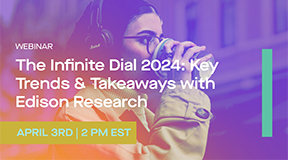 consumer behavior and technology adoption across smart platforms. Marketers and media buyers turn to these insights for important media trends in key channels such as radio, streaming audio, podcasts, social media, and more. Audacy will host a webinar on April 3 with head of research & insights Idil Cakim and Edison Research president Larry Rosin, who will share key trends from The Infinite Dial 2024, including: Media consumption and device adoption, in-car listening habits, podcast trends among key demographic groups, and observations and advertiser insights.
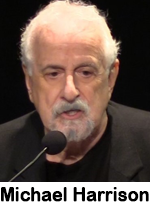
  -2) at the Sheraton Times Square hotel in New York City. Harrison’s address titled, “The Next 10 Years of Media and Popular Culture is…?,” is scheduled to take place between 11:00 am and 12:00 noon on Saturday (3/2). Harrison states, “I have always believed that the future of broadcasting, for better or worse, brews on the campuses of America and this observation is truer now than ever before. I am very excited to bring an array of provocative and pertinent observations, predictions and possibilities, born of my perspective as a future-minded immigrant from the 20th century to such a vital and dynamic group of young communicators.”
  What do your New Year’s resolutions look like?
 We live in an increasingly noisy world. The accelerating advancement of media technology, with its accompanying “everybody is a star” syndrome, combine to make it increasingly difficult to get attention. By that, I mean real attention – the kind of attention that those in the professional media (and related) industries describe as “traction.”
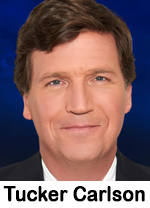 economy found on PublicSq.” The agreement includes collaborative content segments that will air on Tucker Carlson’s show on both X and Last Country’s own platform. Last Country CEO Neil Patel comments, “We are proud to announce that our new media venture will be partnering with PublicSq. as our first advertiser. PublicSq. is a key company in the parallel economy, specifically countering the Chamber of Commerce and Amazon. There is a wave of disruption coming to the media and economic establishment, and our companies will help accelerate this overdue shift.”
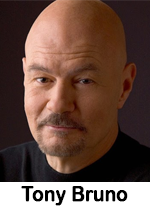 “Martinez & Company” (6:00 pm to 8:00 pm ET), with the early afternoon daypart to be announced. The press release states, TBSN will debut October 30th with LIVE programming every weekday with sports talk radio from 7am to 8pm to start. Additional time slots and weekend programming will be added over the following months. TBSN is available to listeners nationwide online via LIVE365.com and on the ‘Tony Bruno Sports Network’ app for Android and iPhone.” Bruno adds, “I want to thank all of my fans who have followed and supported me through the years. I am grateful to everyone who has encouraged me to return and who still want to hear my daily fun approach to sports and current affairs, which has been my forté for over five decades in broadcasting; this time, I’m bringing friends! I hear over and over again that fans are tired of X’s & O’s sports radio. I plan to bring back exciting, sports talk radio again, with a Florida flair. What better place to launch a new nationwide sports network than in Florida, a true melting pot of fans from all over the nation.”
 There are media and there are media. There are platforms and there are platforms. Not all cultural artifacts are equal in terms of their utilitarian versus cultural value. Damn the tone-deaf corporate bean counters who are ripping the heart out of the spirit that gives humanity its life force! Marketplace obsolescence should not solely be determined by profit and loss. With all due respect to the idea of public service, what about the concept of loyalty? Shame on the automobile industry! Not only is it turning its back on the needs of millions of people, it is in the process of betraying one of its historic partners in not only commerce – but romance and glory. In other words, the automobile industry owes the radio industry a huge debt. The relationship between cars and radios goes a century deep and has been nothing less than a two-way street. Yes, auto industry, don’t be so hasty to save a few bucks by rushing AM (and then FM) radio out the door. You might just find in the long run that “radio” outlasts the private “car” as a fixture of human activity.
 and streaming for everything from brand awareness to consumer purchase. Audacy chief marketing officer Paul Suchman says, “Audio holds the title as the undisputed leader of brand-building channels – working its magic with the one-two punch of massive reach and beloved and trusted personalities. But if you’re thinking of Audio as just a top-of-funnel play – good for sparking a conversation but not driving conversion – think again. The truth is the game has expanded in recent years and audio is now a truly multi-purpose platform. Thanks to precision targeting, authentic influencers whose listeners follow them across channels, and advanced measurement, marketers are uncovering the best-kept secret in media – audio’s ability to drive impact at every funnel stage.”
 “ScreenShare” on MSNBC’s Peacock. The program features diverse guests and conversations that “tackle the biggest issues in culture, entertainment, media, and politics.” Best-selling author, advocate, speaker, and strategist Reecie Colbert hosts the Saturday 3:00 pm to 4:00 pm program that addresses politics, culture, current events, entertainment, and lifestyle topics. And broadcaster, news analyst, business executive, college dean, university professor, lecturer, entrepreneur, and advocate Dr. Rashad Richey is host of the Sunday 1:00 pm to 2:00 pm hour that SiriusXM calls “your one-hour Sunday ‘all things’ political, social, and economic empowerment show!”
