
When the Algorithm Misses the Mark: What the Walters v. OpenAI Case Means for Talk Hosts
By Matthew B. Harrison
TALKERS VP/Associate Publisher
Harrison Media Law, Senior Partner
Goodphone Communications, Executive Producer
 In a ruling that should catch the attention of every talk host and media creator dabbling in AI, a Georgia court has dismissed “Armed American Radio” syndicated host Mark Walters’ defamation lawsuit against OpenAI. The case revolved around a disturbing but increasingly common glitch: a chatbot “hallucinating” canonically false but believable information.
The Happenings: A journalist asked ChatGPT to summarize a real court case. Instead, the AI invented a fictional lawsuit accusing Walters of embezzling from the Second Amendment Foundation — a group with which he’s never been employed. The journalist spotted the error and never published inaccurate information. But the damage, at least emotionally and reputationally, was done. That untruth was out there, and Walters sued for defamation.
Last week, the court kicked the case. The court determined Walters was a public figure, and as such, Walters had to prove “actual malice” — that OpenAI knowingly or recklessly published falsehoods. He couldn’t but now it may be impossible.
The judge emphasized the basis that there was an assumption false information was never shared publicly. It stayed within a private conversation between the journalist and ChatGPT. No dissemination, no defamation.
But while OpenAI may have escaped liability, the ruling raises serious questions for the rest in the content creation space.
What This Means for Talk Hosts
Let’s be honest: AI tools like ChatGPT are already part of the media ecosystem. Hosts use them to summarize articles, brainstorm show topics, generate ad copy, and even suggest guest questions. They’re efficient — and also dangerous.
This case shows just how easily AI can generate falsehoods with confidence and detail. If a host were to read something like that hallucinated lawsuit on air, without verifying it, the legal risk would shift. It wouldn’t be the AI company on the hook — it would be the broadcaster who repeated it.
Key Lessons
- AI is not a source.
It’s a starting point. Just like a tip from a caller or a line on social media, AI-generated content must be verified before use. - Public figures are more exposed.
The legal system gives less protection to people in the public eye — like talk hosts — and requires a higher burden of proof in defamation claims. That cuts both ways. - Disclosure helps.
OpenAI’s disclaimers about potential inaccuracies helped them in court. On air, disclosing when you use AI can offer similar protection — and builds trust with your audience. - Editorial judgment still rules.
No matter how fast or slick AI gets, it doesn’t replace a producer’s instincts or a host’s responsibility.
Bottom line: the lawsuit may be over, but the conversation is just beginning. The more we rely on machines to shape our words, the more we need to sharpen our filters. Because when AI gets it wrong, the real fallout hits the human behind the mic.
And for talk hosts, that means the stakes are personal. Your credibility, your syndication, your audience trust — none of it can be outsourced to an algorithm. AI might be a tool in the kit, but editorial judgment is still the sharpest weapon in your arsenal. Use it. Or risk learning the hard way what Mark Walters just did. Walters has yet to comment on what steps – if any – he and his lawyers will take next.
TALKERS publisher Michael Harrison issued the following comment regarding the Georgia ruling: “In the age of internet ‘influencers’ and media personalities with various degrees of clout operating within the same space, the definition of ‘public figure’ is far less clear than in earlier times. The media and courts must revisit this striking change. Also, in an era of self-serving political weaponization, this ruling opens the door to ‘big tech’ having enormous, unbridled power in influencing the circumstances of news events and reputations to meet its own goals and agendas.”
Matthew B. Harrison is a media attorney and executive producer specializing in broadcast law, intellectual property, and First Amendment issues. He serves as VP/Associate Publisher of TALKERS magazine and is a senior partner at Harrison Media Law. He also leads creative development at Goodphone Communications.
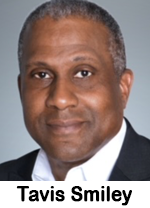 Airing in more than 40 markets from Los Angeles flagship KBLA “Talk 1580,” SmileyAudioMedia’s “Tavis Smiley” show will be offered free to urban-targeted stations for one week during next month’s Democratic National Convention (8/19-22). The SmileyAudioMedia owner/TALKERS 2023 “Freedom Of Speech” award winner will broadcast from the event’s radio row inside the site of the convention – Chicago’s United Center – and other relevant locations. Smiley tells TALKERS, “Black voters will be at the epicenter of whatever happens in Chicago, a fact made more relevant with the increasing likelihood that Kamala Harris will be the Democratic Party’s presidential nominee. If the Democratic Party hopes to achieve victory in November, it will be because Black voters saved the party and, ultimately, American democracy. To date, the 2024 election has been unpredictable and unprecedented. As the battle between the candidates enters its final stretch, the policies discussed and the decisions made will have a profound and lasting impact on Black America. It’s appropriate that ‘Tavis Smiley’ listeners will be at the center of the action as the conversation occurs.” SmileyAudioMedia syndication manager Rob Wilkins (who can be reached at
  as well as serving as news director for the Athens stations and anchor/reporter for sister news/talk WSB-AM/WSBB-FM, Atlanta. The Oconee Enterprise says Bryant “is known for not just delivering the news of Athens and Oconee on the airwaves but also interviewing political candidates, public figures and citizens who do something newsworthy, as well as hosting candidate forums.”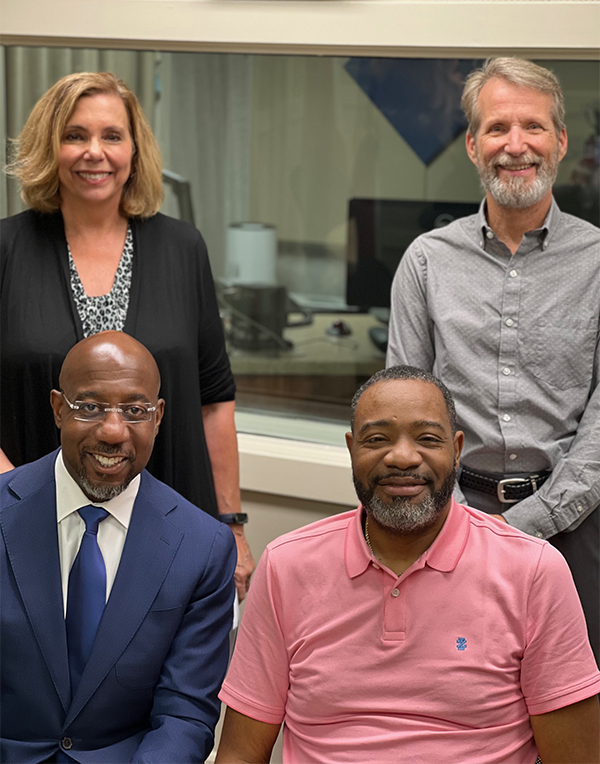

 in 1979 from the University of Georgia with a degree in Journalism from the prestigious Grady School of Journalism, she worked in the corporate world and met a payroll. She is a wife, mother and a grandmother. She’s stayed at home and juggled children and working priorities. She says there is no glass ceiling and women can have it all, just not at the same time. A life-long learner, she completed her MA in Political Science in 2021 at the University of Georgia’s School of Politics and International Affairs. Her thesis was on women’s electoral success in the GOP. During her formidable broadcasting career in the Peach State, she has pivoted between holding positions on key talk stations and performing stints in politics and the public sector. These include being state director of field offices for Governor Brian Kemp. She’s also worked for Senator David Perdue in senior staff positions. In addition to her daily duties at WDUN, Zoller serves on the Georgia State Board of Education. TALKERS publisher Michael Harrison says, “Martha Zoller is a perfect ‘go-to’ guest to discuss the Georgia Trump indictment. She’s an independent Republican and moderate conservative without an ax to grind. I have always found her to be an extremely credible source for political discussion of the hot issues – now with the Trump Georgia story boiling on the front burner, she is a talk show treasure for her industry colleagues.” To arrange an interview or set up a connection with Martha Zoller, contact Victoria Jones at DC Radio Company at 917-865-3991 or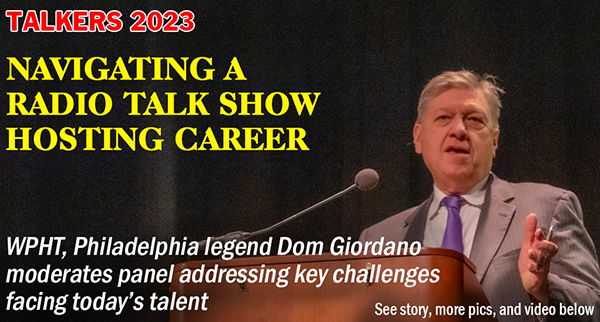
 Hosting Career.” The session, sponsored by C. Crane, was introduced by managing partner, Goldman McCormick PR and syndicated host, Ryan McCormick (pictured at right) and moderated by WPHT, Philadelphia host, Dom Giordano (pictured above). Panelists (pictured below from left to right) include Heather Cohen, SVP, the Weiss Agency; Martha Zoller, host, WDUN-AM/FM, Gainesville, GA; Frank Morano, host WABC, New York; Rich Valdes, host, Westwood One; and Jeff Katz, host, WRVA, Richmond, VA.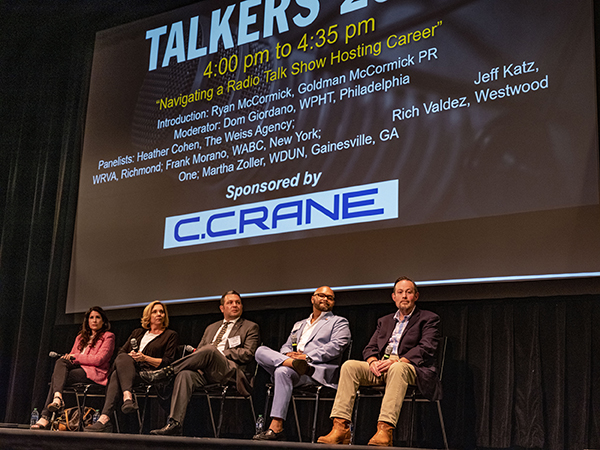
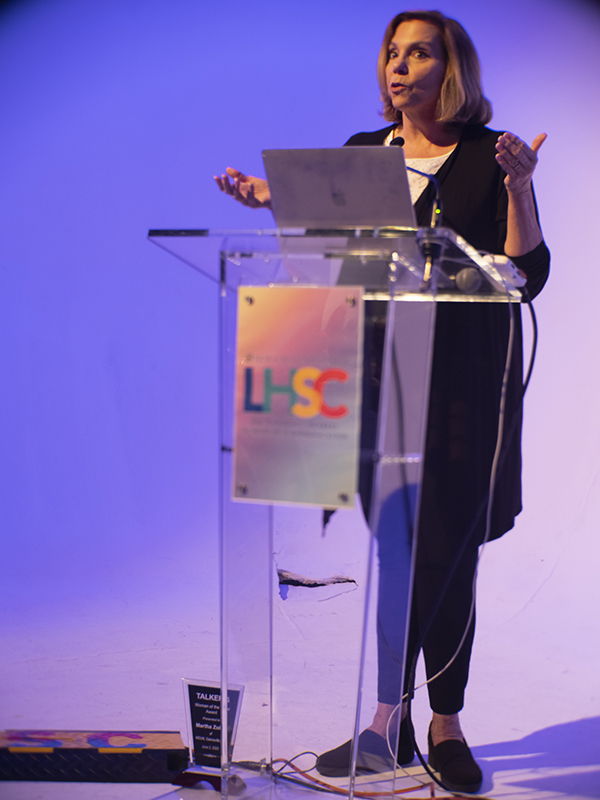
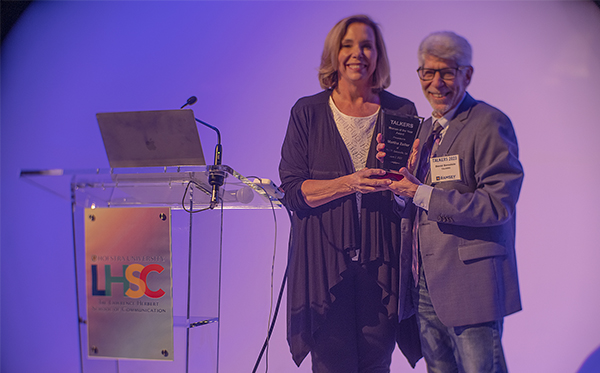
 student has pivoted between holding positions on key talk stations and performing stints in politics and the public sector. These include being State Director of Field Offices for Governor Brian Kemp. She’s also worked for former U.S. Senator David Perdue in senior staff positions. Back in 2011, she announced her candidacy for Congress in Georgia’s new 9th Congressional District and temporarily left the airwaves to campaign full time. She made it to the runoff in that race, but did not win, although her impressive showing was a victory unto itself. Among her many roles, she has served on the Georgia State Board of Education since 2020. Zoller has been designated the TALKERS 2023 “Woman of the Year” and will be presented the prestigious award at the publication’s national conference on June 2 at Hofstra University on Long Island.