


FCC Commissioner Gomez Criticizes “Unlawful” Nexstar-Tegna Merger
FCC Commissioner Anna M. Gomez issued a statement on Friday (3/20) after the FCC’s Media Bureau approved the Nexstar/TEGNA merger, which Gomez notes violates the existing 39% national ownership cap in federal law. She says, “The FCC has once again chosen bureaucratic cover over public accountability. This merger was approved behind closed doors with no open process, no full Commission vote, and no transparency for the consumers and communities who will bear the consequences. A transaction of this magnitude, which includes new and novel issues before the FCC, demands open deliberation before the full Commission, not a quiet sign-off meant to avoid public scrutiny. Given the increasingly alarming pace of reckless media consolidation, the American public deserves to know how and why this decision was made.
“Local journalism is under extraordinary strain. Across the country, newsrooms are being consolidated, reporters laid off, and editorial decisions made far from the communities broadcast stations are licensed to serve. The Nexstar/TEGNA merger will accelerate exactly that trend, concentrating broadcast power in fewer corporate hands, shrinking independent editorial voices, and prioritizing national business interests over local needs. Nexstar has already begun cutting newsrooms throughout the country, and as these billion-dollar companies grow even larger, their increased negotiating leverage will drive up fees that translate into higher monthly bills for those families who can least afford them. The consequences of this rubber stamp approval will be felt in living rooms and newsrooms across the country, resulting in fewer voices, less competition, and higher costs for consumers.”
 pretends it has the power to control news coverage. In reality, the FCC has vanishingly little power over national news networks. It licenses local broadcast stations, not networks, and no licenses are up for renewal until 2028. Early renewal attempts are exceedingly rare, and the process is so demanding that any effort would almost certainly fail, especially given the well-documented First Amendment violations underlying these moves. These threats are grounded in neither reality nor law and would not survive judicial scrutiny, just as other recent attempts by this Administration to push beyond constitutional limits have repeatedly failed in court.
 Carrier Bureau, helping implement the Act. In the webinar titled “30th Anniversary of the 96 Act: What Did We Learn?” panelists will explore how lessons from the past 30 years can drive innovation and competition for consumers today. Topics will include artificial intelligence, media, competition, convergence, access, and cybersecurity. The three separate panels will include Panel 1 looking at “The Legislative Process That Led to the Act; Panel 2 will address “FCC Implementation of the Act”; and Panel 3 will focus on “Today’s Challenges.” Interested parties can join online via the
  recent trends towards fragmentation facilitate or inhibit the ability of local broadcast television stations to meet their public interest obligations, including their production of local news and reporting? In what ways is the marketplace continuing to evolve and how will future changes impact consumer access to free over-the-air news and information, including public safety information?”
 to television and radio programming. After the back-and-forth between The Late Show’s Stephen Colbert and CBS attorneys over the interview with U.S. Senate candidate U.S. Rep. James Talarico that did not air on CBS television but was pushed out on the show’s social media accounts instead, broadcasters – including news/talk radio programmers and hosts – may be confused about how the equal time rule is being applied.
 FCC has no lawful authority to pressure broadcasters for political purposes or to create a climate that chills free expression. CBS is fully protected under the First Amendment to determine what interviews it airs, which makes its decision to yield to political pressure all the more disappointing. It is no secret that Paramount, CBS’s parent company, has regulatory matters before the government, but corporate interests cannot justify retreating from airing newsworthy content. The FCC is powerless to impose restrictions on protected speech, and any attempt to intimidate broadcasters into self-censorship undermines both press freedom and public trust. I once again urge broadcasters and their parent companies to stand firm against these unlawful pressures and continue exercising their constitutional right to speak freely and without government interference.”
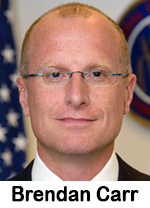 Republican or Democrat. Often, Democratic candidates balk at being interviewed by conservative hosts for fear they will not get a “friendly” interview as their Republican opponent might have. Regardless, the law is about equal time, and the matter late night shows are dealing with is assuming they qualify for the “bona fide news” exemption that excuses them from the equal time rule. Chairman Carr’s position is there is no blanket exemption; it is taken on a case-by-case basis.
 recommended proposals for the International Telecommunication Union’s World Radiocommunication Conference, which will be held in 2027. The World Radiocommunication Conference is a treaty-level forum held by the International Telecommunication Union (a United Nations agency) every three to four years in which countries decide on the allocation of frequency spectrum to allow the deployment or growth of all types of radiocommunication services such as wireless, broadcasting, satellite, and aeronautical services.
 interview due to potential implications under the Federal Communications Commission’s “equal time” rule. The rule requires broadcast licensees to provide equal opportunities to legally qualified candidates for public office if one candidate is given airtime.
 the Lakeland-Winter Haven, Florida market from Hall Communications. The deal includes news/talk WLKF-AM (but not its current FM translator W244BJ at 96.7 MHz) country WPVC, and adult hits WONN-AM and its translators W296CS at 107.1 FM and W240DB at 95.9 FM. MARC Radio says it expects the deal to close in May, pending FCC approval.
 clear on what this is. This is government intimidation, not a legitimate investigation. Like many other so-called ‘investigations’ before it, the FCC will announce an investigation but never carry one out, reach a conclusion, or take any meaningful action. The real purpose is to weaponize the FCC’s regulatory authority to intimidate perceived critics of this Administration and chill protected speech. That is not how a free society operates. The First Amendment protects the right of daytime and late-night programs to cover newsworthy issues and express viewpoints without government interference. I urge broadcasters and their parent networks to stand strong against these unfounded attacks and continue exercising their constitutional rights without fear or favor.”
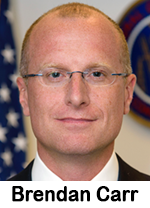 that wasn’t part of anything in that decision. It was focused on the potential misreading of precedents on the broadcast TV side. Of course, as you know, the rule applies to broadcast, radio and TV, but that one was focused on those TV precedents.” The memo to broadcast TV was relative to the 1996 bona fide news interview exemption that came about in the wake of an interview Jay Leno did with then-California Governor Arnold Schwarzenegger on “The Tonight Show.” The FCC Media Bureau ruled that “The Tonight Show” did not have to give Schwarzenegger’s opponent equal time because that interview segment qualified as a bona fide news interview. This matter doesn’t seem to be a big one for news/talk radio since news/talk stations are viewed as news outlets, on top of the fact that most talk radio hosts would love the opportunity to interview candidates with whom they might not personally agree.
  The plague of pessimism about the future of radio is fueled internally by radio employees. Doomsayers are logically found in the sales department. All day, salespeople meet with buyers. A buyer’s job is to negotiate a lower price by arguing radio’s negatives. The wall of negativity thrives within the work environment of a seller. Tough. But there is little or no reason for pessimism.
 fundamentally changed with respect to our political broadcasting rules. The FCC has not adopted any new regulation, interpretation, or Commission-level policy altering the long-standing news exemption or equal time framework. For decades, the Commission has recognized that bona fide news interviews, late-night programs, and daytime news shows are entitled to editorial discretion based on newsworthiness, not political favoritism. That principle has not been repealed, revised, or voted on by the Commission. This announcement therefore does not change the law, but it does represent an escalation in this FCC’s ongoing campaign to censor and control speech.
 serve in the public interest, the FCC yesterday issued a Guidance on Political Equal Opportunities Requirement for Broadcast Television Stations. While the memorandum is written to television stations, it obvious applies to radio stations as well. The memo ultimately addresses the 1959 order that exempts broadcasters from providing equal time to qualified candidates on any: (1) bona fide newscast; (2) bona fide news interview; (3) bona fidenews documentary (if the appearance of the candidate is incidental to the presentation of the subject or subjects covered by the news documentary); or (4) on-the-spot coverage of bona fide news events (including but not limited to political conventions and activities incidental thereto). Programs such as “The Tonight Show” and “The View” are cited as entertainment shows in which an interview segment can qualify as a bona fide news interview. Regarding this, the memo concludes with two important paragraphs:
 the way the commission is operating. She took issue with FCC Chair Brendan Carr’s interpretation of how the Commission should ensure that licensees operate in the public interest. She stated, “For months, this FCC has asserted an apparent roving mandate to police speech that this Administration does not like, invoking an undefined and unchecked concept known as the ‘public interest’ standard.
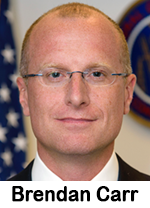 made clear, broadcasters are different than every other distributor of media. Specifically, broadcasters are required by both the Communications Act and the terms of their FCC-issued licenses to operate in the public interest. This sets them apart from cable channels, podcasts, streaming services, social media, and countless other types of distributors that have no public interest obligation. The FCC’s broadcast hoax rule, its news distortion policy, its political equal opportunity regulation, its prohibition on obscene, indecent, and profane content, its localism requirements — all of those and more apply uniquely to broadcasters. Congress has instructed the FCC to enforce public interest requirements on broadcasters. The FCC should do exactly that.” Carr added, “To ensure that broadcasters can meet their public interest obligations, the FCC has taken a number of actions, including seeking public comment for the first time in more than 15 years on the relationship between the large, national programmers on the one hand and the many local broadcast television stations on the other. Comments in that proceeding suggest that many local broadcasters are concerned that the national programmers have amassed enormous power and influence in recent years and have made it more challenging for local broadcasters to fulfill their public interest obligations. The FCC is going to continue its efforts to empower local broadcasters to meet their public interest obligations.”
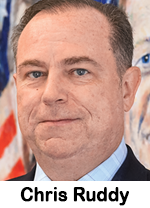 competition, raise prices for consumers, and damage local news across the country. If the deal is approved, Nexstar would become the largest TV station owner in the nation owning 244 television stations across 44 states. Newsmax CEO Christopher Ruddy says, “This merger would create an unprecedented and dangerous consolidation within the broadcast TV industry, giving them immense control over local news and political news coverage.” Newsmax says that the national television ownership cap was set by Congress at 39% of U.S. television households in 2004 and explicitly stripped the FCC of authority to modify it and argues that any change in the cap by the FCC, including waivers, is a direct violation of law.
  working to empower local broadcasters to serve the public interest and meet the needs of their communities. As Congress, the Supreme Court, and the FCC have all made clear, broadcasters are different than every other distributor of media. Specifically, broadcasters are required by both the Communications Act and the terms of their FCC-issued licenses to operate in the public interest. This sets them apart from cable channels, podcasts, streaming services, social media, and countless other types of distributors that have no public interest obligation. The FCC’s broadcast hoax rule, its news distortion policy, its political equal opportunity regulation, its prohibition on obscene, indecent, and profane content, its localism requirements – all of those and more apply uniquely to broadcasters. Congress has instructed the FCC to enforce public interest requirements on broadcasters. The FCC should do exactly that.
 independent one because commissioners can be removed by the president. Numerous news organizations pointed out that the mission statement on the FCC’s website described it as an independent agency – until yesterday afternoon when the website was apparently updated to reflect Carr’s testimony. Numerous news outlets also pointed to Carr himself describing the agency as independent as recently as April of 2021. When questioned about the FCC regulating content, Carr said that he believes political satire is protected speech but he added that broadcast television and radio stations are held to a “public interest” standard that the FCC is required by law to enforce.
 Carr. Facing regulatory scrutiny, the San Francisco Bay Area station demoted well-regarded journalists and sharply curtailed its political coverage for months. As pressure has eased, KCBS has gradually resumed more ambitious reporting, reflecting tensions between regulatory oversight and editorial independence.” Carr accused the station of failing to operate in the public interest and threatened an investigation. This was enough for Audacy management to back off its reporting. Tau writes, “KCBS demoted a well-liked anchor and dialed back on political programming, people said. For months, reporters were dissuaded from pursuing political or controversial topics and instead encouraged to focus on human interest stories, according to the current and former staffers.” The piece notes that anchor Bret Burkhart, the one to first present the ICE actions on the radio, was demoted. He eventually left the station for another position.
  Trump’s historic Executive Order on artificial intelligence promotes America’s leadership in AI and advances our nation’s economic and national security interests. It does so by targeting excessive state regulations that would not only hold America back but insert ideological bias into AI models. President Trump’s decisive action also ensures a policy framework that protects children, prevents online censorship, respects copyrights, and safeguards communities. The FCC welcomes President’s Trump’s direction that the agency initiate a proceeding to determine whether to adopt a Federal reporting and disclosure standard for AI models that preempts conflicting State laws.”
 by the FCC and is expected to close early next year. Connoisseur Media says the sale is “another step in the company’s efforts to concentrate on markets where it can execute its successful playbook. It is one element in the strategic plan for the markets acquired in Connoisseur Media’s acquisition of Alpha Media that took place in September.” Connoisseur Media founder and CEO Jeff Warshaw says, “Bakersfield was a market that did not fit into the long-term plans we have for Connoisseur. We looked for a local operator that we felt could devote the time and energy that Bakersfield deserves. We are confident that we have found that in Frequency and the Hill family operation.”
 Amendment protects journalistic choices from government intimidation. Nevertheless, this FCC has deployed a vague and ineffective News Distortion policy as a weapon to stretch its licensing authority and pressure newsrooms. The First Amendment is a pillar of our democracy. As federal regulators, we must respect the rule of law, uphold the Constitution, and ensure that a free press is never subjected to regulatory interference by the FCC.” The FCC’s News Distortion Policy was created in 1949 and has been criticized from time to time over the years. It has rarely been invoked until now. A Petition for Special Relief before the FCC signed by 11 people, including former FCC Chairman Thomas E. Wheeler, asks that the Commission repeal the news distortion policy. They cite case law, saying, “In Moody v. NetChoice, LLC, the Supreme Court, applying the First Amendment, reaffirmed that the government has no role in ‘un-biasing’ the media. In direct contradiction to that decision, the news distortion policy seeks to mold the speech of private broadcasters to the FCC’s own view of what is correct, complete, and accurate news. The First Amendment forbids the government from embarking on such a project.”
 and radio industry CEOs are pleased with the probability that they will be loosened. Cumulus Media president and CEO Mary G. Berner states, “We’re encouraged that Chairman Carr and the FCC are advancing the 2022 Quadrennial Review. Quickly modernizing the radio ownership rules is essential for listeners who rely on local radio every day. With updated
  rules, companies like ours can invest more locally, diversify our offerings, and compete effectively in today’s rapidly evolving audio landscape. We look forward to working with the Commission to make these updates.” Beasley Media Group CEO Caroline Beasley comments, “We would like to thank Chairman Carr for moving forward with the quadrennial review on this critical endeavor. This is a defining moment for our industry to ensure that local radio can continue to fulfill its essential public service mission for decades to come. We look forward to working with the Commission to implement common-sense reforms that will allow broadcasters to compete fairly and keep serving the local audiences who rely on us every day.”
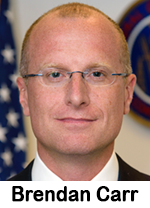 Democrats in Congress have lashed out at FCC Chairman Brendan Carr for his statements about ABC/Disney and Jimmy Kimmel’s Charlie Kirk bit that got Kimmel suspended from “Jimmy Kimmel Live!” Last week, Carr appeared on the Benny Johnson podcast and called Kimmel’s statements “some of the sickest conduct possible” and added, “This is a very, very serious issue right now for Disney… We can do this the easy way or the hard way.” ABC/Disney has television affiliates owned by both Nexstar and Sinclair, which objected to Kimmel’s comments and threatened to pull Kimmel’s show from the air. Nexstar has a $6.2 billion
 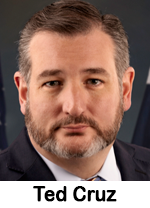 merger with Tegna in the works and needs FCC approval and critics of Carr’s comments are calling him out for appearing to threaten ABC. Republican Senator Ted Cruz, on his Premiere Networks podcast ‘The Verdict,’ disagreed with Carr saying, “Let me tell you if the government gets in the business of saying, ‘We don’t like what you the media says. We’re going to ban you from the airwaves if you don’t say what we like.’ That will end up bad for conservatives.” President Trump – who’s publicly mused about investigating his media critics – weighed in after being asked about Cruz’s response by saying, “I think Brendan Carr’s a courageous person. I think Brendan Carr doesn’t like to see the airwaves be used illegal and incorrectly and purposefully horribly.”
 Federal Communications Commissioner Anna M. Gomez issued a statement criticizing the Commission’s threats against ABC that, in part, led to the suspension of the “Jimmy Kimmel Live!” program. Her statement is as follows: “We cannot allow an inexcusable act of political violence to be twisted into ajustification for government censorship and control. First, an ABC reporter was told that his coverage amounted to hate speech and that he should be prosecuted simply for doing his job. Then, the FCC threatened to go after this same network, seizing on a late-night comedian’s inopportune joke as a pretext to punish speech it disliked. That led to a shameful show of cowardly corporate capitulation by ABC that has put the foundation of the First Amendment in danger.
 America’s top 10 radio broadcasters by station count and by revenue. Connoisseur Media CEO Jeffrey Warshaw says, “Local broadcasting has always been at the heart of what we do. Connoisseur started as a company rooted in radio serving local markets. Today we’re taking that same local-focused philosophy, which now includes our digital marketing and multi-platform expertise to some of the most dynamic markets in the country. This acquisition is about assembling the scale and resources to keep radio strong, serve our communities, empower our employees, and create even more value for advertisers. As I have travelled the country to meet our new colleagues in the Alpha Media markets, I have been impressed with their dedication to radio and their communities. I am excited to be associated with such a great group of people.”
 pursuit of pure profit. It embraced this Administration’s radical notion that discriminatory behavior should be tolerated and even embraced, while efforts to expand opportunity for everyone should be rejected.
 South Florida viewers are confused. WPLG, which brands as “Local 10,” was an ABC-TV affiliate for 69 years… until yesterday. Now it’s more local than ever, after divorcing its network, whose programming moved to the FOX affiliate’s digital channels 18.1 and 7.2, now branded “ABC Miami.” Among courteous FAQs about this change on WPLG’s web site: “How do I rescan my TV?” to find ABC programming.
 for free markets, Gomez called out the FCC’s role and Paramount for “cowardly capitulation.” Trusty said, “This transaction reflects the free market at work, where private investment, not government intervention, is preserving an iconic American media institution. During its review of the transaction, the Commission determined the merger was lawful and would serve the public interest. This deal brings fresh
  leadership, new capital, and a clear plan to compete with dominant tech platforms.” Gomez stated, “In an unprecedented move, this once-independent FCC used its vast power to pressure Paramount to broker a private legal settlement and further erode press freedom. Once again, this agency is undermining legitimate efforts to combat discrimination and expand opportunity by overstepping its authority and intervening in employment matters reserved for other government entities with proper jurisdiction on these issues. Even more alarming, it is now imposing never-before-seen controls over newsroom decisions and editorial judgment, in direct violation of the First Amendment and the law… The Paramount payout and this reckless approval have emboldened those who believe the government can – and should – abuse its power to extract financial and ideological concessions, demand favored treatment, and secure positive media coverage. It is a dark chapter in a long and growing record of abuse that threatens press freedom in this country.”
 station ownership. NAB president and CEO Curtis LeGeyt issued a statement expressing his pleasure with that move but said he’s disappointed the Court didn’t do the same for radio. LeGeyt says, “At the same time, we are disappointed that the court stopped short of addressing the decades-old radio ownership restrictions that defy economic reality and weaken broadcasters’ ability to compete, invest in local journalism and serve their communities. Fortunately, FCC Chairman Brendan Carr has long been a champion for empowering local stations, and we look forward to working with this FCC to modernize its local radio ownership rules and ensure local broadcasters can thrive in the communities they serve across the nation.”