


Pew Research: Trust in News Organizations Rising
According to data from Pew Research, after a period in which Americans’ trust of news organizations had fallen dramatically, people are now “more likely than they were a year ago to trust information from national and local news organizations.” Pew says  trust in information from national and local news organizations has risen in both the Republican and Democratic parties since 2025. Overall, 62% of U.S. adults say they have a lot of or some trust in the information they get from national news organizations – up 6% since September 2025 but still lower than a decade ago. Trust in local news organizations remains higher: 75% now say they have at least some trust in information from local outlets, up 5 points from a year ago. By contrast, 38% of Americans say they have at least some trust in information from social media sites, virtually unchanged from 37% in 2025. See more from Pew Research here.
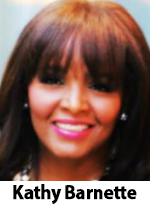 Independence Center that drew fellow Black conservatives and Democrats to discuss important issues facing families today. Barnette says, “America is at a crossroads, and I believe my voice comes at a critical time. I don’t talk about poverty or perseverance from a spreadsheet – I’ve lived it. From a pig farm in Alabama to the halls of corporate America, from serving in the military to building a national platform, I’ve seen firsthand what faith, discipline, and hard work can achieve. My show is about bringing authenticity, courage, and moral clarity back to the airwaves – and planting the kind of seeds that will offer shade for generations to come.” Barnette was the national grassroots director and senior advisor Vivek Ramaswamy’s presidential campaign and is the author of Nothing to Lose, Everything to Gain: Being Black and Conservative in America (2020, Center Street).
 Atlanta Journal-Constitution. The Compass Media Networks host is heard in Atlanta on Cox Media Group’s WSB-AM/WSBB-FM. His first piece was printed in September in the wake of the slaying of Charlie Kirk. His latest column is titled, “Democrats are hungry, Republicans complacent and all politics is national,” and
 Carr of “illegally targeting broadcast networks and media companies perceived to be unfavorably covering the Trump Administration – wasting critical agency resources on bogus investigations in the process.” The lawmakers are also questioning Carr’s “commitment to his agency’s independence, given his frequent trips with the president to Mar-a-Lago and his targeting of entities that the president has criticized or sued in his personal capacity.” Committee Ranking Members says that “under Carr’s leadership, the FCC has harassed CBS for routine editing practices, reinstated lawfully denied complaints against ABC and NBC, launched a bogus investigation into KCBS-AM in San Jose simply for reporting publicly available information, and directed the FCC’s Enforcement Bureau to launch investigations into NPR and PBS based on false allegations.” The Committee is requesting documents and communications “related to its investigations of media entities,” “all communications between Carr and current White House officials and between Carr and other Trump Administration officials that relate to investigations,” as well as Carr’s travel records.
 reach. “Republicans listen to more AM/FM radio than other groups, with an index of 109 (or 9% more listening than average). The ad-supported spoken-word channels on SiriusXM are a particularly efficient place to find Republicans, with an index of 146. Meanwhile, podcasts stand out as the more efficient platform for reaching Democrats, indexing at 121. And what about those elusive Independents, who often tip an election? Both streaming music, and in particular music videos on YouTube, over-deliver for these potential voters, with indexes of 103 and 123 respectively.” Edison adds, “Regardless of the party that buyers are trying to reach with political ads, audio stands out as a superior pathway to reaching voters. Audio provides enormous audiences and often a far less cluttered political environment than other ad channels.”