
Beasley and Investors Heading Toward Refinancing Agreement
On Friday (3/20), Beasley Broadcast Group filed a Form 8-K with the Securities and Exchange Commission revealing it is entering into a Transaction Support Agreement with 98.7% of holders 11.000% Senior Secured First Lien Notes due 2028 and 76.5% of the aggregate outstanding principal amount of the 9.200% Senior Secured Second Lien Notes due 2028. This exchange offer includes an exchange of all of the Existing Second Lien Notes for newly issued 10.000% Senior Secured Second Lien PIK Notes due 2027 at an exchange ratio of 50.0% of the aggregate principal amount of the Existing Second Lien Notes tendered for exchange, and an offer to purchase up to $15,899,000 of the Existing First Lien Notes at a price equal to 100% of the par value thereof.
The upshot of this is that if these offers are accepted, lien holders will have a lot of control over how the company operates. They will be allowed to appoint a director to sit on the company’s board of directors. But the most telling part of this plan is that it allows for lien holders to exchange their debt for equity – meaning they could assume control of the company. Beasley provided “cleansing information” to lien holders in the form of a profit & loss statement ahead of its 2025 Q4 and 2025 full year financial statements that indicates a significant decline in audio net revenue “driven by continued weakness across the industry as a result of reduced consumer sentiment.” We’ll know soon enough whether this goes forward as the Transaction Support Agreement will terminate on May 15, 2026 if it’s not consummated.
 $600 million of debt, “substantially deleveraging its balance sheet and enhancing its ability to execute on strategic priorities.” The company says it will continue operating in the ordinary course throughout the process, with no impact to employees, partners, or listeners.
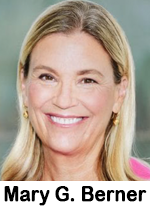 macroeconomic and industry-wide pressures we have faced have remained unrelenting. Against that backdrop, it became clear that Cumulus’s remaining debt burden limited our ability to fully realize the company’s potential, and this agreement represents a major step forward. The prepackaged process is intended to address the company’s debt efficiently with no disruption to our operations, our people, and our strategies. On emergence, a stronger financial foundation will better position Cumulus to continue investing in premium content, enriched audience experiences, advertiser performance enhancements, and the ongoing growth of our digital marketing offerings.” Cumulus has filed a proposed Plan of Reorganization that incorporates the terms of the RSA and is subject to approval by the Court. The requisite majority of debtholders committed to vote in favor of the Plan, which calls for the cancellation of 100% of the company’s existing funded indebtedness in exchange for 100% of the company’s reorganized equity and $50 million of new convertible notes, as well as the amendment and restatement of the company’s asset-based revolving credit facility to provide continued liquidity. Cumulus expects that the Court will hold a hearing to consider the approval of the Plan within 60 days of the filing date and that the company will emerge from bankruptcy following receipt of required regulatory approvals from the Federal Communications Commission.
 current Alpha Media shareholders retaining their interest in the company but ceding control to Connoisseur. Under the terms of the deal, Alpha shareholders will reorganize into a new company which will become part of Connoisseur in exchange for a 3.75% equity stake in Connoisseur, plus two warrants to allow them to acquire more equity – one for 5% at $30 million valuation and the other for up to 5% at $70 million valuation. Connoisseur is acquiring new credit facilities to finance the retirement of Alpha debt plus a new, revolving credit line. Connoisseur is operating the Alpha under an LMA and when the deal closes, the new Connoisseur will own and operate 218 stations in 47 markets.
  Audacy. Before he was chairman, Carr had argued that the FCC should not allow a “Soros shortcut” but must follow FCC procedure. In June of last year Carr said the FCC had never previously used the “Soros-shortcut” procedure to approve licenses to a firm with significant foreign ownership. But Audacy argued in its opposition to the Petition to Deny (filed last summer) that there is nothing unique about this request, saying that the FCC “granting a limited waiver deferring its foreign ownership review to facilitate a licensee’s prompt emergence from bankruptcy is consistent with the Communications Act.” Audacy added that the notion that the limited waiver is new “completely ignores longstanding precedent establishing the Commission-approved special warrant process used in a number of prior transactions to allow licensees to emerge from bankruptcy promptly, while affording the Commission sufficient opportunity to review foreign ownership issues post-emergence.”
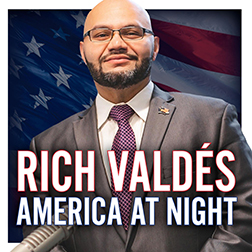 be able to alter the course of established radio stations and the marketplace of ideas before the 2024 election or even soon thereafter. Harrison told “America at Night” host Rich Valdés last night (5/22) that radio is far too idiosyncratic an industry – already run by too many people who don’t understand how it really operates – for someone (who also doesn’t really have first-hand experience in the field) to just step in and make drastic alterations to entrenched stations, formats, audiences and sponsors just to make a political statement. Harrison states, “There are more
  expedient uses of his money if that is his main purpose. After all, not all Audacy stations are conservative news/talkers… many are music, sports and a variety of formats. How inefficient such a move would be!” Harrison went on to say that radio is still an extremely powerful and potentially lucrative medium if only its present owners and operators believed in it and invested in its programming and marketing. He encouraged radio broadcasters to understand and believe in the “esthetic of ‘radio’ and not be so anxious to bail out into the utilitarian term ‘audio.’” Harrison and Valdés tied the discussion into the current news about the AM for Every Vehicle Act currently making its way through Congress stating that radio is still a lifeline for service to the community as a place for information, education, and entertainment and that eliminating it from automobile dashboards would be about “five to 10 years premature.”
  Townsquare’s Cash Flow from Operations increased 35% year-over-year to $68 million, or approximately $4.07 per basic share based on shares outstanding as of March 28, 2024. Pro forma for this transaction, Cash Flow from Operations per basic share increased to approximately $4.47, representing accretion of approximately 10%. Following the transaction, the Company has 15.2 million shares outstanding. Townsquare CEO Bill Wilson says, “We are very pleased to share that we have repurchased just under 10% of our total shares outstanding in an immediately accretive transaction for our shareholders. Since 2021, we have repurchased 16.2 million shares at an average price of $7.19, while simultaneously reducing leverage. The strong cash generation characteristics of our business model, which produced $68 million of cash flow from operations in 2023, has afforded us the opportunity to accretively repurchase equity and debt, while also investing internally in our digital growth engine. In addition, we introduced a high-yielding dividend in 2023, and recently increased it by 5%. Our dividend has a yield of 7% as of March 28, 2024. With a strong cash balance of $40 million following this transaction, we will retain financial flexibility moving forward and we are confident in our ability to build shareholder value for our investors through long-term net revenue, Adjusted EBITDA and cash flow growth, net leverage reduction, future dividend payments, and potential future share repurchases.”
 Post says it confirmed the report with Audacy and the company added, “The decision by our existing and new debtholders to become equity holders in Audacy represents a significant vote of confidence in our company and the future of the radio and audio business.” The story cites an insider close to the situation who is a Republican saying he believes its “possible Soros was buying the stake to exert influence on public opinion in the months leading up to the 2024 presidential election.”
 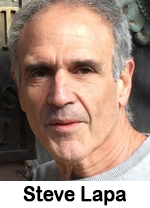 I’m no expert, but I do have a theory.
 the blessing of the lenders, the company will be owned by those same lenders. Audacy’s debt is approximately $2 billion. It began talks with lenders in October after the company sought and received amendments to its credit facilities because it is unable to make interest payments due largely to the industry-wide downturn in advertising revenue. The 2017 acquisition of the CBS Radio assets is cited among industry watchers as the move that pushed Audacy into its currently precarious situation.
  6.75% senior secured second-lien Notes due March 31, 2029. The decision to use the grace period will not trigger an event of default under the indenture governing the Notes, and the Company retains the right to make the interest payment to the holders of the Notes through the end of the grace period. Audacy says it intends to utilize the 30-day grace period to continue its dialogue with lenders “regarding a potential plan to strengthen its capital structure to support Audacy’s strong operating business and position Audacy for long-term growth.” Audacy chairman, president and CEO David Field comments, “We continue to engage in discussions with our lenders as we execute on our overall growth strategy and remain focused on investing in our people, platform, content and technology capabilities to serve our listeners and customers. We continue to drive progress across our key performance metrics, meaningfully advance our ad tech and product roadmap and enter new partnerships to enhance content, distribution and monetization opportunities.”
 Class A Common Stock and 1,125,000 shares of Class C Common Stock). The purchase price of $14.6 million was funded with cash on hand. Townsquare CEO Bill Wilson states, “We could not be more pleased to share that given our strong cash position, we were able to repurchase approximately 8.5% of our total shares outstanding (and nearly half of MSG’s ownership in Townsquare), capturing a positive return for our shareholders. Due to our strong cash flow generation, we have demonstrated Townsquare’s ability to support a high-yield dividend and repurchase debt and equity, while also simultaneously investing in the future of our digital growth engine. This repurchase is immediately accretive to shareholders and we thank our board of directors for their vote of confidence in our medium and long-term business plan to grow revenue and profits.”