


Monday Memo: “Tell Me What Happened”
By Holland Cooke
Consultant
 Good News/Bad News: Fender‑benders, slip‑and‑falls, and other “injuries caused by the negligent, careless, or reckless actions of others” will always happen. That’s the good news…for personal injury attorneys. Their bad news is that supply WAY-exceeds demand, and their advertising reflects it.
It all looks the same. The billboards are interchangeable: a headshot and a promise of six-figure settlements. When everyone is saying the same thing, differentiate with gimmicks. TV spots are either goofy shtick or tough-guy talk. Where I live, “The Heavy Hitter” has a phone number jingle Southern New Englanders can sing from memory. Competitors’ numbers are even easier, 444-4444 and 777-7777.
If you will be in Las Vegas for the NAB Show, turn on local TV there. You will howl. Some firms pitch “we charge less,” like a radio station dropping trou’ on rate to grab the whole buy. And there are the nationally syndicated spots, customized for local firms, in which cartoonishly terrified insurance executives beg to settle. Or the hard-boiled attorney threatens to “beat them in court.” Baloney! A jury trial is the last thing most personal injury firms want. Too time consuming, too risky.
Like radio’s, a lawyer’s inventory is perishable. We can’t monetize yesterday’s unsold avail. And lawyers can’t add the client who didn’t come in yesterday for that free, no obligation consultation. No “intake,” no sale. Which is exactly why they should be using radio.
“The lawyer is in, the meter is off” is the proposition when attorneys host brokered weekend talk shows and take listener calls. No look-alike billboard or tacky TV spot can humanize the attorney – and demonstrate comforting counsel – like eavesdropping on a conversation with a caller’s relatable situation. So instead of slogans or shouting about settlements, build the client’s message around four words that are turning callers into clients on weekend talk radio: “Tell me what happened.”
Holland Cooke (HollandCooke.com) is a consultant working the intersection of broadcasting and the Internet. Follow HC on Twitter @HollandCooke and connect on LinkedIn
 Small businesses often underestimate their greatest competitive edge. It’s not price. It’s not selection.
 Unless you live in Hawaii and Arizona (except the Navajo Nation) or American Samoa, Guam, the Northern Mariana Islands, Puerto Rico and the U.S. Virgin Islands, your clocks will change when we “Spring Forward” on Sunday 3/8.
 Your prospect – or, worse, an existing advertiser with cold feet – says “We tried radio. It didn’t work.” Often, the copy is the culprit, because it’s inside-out.
 If you work in radio, you’ve heard every flavor of AI anxiety. Some fear it will wipe out jobs. Others treat it like a super shortcut – cranking-out spots, promos, and proposals faster and cheaper. Kate O’Neill’s “
 If you’re on-air, it’s an important part of your job. Here’s what I see and hear working:
 Linear broadcast media have never been more challenged. Internet video now commands far more viewing time than over-the-air TV. And their own networks are hijacking viewers! Your local NBC station tells you to watch Peacock. ABC points you to Disney+. CBS pushes Paramount+. Affiliates are effectively forced to promote their own competition.
 Notice how often you see one in TV commercials, even when the product has nothing to do with pets? I see spots for a local building supply outlet, in which the owner’s dog ambles through every shot, then plops down – seeming to smile – among employees in the closing shot.
 Evidence that your correspondent is a nerd: my airplane read for my CES back-N-forth was Successful AI Product Creation: A 9-Step Framework by Shub Agarwal (Wiley). If you haven’t got time for all 307 pages, here’s what I gleaned, pertinent to radio:
 Cutting edge technology is on display — and on wheels — this week here in Las Vegas.
  If you missed yesterday’s webinar, look for the replay which will be posted today at
  By now, a music station in your market – hopefully in your cluster – is all-Christmas-music-all-the-time, a great perennial franchise.
 In an industry built on speed – breaking news, live liners, commercial deadlines – “pause” can feel like a luxury radio can’t afford. But Kevin Cashman’s The Pause Principle: Step Back to Lead Forward (Wiley) argues the opposite: pausing isn’t weakness, it’s a competitive advantage. For local radio leaders, the message couldn’t be timelier.
 If you’re a news/talk station, be known-for-knowing what’s happening. My client stations routinely invite tune-in “for a quick [name of network] news update, every hour, throughout your busy day.”
 Confidence is down. Costco is mobbed.
 The most common mistake podcasters make is assuming the microphone alone creates an audience. Too many would-be hosts hit Record without a clear strategy for WHY they’re doing a show, WHO it’s for, and what makes it DIFFERENT from millions of other podcasts.
 Don’t let Halloween sneak-up on you. The only holiday Americans spend more for is Christmas. So – to seem more in-touch than your robotic and/or non-local audio competitors – plan something spook-tacular.
 Baby Boomers (born 1946–1964) are some 20% of the U.S. population, but control more than 50% of all household wealth. They hold $70+ trillion in assets and spend an estimated $548 billion annually. They are lifelong AM/FM listeners, and they’re redefining what life after 60 looks like. Are you into what they’re up to?
 How obsolete does this sound? “Newsweek magazine.” News, gathered during most-of the week, had to be frozen by week’s-end, on deadline, to roll the presses in time for hard copy to be delivered in Monday’s snail mail. Back then – picture people dressed like “Mad Men” characters – enough subscribers felt informed-enough to deliver Return On Investment for the magazine’s advertisers. Seems antique. Now, news is reported moment-to-moment, on any device. And newsweek.com is there… along with everyone else competing for attention.
 With so many of us taking vacation time soon, guest hosts are often local somebodies who are not career broadcasters and don’t share our second-nature performance routines. For their benefit, these tips, based on my experience on both sides of the mic:
 This coming Sunday, June 15, is Father’s Day. For that day – and the Friday before (hint-hint) – you might have already readied Harry Chapin’s “
 There has never been more news. And news has never been more quotable. It costs two-plus cents to make a penny.
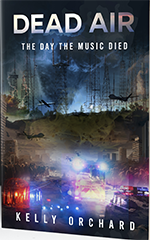 Day the Music Died, that involves pirates hijacking 100 radio stations in five major U.S. cities and follows one company’s story over the course of 24 hours. Orchard was raised in a radio family that owned and operated stations in the 1980s and 1990s. Her family later launched a consulting business that conducted mock FCC inspections and she says the idea for her novel was born from those experiences.
  X – which most people I hear still call “Twitter” – is a great way to attract new ears.