


Gomez Calls Out FCC’s “Intimidation Tactics”
FCC Commissioner Anna M. Gomez responds to FCC Chairman Brendan Carr’s recent statements tying broadcasters’ public service obligations to reporting about the Iran conflict and warning them about airing “hoaxes and news distortions.” She writes: “Once again, this FCC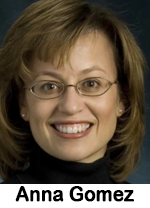 pretends it has the power to control news coverage. In reality, the FCC has vanishingly little power over national news networks. It licenses local broadcast stations, not networks, and no licenses are up for renewal until 2028. Early renewal attempts are exceedingly rare, and the process is so demanding that any effort would almost certainly fail, especially given the well-documented First Amendment violations underlying these moves. These threats are grounded in neither reality nor law and would not survive judicial scrutiny, just as other recent attempts by this Administration to push beyond constitutional limits have repeatedly failed in court.
“The concern over the chilling effect of these actions, however, is very real. Over the past year, this FCC has attacked the media as part of a years-long campaign by this Administration and its allies to discredit factual, independent coverage while blaming the press for growing public distrust. Meanwhile, it is the FCC’s own credibility and public trust that are rapidly eroding.
“Out of the many politically motivated FCC investigations targeting perceived government critics, not a single one has resulted in an enforcement action. This follows a well-established pattern of threatened investigations, broadcast license revocations, and regulatory harassment aimed at pressuring broadcasters and their corporate parents to comply or capitulate in advance. We cannot give this FCC more power than it has. Broadcasters, journalists, and the public should recognize these empty threats for what they are and fight to defend the First Amendment against any attempt to control or intimidate the press.”
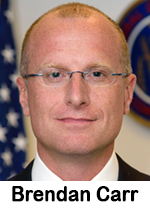 license renewals come up. The law is clear. Broadcasters must operate in the public interest, and they will lose their licenses if they do not. And frankly, changing course is in their own business interests since trust in legacy media has now fallen to an all time low of just 9% and are ratings disasters. The American people have subsidized broadcasters to the tune of billions of dollars by providing free access to the nation’s airwaves. It is very important to bring trust back into media, which has earned itself the label of fake news. When a political candidate is able to win a landslide election victory after in the face of hoaxes and distortions, there is something very wrong. It means the public has lost faith and confidence in the media. And we can’t allow that to happen. Time for change!” Carr included a Truth Social post from President Donald Trump in which he complains about papers such as The New York Times and The Wall Street Journal reporting on a strike against the U.S. base in Saudi Arabia that hit five refueling tanker planes. Trump said the reporting was intentionally wrong.
  patriotic, pro-America content that celebrates the American journey and inspires its citizens by highlighting the historic accomplishments of this great nation from our founding through the Trump Administration today.” Carr adds, “On July 4, 2026, America will celebrate the 250th Anniversary of the signing of the Declaration of Independence. That revolutionary document set forth our founding principles – including Life, Liberty, and the pursuit of Happiness – and put America on a collision course with destiny. Over the following centuries, the American story has defined modern history and spread freedom, opportunity, and prosperity across the globe. As America’s 250th anniversary approaches, it is important to reflect on the ideals and events that have defined our past while keeping an eye towards our country’s bright future. The White House is leading our national celebration of this historic event with the Salute to America 250 Task Force, which calls on the federal government, among others, to mark this momentous occasion. As part of this effort, I am calling on broadcasters to pledge to provide programming that promotes civic education, national pride, and our shared history.” Carr shares some examples stations could use, including:
 to television and radio programming. After the back-and-forth between The Late Show’s Stephen Colbert and CBS attorneys over the interview with U.S. Senate candidate U.S. Rep. James Talarico that did not air on CBS television but was pushed out on the show’s social media accounts instead, broadcasters – including news/talk radio programmers and hosts – may be confused about how the equal time rule is being applied.
 FCC has no lawful authority to pressure broadcasters for political purposes or to create a climate that chills free expression. CBS is fully protected under the First Amendment to determine what interviews it airs, which makes its decision to yield to political pressure all the more disappointing. It is no secret that Paramount, CBS’s parent company, has regulatory matters before the government, but corporate interests cannot justify retreating from airing newsworthy content. The FCC is powerless to impose restrictions on protected speech, and any attempt to intimidate broadcasters into self-censorship undermines both press freedom and public trust. I once again urge broadcasters and their parent companies to stand firm against these unlawful pressures and continue exercising their constitutional right to speak freely and without government interference.”
 Republican or Democrat. Often, Democratic candidates balk at being interviewed by conservative hosts for fear they will not get a “friendly” interview as their Republican opponent might have. Regardless, the law is about equal time, and the matter late night shows are dealing with is assuming they qualify for the “bona fide news” exemption that excuses them from the equal time rule. Chairman Carr’s position is there is no blanket exemption; it is taken on a case-by-case basis.
 recommended proposals for the International Telecommunication Union’s World Radiocommunication Conference, which will be held in 2027. The World Radiocommunication Conference is a treaty-level forum held by the International Telecommunication Union (a United Nations agency) every three to four years in which countries decide on the allocation of frequency spectrum to allow the deployment or growth of all types of radiocommunication services such as wireless, broadcasting, satellite, and aeronautical services.
 interview due to potential implications under the Federal Communications Commission’s “equal time” rule. The rule requires broadcast licensees to provide equal opportunities to legally qualified candidates for public office if one candidate is given airtime.
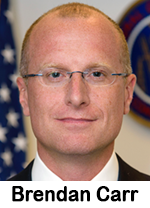 that wasn’t part of anything in that decision. It was focused on the potential misreading of precedents on the broadcast TV side. Of course, as you know, the rule applies to broadcast, radio and TV, but that one was focused on those TV precedents.” The memo to broadcast TV was relative to the 1996 bona fide news interview exemption that came about in the wake of an interview Jay Leno did with then-California Governor Arnold Schwarzenegger on “The Tonight Show.” The FCC Media Bureau ruled that “The Tonight Show” did not have to give Schwarzenegger’s opponent equal time because that interview segment qualified as a bona fide news interview. This matter doesn’t seem to be a big one for news/talk radio since news/talk stations are viewed as news outlets, on top of the fact that most talk radio hosts would love the opportunity to interview candidates with whom they might not personally agree.
 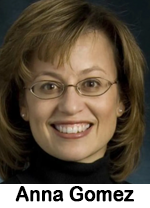 fundamentally changed with respect to our political broadcasting rules. The FCC has not adopted any new regulation, interpretation, or Commission-level policy altering the long-standing news exemption or equal time framework. For decades, the Commission has recognized that bona fide news interviews, late-night programs, and daytime news shows are entitled to editorial discretion based on newsworthiness, not political favoritism. That principle has not been repealed, revised, or voted on by the Commission. This announcement therefore does not change the law, but it does represent an escalation in this FCC’s ongoing campaign to censor and control speech.
 serve in the public interest, the FCC yesterday issued a Guidance on Political Equal Opportunities Requirement for Broadcast Television Stations. While the memorandum is written to television stations, it obvious applies to radio stations as well. The memo ultimately addresses the 1959 order that exempts broadcasters from providing equal time to qualified candidates on any: (1) bona fide newscast; (2) bona fide news interview; (3) bona fidenews documentary (if the appearance of the candidate is incidental to the presentation of the subject or subjects covered by the news documentary); or (4) on-the-spot coverage of bona fide news events (including but not limited to political conventions and activities incidental thereto). Programs such as “The Tonight Show” and “The View” are cited as entertainment shows in which an interview segment can qualify as a bona fide news interview. Regarding this, the memo concludes with two important paragraphs:
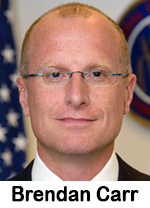
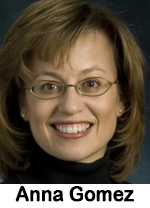 the way the commission is operating. She took issue with FCC Chair Brendan Carr’s interpretation of how the Commission should ensure that licensees operate in the public interest. She stated, “For months, this FCC has asserted an apparent roving mandate to police speech that this Administration does not like, invoking an undefined and unchecked concept known as the ‘public interest’ standard.
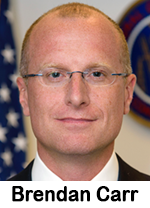 made clear, broadcasters are different than every other distributor of media. Specifically, broadcasters are required by both the Communications Act and the terms of their FCC-issued licenses to operate in the public interest. This sets them apart from cable channels, podcasts, streaming services, social media, and countless other types of distributors that have no public interest obligation. The FCC’s broadcast hoax rule, its news distortion policy, its political equal opportunity regulation, its prohibition on obscene, indecent, and profane content, its localism requirements — all of those and more apply uniquely to broadcasters. Congress has instructed the FCC to enforce public interest requirements on broadcasters. The FCC should do exactly that.” Carr added, “To ensure that broadcasters can meet their public interest obligations, the FCC has taken a number of actions, including seeking public comment for the first time in more than 15 years on the relationship between the large, national programmers on the one hand and the many local broadcast television stations on the other. Comments in that proceeding suggest that many local broadcasters are concerned that the national programmers have amassed enormous power and influence in recent years and have made it more challenging for local broadcasters to fulfill their public interest obligations. The FCC is going to continue its efforts to empower local broadcasters to meet their public interest obligations.”
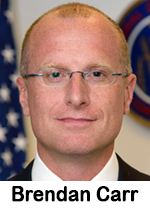 working to empower local broadcasters to serve the public interest and meet the needs of their communities. As Congress, the Supreme Court, and the FCC have all made clear, broadcasters are different than every other distributor of media. Specifically, broadcasters are required by both the Communications Act and the terms of their FCC-issued licenses to operate in the public interest. This sets them apart from cable channels, podcasts, streaming services, social media, and countless other types of distributors that have no public interest obligation. The FCC’s broadcast hoax rule, its news distortion policy, its political equal opportunity regulation, its prohibition on obscene, indecent, and profane content, its localism requirements – all of those and more apply uniquely to broadcasters. Congress has instructed the FCC to enforce public interest requirements on broadcasters. The FCC should do exactly that.
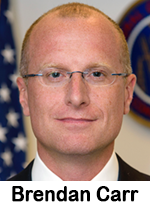 independent one because commissioners can be removed by the president. Numerous news organizations pointed out that the mission statement on the FCC’s website described it as an independent agency – until yesterday afternoon when the website was apparently updated to reflect Carr’s testimony. Numerous news outlets also pointed to Carr himself describing the agency as independent as recently as April of 2021. When questioned about the FCC regulating content, Carr said that he believes political satire is protected speech but he added that broadcast television and radio stations are held to a “public interest” standard that the FCC is required by law to enforce.
 Carr. Facing regulatory scrutiny, the San Francisco Bay Area station demoted well-regarded journalists and sharply curtailed its political coverage for months. As pressure has eased, KCBS has gradually resumed more ambitious reporting, reflecting tensions between regulatory oversight and editorial independence.” Carr accused the station of failing to operate in the public interest and threatened an investigation. This was enough for Audacy management to back off its reporting. Tau writes, “KCBS demoted a well-liked anchor and dialed back on political programming, people said. For months, reporters were dissuaded from pursuing political or controversial topics and instead encouraged to focus on human interest stories, according to the current and former staffers.” The piece notes that anchor Bret Burkhart, the one to first present the ICE actions on the radio, was demoted. He eventually left the station for another position.
 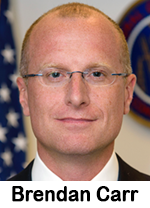 Trump’s historic Executive Order on artificial intelligence promotes America’s leadership in AI and advances our nation’s economic and national security interests. It does so by targeting excessive state regulations that would not only hold America back but insert ideological bias into AI models. President Trump’s decisive action also ensures a policy framework that protects children, prevents online censorship, respects copyrights, and safeguards communities. The FCC welcomes President’s Trump’s direction that the agency initiate a proceeding to determine whether to adopt a Federal reporting and disclosure standard for AI models that preempts conflicting State laws.”
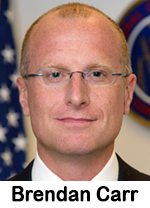 but sources tell Reuters that it would likely be sometime after November. Senate Commerce Committee Chair Ted Cruz criticized Carr for comments he made on the Benny Johnson podcast about late night talk host Jimmy Kimmel’s joke that appeared to threaten ABC/Disney and promise FCC action against the company if it didn’t take action on its own. On his Premiere Networks distributed podcast, “The Verdict with Ted Cruz,” Cruz said of Carr’s comments, “I got to say that’s right out of ‘Goodfellas.’ That’s right out of a Mafioso coming into a bar going, ‘Nice bar you have here. It would be a shame if something happened to it.’” Carr recently said that’s not what he meant and stated, “We don’t want to see weaponization of government by any administration against any perspective – and that’s certainly not what we’re doing here.”
 and radio industry CEOs are pleased with the probability that they will be loosened. Cumulus Media president and CEO Mary G. Berner states, “We’re encouraged that Chairman Carr and the FCC are advancing the 2022 Quadrennial Review. Quickly modernizing the radio ownership rules is essential for listeners who rely on local radio every day. With updated
  rules, companies like ours can invest more locally, diversify our offerings, and compete effectively in today’s rapidly evolving audio landscape. We look forward to working with the Commission to make these updates.” Beasley Media Group CEO Caroline Beasley comments, “We would like to thank Chairman Carr for moving forward with the quadrennial review on this critical endeavor. This is a defining moment for our industry to ensure that local radio can continue to fulfill its essential public service mission for decades to come. We look forward to working with the Commission to implement common-sense reforms that will allow broadcasters to compete fairly and keep serving the local audiences who rely on us every day.”
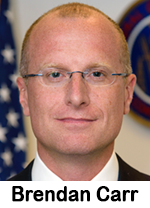 Democrats in Congress have lashed out at FCC Chairman Brendan Carr for his statements about ABC/Disney and Jimmy Kimmel’s Charlie Kirk bit that got Kimmel suspended from “Jimmy Kimmel Live!” Last week, Carr appeared on the Benny Johnson podcast and called Kimmel’s statements “some of the sickest conduct possible” and added, “This is a very, very serious issue right now for Disney… We can do this the easy way or the hard way.” ABC/Disney has television affiliates owned by both Nexstar and Sinclair, which objected to Kimmel’s comments and threatened to pull Kimmel’s show from the air. Nexstar has a $6.2 billion
 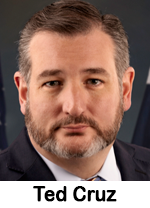 merger with Tegna in the works and needs FCC approval and critics of Carr’s comments are calling him out for appearing to threaten ABC. Republican Senator Ted Cruz, on his Premiere Networks podcast ‘The Verdict,’ disagreed with Carr saying, “Let me tell you if the government gets in the business of saying, ‘We don’t like what you the media says. We’re going to ban you from the airwaves if you don’t say what we like.’ That will end up bad for conservatives.” President Trump – who’s publicly mused about investigating his media critics – weighed in after being asked about Cruz’s response by saying, “I think Brendan Carr’s a courageous person. I think Brendan Carr doesn’t like to see the airwaves be used illegal and incorrectly and purposefully horribly.”
 South Florida viewers are confused. WPLG, which brands as “Local 10,” was an ABC-TV affiliate for 69 years… until yesterday. Now it’s more local than ever, after divorcing its network, whose programming moved to the FOX affiliate’s digital channels 18.1 and 7.2, now branded “ABC Miami.” Among courteous FAQs about this change on WPLG’s web site: “How do I rescan my TV?” to find ABC programming.
 and actions prior to the Paramount-Skydance merger. Paramount’s CBS agreed to a settlement with President Donald Trump over a Kamala Harris interview on “60 Minutes.” The complaint says, “Everyone from U.S. senators to CBS employees to a dissenting FCC commissioner has said the settlement appears to have been a bribe to grease the wheels for Carr’s FCC to approve the merger. Even putting Paramount aside, Carr has pursued numerous other frivolous and unconstitutional legal proceedings and threatened more of them in furtherance in his efforts to intimidate broadcast licensees to censor themselves and fall in line with Trump’s agenda.” It goes on to say, “Carr’s actions brazenly violate legal and ethical standards that govern the practice of law and public officials, undermining the First Amendment, the FCC’s credibility, and the laws he is trusted to administer. His abuse of his office to force an unwarranted settlement of a private lawsuit is shameful and warrants disbarment.”
 station ownership. NAB president and CEO Curtis LeGeyt issued a statement expressing his pleasure with that move but said he’s disappointed the Court didn’t do the same for radio. LeGeyt says, “At the same time, we are disappointed that the court stopped short of addressing the decades-old radio ownership restrictions that defy economic reality and weaken broadcasters’ ability to compete, invest in local journalism and serve their communities. Fortunately, FCC Chairman Brendan Carr has long been a champion for empowering local stations, and we look forward to working with this FCC to modernize its local radio ownership rules and ensure local broadcasters can thrive in the communities they serve across the nation.”
 receive on our mobile phones. With underlying frameworks that are 31 and 13 years old respectively, we think it’s time to explore if structural changes to these systems are needed, with an eye towards making sure we are leveraging the latest technology to save lives. Similarly, we will also vote to initiate a review of our system for collecting real-time data on network outages and restoration during and after major disasters. Since its inception in 2007, our Disaster Information Reporting System (DIRS) has proven to be a valuable tool for collecting actionable information to help with recovery efforts. While the DIRS reports are valuable, they can be time-consuming to produce, drawing resources away from responding to an ongoing disaster. The Commission will vote on reforms to streamline DIRS to make sure that its benefits outweigh its burdens. We’ll close our August meeting by removing unnecessary regulations and injecting common sense across the Commission’s policies—critical features to streamline the implementation of our Build America Agenda.”
  Internet adopted under the Biden Administration and network interconnection. FCC chairman Brendan Carr says, “We’re continuing to clean house at the FCC, working to identify and eliminate rules that no longer serve a purpose, have been on our books for decades, and have no place in the current Code of Federal Regulations. Today’s action is just the latest step the FCC is taking to follow the Trump Administration’s effort to usher in prosperity through deregulation. And it’s just one of many, with more on the horizon, so stay tuned.”
 strengthen America’s tower and telecom workforce. We will deliver on all of this by implementing smart policies while carrying out a massive and comprehensive deregulatory agenda. As we do so, we will be guided at the agency by a few simple ideas. For one, we will keep the Gretzky test front and center. We want to keep our eye on where the proverbial puck is going, not where it has been. For another, we are going to take a first principles approach. Just because a regulation has been on the books for 30 years, we are not going to keep it there simply out of a sense of inertia. For still another, we will focus on competition as it exists today. The old regulatory silos have been breaking down for quite some time, so the agency must move forward with a keen understanding of today’s converged markets. We are going to focus on outcomes, rather than process to nowhere. We are going to have a bias towards action. After all, delay has an unappreciated economic and social cost. We are going to push for simple, clear rules, rather than complex and bespoke frameworks. And we are going to support U.S. businesses and domestic onshoring.”
  Olivia will be a great addition to the Commission. Olivia brings years of valuable experience to the agency, including her public service on Capitol Hill and time in the private sector. I am confident that her deep expertise and knowledge will enable her to hit the ground running, and she will be an exceptionally effective FCC Commissioner. I look forward to welcoming Olivia to the Commission as a colleague and advancing an agenda that will deliver great results for the American people.” Fellow Commissioner, Democrat Anna Gomez also welcomes Trusty, saying, “I want to congratulate Olivia Trusty on her confirmation and welcome her to the FCC. I have known Olivia for years and have been very impressed with her strong background in communications policy and deep understanding of the technical aspects of this job, which will be a great asset to this agency. I look forward to working with her to return the FCC to its core priorities of protecting consumers, promoting innovation and competition, and securing our communication networks.”
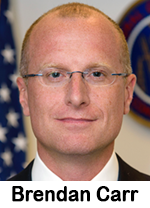 regulatory burdens. We received great feedback from a range of stakeholders already and plan on eliminating onerous, antiquated, and unlawful requirements across the board.” Carr added, “And we have been delivering these results with a focus on efficiency. At the beginning of Fiscal Year 2025, the FCC employed 1,461 full-time employees. As of April 28, 2025, the FCC employed 1,383 full-time employees. The difference over the last six months can be attributed to many factors, including FCC employees who took advantage of the early retirement window opened by my predecessor, the deferred resignation program offered by President Trump, and natural turnover. The agency is well positioned to continue carrying out its statutory mission for the remainder of Fiscal Year 2025 and beyond.”
 1940s, when broadcast dominated mass communications in the U.S. Since then, the media marketplace has changed drastically – from widespread deployment of cable and satellite television networks to the rise of social media, podcasts, and streaming. Local broadcasters compete directly with Big Tech, streaming services, and social media platforms in the marketplace of consumer content. Yet, unlike their competitors such as YouTube and Facebook, broadcasters are limited by the ownership rules in how many households and consumers they can reach. This is an inherent disadvantage.” The letter adds, “By eliminating the national television cap, local TV duopoly restrictions, and local radio ownership caps, broadcasters can better achieve the scale and efficiencies necessary to compete – and to attract vital investment – in a fragmented and rapidly evolving information market.”
 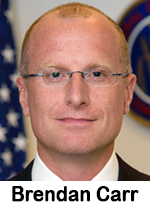 great results for the country and doing so in an efficient manner. That starts with being good stewards of taxpayer dollars. From day one, we have been combing through every FCC contract to eliminate redundancies and wasteful spending. No stone is being left unturned. To date, we have reduced more than $567 million in authorized contract spending, including by ending bloated or unnecessary IT contracts. This is an important step towards ensuring long-term efficiency and maintaining our focus on the FCC’s core responsibilities.”
 Carr of “illegally targeting broadcast networks and media companies perceived to be unfavorably covering the Trump Administration – wasting critical agency resources on bogus investigations in the process.” The lawmakers are also questioning Carr’s “commitment to his agency’s independence, given his frequent trips with the president to Mar-a-Lago and his targeting of entities that the president has criticized or sued in his personal capacity.” Committee Ranking Members says that “under Carr’s leadership, the FCC has harassed CBS for routine editing practices, reinstated lawfully denied complaints against ABC and NBC, launched a bogus investigation into KCBS-AM in San Jose simply for reporting publicly available information, and directed the FCC’s Enforcement Bureau to launch investigations into NPR and PBS based on false allegations.” The Committee is requesting documents and communications “related to its investigations of media entities,” “all communications between Carr and current White House officials and between Carr and other Trump Administration officials that relate to investigations,” as well as Carr’s travel records.
  fundamental ownership restrictions have remained largely unchanged since the 1990s, imposing undue constraints on broadcasters’ ability to innovate and invest in local content. These regulations are a relic of an era when broadcasters were the only electronic media. Today, any one of the largest Big Tech platforms dwarfs the entire broadcast industry – yet they are held to no similar limitations on their reach. This imbalance places broadcasters at a severe disadvantage in competing for advertising dollars and audience engagement… We urge the FCC to act swiftly in eliminating antiquated ownership restrictions and to embrace a broadcast regulatory framework that reflects the realities of today’s dynamic media ecosystem.”