


Who Gets to Decide If and Why a Guest is Newsworthy?
By Matthew B. Harrison
TALKERS, VP/Associate Publisher
Harrison Legal Group, Senior Partner
Goodphone Communications, Executive Producer
 A political candidate sits down for a broadcast interview. The host asks questions. The conversation reaches into policy, personality, controversy, and campaign issues… just another day in the world of talk radio.
To the FCC, depending on the program and the circumstances, it may raise a different question: did the station give one legally qualified candidate a broadcast “use” of its facilities that now triggers equal opportunities for opponents? That question sits at the center of ABC’s dispute with the FCC over “The View,” and it deserves the attention of every broadcaster who books public officials, candidates, advocates, and political personalities.
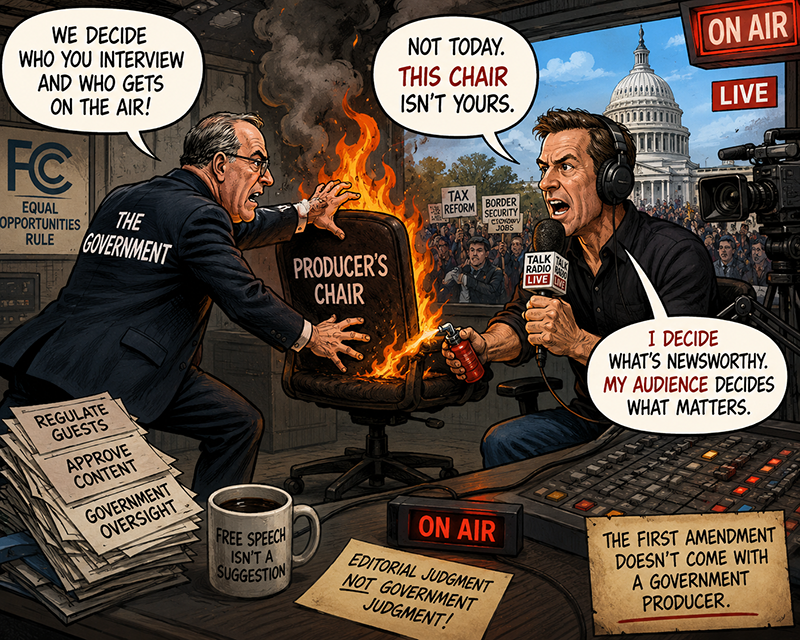
This is not an article about whether anyone likes “The View.” That is the wrong question. The better question is whether the government should decide, after the fact, that a long-running interview program no longer qualifies as a bona fide news interview program because regulators dislike, distrust, or second-guess its guest selection.
The Equal Opportunities Rule, often called “equal time,” is not the Fairness Doctrine. The Fairness Doctrine is gone. However, equal opportunity requirements remain part of broadcast law. In general terms, when a broadcast station permits a legally qualified candidate to “use” its facilities, opposing legally qualified candidates for the same office may be entitled to comparable opportunity, unless an exemption applies.
One such exemption covers bona fide news interviews.
That exemption matters because it allows broadcasters to cover politics without turning every meaningful candidate interview into a scheduling trap. The law recognizes that a news judgment is different from a campaign favor. A host may interview a candidate because that candidate is newsworthy, controversial, powerful, interesting, or central to a public issue, not because the station has endorsed the campaign.
ABC’s argument is that “The View“ already cleared that hurdle more than two decades ago, when the FCC treated it as a bona fide news interview program. ABC now says the Commission has forced the issue back onto the table and is effectively asking whether the government should dictate which candidates the program may feature. That is why ABC’s filing points beyond daytime television and directly toward talk radio.
Talk radio should not dismiss that warning. The format routinely features candidates and officeholders without immediately inviting every opponent. Sometimes the reason is obvious: one guest is in the news and the others are not. Sometimes the reason is practical: a candidate accepts and the opponent declines. Sometimes the reason is editorial: the host believes one interview will better serve the audience.
Those are normal programming judgments. But if regulators start looking behind those judgments for partisan motive, the risk changes. The question becomes less “Was this guest newsworthy?” and more “Can you prove to the government that your reason was acceptable?” That is a dangerous shift for any medium built around editorial discretion.
This does not mean broadcasters should panic or stop booking candidates. It does mean stations, networks and programs should tighten their habits. Know when a guest is a legally qualified candidate. Understand when an appearance may count as a use. Keep clean records. Preserve the editorial reason for the booking. Make sure producers and hosts know the difference between a campaign appearance, a news interview, and paid political time.
The larger warning is simple: broadcast talk is regulated speech in a way podcasts, YouTube shows, and most streaming programs are not. That distinction already matters for indecency, sponsorship identification, public files, political files, and license obligations. Now it may matter again in the heart of the format itself: who gets invited to talk.
The government should not sit in the producer’s chair. But broadcasters should not pretend the chair is invisible. The best protection is not silence. It is disciplined editorial judgment, documented in real time, applied consistently, and defended as what it is: the broadcaster’s constitutional role in deciding what is newsworthy for its audience.
Matthew B. Harrison is a media and intellectual property attorney who advises radio hosts, content creators, and creative entrepreneurs. He has written extensively on fair use, AI law, and the future of digital rights. Reach him at Matthew@HarrisonLegalGroup.com or read more at TALKERS.com.
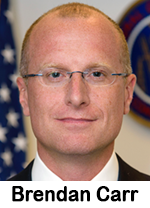 that wasn’t part of anything in that decision. It was focused on the potential misreading of precedents on the broadcast TV side. Of course, as you know, the rule applies to broadcast, radio and TV, but that one was focused on those TV precedents.” The memo to broadcast TV was relative to the 1996 bona fide news interview exemption that came about in the wake of an interview Jay Leno did with then-California Governor Arnold Schwarzenegger on “The Tonight Show.” The FCC Media Bureau ruled that “The Tonight Show” did not have to give Schwarzenegger’s opponent equal time because that interview segment qualified as a bona fide news interview. This matter doesn’t seem to be a big one for news/talk radio since news/talk stations are viewed as news outlets, on top of the fact that most talk radio hosts would love the opportunity to interview candidates with whom they might not personally agree.