LOOKING AHEAD to the Second Half of the Third Decade of the 21st Century
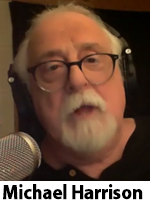
By Michael Harrison
TALKERS
Publisher
 With the conclusion of 2025 at hand, we are entering the second half of the third decade of the 21st century. It will be a remarkably transitional period for the talk radio industry and its closely associated fields in talk media, as well as media-in-general.
Here’s what’s going to happen:
The age old “radio station” paradigm as a brick-and-mortar business/cultural/communications center will disappear. After more than a century, it will be financially and physically impractical to operate the process of “radio” as a federally licensed production company tethered to a broadcast tower that houses programming, sales, and a roster of creative practitioners under one roof on an employee-based payroll. Radio “stations” will be more of an esthetic meme than an actual physical place on a dial coming from a specific business space with desks and “departments.” Programming and sales – local, regional, and national – will be provided by “outside” sources. Most “talent” will operate as either independent contractors or employees (or “partners”) of these outside companies. Local-ness and/or national-ness will not depend upon actual location of sources but rather focus of content. The biggest challenge facing radio station owner/operators will be to transition their “media station” brands from being licensed entities to effectively competing in the “dark jungle” or “high seas” of unlicensed platforms… without going broke.
In the wider world of media:
AI is going to put “Hollywood” out of business. Oh, there will still be a nebulously geographic place in Southern California called “Hollywood” but it will no longer be mythically based on big studios, production companies, and star talent.
And lovers of freedom will come to recognize the communications arm of “Big Tech” as the greatest threat to liberty facing humanity since World War II.
More on the above in 2026.
Happy holidays!
Michael Harrison is the publisher of TALKERS. He can be contacted at michael@talkers.com.
 radio spots across 192 media markets, generating more than 1 billion impressions and $43 million in airtime from TV and radio stations. NAB president and CEO Curtis LeGeyt says, “Local stations are serving communities with live sports, trusted local news and life-saving emergency coverage – all available for free to every American. But outdated rules are shackling these stations from growing and innovating at a time when Big Tech operates with limitless scale and zero public interest obligations. Consumers deserve more – not fewer – local journalists on the ground and live sporting events accessible without a subscription. The FCC must act quickly to level the playing field so broadcasters can continue investing in the content communities rely on most.”
 1940s, when broadcast dominated mass communications in the U.S. Since then, the media marketplace has changed drastically – from widespread deployment of cable and satellite television networks to the rise of social media, podcasts, and streaming. Local broadcasters compete directly with Big Tech, streaming services, and social media platforms in the marketplace of consumer content. Yet, unlike their competitors such as YouTube and Facebook, broadcasters are limited by the ownership rules in how many households and consumers they can reach. This is an inherent disadvantage.” The letter adds, “By eliminating the national television cap, local TV duopoly restrictions, and local radio ownership caps, broadcasters can better achieve the scale and efficiencies necessary to compete – and to attract vital investment – in a fragmented and rapidly evolving information market.”