

TALKERS Books Drops “Speeches They Never Gave,” Richard Chemel’s Collection of 50 Imagined Addresses by Historic Figures to Modern Audiences
Veteran music promoter, new-media pioneer and former TALKERS Pop Culture Editor is available for interviews on AI, authorship and what old voices can tell a modern newsroom
TALKERS Books has published Speeches They Never Gave: Volume One, a collection of 50 imagined speeches compiled and created by Richard Chemel. The paperback went on sale at Amazon on November 7.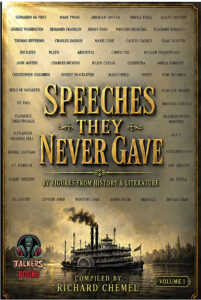
 The premise is simple but fascinating. Chemel takes a figure from history or literature, hands that person a present-day subject, and stands them in front of a specific modern audience. For example, Mark Twain talks to journalists about social media. Abraham Lincoln addresses newsroom editors on political polarization. Socrates takes on the internet and misinformation for a room of high-school students. Dracula explains fear and public relations to media executives, and P.T. Barnum has a few things to tell advertising executives about their own business.
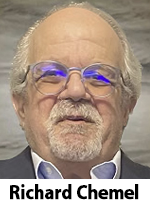
Several of those rooms are full of people who work in this industry, and that is by design. Chemel spent his career in and around broadcasting. In the 1970s, he worked in radio promotion on behalf of musical artists including Heart, ELO, and Bob Seger. He moved into special-interest video marketing with Jane Fonda’s home-fitness series, Shirley MacLaine’s Inner Workout and WrestleMania. He was the first host of the Los Angeles Times online platform, moderated chats for MSN Money on CNBC, and served as pop culture editor of TALKERS magazine. The book began with a question he typed into a search engine: what would Al Capp have to say about the world today? The answer suggested a larger project, and each of the 50 pairings that followed started the same way – as a question Chemel wanted to hear answered.
In his author’s note, Chemel writes that broadcasting taught him that “the right voice, saying the right thing to the right room,” can move people further than almost anything else. He was a 20-year-old student at Kent State in May 1970, and he traces his conviction that listening matters back to that month.
A plain statement about AI
Chemel used AI tools in drafting the speeches and says so in the book, in a section titled, “How This Book Was Made.” He describes prompting, rejecting, rewriting and revising, and he is specific about what the tools did not do: choose the premise, the speakers, the audiences or the argument of any speech. “Tools change,” he writes. “Someone still has to have the idea, make the choices, and put a name on the result.”
That disclosure makes him a timely guest. Questions he can take on the air include:
- When a host, writer or producer uses AI, what does the audience have a right to know?
- Who is the author when a machine helps with the sentences?
- Is it fair to put new words in the mouth of Lincoln or Jefferson, and where is the line between interpretation and fabrication?
- Why does a 19th-century voice sometimes say something about social media that a contemporary one can’t?
The speeches are works of creative interpretation. None was actually delivered by the person or character depicted.
TALKERS publisher Michael Harrison states, “We are very proud to add this timely book to our growing catalogue of talk media-friendly works by authors who make great conversational guests.”
For each paperback sold on Amazon, a donation goes to the Fisher Center for Alzheimer’s Research Foundation. This is an independent promotion; Amazon is not a sponsor.
Availability: Speeches They Never Gave: Volume One is available now at Amazon. More information is at hellospeeches.com.
To book Richard Chemel for an interview, or for signed and bulk orders:hellospeeches@gmail.com
 Corporate cost cuts continue. In