By Holland Cooke
Consultant
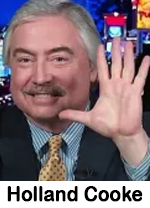 Last week’s column previewed “CeaseFire,” C-SPAN’s antidote to the caricature cable news shouting match. Thanks to all who offered feedback when we wondered “WHAT IF…?” for talk radio.
Recent report from Reuters Institute for the Study of Journalism: People are disabling news alerts, “either because they feel they get too many or because they are not useful.”
People are anxious. Even a robot can read-the-room, as I learned by asking ChatGPT: “In USA society generally, list unmet needs.” Among them:
Belonging Without Division
— People crave community but are tired of being forced to choose sides.
— Unmet need: A way to feel connected and purposeful without being tribalized by politics, race, class, or ideology.
Trusted, Nuanced Information
— There’s information overload, but trust is at an all-time low.
— Unmet need: Sources that feel both credible and fair-minded, without sensationalism, bias, or agenda-chasing.
Civility in Public Discourse
— Public conversation often feels like a battleground.
— Unmet need: Spaces — digital or real-world — where disagreement is safe, not destructive or humiliating.

Mental & Emotional Support
— Rising anxiety, loneliness, and burnout affect people across all ages.
— Unmet need: Accessible, non-stigmatized mental health support, including community-based emotional infrastructure (not just therapy apps).
Work That Feels Worthwhile
— Many jobs pay the bills but feel meaningless.
— Unmet need: Opportunities to do work that’s valued, not just productive — where dignity and contribution matter as much as output.
Financial Security That Isn’t Fragile
— Even middle-class households feel one emergency away from disaster.
— Unmet need: Stability and predictability — not just income, but housing, healthcare, and retirement that won’t evaporate with one bad break.
Intergenerational Connection
— Older and younger generations increasingly live in separate realities.
— Unmet need: Meaningful contact across age lines, where wisdom flows both directions — not just tech tutoring and nursing homes.
Shared Purpose
— Many feel like they’re drifting — or living someone else’s script.
— Unmet need: A sense of contribution to something bigger than self, not through ideology but through everyday roles, responsibilities, and relationships.
Consider as you pose call-in topics and choose interview guests.
Holland Cooke (HollandCooke.com) is a media consultant working at the intersection of broadcasting and the Internet. Follow HC on Twitter @HollandCooke
Share this with your network

 The Museum of Broadcast Communications announces the selection of eight new Legends inductees into the Radio Hall of Fame for 2025, recognizing radio broadcasters who have passed away. This year’s inductees include longtime WLS-AM, Chicago morning drive cohost Don Wade and nationally syndicated host Dale Sommers “The Truckin’ Bozo.” Radio Hall of Fame co-chair Kraig Kitchin comments, “Each of these individuals contributed to the growth and vibrance of our radio industry and are worthy of induction. I’m thrilled to see recognition for their talents and efforts and heartened that their family, friends and colleagues can witness this well-deserved honor.” See the full slate of inductees here.

 The Cumulus Media | Westwood One Audio Active Group unveils an audio planning guide based on data from Edison Research and Nielsen data. Saying that there are incorrect assumptions among strategists and media planners about which audio media have the most listeners, chief insights officer Pierre Bouvard underscores that AM/FM radio is still the dominant ad-supported audio platform with a 66% share. Podcasting is second with a 20% share and this is true across all demographics. For those who are all-in on digital audio only, Bouvard says they are missing 70% of the potential audience as ad-supported Spotify, Pandora and podcasts reach only 30% of the U.S. in a typical day. Further, Bouvard says the data suggests an optimal allocation of audio ad spend: “The ideal allocation for a 25-54 audio plan is 62% AM/FM radio, 24% podcasts, 12% music streaming (Pandora, Spotify, Amazon Music, and YouTube Music), and 2% SiriusXM satellite radio.”
 My kitchen faucet wouldn’t shut off. It died, of old age. Things start doing that when your “new” house turns 25.
 After 40 years on the air in the Rochester market, legendary radio personality Brother Wease is exiting iHeartMedia’s talk WAIO-FM where he’s been hosting the late morning show for the past two years (he’d been hosting the morning drive show there since November of 2008). According to the Democrat & Chronicle, Brother Wease told his audience that the company is flipping the talk station to rock and he, along with air personality Deanna King, are being let go. Brother Wease launched his on-air career on rock WCMF in 1984 in overnights and moved to morning drive in 1985. The show took off and became a highly successful one in the market for years. He left WCMF in late 2007 after contract talks with then-Entercom broke down and resurfaced on WAIO.
  According to a report in Barron’s, Premiere Networks talk host Buck Sexton filing a federal lawsuit against RAD Diversified REIT, alleging they defrauded him of more than $100,000. In the complaint, Sexton alleges that RAD founders Dutch Mendenhall and Amy Vaughn solicited cash from him for investment coaching for property deals, neither of which ever happened. The story notes that this suit comes just weeks after Florida’s attorney general announced a probe into RAD saying the firm “appears to be a Ponzi scheme.” Sexton’s attorney writes in the complaint, “Despite being an experienced real estate investor, Mr. Sexton was taken in by the documents and investment returns touted by Mendenhall and his representatives. The defendants’ grand promises of sweeping returns never materialized.”
  Nashville “102.5 The Game” after being unable to strike a deal to renew his show. The new program will air live weekdays at 2:00 pm and goes online as a podcast by 3:30 pm that day. He tells the paper, “I was fortunate enough to have what I feel is an incredibly loyal core audience and I plan to provide for them a daily show every day that isn’t behind a paywall and 440 Sports gives me that opportunity. With very limited commercial interruption, the podcast should be able to get most people in Nashville through their afternoon commute.”
  He previously hosted his show on crosstown WJBE-AM. In making room for Basilio on WKGN, Bob Baskerville moved to afternoon drive to team up with Russell Smith in afternoons. Basilio says, “Bob has been really accommodating and gracious. They’ve got talented people on that station. I’m proud to be a part of it.” Read
  Why I love going on sales calls with station reps: Meeting retailers, who have SUCH a feel for their customers’ (our listeners’) mindset. Following-up
 role is vital to bringing our brand to life through on-air, digital, and community engagement initiatives. The ideal candidate will thrive in a fast-paced environment, enjoy working with people, and bring creative energy to our promotions and marketing efforts.
  event will benefit The WABC Radio Foundation, The Tunnel To Towers Foundation, The Police Athletic League (PAL), and Shriners Children’s. The evening will feature performances of patriotic songs including WABC Saturday evening personality and singer Tony Orlando performing “Tie A Yellow Ribbon Round the Ole Oak Tree”; Lee Greenwood performing “God Bless the USA” and America’s tenor Christopher Maccio will sing the National Anthem. Additionally, WABC personality Joe Piscopo will perform Frank Sinatra classics and station host Vinnie Medugno will sing oldies. The gala event will be hosted by 77WABC legendary air personality Bruce “Cousin Brucie” Morrow. Distinguished guests will include United States and New York area politicians, business leaders, and community heroes.
  Score” in March as the result of a social media rant against a critic was his fault. He says, “I own my mistakes. This was the culmination of a slow, rolling mental health crisis.” Bernstein recently began working with Hubbard’s 312 Sports platform on the daily podcast “Dan Bernstein: Unfiltered” with co-host Matt Abbatacola. He says, “I learned a lot in therapy, and I’m continuing to learn a lot about the dopamine outrage cycle and how real that is and how my brain chemistry works.” He adds, “I think I’ll be better served by the pace and tone of podcasting.”
  “justice for the injured… Bradshaw & Bryant.” Key takeaways from the blog include: 1) Through its longterm use of AM/FM radio advertising, Bradshaw & Bryant dominates unaided brand awareness; Across all stages of the consumer journey, Bradshaw & Bryant leads the market; 2) Bradshaw & Bryant offers Madison Avenue a master class on creating future demand and how building a brand is the main driver of longterm growth and profit; 3) Every advertiser has two jobs: Creating future demand and converting existing demand; Bradshaw & Bryant excels at creating future demand; and 4) AM/FM radio advertising works: Among AM/FM radio listeners, Bradshaw & Bryant’s awareness is +19% greater than in the overall market.
  U.S. Other takeaways include: Listeners aged 18-34 spend 32% of their daily ad-supported audio time with podcasts; and podcasts consistently drive top funnel advertising impact. Nielsen says its Podcast Brand Impact Database draws on nearly 2,000 case studies and shows that podcast ads continue to drive strong brand awareness, motivate listeners to learn more, and purchase products.
  would go their separate ways when his current contract ends later this year. The Yahoo story says, “A source affirmed that everything is a done deal in this regard, and all previous reports of him exiting the company were pure fallacy, per RadarOnline. The man of the hour himself also dropped a big hint on his social media, teasing an answer to all the questions hovering around his career very soon.” Stern’s own Instagram account posted the following: “Now we can reveal that all the questions will be answered. All the truths will be told by the one man truly on the inside: Howard Stern will speak. Tuesday, September 2.”
  As TV touts its perennial New Fall Season, our DVR is already set to “record series” so we can pick-up where the “Matlock” sequel left-us-hanging; and for a third season of quirky “Elsbeth” (a closet reboot, the female “Columbo”). And where I live – where everyone seems to know everyone – we are salivating for “The Real Housewives of Rhode Island.”
 Murrow Awards for Television, Radio and Digital news operations at the network, large market and small market levels. Radio Network winners include ABC News, NPR and Canada’s CBC. Radio station winners include: KMOX, St. Louis; WSB, Atlanta; WTOP, Washington; and WWNC, Asheville. The presentation of the awards will take place on October 13 at Gotham Hall in New York City.

 Baby Boomers (born 1946–1964) are some 20% of the U.S. population, but control more than 50% of all household wealth. They hold $70+ trillion in assets and spend an estimated $548 billion annually. They are lifelong AM/FM listeners, and they’re redefining what life after 60 looks like. Are you into what they’re up to?