By Matthew B. Harrison
TALKERS, VP/Associate Publisher
Harrison Media Law, Senior Partner
Goodphone Communications, Executive Producer
This is the third installment of a multi-part TALKERS Legal Series on Fair Use for the Media Creator. The first installment is here. The second installment is here.
The “Nature of the Copyrighted Work” is a key factor in fair use analysis, with courts more likely to allow the use of factual works, such as news reports, than highly creative works like music or films. The landmark case Feist Publications, Inc. v. Rural Telephone Service Co. established that mere facts, like telephone numbers, cannot be copyrighted unless presented with originality. In media, factual content like news clips may support a fair use defense, while creative works like syndicated talk shows are more protected. Broadcasters should add commentary or criticism when using factual material and be cautious when reusing creative content. Understanding this factual-creative spectrum is critical for media creators navigating copyright law.
In the context of fair use, courts are more likely to allow the use of factual works, such as news reports, historical accounts, or other informational content, than highly creative works like songs, movies, or artwork. The theory behind this is that factual works generally serve a public interest – society benefits from the free exchange of information and ideas, and we want “the system” to encourage this. On the other hand, creative works involve more personal expression, and copyright law is designed to protect that artistic effort (and allow for monetization thereof.) This distinction plays a crucial role in determining fair use, as courts are more protective of creative works because they represent a higher degree of originality and personal investment.
Classic Case: Feist Publications, Inc. v. Rural Telephone Service Co. (1991)
A landmark case that helps illustrate this factor is Feist Publications, Inc. v. Rural Telephone Service Co., which asked whether copyright protection could be applied to a seemingly factual work: a telephone directory. In this case, Rural Telephone Service Co., a public utility, created a telephone directory of its customers’ names, addresses, and phone numbers. Feist Publications, a company that produced a larger, regional telephone directory, copied some of these listings and was sued by Rural for copyright infringement.
Rural argued that its directory was protected by copyright, but Feist countered that the information in the directory (names, addresses, and phone numbers) was purely factual and, therefore, not eligible for copyright protection.
The Supreme Court ruled in favor of Feist, stating that facts are not protected by copyright because they are not original to the author. The Court held that Rural’s directory did not qualify for copyright protection because it lacked creativity and originality – it was simply a compilation of facts (names and numbers). The case established the principle that mere facts are ineligible for copyright protection, even if they are compiled in an organized way.
This case is significant because it underscores that factual information, like a telephone directory, cannot be copyrighted unless there is a creative element involved in its presentation, such as an original selection or arrangement of the facts.
Application to Radio and Media:
When it comes to radio, news, or media content, the nature of the copyrighted work often comes into play, especially in cases where factual content (such as news clips or interviews) is being reused. Courts may treat factual works more leniently in fair use cases, allowing them to be repurposed for commentary, criticism, or reporting, as they serve a public interest. However, creative works, like talk shows, are given more protection because they represent original artistic expression. The more creative the work, the less likely its unauthorized use will be considered fair use.
An Example – Associated Press v. Meltwater U.S. Holdings (2013)
While not specific to radio, this case highlights the issue of using factual content in media. Associated Press (AP) sued Meltwater, a news aggregation service, for copying parts of AP’s news articles and distributing them without permission.
The court found in favor of the Associated Press, stating that even though AP’s articles contained factual information, they were written with creativity and journalistic skill – thus, they were still copyrightable. The nature of the work was not purely factual, as it involved a degree of originality in the writing and presentation. This case illustrates that while factual works may be more likely to fall under fair use, their specific presentation or creative treatment can still be protected.
Radio Case Example: Syndicated Content and Commentary
A case that touches on the nature of copyrighted works in radio can be seen in disputes over syndicated talk shows or political commentary. Stations that rebroadcast these shows without proper licensing agreements may argue fair use, but their success often depends on whether the work being used is factual or creative. For example, if a station replays a news clip or political speech, the fact that the content is factual might support a fair use defense. However, if they replay a syndicated talk show where a host offers personal opinions or creative commentary, it would be considered a more creative work, requiring higher protection. In some cases, radio stations have argued that the rebroadcasting of certain content (like portions of interviews or speeches) qualifies as fair use because it’s factual and in the public interest. Still, if the content also involves a unique editorial style or commentary, the courts may treat it as more creative and therefore not subject to fair use.
Practical takeaways for media creators:
• Factual vs. creative: When considering whether fair use applies, broadcasters should analyze whether the content they’re using is more factual or creative. Factual works (such as news reports) are more likely to be protected by fair use, while creative works (like music or dramas) are less likely.
• Add commentary or criticism: Even when using factual content, it’s crucial to add commentary, analysis, or criticism to support a fair use defense. Simply republishing factual material without transformation can still lead to copyright infringement.
• Be mindful of syndicated content: Syndicated content, such as talk shows, often involves a mix of factual information and creative opinion. Replaying such content without proper licensing can lead to legal challenges, as courts may view this as a use of creative work.
The nature of the copyrighted work plays a crucial role in fair use analysis. While factual works are more likely to be used under fair use, creative works enjoy stronger protection. Media creators, including broadcasters and radio stations, need to be aware of this distinction and ensure that their use of copyrighted material is both transformative and legally defensible. By understanding the factual-creative spectrum, media creators can better navigate the complexities of copyright law.
Media attorney, Matthew B. Harrison is VP/associate publisher, TALKERS; Senior Partner, Harrison Media Law; and executive producer, Goodphone Communications. He is available for private consultation and media industry contract representation. He can be reached by phone at 724-484-3529 or email at matthew@harrisonmedialaw.com
Share this with your network



 As the Company continues its re-imagination, Borelli will lead Audacy’s audio research and insights practice, closely supporting its forward growth agenda and client enablement strategies. He will report to Paul Suchman, chief marketing officer, and work closely with Audacy’s leadership team across revenue, digital and programming. Suchman tells TALKERS, “Ray’s research experience across channels and media, coupled with his unique ability to turn data into powerful narratives, will make him an excellent addition to the team as we execute our forward strategy,” adding, “With tenure spanning some of the most influential media companies, his expertise in driving meaningful outcomes for clients will be a strong asset as Audacy continues to elevate our value to the advertising community.” “I am thrilled to be joining Audacy at such an exciting time for the audio industry,” said Borelli. “Audacy’s portfolio of brands and research platform is best in class, and I look forward to working closely with our team and advertising partners to help fuel exponential growth for the business.” Borelli previously served as VP of ad sales research at Warner Bros. Discovery, directing the go-to-market sales narrative for WBD’s portfolio. He also previously served as SVP for CNBC, leading the company’s research and scheduling teams and helping build the brand’s market-leading digital business. His research and leadership experience was also built on tenures at the National Basketball Association and FOX Sports.
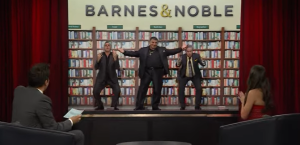 Proving There’s More to Life in America this Week than Just Presidential Politics. Pictured above is Salem Radio Networks (SRN) East Coast affiliate relations manager Jim Bligh – a frequent “player” in NYC-based skits on “Saturday Night Live“ in addition to appearing in theatrical feature films – joined NBC’s “The Tonight Show with Jimmy Fallon” on Tuesday 10/29). Fallon and Grammy-winning guest Olivia Rodrigo played “What’s Behind Me?”…a charade style game with Fallon describing action happening as her back was turned. Blight – far right – acted out a scene of Three Mobsters doing Yoga at a Barnes & Noble. See Bligh’s skit by
  Cumulus Media, which describes itself as a top “audio-first” media company, and TuneIn, self-proclaimed world’s leader in “live audio,” today (10/29) announced that they have renewed and expanded their existing content partnership. Under the terms of the deal, TuneIn will continue to make Cumulus Media’s local sports, news, talk and entertainment programming available to its 75 million monthly global listeners. The extended agreement also includes a new, non-exclusive sales and supply partnership to optimize digital audio advertising monetization for Cumulus’ diverse radio stations. Cumulus owns and operates 400 radio stations across 84 markets with an extensive collection of nationally syndicated sports, news, talk and entertainment programming.
 As part of the agreement, audio streams of Cumulus stations and podcasts, which includes popular stations like WBAP, Dallas; WLS, Chicago; and KNBR, San Francisco will remain available 24/7 through TuneIn. “TuneIn naturally aligns with our strategy to expand our digital footprint and extend the reach of our diverse programming to a global audience,” said Brian Philips, chief content officer of Cumulus Media, telling TALKERS, “TuneIn offers significant global reach that makes it possible for listeners to easily discover our extensive collection of radio stations and podcasts almost anywhere through the TuneIn platform and 200+ connected devices.” “We are excited to continue to expand our long-standing partnership with Cumulus to extend the reach of their comprehensive content offerings,” said Rich Stern, CEO of TuneIn. “This partnership allows us to bring high-quality content to our listeners while also helping Cumulus monetize its digital audio advertising inventory effectively. It’s a win-win for both companies and our audiences.”
 This fifth installment in
 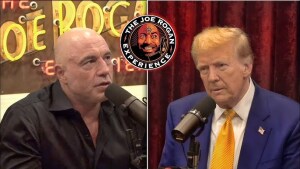 At the Monday morning (10/28) TALKERS editorial meeting, Harrison said, “The hoopla over this podcast appearance and its enormous profile within election news coverage clearly indicates we have arrived at a point where the terms ‘mainstream,’ ‘legacy,’ ‘alternative,’ ‘grassroots,’ and the like have to be reevaluated in conveying impact and importance – both individually, and certainly collectively – in the marketplace of ideas and the industries that serve it.” Harrison added, “This is especially true of Rogan’s individual impact as indicated by 1) the deference he was paid by a former president and major party candidate in showing up three-hours late for a live rally attended by thousands in which he actually implied that this podcast interview was a priority and more important to ‘winning’ than arriving on time for the event; 2) the tsunami of news coverage this podcast generated; 3) the passive aggressive irreverence granted a somewhat oblivious Trump by Rogan both during and following the interview; and 4) the sheer enormity of Rogan’s raw numbers on Spotify and YouTube, unfettered by FCC regulation.”
 “When iHeartMedia New York partnered with the New York Road Runners (NYRR) to produce this inaugural radio broadcast of the marathon, it was a no-brainer to put Len at the helm of the broadcast,” said Tom Cuddy, program director for 710 WOR. “His association with New York sports, during his more than 50-year television career, and his ‘second life’ as co-host of the WOR morning show since 2015, ensure that Len will make this a can’t-miss broadcast.” “I’m honored to be hosting WOR’s maiden voyage with the TCS New York City Marathon,” said Berman. “I’ve hosted TV coverage of the event many times and it’s consistently one of the best days of the year in the city. We look forward to conveying that same message to our listeners.”
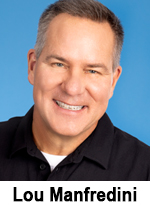 “I have been blessed to call WGN Radio home for the past three decades,” Manfredini tells TALKERS. “But in the end, it’s all about our listeners. I’m excited to continue to help them better understand how their homes work, show them they can have fun, and, of course, remind them to never hold a nail for someone else.” The Chicagoland native will be celebrating his 30th anniversary on WGN Radio in 2025. Mr. Manfredini first appeared on the station as a guest on the Bob Collins Show in 1995 following a letter writing campaign to pitch a call-in home improvement show on WGN.
 “We are delighted that Lou will be with us for his 30th year and beyond,” said WGN Radio VP/GM Mary Sandberg Boyle. “In the nearly 30 years since first appearing on WGN Radio, Lou’s presence across the media world has evolved considerably. Yet, what truly sets him apart is his natural gift of connecting to and interacting with our listeners in the special way that only radio does. Making those listener ‘connections’ has historically been – and will continue to be – the very fabric of WGN 720.” Manfredini can also be heard on weekday segments with John Williams (Mondays), Lisa Dent (Thursdays) and Bob Sirott (Fridays).
  It will be carried by LibertyNewsRadio.com or video stream at TheBigMigShow on Rumble. For additional information or press inquiries, please contact Sam Bushman at 801-756-9133 or LibertyRoundTable@gmail.com.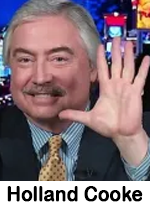

 One day last winter, Alison Stewart, the host of “All of It” on public station WNYC, New York was alarmed to find herself speaking gibberish.
 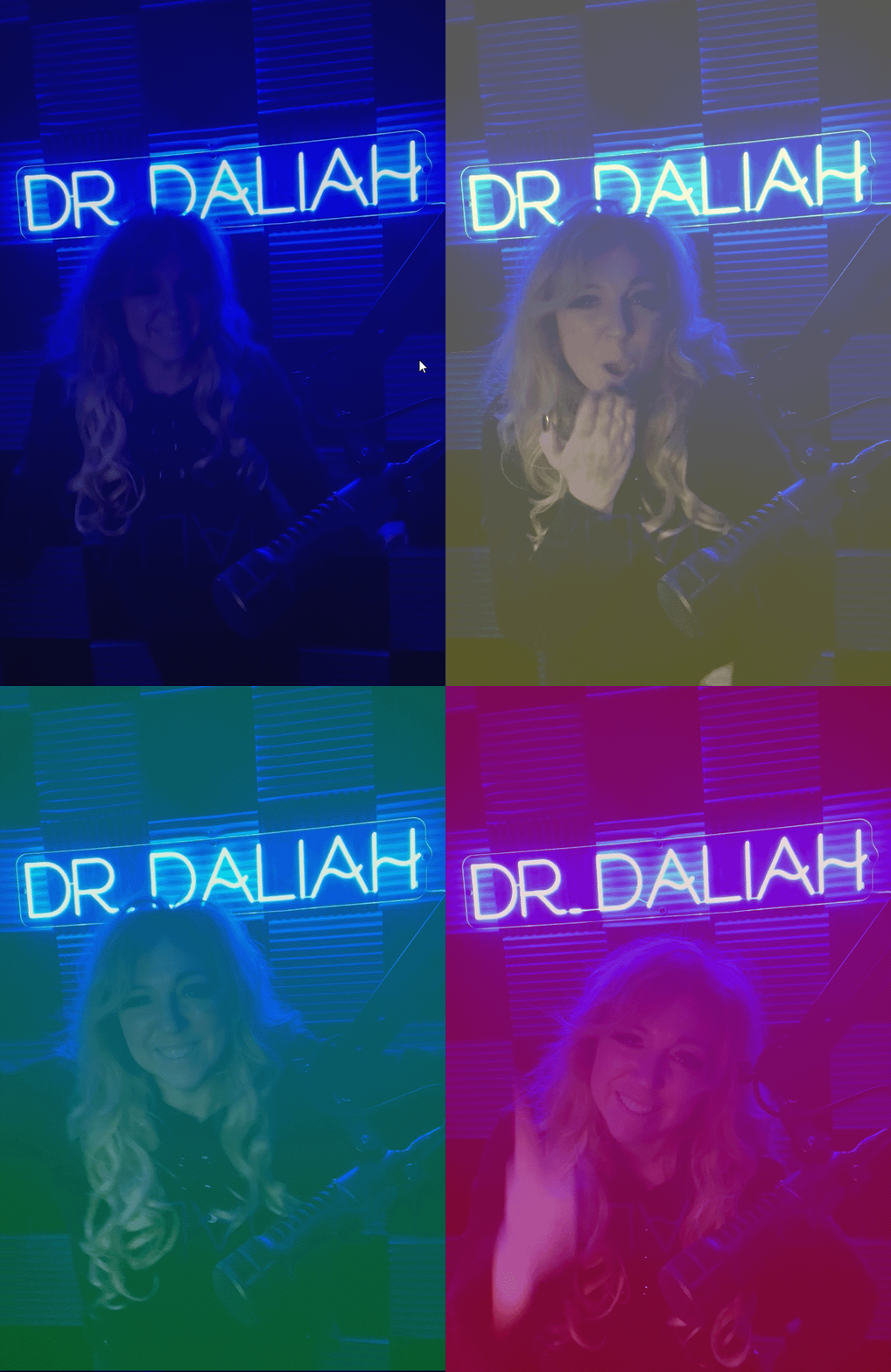 Music Group Gunhill Road Putting Final Touches on Talk Radio Anthem. Gunhill Road, the perennial pop music ensemble that has attracted hundreds of thousands of worldwide followers with its growing repertoire of issue-oriented songs and music videos, is currently in post-production with an anthem celebrating talk radio. Titled “Don’t Stop Talkin’” – the song is an uplifting and infectiously catchy tune about the vital role talk radio plays in serving the cause of American freedom of speech. With lines that include “As long as you’ve got a voice, don’t ever stop!” and “As long as you’ve got the truth, don’t ever stop!” the original composition co-written by band members Steve Goldrich, Paul Reisch, Brian Koonin, and Michael Harrison encourages talk radio practitioners to keep up the good work and great service they provide the nation.TALKERS Heavy Hundred syndicated host Dr. Daliah Wachs pictured above bopping to the music in a scene from the forthcoming video “Don’t Stop Talkin'” by Gunhill Road.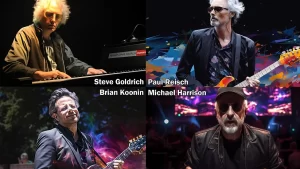
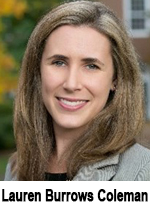 Longtime CFO Marie Tedesco will retire from Beasley after 33 years of what sources describe as “dedicated service to the company.” Before joining Beasley, Burrows Coleman served as Global Head of Strategic Corporate and Commercial Finance at Wayfair, where she led a global team of 50 across Financial Planning & Analysis, Commercial Finance, Capital Markets, Corporate Development, and Global Tax functions. Burrows Coleman’s career also includes leadership positions at WindSail Capital Group and Wind Point Partners, both private equity firms, as well as GE Capital, where she managed equity and debt investments across various industries. She began her career as an investment banker in the Communications & Media group at Lehman Brothers. “We are absolutely thrilled to welcome Lauren into the Beasley family,” said Caroline Beasley, CEO of Beasley Broadcast Group, Inc. “Her extensive and diverse experience, combined with her leadership skills, are exactly what we need to drive the company forward as we evolve into the future.” Burrows Coleman holds an MBA from Harvard Business School and an A.B. cum laude from Dartmouth College. Commenting on Marie Tedesco’s retirement, Beasley said, “Marie has been an integral part of our success, and her contributions have shaped the organization into what it is today,” adding, “It has been a privilege to work alongside her, and we are deeply grateful for her unwavering commitment, hard work, and leadership. We will greatly miss Marie’s wisdom and guidance, and we wish her nothing but the very best!”
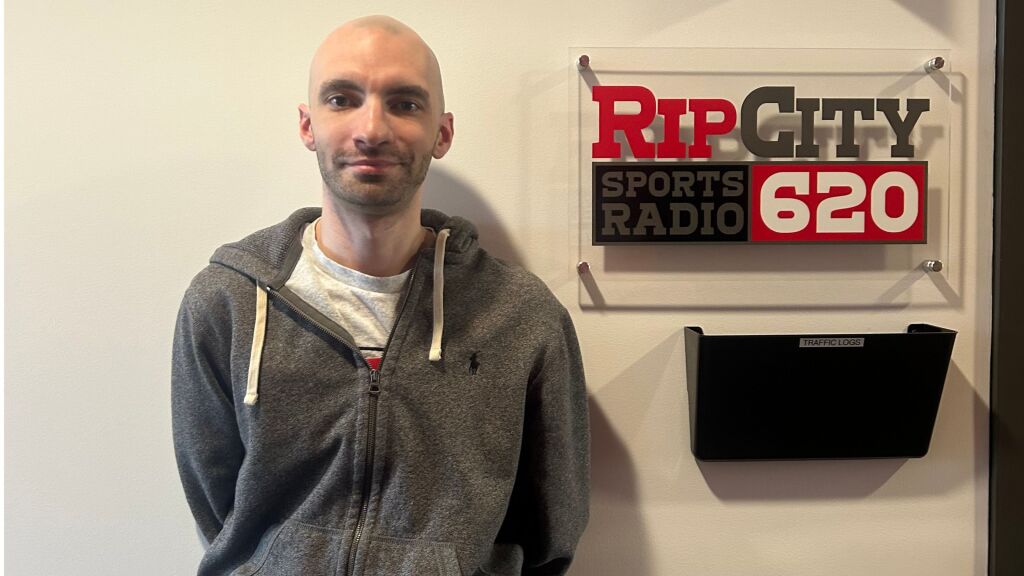 iHM Portand Adds Sean Highkin as Trail Blazers Correspondent on WPOJ-AM. iHeartMedia Portland’s Rip City Radio 620, “Your Home of the Portland Trail Blazers,” announced today (10/24) that acclaimed sports journalist Sean Highkin will join the station as the Portland Trail Blazers correspondent, effective immediately. He will provide comprehensive coverage of the games, practices, press conferences and everything revolving around the Portland Trail Blazers on their flagship station. Highkin brings over a decade of experience covering the NBA, including seven years dedicated to the Portland Trail Blazers. As a trusted voice in basketball, his experience includes contributing to national outlets such as Bleacher Report, USA Today, The Athletic and NBC Sports. In 2023, Highkin was named Oregon Sportswriter of the Year by the National Sports Media Association. “Sean’s knowledge, expertise and impressive track record will elevate and take our Trail Blazers coverage to the next level,” said Marshal Burgess, metro president of iHeartMedia Portland. “His insightful analysis and in-depth reporting have made him a respected voice in the sports journalism community, and we are thrilled to have him join the iHeartRadio Portland team.”
 New York Festivals 2025 Radio Awards Announces Distinguished Grand Jury. The New York Festivals® Radio Awards has announced its 2025 Grand Jury. The 2025 Radio Awards Grand Jury features over 100 global leaders from the radio industry across six continents. This distinguished panel comprises world-class content creators, industry visionaries, and iconic voices. Recruited from renowned companies, these directors, producers, journalists, writers, and sound artists are celebrated for their innovation and engaging storytelling. “The robust world of audio storytelling today is fully represented in the 2025 edition of the Grand Jury,” said Rose Anderson, EVP/executive director, New York Festivals Radio Awards. “From audiobooks to podcasts, from investigative journalism to live events, and from mystery to social justice, this year’s jury members volunteer their time and lend their expertise.” The New York Festivals Radio Awards provides a platform to celebrate creative storytellers from around the world. For 67 years, NYF has recognized both innovation and exceptional quality in broadcast audio content across all genres and platforms since 1957. Since 2023, The National Press Club, has partnered with New York Festivals to honor the highest scoring news program across the Coverage Of Breaking News Story, Coverage Of Ongoing News Story, Nonfiction Series, Investigative Journalism Podcast, and News Podcast categories. The winner will be announced during the 2025 Storytellers Gala in April. NYF’s Radio Awards receives entries from radio stations, networks, and independent producers from over 30 countries around the globe. The mission of the competition is to honor the achievements of the men and women who make up the global audio storytelling community. To see complete list of Grand Jurors click here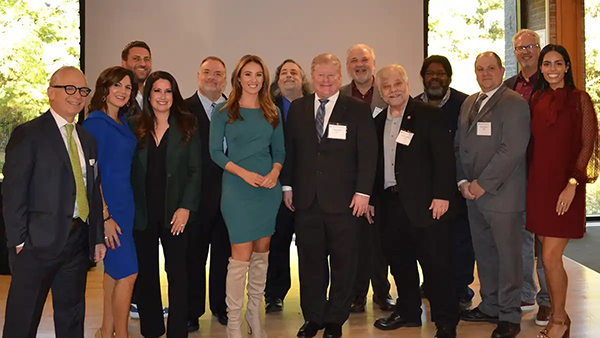
 this year’s Benztown 50 is the presentation of the voiceover industry’s highest honor, the Chris Corley Lifetime Achievement Award, to Ann DeWig. Benztown president Dave “Chachi” Denes says, “We are thrilled to recognize the top 50 VO artists in the U.S. and Canada for 2024, along with the peer-voted ‘Best of Format’ honorees and the great Ann DeWig, recipient of the Chris Corley Lifetime Achievement Award. These individuals represent the pinnacle of audio branding and are synonymous with many major brands in our industry. Fifteen years ago, when we began working with VO talent, I never imagined we would collaborate with the best in North America. I am incredibly grateful for their support; without it, Benztown would not be where it is today. As we celebrate these honorees, we also honor all world-class VO talent and the emerging voices that shape the future of the industry.”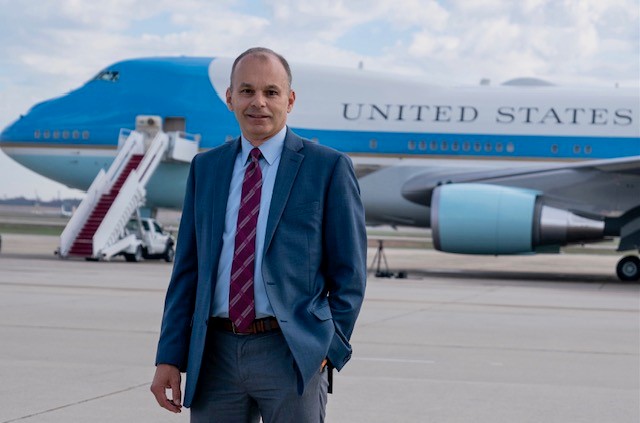
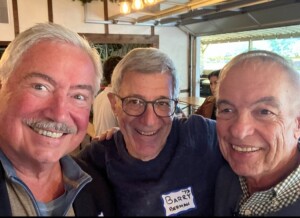 Old Friends and Colleagues Gather for CRN International Reunion. Some 50 long-ago colleagues gathered at a warm weekend reunion at a cozy restaurant in the Nutmeg State for what, in the 1970s, began as “Connecticut Radio Network.” It evolved into CRN International, a major advertising promotion agency, which ceased operations a decade ago. CRN SkiWatch reports aired across the USA, customized for each affiliate, and based on conditions reported by CRN’s army of spotters. Pictured above (l-r): consultant Holland Cooke; CRN International founder Barry Berman; and WABC, New York news personality, Joe Connolly. (NOTE: CRN International is not to be confused with long-active CRN Digital Talk Radio.)
 AdLarge Adds Innovative “CIRCLE THIS” Podcast to Client Stable. AdLarge, a pioneering podcast advertising agency, has announces the addition of “CIRCLE THIS with Andrea ‘Dre’ Bendewald” to the
  If a shark doesn’t swim, it dies. Radio is just fine, thank you, but it’s not swimming. Water, check. Tank, check, Sharks, check. Swimming to the next meal, nope. For the past 10 years at least, the radio show in every city is stuck in place and that sound in the distance that wakes you up at night is a death rattle.
 The research notes millennials (ages 27-42) are the most concerned at 83%. The survey finds people are feeling the effects of the higher costs of goods and services, and they remain concerned about inflation. In addition, 37% said their finances are in worse shape than four years ago. Thirty-four percent said their finances are about the same, while only 29% said they’re better off than they were four years ago. The research indicates more than half (52%) of Americans believe the U.S. presidency has a major impact on their personal finances. “We encourage every American to go out and vote,” said Dave Ramsey, personal finance expert and host of “The Ramsey Show.” “But remember, what goes on in your house is a whole lot more important than who’s in the White House. The research shows that less than half of Americans believe a written household budget is the way to win with money. That has to change, or nothing will.”

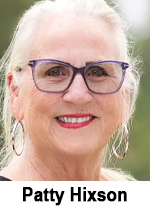 The hallmark awards ceremony, presented by CalViva Health in the New Exhibit Hall of the Fresno Convention & Entertainment Center. The awards paid tribute to 10 Central Valley women who have excelled professionally, served as role models, and given back to their communities, as well as one business honored for its support of women and women’s issues. Patty Hixson’s successful radio career spans 32 years serving the Central Valley. An active leader in the community, she has been a member of the Fig Garden Rotary Club for 30 years, serving as president in 2018, and was a longtime member of the California State University-Fresno’s Bulldog Foundation. Hixson also served on the Board of Directors of the Greater Fresno Area Chamber of Commerce. Patty Hixson said: “I’m honored and humbled to be recognized among this astute group of leaders. Giving back to the community is a central part of my DNA, and I thank the Marjaree Mason Center for this award and for its important efforts supporting all women in our community.”
 The agreement extension will feature Jeff Lewis expanding his popular show, “Jeff Lewis Live” to two hours a day giving listeners more of Jeff Lewis promoted as “just the way you want him…live and uncensored.” Lewis tells TALKERS, “SiriusXM has given me the freedom to build a show that is unfiltered, unapologetic, and morally corrupt. I’m grateful for the opportunity to grow my show and my cult…I mean, listeners.” The show will now air Monday through Fridays from 12:00 noon – 2:00 pm ET on SiriusXM’s
 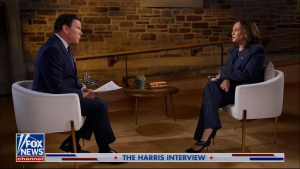 Ideology and, as Michael Harrison calls it, “the daily dance of affirmation” aside – perhaps there’s something to be said about booking “opposition” political luminaries as guests on our industry’s highly “targeted” venues. FOX News Channel’s (FNC) “Special Report with Bret Baier” delivered 7.8 million viewers and 1,126,000 in the 25-54 demo during anchor Bret Baier’s exclusive interview with VP Kamala Harris from 6:00 pm – 6:30 pm ET this past Wednesday (10/6), according to Nielsen Media Research. The interview marked the highest rating of the Harris-Trump political season, outrating Harris’s individual appearances on “60 Minutes,” “The View,” “The Late Show with Stephen Colbert,” CNN and MSNBC. For the full 6:00 pm ET hour, “Special Report” drew 6.7 million viewers and 901,000 in the 25-54 demo. Combined with the show’s midnight airing 12:00 midnight -12:30 am ET, the interview with VP Harris nabbed 9.2 million viewers and 1.4 million in the 25-54 demo, beating ABC’s interview with President Joe Biden before he dropped out of the race (8.5 million viewers).