Industry News

Audacy Promotes Rachel Williamson and Kevin Cassidy

Audacy announces two promotions within its senior leadership team. Rachel Williamson is promoted to president of local sales strategy and innovation, and Kevin Cassidy moves from his role overseeing theim company’s New Orleans market to take over for Williamson as SVP and market manager for the Chicago market. Williamson reports to Brian Benedik, chief imrevenue officer, and Cassidy reports to Brian Purdy, regional president. Benedik says, “We are thrilled to move Rachel into this new, important assignment. Her leadership experience and expertise with linear and digital audio and video will be a tremendous asset to growing our local business across Audacy.” Purdy comments, “With an impressive multiyear track record of success overseeing our New Orleans cluster, Kevin knows how to grow brands and deliver performance. We are confident that Chicago will continue to thrive under Kevin’s guidance.”

Industry News

Cumulus/Signal Hill Release Podcast Download – Fall 2023 Report

Cumulus Media and Signal Hill Insights are releasing the Podcast Download – Fall 2023 Report that looks at the latest podcast audience trends. Some of the findings include: 1) Podcast consumers continue to embrace YouTube as the number one podcast platform, especially with podcast discovery;im 2) Audio is powerful. Podcast consumers spend a significant amount of time on YouTube listening to podcasts without watching the video; 3) Since 2019, YouTube and Spotify have been growing among podcast newcomers at the expense of Apple Podcasts; 4) More than half of the weekly YouTube podcast audience say they have listened to the same podcasts in another place; and 5) Podcast consumers who watch video podcasts often have eyes on the screen. More than 6 in 10 look at the screen at least some of the time, even during ads. Since October 2021, podcast watchers have been increasing their time spent with eyes on the screen. See more about the study here.

Industry News

Cumulus Podcast Network Contracts with Barometer for Brand Safety & Suitability

Cumulus Media announces its Cumulus Podcast Network is now providing brand suitability and safety measurement through Barometer, which provides brand-suitability measurement and contextual targeting unique to the podcast space. Cumulus says that this allows marketers and media agencies toim be able to review podcasts to ensure they meet their brand’s safety and suitability standards. Brands are also able to monitor their ad-buys during and after the campaigns to ensure their standards are being upheld. Westwood One SVP, sales and digital partnerships David Cohn comments, “We are proud to provide Barometer’s transparency and accountability to the marketplace. Brand marketers now represent 61% of U.S. podcast revenue. Advertisers deserve a brand-suitability solution that is designed for the unique attributes of podcast content rather than the legacy systems that were designed for display and online video.”

Industry Views

Monday Memo: We Don’t Just Do Live Audio Anymore

By Holland Cooke
Consultant

What used to be “a radio station” is now the hub of live AND on-demand audio AND video AND text and graphics. As we populate all the platforms with which we share listeners’ attention (and advertisers’ do-re-mi), I’ve gathered tips from the pros:

im

Holland Cooke (HollandCooke.com) is a consultant working at the intersection of broadcasting and the Internet. He is the author of “Close Like Crazy: Local Direct Leads, Pitches & Specs That Earned the Benjamins” and “Confidential: Negotiation Checklist for Weekend Talk Radio.” Follow HC on Twitter @HollandCooke

Industry News

Bjorson to Lead Audacy’s Milwaukee Cluster

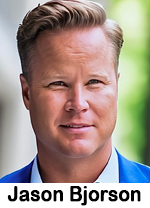
Audacy names Jason Bjorson SVP and market manager for its Milwaukee market stations that include sports talk WSSP-AM “1250 AM The Fan” and four music brands. He most recently led a new business sales team for an HR tech company in the SaaS space and oversaw advertising sales teams forim Spectrum Cable. During his career he’s also served with Cox Radio in Jacksonville and the former Journal Broadcast Group at WTMJ, Milwaukee. Audacy regional president Rachel Williamson states, “I am excited to welcome Jason to lead our Milwaukee cluster. His experience across radio, video and digital combined with his deep knowledge and relationships throughout the Milwaukee market brings an increased expertise to our cluster and clients.” Bjorson comments, “I’m thrilled to join the Audacy Milwaukee team, with some of Milwaukee’s most iconic brands and an innovative broadcaster. I’ve competed with this team and tried to recruit them for years, so I know how much talent is here. I’m looking forward to working with them to win big here in Milwaukee!”

Industry News

Nashville-based Talk Host Causes Controversy After Releasing Shooter’s Manifesto

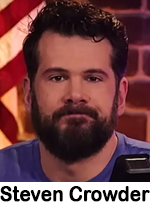
Steven Crowder – who does a talk show streamed on YouTube and other digital platforms – is causing controversy and raising questions about the public’s right to know after releasing what is purported to be the “manifesto” of Audrey Hale, whom authorities say is responsible for the Covenant School shooting in Nashville last March that claimed the lives of three children and three adults. YouTube removed theim video saying it violates its community guidelines that “prohibit linking to content containing manifestos from individuals who have committed violent attacks.” Crowder issued a notice on X regarding the removal of the content, saying, “YOU determine what matters. YOU determine the content. Not YouTube, not the rest of BigTech, not their lackies, and not a gaggle of sponsors who don’t have the b***s to stand behind the kind of content you actually want to see.” According to a report by Newsweek, “The Metro Nashville Police Department has not confirmed that the screenshots shared by Crowder are Hale’s manifesto. A department spokesperson told Newsweek Monday that police were ‘unable to confirm the authenticity of what has been released, although we are looking into that at this very moment.’” Read the Newsweek story here.

Features

How News/Talk Radio Should Adapt to Attract and Retain a Younger Audience

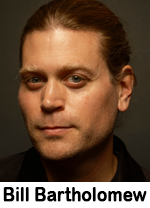
By Bill Bartholomew
Talk Host/Podcaster/Journalist/Musician

imFolks in the Gen Z and millennial demographics are heavily engaged in political issues, care about news in their communities and the world, and are constantly bombarded with content.  So why are they less likely to tune into and interact with news/talk radio than older demographics?

Talk radio has historically skewed older, and from an ad portfolio standpoint, is often targeted at the coveted 35-54 and 55+ demographics.  However, in a world where social media influencers and podcasters supply information to millions of young consumers, news/talk radio should be able to effectively compete for the ears of younger generations in a comparable, if not expanded way.

For all of the anecdotal and hard evidence that terrestrial radio may be trending in a downward direction, the format continues to have a vast reach.  It is convenient to engage with it in automobiles, and occasionally in home or office settings.  Yet, while younger generations listen to radio, news/talk is not the format that they turn to by and large.

Unlike many digital-first content producers, radio retains a unique quality: authority.  By virtue of editorial standards, FCC regulation and brand – things that social media and podcasts often lack – radio has the unique ability to deliver credible, vetted, nuanced and universally trustworthy content that can instantaneously adapt to meet the needs of the moment.  This is true in everything from natural disasters to rapidly evolving breaking news stories, providing a channel for immediate, reactionary insight and analysis.

There are several steps that news/talk radio should pursue in earnest to adapt to the current climate of content consumption, particularly by younger listeners, that can reach, and most importantly, retain broader, younger, more diverse and more engaged audiences.

  1. Introduce younger people into the conversation.

Too often, Gen Z and millennials are skewered by older hosts, mocked for their perceived naivety, unchecked optimism and me-first approach.  While some of these qualities can be accurate, that approach reflects a disconnect between older generations and the experience of younger ones.  Millennials and Gen Z have grown up in a post-9/11 world replete with “endless wars”, the fallout from the 2008 financial crisis, runaway student debt, a massive housing crisis, the mental health stressors of social media, Covid19’s impact on traditional youth experiences, climate change, a deeply bifurcated political environment and a constantly evolving quest for social justice.  Through these experiences, younger generations offer an important perspective that should be assigned the same news value as experts from older generations.

Are you discussing shifts towards electric vehicles?  Bring on someone from Gen Z to share their perspective on why steps towards carbon neutrality are important to them.  Engaging a conversation on the president’s approval rating?  Perhaps younger conservative and leftist voices should be included in the conversation.  Discussing immigration?  How about the perspective of a younger member of a Latino organization?

By giving younger generations and more diverse guests a platform, stations can simultaneously expand their content and reach.  With consistency, the station’s brand will become more familiar to younger potential listeners who may be inclined to tune in to hear someone who shares their identity and perspective on – here’s that word again – a platform of authority.  Let the guest do the work of establishing the credibility and importance of your station or talk show to younger audiences by posting about their appearance on social media, sharing audio clips and mentioning to their peers.  It will build familiarity and trust among those generations, who in turn, will begin to tune in on a more regular basis.

Stations should also consider bringing more younger, competent voices into on-air roles, whether that be through reporting, segments, fill-in hosts, weekend shows or full-time hosts.

  1. Meet the audience where they are: their phones. 

As mentioned above, the convenience of simply turning on AM/FM radio is highly appealing in automobiles, though as Apple Carplay continues to adapt and evolve, digital-first content is likely to become as simple and convenient in the near future.

Talk radio needs to make consuming their product on smartphones as simple and direct as turning on a traditional radio.  This means no clunky websites, no lengthy pre-roll spots, a reliable stream connection and a “one touch” means of turning on and off the station.  This should also mean expanding talk shows to high-quality video livestreams, following in the footsteps of the top YouTube and Twitch performers; developing unique content for TikTok and Instagram; building podcasts that are focused on specific issues, and; providing interaction via text and chat.

Radio has the ability to be the ultimate livestreamer, social media influencer and podcaster, but rarely harnesses these platforms in a meaningful way.

It is not enough to simply strive to “expand a digital presence”; stations and shows must engage in the hard work of building platform-specific content with their brands.

  1. Music, cultural references and themes for the modern age.

A few weeks ago on a seemingly benign episode of the TV show FOX NFL Sunday, panelists Jimmy Johnson and Terry Bradshaw offered an example of the type of cultural adaptation that sophisticated writers and producers provide their brands.  While describing a fight between two football players, Mr. Johnson said something to the effect of “when it comes to these two, what’s that Taylor Swift song?”, and then in synch with Mr. Bradshaw, “bad blood!”.  It is highly unlikely that these two 70+ men listen to Taylor Swift’s music with any regularity or would simultaneously pull the “Bad Blood” reference.  Yet, with excellent preparation that played into the greater cultural moment as well as the specific, current Taylor Swift/NFL overlap, in a six-second span, FOX NFL Sunday was able to give the illusion that their panelists are contemporary, hip and plugged into “what is going on”.  Is your station or show plugged into what’s going on?  Do you use contemporary music for bumps?  Are your images – including headshots and social content – modern, interesting and engaging or are they more akin to a miscellaneous real estate agent?  You are a performer in an entertainment business that, while certainly paying homage to the past and lineage of the industry, must be contemporary in aural and visual presentation.  This goes for everything from wardrobe on video and in photo to fonts on graphic design.

How often do you or your producer read Pitchfork to learn about new music that is breaking this week?  How often do you or your producer read Variety to understand major trends that are happening in the broader entertainment industry?  What live events are you broadcasting from, covering and building partnerships with?  You should strive to be cutting edge.

  1. We need a friend now more than ever.

This is something that goes for all audiences, but particularly for younger ones.  It’s OK, in fact, great to be yourself, present yourself from your generation and retain the authoritative stance that has built your brand.  Take a look at the success that sports talker Mike Francesa enjoyed by leaning into his persona – and in turn – developing legions of younger listeners that fell in love with his dad-like delivery and frequent meltdowns.

Few things are as uncomfortable to see as a 40+ person dressing or acting like a teenager.  Younger listeners want that senior, experienced, trusted friend to entertain them, inform them, and at times, tell them that everything is going to be OK.  You can help make sense of the world for younger audiences, something that is absolutely essential in the modern era.

Through attracting younger listeners by including them in the conversation, effectively delivering content on smartphones, presenting a cutting-edge entertainment product and continuing to serve as a trusted friend, news/talk radio can greatly expand its reach, relevance and revenue.

To that point, some younger listeners who discover a radio station or show via any of the above entry points will likely work backwards to the traditional AM/FM dial.  Like the resurgence of vinyl records, AM radio in particular has the opportunity to become a hip delivery format for discerning younger listeners.

The big question is: are radio companies, stations and hosts prepared to do the hard work of reimaging their product?


Bill Bartholomew is a talk radio and podcast host/producer, journalist and musician based in Providence, Rhode Island. Email him at: william.f.bartholomew@gmail.com. 
Industry Views

Monday Memo: TV Synergies

By Holland Cooke
Consultant

imI am always impressed when I see-and-hear radio and TV stations swapping product.

— The most obvious asset is weather. Many radio stations’ forecasts are voiced by local television meteorologists, often gratis because their boss assigned them to, as part of an information alliance. So, the radio station’s weather cred’ stands on the broad shoulders of the weather brand the TV station promotes so relentlessly.

— For some news/talk stations, simulcasting a television newscast is the only way they can air local news in the afternoon. Turn lemons into lemonade. Radio people who love to hate TV audio under-estimate how loyal viewers are; and how conspicuous and convenient this can make the radio station.

— Especially if the deal includes promos – on both stations – voiced by trusted local TV anchors, offering that “If you can’t be home in time to SEE us, you can HEAR us…”

— In every market where we have executed this strategy, the TV talent has remarked about how many compliments they get for being on radio.

— Deal point: During simulcast newscasts, the TV station supers “Heard live on WXXX 8:50 AM.”

How’s THIS for resourceful?  

— A radio station’s afternoon drive newscast consists of a 60-second live shot (or prerecorded live-on-tape) from a local TV newsroom, voiced by the TV anchor who ticks-off “the stories we’re following” that will be seen on evening newscasts.

— The radio station wraps it into a four-minute package, including:

— that live headline package, at the end of which

— the TV anchor hands off to radio’s traffic reporter, then…

— the traffic reporter teases weather into a radio spot, and…

— after the commercial, the weather comes on.

— And here’s the kicker…that live shot from the TV newsroom is a commercial for the TV station! To the listener’s ear, it’s a free newscast from a credible, branded source. Possibly a trade for TV time to advertise the radio station?

im

Another win-win synergy: Reciprocal excerpting, with attribution 

Translation: Each station gives blanket permission for the other to grab, from the air, whatever it wants, crediting the originating partner.

— There will be times when someone from the radio station is on-scene; or when radio scores a newsworthy interview that TV can use the audio of. More often, thinner-staffed radio will use TV sound more than vice-versa.

— When I programmed WTOP, Washington, WUSA9 let us help ourselves to their newscast audio (“And the mayor told Channel 9…”). Each day, our desk and theirs compared assignments, and we recorded every WUSA newscast.

— True story: The news director from NBC4 came to my office and said, “You can use OUR sound, and you don’t even have to say ‘Channel 4!’ Just STOP saying ‘Channel 9.’”

— It was a flattering offer, but we remained loyal to WUSA, the once-upon-a-time WTOP-TV. Decades later we were still getting mail addressed to “WTOP-TV.” And both stations being CBS affiliates contributed to the lingering impression that we were siblings, so the confusion was actually useful. Does your radio station have a long-lost TV brother? 

Radio takes TV where it otherwise can’t go: in-car

Note how aggressively TV stations are programming their apps and websites. They want to be a news brand, not just a news station.

— A smart TV station should want to give radio a ROSR (Reporter On-Scene Report) during the day (when radio audience is high and TV audience is low), because doing so serves to promote the upcoming evening TV newscast.

— WARNING, based on experience: This can be a tough sell to over-protective TV news directors, who may fret that by going-live on radio they’re alerting other TV stations to the story. Stinkin’ thinkin.’ Other TV stations could show up anyway, and they wouldn’t be as-well-known for covering the story as the TV station that’s also already reporting it on radio.

Local TV news is a hungry critter…

…with a limited budget. Which is why some TV stations toss-live to their radio partner’s host: “Gene, what are your callers saying about the congressman’s abrupt resignation?” Arrangements like this were commonplace even decades ago, when TV had to equip the radio studio with equipment more elaborate than modern day video chat requires.

The calculus is simple

Radio + TV > Radio – TV or TV – Radio

(Radio PLUS television is greater-than Radio MINUS television or television MINUS Radio.)

Even if you’re a music station that doesn’t do much news at all, these opportunities are worth exploring. At least trade spots, because neither station can afford to promote as much as it should.

Holland Cooke (HollandCooke.com) is a consultant working at the intersection of broadcasting and the Internet. He is the author of “Close Like Crazy: Local Direct Leads, Pitches & Specs That Earned the Benjamins” and “Confidential: Negotiation Checklist for Weekend Talk Radio.” Follow HC on Twitter @HollandCooke

Industry Views

SABO SEZ: Stream to Success

By Walter Sabo
Consultant, Sabo Media Implementers
A.K.A. Walter Sterling
Radio Host, “Sterling On Sunday”
Talk Media Network

imIn May 2007, I was enjoying the brand-new app called YouTube. Still independently owned, still relatively unknown. Some of the videos pulled millions of viewers, more viewers than enjoyed by ESPN or any cable network. More interesting, the videos with high counts were not made by NBC or ESPN or any traditional video source. High view count videos were being made by people with no experience in traditional media, they were experimenters producing in their basements and bedrooms.

As these new performers were pulling major view counts, they revealed that they worked at Starbucks, were going to school and wanting to make enough money to get out of their parent’s house. Wait. Some video creators were winning more viewers than ESPN and they were broke? Simultaneously major brands like Pepsi and Budweiser knew they had to enter the online video space and each attempt was a disaster. BUD TV! Online video entertainment was a brand-new medium; USG User Generated Content.

I started a company called HITVIEWS. The goal was to placed brand messages in User Generated Content. The first company. No one had ever done it. We gathered the top video performers and started to marry them with brands like Pepsi, FOX TVTimberlandMTV,  CBS TelevisionIBMLogitech, many more. A TALKERS conference introduced the first Influencer (we called them “Web Stars”), Caitlin Hill, to radio executives.

From this pioneering initiative into online video, I can share a significant amount of information about the ingredients of a successful video campaign.

  1. Use video stars, influencers, to deliver your message. It’s a different medium and requires different stars.
  2. Engage every capability of the platform. The videos with the highest view counts demand the most interaction with the viewer. Click now. Comment below. Make a response video. Send a text back. THEN answer all responses. Every single viewer response must be answered by you or it is wasted.
  3. It’s not radio or TV. Don’t bother putting up videos at a fixed day and time. Put up as many videos as you possibly can. Two days is too old!
  4. Funny works best.

Online video success makes the medium the message. The touch screen, mouse, keyboard. Audio, video capabilities must all be integrated into the entertainment. If full functionality is not part of the show, the show is boring.

Walter Sabo has consulted the largest media companies worldwide in digital initiatives. He was the on-site consultant for SiriusXM Satellite Radio for nine years. He can be reached by email at walter@sabomedia.com and his network radio show can be discovered at  www.waltersterlingshow.com.

Industry News

NRG Media’s Iowa Talking Points Goes on Remote

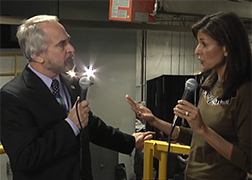
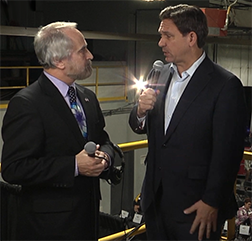
The cross-platform program “Iowa Talking Points” – produced by NRG Media and Mudd Advertising, took to the road last Friday (10/20) for a remote broadcast that featured GOP presidential candidatesim Gov. Ron DeSantis, Amb. Nikki Haley, Vivek Ramaswamy, Sen. Tim Scott, Gov. Doug Burgum, Gov. Asa Hutchinson, and Ryan Binkley. “Iowa Talking Points” is produced for live video stream, imvideo and audio on-demand playback, and radio rebroadcast by NRG’s “News/Talk 1540” KXEL, Cedar Rapids-Waterloo and is hosted by KXEL program director and host Jeff Stein. Previous programs in the series have been produced in front of a live studio audience from Mudd’s state-of-the-art “Studio5@Mudd” facility in Cedar Falls. Last week, the team arranged a special live broadcast from the annual tailgate fundraiser sponsored by Iowa State Rep. Mariannette Miller-Meeks. Stein says, “There are very few opportunities to have access to this many candidates at one time. Engaging with them in this way gives our audience the best information free from sound bites and media filters.” Pictured here is Stein with DeSantis (left) and Haley (right).

Industry Views

Pending Business: Your 2024 Ad Sales Forecast

By Steve Lapa
Lapcom Communications Corp
President

imYour crystal ball is still foggy, isn’t it?

Even worse, no matter how many times you try and shake it into a predictive submission, the answer is still the same, “Political-not sure, Weather Emergency-unforecastable.”

Nobody in business likes a lack of confidence, so “Not Sure” is a non-starter. For us radio fans, the variables in predicting a 2024 ad sales forecast are the most unforecastable, unpredictable, variables since the original gang of head-in-the-sand radio gurus pegged MTV as a 1981 fad.

And here we are, 42 years later where a pure-play music video channel challenging FM music radio, satellite music radio, music streaming and downloadable audio would include dating games and ridiculousness, once again saving America’s most-listened-to free music source: radio.

Remember 1981 when talk radio was mounting a competitive threat to all-news radio. Rush was 30, Hannity was 20, Bongino was seven and Ben Shapiro was not born yet. Anybody here have 42 years to wait out your 2024 predictions and get it right? How about 42 days late with your forecast?

Our new world of AI, super-speed computer analysis, blended into an ever-changing digital and social media landscape, under pressure from the economy, global events and the melting radio revenue ice cube has made predicting 2024 ad projections a Vegas skill game.

Thankfully, we have the experience, patience, and cooperation of radio’s leadership to adjust forecasting quarter by quarter, sort of. Back to the task at hand and how to navigate this cracked crystal ball as you mount your sales strategy into 2024.

— Keep your eye on the prize. Always remember, your current advertiser is your best advertiser. Take diligent care of your foundational base billing and that means super serving your customers, as competitors from every medium are monitoring, planning, and pricing a counter plan.

— Positive Paranoia. Thank you, Andy Grove. The third CEO of Intel and a driving force behind Silicon Valley’s original exponential growth knew how to channel innovation and competition into a positive zone. How about you?

— Never stop learning. What new strategies and sales techniques will you drive into next year.

— Something will drop out of your sales picture. What is it? Eventually a sale resource will drop out. Identify how you will compensate for the loss and how you will grow your business as a result.

— Do you have minimum and maximum goals? There are only so many accounts you can sell and service in a month. What is that number and how much do each of those accounts need to generate monthly?

— Attrition. The arch-enemy of sales. Some business never returns. Now what?

Many 2024 projections are falling in the ultra-conservative, no risk, under promise/overdeliver category. Yet there is a fine line between being too conservative and a vote of no confidence. What’s in your forecast?

Steve Lapa is the president of Lapcom Communications Corp. based in Palm Beach Gardens, FL. Lapcom is a media sales, marketing, and development consultancy. Contact Steve Lapa via email at: Steve@Lapcomventures.com.

Industry News

Mark Wainwright: The Greatest Home Run

im“A sports moment for the ages, a botched radio call, a live broadcast believed lost forever… then miraculously rediscovered. What a story!” October 13, 2023 is the 63rd anniversary of Pittsburgh Pirates second baseman Bill Mazeroski’s unlikely World Series-winning home run that lifted the team over the heavily favored New York Yankees in the 1960 championship. Today, veteran radio performer and voiceover artist Mark Wainwright presents the story – and the stories behind the story – of “the greatest home run,” broadcasting legend Chuck Thompson’s uncharacteristic radio flubs, and how the video & audio of the series that was thought to be lost forever was found! Read Mark Wainwright’s story here.

Features

The Greatest Home Run

A sports moment for the ages, a botched radio call, a live broadcast believed lost forever… then miraculously rediscovered. What a story!

By Mark Wainwright

imThe History Channel calls it “The Most Dramatic Home Run in World Series History.” ESPN has often described it as the greatest home run of all time. To this day, it is the only World Series Game 7 walk-off home run.

Long-time baseball fans know the basic facts: On October 13, 1960, Bill Mazeroski of the Pittsburgh Pirates hit a line drive over the left field wall at Pittsburgh’s Forbes Field to win the World Series for the Pirates.

This was an iconic moment in baseball history, and an iconic moment in baseball broadcasting history, as well … although the Hall of Fame broadcaster who described the moment for the national radio audience probably wished he could have done a second take!
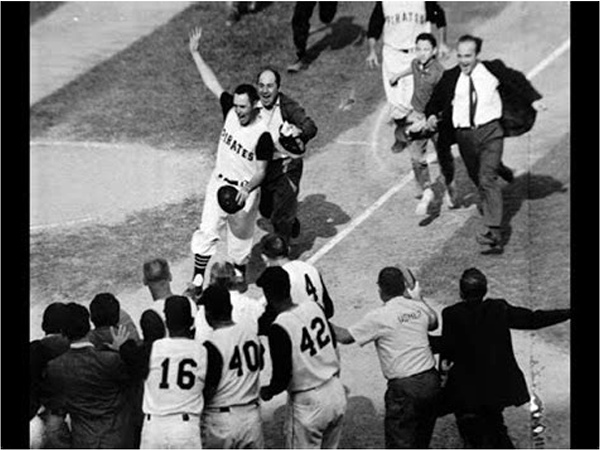
im

Above: Bill Mazeroski crosses the plate for the Game 7 victory! (photo courtesy YouTube)

It was a dramatic finish to an astonishing World Series, but as often happens, the backstory of that moment and how it was broadcast– and everything that led up to it – has been largely forgotten. As we follow this year’s MLB playoffs (while taking note of the anniversary), it’s worthwhile to look back at an earlier, very different era of post-season baseball…

******************************

The 1960 World Series opponents could hardly have been more different. The New York Yankees of that era were a machine, and the 1960 team easily dominated the American League on their way to the pennant. In contrast, the Pittsburgh Pirates were a surprise. The Pirates had not been to the Series since 1927, they were coming off a mediocre 1959 season, and expectations were low… but they got off to a good start and managed to keep it going. With timely pitching, clutch hitting, lucky breaks, and a never-say-die attitude (21 of their 95 wins came in their final at-bat), the Pirates claimed the National League pennant. The Yankees were studs, while the Pirates were scrappers, and the first six games of the Series reflected the character and personality of the respective teams.

In their three wins, the Yankee sluggers clobbered Pittsburgh pitchers for 38 runs. Yet, the Pirates managed to hang on, squeezing out three close victories in response. It all came down to Game 7 at Forbes Field on the afternoon of Thursday, October 13. Not only were there multiple Hall-of-Famers on the field and in the dugouts, there were Hall-of-Famers in both the TV and radio broadcast booths:

NBC’s national TV broadcast (in “Living Color!”) was handled by Yankees announcer Mel Allen and the Pirates’ Bob Prince, while NBC’s national radio broadcast was called by the Chicago Cubs’ Jack Quinlan, and Chuck Thompson, the play-by-play voice of the Washington Senators… wait, what? The Washington Senators? Wasn’t Chuck Thompson the voice of the Baltimore Orioles forever? For most of his career, yes… but Thompson was caught in a business dispute between the Baltimore brewery that owned the Orioles and the Baltimore brewery that owned his broadcasting contract, so Chuck wound up in Washington for a while (alas, as so often happens in life, it was a battle between money and beer, and money won out).

Game 7 combined and concentrated all the craziness of the previous six. Both pitching staffs were tired, and the hitters took advantage; it is the only game in World Series history where no pitcher from either team recorded even a single strikeout. The Pirates jumped out to an early 2-0 lead, but the New York offense awakened and the Yankees took a 7-4 lead into the bottom of the eighth inning. That’s when things really started to get strange…

In the Pittsburgh half of the 8th, it appeared a routine ground ball would start a double-play and stall a potential Pittsburgh rally… but the ball took a bad hop and hit Yankee shortstop (and later, Hall of Fame broadcaster) Tony Kubek in the throat. He got up bleeding and gasping for air, and was taken to the hospital with bruised vocal cords and a swollen trachea.The injury didn’t damage Kubek’s future career, but it kept the Pirates alive, and they followed with five runs to take a 9-7 lead into the 9th inning. Just three outs away, and yet…

The Yankees scored two runs to tie it at 9-9. The tying run was another odd play; a hard shot toward first base looked like a game-ending (and Series-ending) double play, but Pittsburgh first baseman Rocky Nelson took the easy out at first… which turned the play into a fielders’ choice. Mickey Mantle (the runner already on first) dove back to base and avoided the tag, which gave the Yankee runner on third the opportunity to tie it up. The Yankee inning ended with a routine ground out, so it all came down to the bottom of the 9th.

New York manager Casey Stengel left Ralph Terry in to pitch the 9th, with 15-game-winner Art Ditmar warming in the bullpen, if needed. Second baseman Bill Mazeroski would lead off the inning for the Pirates. Mazeroski was much better known for his outstanding glove work than his hitting, but he had one of the Pirates’ hottest bats late in the season, and it paid off.

Ball one, high. Catcher Johnny Blanchard went to the mound to briefly confer with Terry. Up in the radio booth, Chuck Thompson was obviously caught up in the excitement of the moment and everything leading up to it:

“Well, a little while ago, when we mentioned that this one, in typical fashion, was going right to the wire, little did we know…”

Then, at 3:36 pm, the 1-0 pitch, and…

“Art Ditmar throws…”

(Chuck, no! Ditmar’s still in the bullpen! Terry’s pitching!)

Thompson called the following moments superbly when Mazeroski connected and the ball sailed over the wall at the 406’ mark. Pandemonium ensued as Mazeroski quickly rounded the bases. Fans poured onto the field; it looked like half of Pittsburgh was poised to welcome him at home plate.

Unfortunately, Thompson committed another gaffe in the midst of the uproar:

“Ladies and gentlemen, Mazeroski has hit a one-nothing pitch over the left field fence at Forbes Field to win the 1960 World Series for the Pittsburgh Pirates by a score of ten to nothing!”

(Chuck, no! Look at the scoreboard! Look at your scorecard!)

…to his credit, he corrected himself moments later.

As both a long-time broadcaster and a Baltimore native – someone who heard Chuck Thompson broadcast countless games for the Baltimore Orioles and the Baltimore Colts of the NFL – it’s bizarre to hear Thompson commit these gaffes. Chuck Thompson did NOT make mistakes like this; he just didn’t. In his 1996 autobiography, he called it “easily the most embarrassing moment of my career behind the microphone.” His flawed moment did not derail a stellar career. In 1993, he received the Ford C. Frick broadcasting award from the Baseball Hall of Fame, and his name is honored in Cooperstown alongside the greats of the sport.

There’s a YouTube link, of course. Whoever produced it did a nice job of capturing this iconic event in sports history. You’ll hear Chuck Thompson’s “flawed but endearing” (as Wikipedia describes it) radio call of the homer, combined with the actual broadcast video. Although the audio portion switches over to Mel Allen’s TV call toward the conclusion, this minor deviation from the archived radio recording does nothing to spoil the drama and excitement. And by the way… the story behind how and why the Game 7 telecast was preserved is amazing enough on its own. So stay tuned for our post-game wrap-up!

The Greatest Home Run!

******************************

EPILOGUE

Although NBC videotaped all seven games (in “Living Color!”), those recordings soon disappeared. As I’ve mentioned in previous articles, videotape was very expensive back then, the reels were cumbersome, and storage was an issue. Thus, networks often re-used the tapes for various purposes, wiping everything that was recorded previously. Countless hours of television history have been lost due to this practice. So why did the entire TV broadcast of Game 7 survive intact (at least in black-and-white)?

You can thank Hollywood singing star Bing Crosby. Bing held an ownership interest in the Pirates then and was a huge fan, but he was oddly superstitious about things. He believed that watching the game on television would jinx the team, and showing up at Forbes Field would have been even worse. So he and his wife took off for a brief vacation in France, where he listened to the broadcast on shortwave radio. However…

Crosby had a close relationship with Ampex (including a financial interest), and he asked the folks at Ampex to record the game so he could watch it upon his return (but only if the Pirates won!). It’s not clear whether they taped it and transferred it to kinescope film or if they filmed a kinescope directly from the live broadcast. In any event, a black-and-white kinescope was saved and presented to Crosby. Presumably, Bing enjoyed viewing it and subsequently stashed it in his basement – where it remained untouched for forty-nine years!

In 2009, long after Crosby’s death, Robert Bader – an executive from Bing Crosby Enterprises – was going through materials at Crosby’s former home in Hillsborough, California. He was looking for any useful recorded video that could be transferred to DVD and marketed, and he stumbled onto the five-reel set in Bing’s wine cellar! It is the only known copy of the historic game. The reels were preserved and digitized, and later broadcast as part of several retrospectives covering the 1960 World Series and Game 7 specifically.

So… what’s mellowing in your wine cellar?

******************************

Mark Wainwright is a veteran radio performer and voiceover artist who has spent decades working as a disc jockey, talk show host, and morning personality at well-known radio stations throughout the United States. He was most recently the morning host at WSYR in Syracuse, New York. Mark can be reached through his LinkedIn page or at: markwainwright@earthlink.net


Industry News

TALKERS News Notes

PodcastOne president and co-founder Kit Gray will present at the ThinkEquity Conference on Thursday, October 19 at 4:00 pm ET. The event will be held in-person at the Mandarin Oriental Hotel in New York City and Gray will meet with professional investors throughout the day.

Ingstad Family Media’s news/talk KNUJ/K247CU, New Ulm, Minnesota adds the GCN-syndicated “Dr. Daliah Wachs Show” to its lineup airing 1:00 am to 4:00 am ET.

Boston-based public media firm GBH is covering the Worcester, Massachusetts mayoral race with a debate live from the organization’s Worcester bureau on Monday (10/16) at 6:00 pm. Reporter Sam Turken will moderate an open-format debate among the five candidates. The debate will be broadcast as a video livestream on the GBH News website and the GBH News YouTube channel.

WJCT Public Media names Anne Schindler permanent host of the flagship daily public affairs program “First Coast Connect” on WJCT-FM, Jacksonville “News 89.9,” effective October 30. , 2023. Schindler is a producer, journalist, and editor who has served as executive producer of special projects for “First Coast News” and editor-in-chief of Folio Weekly.

Industry News

RTDNA Files Request to Broadcast Trump Trial

On Thursday (10/5), the Radio Television Digital News Association (RTDNA) and a coalition of media outlets filed a legal request with the U.S. District Court of Washington D.C., formally asking for live audio and video coverage of the upcoming January 6th-related criminal trial against former President Donaldim Trump, currently on the docket for March 2024. RTDNA says it has consistently advocated for the public’s right to live audio and video coverage of the multiple trials facing the former president. RTDNA CEO Dan Shelley states, “For decades, RTDNA has been the nation’s leading advocate for cameras in courtroom. We believe Americans have a right to see for themselves if and how justice is administered to a former president of the United States. The only opportunity for the public to have any faith in the outcome of this trial is if people are able to see and hear the proceedings for themselves.”
Industry News

Amazon to Drop Sports Talk Programming

Amazon is dropping its 11-month-old sports talk programming on the Prime Video platform. Joe Lucia writes about the news (originally reported by The Athletic’s Richard Deitsch) at Awful Announcing. The programming streams from 8:00 am to 8:00 pm. Amazon was mum about the reason for shutting it down, but as Lucia notes in his piece, “there’s so much competition in the sports talk radio space.” Read his story here.

Industry Views

Matthew B. Harrison is This Week’s Guest on Harrison Podcast

Two generations of the Harrison radio family meet on mic discussing the copyright implications of artificial intelligence as Matthew B. Harrison is this week’s guest on the award-winning PodcastOne series, “The Michael Harrison Interview.” Matthew, the son of Michael, is VP/associate publisher of TALKERS in addition to being a media and intellectual property attorney, talent manager and audio/video producer.  His latest productions, “I Got a Line in New York City” (www.igotaline.com) and “My Friend is Going Away” (www.myfriendisgoingaway.com) are experimental exercises in the utilization of AI graphics in the music video genre. On this podcast, Harrison and Harrison bring into focus the somewhat murky application of copyright law in communications and the arts as we hurtle into the frontier age of artificial intelligence. Listen to the podcast in its entirety here

Industry News

Report: Good Karma to Pass on WEPN-FM, New York After Lease Expires

According to a report by Andrew Marchand at the New York Post, Good Karma Brands – which is currently leasing WEPN-FM, New York from Emmis Communications for its “ESPN New York sportsim radio brand – will not continue the lease after it expires on August 31, 2024. Good Karma owns WEPN-AM, New York and company chief Craig Karmazin tells the Post, “We’re committed to serving the New York sports fan and with the combination of our AM signal, the ESPN New York app, podcasts, smart speakers, YES and other additional audio and video distribution, investing in an FM signal was not relevant in the way it was a decade ago.” The piece states the lease price for the signal is “in the $12.5 million per year range.” It also reports that sources indicate Emmis is seeking roughly $50 million in a purchase deal. Read the Post piece here.

Industry News

Donovan McNabb Joins Outkick

Sports media platform OutKick today launches a new video podcast starring former NFL star Donovan McNabb titled, “The 5 Spot with Donovan McNabb,” (co-hosted by OutKick senior NFL writer Armandoim Salguero) that will drop every Tuesday and Friday during the NFL season. Outkick founder Clay Travis states, “Donovan McNabb is an NFL legend who I always enjoyed watching, except when he played against the Titans. I’m ecstatic to have him as a teammate now and he will be a great addition to OutKick, where we are continuing to build a unique home for the most insightful personalities in sports media who are free to speak their minds.”

Industry News

TALKERS News Notes

Compass Media Networks kicked off year 15 of college football coverage this month that’s part of its 16-game CFB schedule. Compass SVP and general manager for sports Michelle Salvatore states, “There is nothing quite like the fan frenzy and pageantry of the college game day experience. Each week Compass Media Networks brings our national audience the absolute best matchups from the Power 5. We cannot wait to broadcast #5 LSU at Mississippi State this weekend!”

Art Vuolo of Vuolo Video shot video of the flip of WFDF, Detroit to news/talk on September 5. The video includes a history of the 910 AM frequency in the market and its most recent programming under owner Kevin Adell’s Adell Media. See the video here.

Industry News

Report: WPEN-FM, Philadelphia’s Anthony Gargano in “Contractual Situation”

According to a story by Kevin Kinkead at Crossing Broad, it appears WPEN-FM, Philadelphia “The Fanatic” morning drive host Anthony Gargano is dealing with a contractual situation with employer Beasley Media Group after ALLCITY announced the lineup for its soon-to-debut digital sports platformim PHLY and Gargano is promoted as part of it. See the X video ALLCITY released on Tuesday (9/12) here. It’s likely Gargano has some sort of non-compete in his contract that would prevent him from being part of the new venture, at least immediately. ALLCITY CEO Brandon Spano is quoted in the Philly Inquirer saying, “At the moment, we are trying to determine exactly what that involvement looks like as we navigate his contractual situation with the Beasley Media Group. What we can promise is that Anthony will be involved in many aspects of the network and at some point, fans will be able to watch him and listen to him on PHLY.” See the Crossing Broad piece here.
Industry News

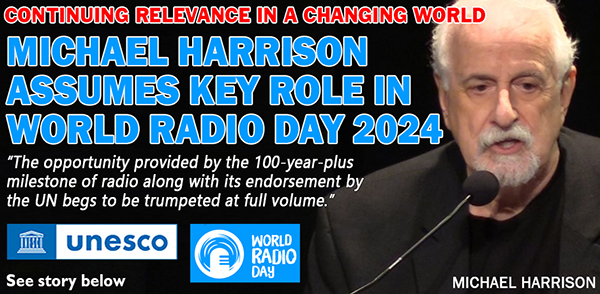
Michael Harrison Appointed Executive Advisor to UNESCO for the UN’s Celebration of World Radio Day 2024

TALKERS founder and longtime radio programming pioneer Michael Harrison has been appointed by the United Nations Educational, Scientific and Cultural Organization (UNESCO) to the position of Executive Advisor for the 2024 presentation of World Radio Day (WRD), celebrated each year on February 13.

The theme of the 2024 celebration is Radio: A century informing, entertaining and educating.  

Harrison issued the following statement: “In an era marked by the dizzying speed of technological innovation and the rapid obsolescence of one shiny new platform after another, radio is beginning its second century of service as one of the most dependable and widely-utilized forms of media in the world. WRD’s mission in 2024 will be to shine a broad floodlight on radio’s remarkable past, relevant present and promise of a dynamic future. The opportunity provided by the 100-year-plus milestone of radio along with the medium’s endorsement by the United Nations begs to be trumpeted at full volume. I am honored and invigorated at this delicate time in history to be able to participate in helping to celebrate this glorious, iconic medium on a global level.”

UNESCO has posted the following statement: “For many generations, radio has remained the most far reaching, easily accessible communication medium that informs and entertains all sectors of society. While in some regions it has been used to fuel hatred, divisions and conflicts, a lot of progressive legislation and regulatory mechanisms have been passed in many countries resulting in radio that broadcasts balanced news, programs and practices independent journalism in general.”

The statement continues: “Over the years radio practitioners have received training to improve their professionalism and adapt to changing editorial and ethical demands as well as technological developments especially radio’s incorporation into new popular digital platforms. Increasing access to reliable information and reaching audiences in remotest parts of countries in different languages, regardless of literacy levels, have been some of the greatest attributes of radio, still to be surpassed by any other media.”

Every year, UNESCO offers radios stations copyright-free material and suggests some ideas that radio stations could include following the annual themes decided by the WRD Committee, such as special radio shows and audios, open house, broadcast exchanges and increased listener interaction, among others.  Harrison will play a key role in facilitating these processes for 2024.

While UNESCO coordinates World Radio Day activities at a global level, UN member countries, through their radio stations and media stakeholders, celebrate the day in a variety of ways they see fit, including offerings of some optional 13 program ideas offered by UNESCO, information, news, audio and video resources every year.

Harrison will be reaching out to radio industry leaders worldwide to, as he says, “Do our best to raise awareness of radio’s ongoing importance and value and help the broader industry achieve that worthy goal, integrating into the new technology and social norms of this remarkable new era.”

Industry News

The Damning Myth of Spoken Word Radio: High Time Spent Listening (TSA) and Low Cume

By Walter Sabo
Consultant, Sabo Media
A.K.A. Walter Sterling
Radio Host, “Sterling On Sunday”
Talk Media Network

imDependency upon a PPM panel to deliver high time spent listening is a bad business model. Would you rather count on one person listening for one hour or four people listening for 15 minutes? Right.
A good music format program director knows exactly how to program talk radio in a PPM environment. Oddly, when a music programmer has the privilege of programming a talk station they seem to forget all of their programming knowledge. Both formats are measured by exactly the same technology and therefore if it “works” in music, it works in talk.

The reason “New Jersey 101.5” quickly became the highest cuming FM talk station in the world – for 20+ years – is because when Bob McAllanJay SorensenPerry SimonJohn Dziuba and I designed it, we had a simple process: Build a music station that takes a lot of phone calls. It was always programmed like a top 40 station and 33 years later it obviously worked.

The reason “Real Radio 104.1 in Orlando” was the only Howard Stern station that did not suffer the expense of having to change format when he was recruited to SiriusXM Satellite Radio was because the station was built as a heavily formatted music station that took a lot of phone calls. Note that Real Radio 104.1 and New Jersey 101.5 both air music non-stop on the weekends for the single purpose of targeting a specific cume demographic. It obviously worked.

What are the key elements of a music format that should be applied to talk in order to build cume?

  • Please, god, don’t flag the “breaks.”
  • Every show had a specific pace based on topic set up time and call length time which gave the station a consistent rhythm and sound.  All day.
  • No “records” from home!  No personal sound effects, jingles or that crap.
  • Constantly sell ahead. No yesterday calls, yesterday references. Sell what’s next.
  • Assume every single listener just tuned in. Explain the topic and give the phone number obsessively.
  • Listener driven not host driven. Every host is valuable and gifted but if a host makes the mistake of quitting, the interest needs and tastes of the listener are constant and can be reflected by the next host. A constant.

Mickey Luckoff, the brilliant president of KGO, San Francisco for decades explained why he hired most of his hosts from top 40  radio because, “I can teach them TALK but I can’t teach them radio.”  BTW yes, even 34-year morning host Jim Dunbar worked at WLS and KQV as a top 40 jock immediately before joining KGO to host a talk show.

Walter Sabo was a pioneer in the concept of targeted talk which allows a station to precisely reach a chosen demographic. He has had a robust list of consulting clients including, SiriusXM Satellite Radio, Conde Naste, CBS, Press Broadcasting, RKO General, Hearst, Fred Silverman Productions, and many more. His company HITVIEWS was the first major player to recognize and monetize online video stars known as “influencers.” He is on the nominating board of the Radio Hall of Fame. Reach him at 646.678.1110 or walter@sabomedia.com.  Discover Sabo’s network radio show here: waltersterlingshow.com.

Industry Views

Pending Business: No Time for the Fat Lady

By Steve Lapa
Lapcom Communications Corp
President

imIf you are a seller in the terrestrial radio business, please listen carefully. That faint voice you hear could be the Fat Lady warming up – old Brunhilde ready to wrap it up and put an end to that long, sad Wagnerian opera, known as traditional, transactional radio sales.

I’m not kidding here, folks.

When one of the big boys on the ownership side starts getting serious about real-time bidding for radio inventory, we are talking GoogleYouTubeAdSense-style modeling and that can move your radio station’s ad inventory faster than the super computers used to create this year’s NFL schedule.

Did you hear about what it takes to appease CBS, NBC, ABC, FOX, Paramount, ESPN, Amazon, and YouTube when they spend $112 billion in rights fees? Let us just say, you can’t please all the buyers all the time, but if you want to please some of the buyers some of the time you forget the sticky notes and call in the super-computer guys. I digress.

Not familiar with the bidding process developed by Google for ads primarily on YouTube videos? It is as easy and as much fun as eBay, Vegas, and your favorite silent charity auction all rolled into one.

Recent estimates put Google’s YouTube ad income at about $30 billion, arguably double the size of the entire commercial radio business. This of course does not include the estimated $165 billion from Google search ads, etc. They know the real-time bidding process better than any of us.

Imagine yourself a radio station owner, like I was, only this time having the daily revenue responsibility of 16 commercials per hour on 25 news/talk radio stations. Even if you focus on Monday-Friday and the traditional 6A-7P model, do your math, then think like a pro. NFL 2023-style supercomputer or old school peddle power? The caveat? Has anyone reading this column spoken to a human seller from the Google bidding platform? OOPS! There goes that Fat Lady again, getting a little louder this time.

Not so fast, Fat Lady, there is a silver lining for the skilled, high-achieving seller in this high stakes, real-time bidding future. Remember, Bugsy Siegel started some of this “bidding” on the Vegas strip in 1946. “Monday Night Football” launched in 1970 moving TV coverage into a multi-billion-dollar ad machine and Google started the online version of all this somewhere in 2005. My point is that fine-tuning for profit takes time and resources. The big boys just gave you a peek behind the curtain and showed you the future. The sellers who worked for me heard this opera in 2007, when one million iPhones were sold. That number now is over 2.3 billion. The future is here and moves fast. Refine your skills daily, learn, grow, and become so valuable to your organization, your name is always at the top of the “Don’t even think about it” list.

Someone please tell the Fat Lady to stop warming up and find a different stage… for now.

Steve Lapa is the president of Lapcom Communications Corp. based in Palm Beach Gardens, FL. Lapcom is a media sales, marketing, and development consultancy. Contact Steve Lapa via email at: Steve@Lapcomventures.com

Industry News

Talk Media Commentator C.C. Carter Shares Touching 9/11 Audio Podcasts with Radio

Longtime talk media host, commentator and director of the Good For You Network (www.goodforyounetwork.comClaire Carter (a.k.a. C.C. Carter) is making the audio files of two of her compelling short-form podcasts about 9/11 available at no cost for airplay on interested radio stations in time for this coming Monday’s 22nd anniversary of the tragic attack on America.

The first titled, “Never Again Should There Be a 9/11,” (8:00) is a plea for American government andim society alike to learn from the mistakes made before, during and after the tragedy so as to prevent such an atrocity from happening again. Carter tells TALKERS, “On the Sunday after 9/11, I listened to a sermon titled, ‘Making Sense of the Senseless.’ Its overriding message was: We cannot allow all these people to have died in vain. We need to do good in their name. And so to honor and remember all those who died, all those who survived, all those involved in the rescue and recovery efforts, as well as all those whose lives will never be the same, I have written and recorded a moving, memorable and thought-provoking piece, ‘Never Again Should There Be a 9/11,’ with the music, ‘Help is on the Way’ composed and performed by composer, David Friedman. It is all the more compelling when you watch the video on YouTube.” Carter adds, “We came together then. Can we come together again for the sake of the well-being of our nation and world. And what will it take to prevent such a horrific act from happening again? Thank you for caring and getting the vocals, the music and the video to as many people as possible around the world – including government officials who need to ensure our safety and security.” View the video here.
Regarding the podcast, “Reflections on 9/11,” Carter says, “Two months after 9/11, I went down to the World Trade Center site to pay my respects. I walked over to the makeshift ‘Teddy Bear’ memorial site, where people had spontaneously left notes and cards – and teddy bears. I wanted to write down some of what was left, because it was meant to be heard. I wanted to give voice to peoples’ hearts and heartache. And so, I ask you to listen to the raw emotions emanating from their hearts. ‘Reflections on 9/11’ (4:11) with music by Gunhill Road that you can download here. Please share with everyone you know. Remembering all those beautiful souls who left us that day is the least that we can do – and so much more.” Download “Never Again Should There Be a 9/11” here. To arrange a timely interview with C.C. Carter contact Victoria Jones at DC Radio Company. 917-865-3991 or victoria@dcradiocompany.com.

Industry Views

Politeness, Punctuality and Power

By Walter Sabo
Consultant, Sabo Media
A.K.A. Walter Sterling
Radio Host, Sterling On Sunday
Talk Media Network

imFor decades the power-lunch spot in Manhattan was the beautiful Four Seasons restaurant. Check it out: A history of the Four Seasons Restaurant in New York City – Four Seasons new ownership (townandcountrymag.com)
Top clients would host luncheons at the Four Seasons with Sabo Media. These included Walter Anderson, former chairman/CEO of PARADE magazine who was a regular customer. If the lunch was scheduled for 12:30 pm and I arrived at 12:15 pm, Anderson was already there. Next time, I would arrive at 12:05 pm for the 12:30 pm lunch; he was already there.

The restaurant manager/maître d’ explained that, “The most powerful person always arrives first.” Of course. The most powerful person could control where she sat, where she faced and what your view of the room would be. When Walter Anderson hosted future lunches, I arrived at about 11:15 am for the 12:30 pm meet!

If I had any early career success it was not because I knew anything, it was because of Eleanor Ranft, my assistant. Prior to working with me she had been Robert Sarnoff‘s assistant for 20 years. Robert, as-in-son of the General. (Eleanor knew how to address letters to ambassadors.) At the end of the workday, she would go over the telephone call sheet and make sure I had returned every call. Neither of us were going home unless I returned every call.

When addressing emails, the most powerful people return the emails instantly. Test it, send a note to the most powerful people you know, see what happens. Mel KarmazinBob PittmanHoward SternMichael HarrisonChris OlivieroKraig KitchinDavid YadgaroffBill WhiteLee HarrisDan MasonJarl MohnMarc Rowan instant answers. Instant response keeps a person in the deal-flow, the conversation and the action. Instant response makes them powerful.

Conversely, for weeks I tried to have lunch with a local market EVP, no answer. I didn’t want a job; I was trying to place a sales order for an agency friend! No answer. Finally, I asked the market program director why I never heard from his boss. Answer, “He doesn’t think you can do anything for him.” Obviously, the order went to a different company.

A common trait of every star I’ve had the privilege to know is that they are all extremely polite. For example, Randy ThomasCharlie VanDykeBruce Morrow, Howard Stern, the late Casey KasemElvis Duran are kindness and manners personified. They send thank you notes. Their interpersonal attitude is to share experience rather than to say look it up yourself. Many top executives built their entire career by sending thank you notes.

That being said, THANK YOU for being a client of Sabo Media. Thank you for clearing “Sterling On Sunday” on stations like KMOX, KMBZ-FM, WPHT, KDKA and Albany’s Talk 1300.  Have a pleasant Labor Day.

Walter Sterling-Sabo can be contacted at Walter@sabomedia.com or 646.678.1110 mobile. He’ll answer immediately. Sabo Media’s robust client list over the years has included PARADE magazine, Sirius Satellite Radio, The Wall Street Journal Radio Service, RKO, Salem, and CBS. Sabo was the first to monetize online video stars and influencers through his company HITVIEWS.

Industry Views

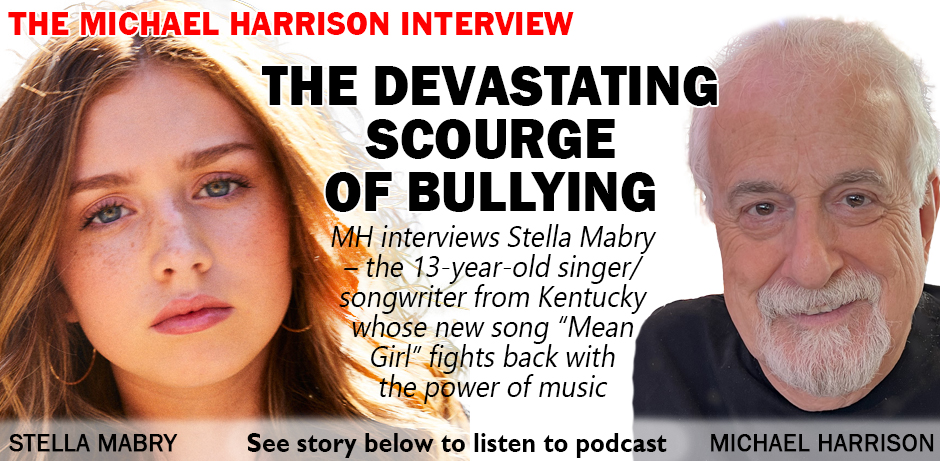
13-Year-Old Singer/Songwriter Stella Mabry Discusses Bullying on Harrison Podcast

Stella Mabry – a stunningly talented 13-year-old singer/songwriter from Owensboro, Kentucky – is this week’s guest on the award-winning PodcastOne series, “The Michael Harrison Interview.” At the tender age of 10, Stella was the victim of school bullying… but she did something about it. She wrote a song as a message to her tormentor titled, “Mean Girl,” and it proved to be a far more effective defense mechanism and diplomatic bridge than a nasty verbal or physical escalation of the problem. The power of music made a huge difference.

Stella’s parents had already recognized their daughter’s musical talent at an early age and gave her lessons and encouragement. But her dad was so taken with the quality of the anti-bullying song that he booked her into a local studio, recorded a rough demo and sent it to his old friend in Los Angeles. That old friend happened to be Les Garland – one of the most plugged in-pop media executives of the past half century – a brilliant radio programmer-turned-innovative-media-entrepreneur who, among his long list of achievements, co-founded MTV.

Garland was so impressed by the song and its back story that he played it for a couple of his buddies in the LA music scene – Sasha Krivtsov and Paul Mirkovich from the famed NBC’s “The Voice” house-band. They loved it and agreed to record it with Stella in the renowned L.A. studio, Sound Factory. With Garland now serving as executive producer, the entire band with instruments in hand was in-studio to record the song as well as a number of other tracks written and performed by Stella. The track “Mean Girl” and its accompanying music video are being released TODAY (8/22). Check it out on YouTube at www.MeanGirlVideo.com.

Michael Harrison says, “Bullying is a major societal cancer with devastating impact. Although with us since the dawn of time – bullying is a worsening problem that torments so many of our children in this era of social media where there’s no relief from taunts, lies and cruelty 24/7 even at home – away from school or the playground. It can lead to depression, unspeakable violence, and teen suicide. I am gratified to be able to interview this young woman about this deeply important topic at such a key point in what could very well become a major musical career. She is authentic, talented and on a meaningful mission. I encourage my colleagues in talk media to book her as a back-to-school guest as soon as possible… before the music media world gobbles her up.” Harrison suggests that interested hosts and producers contact him directly at michael@talkers.com.

Listen to the podcast in its entirety here.

Industry News

Michael Harrison Says AI is One of the Most Important Talk Topics of Our Times

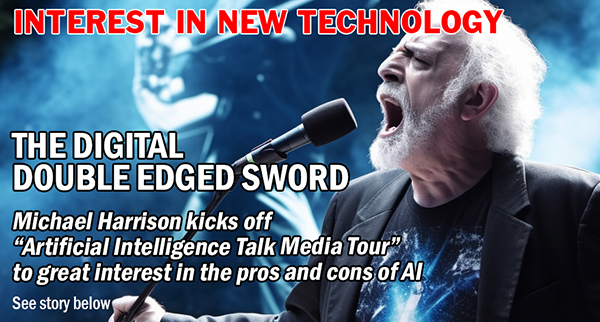
TALKERS founder Michael Harrison has kicked off a nationwide guesting tour of talk shows promoting discussion of the upside and downside of AI in conjunction with the release of the new song, “I Got a Line in New York City,” by the long-established classic rock group, Gunhill Road. Harrison performs lead vocals on the track performed with band members Steve GoldrichPaul Reisch and Brian Koonin. The music video of the song (produced by Harrison’s son and TALKERS associate publisher Matthew B. Harrison) has been described as a computer’s “fever dream about the Big Apple.” Although the music is totally organic, all of the visual graphics on the video have been assisted in their creation by generative artificial intelligence. Harrison says, “There’s huge interest in the topic of AI including the existential issues of its potential impact on our species. In the art community, debate is raging over whether AI enhances originality and creativity or if it is ushering in the death of individual artists and the role they play in the humanities.” See that video here.

Harrison launched the tour late last week appearing on the Rich Valdes show on Westwood One and has subsequently appeared on network programs hosted by Doug Stephan, Dr. Daliah Wachs, and WABC’s Frank Morano, as well as Harry Hurley on WPG, Atlantic City,  Todd Feinburg on WTIC-AM, Hartford and Michael Zwerling on KSCO, Santa Cruz.  WOR, New York has posted the video and an  accompanying story here.

To book Michael Harrison please call Barbara Kurland at 413-565-5413 or email info@talkers.com

Industry News

ViceTV’s Dark Side of the 2000s Looks at “Shock Jock” Wars

The ViceTV series “Dark Side of the 2000s” delves into the rivalry between radio personalities Howard Stern, Erich “Mancow” Muller and Opie & Anthony in episodes 5 and 6 titled, “Shock Jocks Part 1: The Rise” andim “Shock Jocks Part 2: The Fall.” Through interviews with major players in the radio and entertainment industries, including TALKERS magazine publisher Michael Harrison, the story of the growth of male-targeted “FM talk” along with the vicious battles that took place between the major players is told. ViceTV is on a number of on-demand services. The episodes are also behind a paywall at vicetv.com.

Industry News

PodcastOne and Comedian Brendan Schaub Strike Distribution Deal

PodcastOne announces it obtains the exclusive network distribution and advertising sales rights to comedian Brendan Schaub’s network of podcasts including “The Schaub Show,” “The Fighter and The Kid,” and “Theim Golden Hour.” Schaub’s signature podcast, “The Fighter and The Kid,” is a weekly show hosted by the comedian and former professional UFC fighter and co-hosted by actor and comedian, Bryan Callen. “The Schaub Show,” explores the intersection of combat sports and life in and outside the sport. “The Golden Hour” is a weekly look at all of the most relevant cultural and social topics driving conversations in America. Schaub is joined on each show by a rotating collection of top-tier comedians who stop by to share their thoughts on everything from top trending news and engaging fan submitted videos.


Industry News

New Research Shows Audio Advertising Drives Significant Attention Over Other Platforms

Research and consulting firm dentsu announces the results of its research measuring attention in audio advertising that was conducted in partnership with Lumen Research and with audio firms Audacy, Cumulus Media, iHeartMedia, Spotify and SXM Media. Dentsu measured attention in various audio formats and environments across three unique studies in podcasts, radio and music streaming. The podcast study was conducted with participating partners Audacy, Cumulus Media, iHeartMedia, Spotify and SXM Media. The radio study was conducted with Audacy, Cumulus Media, and iHeartMedia. The study found that audio advertising (including podcasts, radio and music streaming) drove significant attention compared to other ad platforms: 1) Average attentive seconds per (000) APM for audio advertising was 10,126 compared to dentsu norms of 6,501 APM; 2) On average, 41% of audio ads generated correct brand recall (vs. 38% of dentsu norms); and 3) Brand choice uplift for audio ads was 10% (vs. 6% for dentsu norms). The study also found that each audio destination has its own unique strength in driving attention and brand impact: 1) Podcasts (measured across Audacy, Cumulus Media, iHeartMedia, Spotify and SXM Media) drove the highest attentive seconds per thousand impressions compared to other digital, social and TV benchmarks. In addition, we saw that brand choice uplift was higher for host reads compared to traditional audio ads within podcasts; and 2) Radio (measured across Audacy, Cumulus Media and iHeartMedia) also impressively drove higher attentive seconds per thousand impressions compared to other digital, social and TV benchmarks. Radio shined as the most efficient of the audio formats studied, proving to be 10x more efficient when compared to the average online video ads measured through dentsu’s Attention Economy. Dentsu Media US EVP Jennifer Hungerbuhler states, “We understand that radio advertising is a cost-efficient way to build reach, that podcast listeners have great affinity not only to the programming but also podcast hosts, and that smart speakers are a compelling new destination for audio ads on streaming services. It’s nice to see each of these unique strengths of different audio formats validated by our audio Attention Economy Study.”

Industry News

WFAN’s “Evan & Tiki” to Simulcast on SNY

SNYSportsNet New York – announces that WFAN on SNY will continue as WFAN’s “Evan & Tiki” program – starring Evan Roberts and Tiki Barber – makes its simulcast debut on Monday (7/24) from 4:00 pm to 6:00 pm ET. SNY president Steve Raab states, “We are happy to bring ‘Evan & Tiki’ to SNY. Our partnership with WFANim has not only enhanced our daily lineup, but it has elevated New York sports news and programming for a very loyal and passionate fan base.” Audacy New York market president Chris Oliviero comments, “The debut of ‘Evan & Tiki’ is the next chapter in our tremendous partnership with SNY. Together we will bring the very best in sports audio and video to New York fans daily, which is exactly what they have come to expect from WFAN on SNY.”