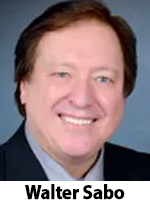
By Walter Sabo
a.k.a. Walter Sterling, Host
WPHT, Philadelphia, “Walter Sterling Every Damn Night”
TMN syndicated, “Sterling on Sunday”
 The plague of pessimism about the future of radio is fueled internally by radio employees. Doomsayers are logically found in the sales department. All day, salespeople meet with buyers. A buyer’s job is to negotiate a lower price by arguing radio’s negatives. The wall of negativity thrives within the work environment of a seller. Tough. But there is little or no reason for pessimism.
Kevin O’ Leary (a.k.a. “Mr. Wonderful” on TV’s Shark Tank) is a pragmatic investor. When asked about AI’s impact on radio, he says, “It’s the same phobia we had when television hit radio. ‘Oh, it’s going to decimate radio!’ No, it’s not. The art form exists today, even bigger, terrestrial, and in space. To me, AI is just a tool.” (Variety. January 5, 2026)
Surprising to many, radio’s audience numbers today are virtually the same as they were in 1970.
Radio Listenership Today (2020s)
Weekly Reach: As of 2022–2023, approximately 82% to 88% of Americans aged 12 and older listen to terrestrial (AM/FM) radio in a given week.
Monthly Reach: Nielsen data indicates that AM/FM radio reaches 91% of U.S. adults each month.
Daily Listening: Approximately 66% of U.S. adults listen to broadcast or streaming AM/FM radio on a daily basis.
Resiliency: Despite the rise of podcasts and music streaming, 55% of Gen Z in the U.S. still listen to AM/FM radio every day, and it remains the top reach medium, even exceeding social media.
1970s: The era of AM to FM transition and the peak of top-40 terrestrial radio, with 25 million CB radios also becoming popular in the mid-70s.
Today: While reach is still high, the amount of time spent listening is more fragmented, with radio facing competition from streaming (Spotify/Apple Music) and podcasts, although it remains the dominant ad-supported audio choice in cars.
CB radio, cassettes, 8-tracks, CDs, DVDs, Walkman, iTunes, iPhones, SiriusXM, Spotify, podcasts, Pandora… all terminators of radio. None of them made a dent. The killer of radio will be radio’s odd internal pessimism that while predicting doom that never comes drives actions that are suicidal: Elimination of audience qualitative research. Tracking. More Tracking. (Radio Fracking!) No external marketing. Endless talent cuts. No contests. (A $1,000 national contest WOW!) None of those cuts are good business because they cut potential revenues.
And yet there is a relentless, funded determination to end all FCC ownership caps allowing companies to buy more radio stations to operate with great Panglossian efficiency!
Walter Sabo has been a C-Suite action partner for companies such as SiriusXM, Hearst, Press Broadcasting, Gannett, RKO General, and many other leading media outlets. His company, HITVIEWS, in 2007, was the first to identify and monetize video influencers. His nightly show “Walter Sterling Every Damn Night” is heard on WPHT, Philadelphia. His syndicated show, “Sterling On Sunday,” from Talk Media Network, airs 10:00 pm-1:00 am ET, and is now in its 10th year of success. He can be reached by email at sabowalter@gmail.com.
Share this with your network
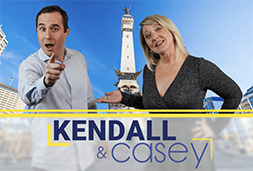 last 9 years. Being your voice, using my platform to speak up for you, to take on the powerful, the connected, the politicians, has been the greatest honor of my professional life. You have responded with incredible ratings and support of our advertisers that stood behind me. In the process we have formed an unbreakable bond. In the end, the show was always about us. In a battle together. I also want to thank those of you who have written letters in support of me the last 3 weeks. I was so moved by the outcry demanding this beautiful thing we’ve forged together keep going at the place we made it happen. If you want the answers why it will not occur, that’s a question for Urban One. We have some amazing things coming soon! Our bond is so much bigger than any singular platform or frequency. You have proven that in recent weeks. I can’t wait to tell you all about our new opportunities together in the near future. In the meantime, thank you for all YOU have given to me the last 9 years. Your loyalty and dedication allowed me to live out my boyhood dream. I will never be able to thank you enough.” Kendall hasn’t publicized his plans for the future but appears to be leaning toward a digital platform as he’s continuing to post Indiana and Indianapolis news via social media.
 serve in the public interest, the FCC yesterday issued a Guidance on Political Equal Opportunities Requirement for Broadcast Television Stations. While the memorandum is written to television stations, it obvious applies to radio stations as well. The memo ultimately addresses the 1959 order that exempts broadcasters from providing equal time to qualified candidates on any: (1) bona fide newscast; (2) bona fide news interview; (3) bona fidenews documentary (if the appearance of the candidate is incidental to the presentation of the subject or subjects covered by the news documentary); or (4) on-the-spot coverage of bona fide news events (including but not limited to political conventions and activities incidental thereto). Programs such as “The Tonight Show” and “The View” are cited as entertainment shows in which an interview segment can qualify as a bona fide news interview. Regarding this, the memo concludes with two important paragraphs:
 competition local radio stations today face for audiences and vital advertising revenues from online and satellite content providers and digital ad platforms not subject to any comparable restrictions on their scale and scope; the dire negative effects that consumer and advertiser substitution of competing digital audio content and advertising for traditional radio has had on the listenership and advertising revenues garnered by local radio stations, including in mid-sized and small markets; and how the retention of asymmetric ownership restrictions has prevented radio broadcasters from gaining local scale to take advantage of important economic efficiencies, obtain investment capital, and better compete for audiences and advertising revenues, and thus enhance – or even maintain – their provision of news, emergency information, and valued entertainment and sports programming in local communities across the country at no cost to the public.” Responding to testimony from musicFirst Coalition and the Future of Music Coalition – referred to as the Coalitions – NAB writes, “First, the fact that the Coalitions continue to hold themselves out as protectors of small, local independent broadcasters not just borders on the absurd but crosses over into full-blown absurdity. The Coalitions represent the interests of the music industry, which is dominated by three consolidated international record labels. Compared to even the largest radio station groups, the giant record labels are the 800-pound gorillas of the music world. Those three labels earn billions more in revenue than the approximately 11,000 full-power commercial AM/FM stations combined. As NAB earlier reported, the three major music companies jointly generated about $2.9 million per hour in 2023. In remarkable contrast, in 2023 and 2024 the vast majority of radio stations garnered less – and often much less – than $2.9 million per year in advertising revenues. Needless to say, the Coalitions have never explained how local radio stations earning such low levels of revenue (and even lower, if any, profits) are supposed to keep talented employees and provide high quality programming, including popular music, sports, and informational programming, such as weather updates and emergency information, OTA and free to the public without achieving increased local scale, greater economic efficiencies, and more robust ad revenues.
 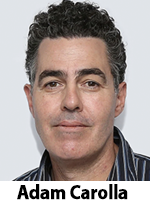 Podcast” joins SiriusXM’s The Megyn Kelly Channel for same-day distribution of Carolla’s daily show, Tuesdays through Fridays at 7:00 am – 9:00 am ET. PodcastOne co-founder Kit Gray states, “PodcastOne is thrilled to extend our relationship with Adam and his ‘The Adam Carolla Show.’ Adam has paved the way for podcasters around the globe and his podcast is continuously growing with audiences and with advertisers. We’re proud to be working alongside one of the greatest in the business as he sets the tone for success in the genre.”
 February 2. Audacy Chicago SVP and market manager Kevin Cassidy states, “Chicago fans are the best in the world, and they deserve coverage that matches their passion. Our roster features the best talent in the city with unmatched dedication to delivering the latest sports news and insight. We’re excited to expand The Score’s reach through this FM simulcast, bringing our premier sports content to an even wider audience so they can join the conversation and stay connected to their favorite Chicago teams.”
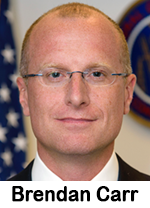 made clear, broadcasters are different than every other distributor of media. Specifically, broadcasters are required by both the Communications Act and the terms of their FCC-issued licenses to operate in the public interest. This sets them apart from cable channels, podcasts, streaming services, social media, and countless other types of distributors that have no public interest obligation. The FCC’s broadcast hoax rule, its news distortion policy, its political equal opportunity regulation, its prohibition on obscene, indecent, and profane content, its localism requirements — all of those and more apply uniquely to broadcasters. Congress has instructed the FCC to enforce public interest requirements on broadcasters. The FCC should do exactly that.” Carr added, “To ensure that broadcasters can meet their public interest obligations, the FCC has taken a number of actions, including seeking public comment for the first time in more than 15 years on the relationship between the large, national programmers on the one hand and the many local broadcast television stations on the other. Comments in that proceeding suggest that many local broadcasters are concerned that the national programmers have amassed enormous power and influence in recent years and have made it more challenging for local broadcasters to fulfill their public interest obligations. The FCC is going to continue its efforts to empower local broadcasters to meet their public interest obligations.”
 commercially unreasonable rate for its Nationwide Report may cause it to have to do away with the Nationwide Report altogether. This testimony accompanied Nielsen’s request for a stay pending appeal as it appeals to the Second Circuit. This is the latest in action in Cumulus’ suit alleging that
  Nielsen is illegally leveraging its dominance over national and local radio audience data to stifle rivals and charge inflated prices. Judge Vargas denied the stay pending appeal but did grant an administrative stay will be in effect only until January 16, 2026, to allow Nielsen time to file a motion for a stay in the Second Circuit Court of Appeals. Tunkel’s testimony states that the order would cause Nielsen “significant irreparable harm if required to comply with the Court’s ruling during the pendency of Nielsen’s appeal… As a result, Nielsen would not be able to apply that policy in any of the at least ten negotiations with clients that Nielsen expects to have in 2026. If Nielsen is unable to apply the Network Policy, then it will be hindered in its ability to ensure that it can recover the costs of collecting the local radio-ratings data that make up the Nationwide report and spread those costs appropriately across the customers that use the products generated from those joint costs. If Nielsen cannot recover these costs, then it may have to retire the Nationwide report, similar to when Nielsen retired its other national data product, RADAR. If it does not retire the Nationwide report, it may have to pass a higher share of the costs of collecting local data on to other customers, including local radio stations, hurting Nielsen’s negotiating position with respect to those customers, as well as those customers themselves.”
 Every media creator knows this moment. You are building a segment, you find the clip that makes the point land, and then the hesitation kicks in. Can I use this? Or am I about to invite a problem that distracts from the work itself?
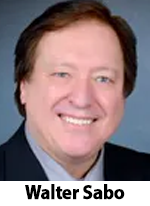 Advice columns blanketing sites like LinkedIn, the Skimm, and Forbes 2.0 – aimed at recent graduates – encourage their readers to seek and bond with an at-work mentor. After years of skimming “5 bullet” articles, I have reached the tipping point and I’m not going to take it anymore: Seeking a mentor as a career strategy is horrible advice. Just horrible.
 build WPYB-AM in Benson, North Carolina. The company says that at a time when many smaller communities lacked access to local broadcasting, he recognized radio’s unique ability to inform, connect, and serve and that vision became the cornerstone of the company. Beasley CEO Caroline Beasley comments, “Reaching 65 years is a testament to the resilience, creativity, and dedication of the people who make Beasley Media Group what it is today. While we are incredibly proud of our legacy, this milestone is equally about where we are headed — continuing to evolve, embrace innovation, and strengthen the local connections that have always set us apart.” The company currently operates 55 radio stations in large and mid-sized markets. Beasley says the anniversary theme — “65 Strong: Forward Together” — reflects both the strength of the company’s foundation and its focus on the future.
 With the conclusion of 2025 at hand, we are entering the second half of the third decade of the 21st century. It will be a remarkably transitional period for the talk radio industry and its closely associated fields in talk media, as well as media-in-general.
 addition to their existing audio distribution. When this video feature launches, creators will be able to upload their podcast episodes, including full-length video versions, through their standard RSS feeds for seamless distribution in iHeartRadio.” The company goes on to say that this feature will 1) allow podcasters to control how their content is presented; 2) allow creators control over their monetization, with no revenue share required to iHeart; and 3) give them the freedom to have their videos hosted and served from wherever they want and not be tied to an iHeart-owned hosting provider. iHeartMedia chairman and CEO Bob Pittman explains, “While audio remains the backbone of the podcast medium, as well as its primary source of audience connection and the reason for the industry’s explosive growth, video podcasting is now emerging as a completely separate and incremental form to audio, in the same way that podcasting evolved as a new layer on top of broadcast radio. At iHeartMedia creators come first. Providing this new video distribution capability for free to our creators is an additional testament to our continuing focus on creators’ success and is consistent with how and why the podcast industry was built to begin with.”
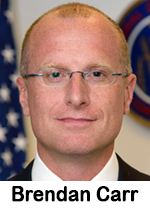 working to empower local broadcasters to serve the public interest and meet the needs of their communities. As Congress, the Supreme Court, and the FCC have all made clear, broadcasters are different than every other distributor of media. Specifically, broadcasters are required by both the Communications Act and the terms of their FCC-issued licenses to operate in the public interest. This sets them apart from cable channels, podcasts, streaming services, social media, and countless other types of distributors that have no public interest obligation. The FCC’s broadcast hoax rule, its news distortion policy, its political equal opportunity regulation, its prohibition on obscene, indecent, and profane content, its localism requirements – all of those and more apply uniquely to broadcasters. Congress has instructed the FCC to enforce public interest requirements on broadcasters. The FCC should do exactly that.
 Murder,” “Joe and Jada,” “Dear Chelsea” with Chelsea Handler and “This Is Important” with “Workaholics” stars Adam Devine, Anders Holm and Blake Anderson. iHeartMedia CEO Bob Pittman states, “Audio podcasting has been the fastest-growing medium over the past 20 years, and now we’re thrilled to expand that experience with an exciting new category – video podcasts. Netflix has a leading video-first service, and this partnership perfectly complements our strong audio foundation. Working with Netflix – an important leader in entertainment – gives fans one more way to connect with the personalities they love and opens the door to new audiences, including viewers discovering these shows for the first time.”
 the multiyear deal, the Newsmax channel will continue to be available in YouTube TV’s Base Package. Newsmax SVP of distribution Andy Biggers says, “This agreement keeps Newsmax, the fastest growing cable network in the U.S., on YouTube TV, the fastest growing pay TV platform in the U.S., for years to come. YouTube TV have been great partners, and we look forward to continuing to grow together.”