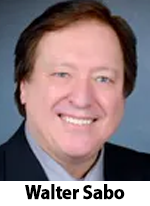
By Walter Sabo
A.K.A. Walter M Sterling
WPHT, Philadelphia
Sterling Every Damn Night
Sterling on Sunday Syndicated, TMN
Another Side of Midnight, WABC, New York
 In 1952, the success formula for today’s radio was discovered and put into practice by two hungry entrepreneurs: Todd Storz and Gordon McLendon. Both men owned dying radio stations in medium and major markets. The industry was suffering from a lack of purpose or solutions due to the advent of television which drove the migration of hit network radio shows to television. Lucille Ball, Bob Hope, and Gertrude Berg were on radio first.
Storz and McLendon developed “Top 40” with their own brains and money. Top 40 was research and focus group based, as well as. Storz tried it first in Omaha, then Kansas City and Miami. McLendon in Dallas, Houston, Minneapolis, and New Orleans. The formula was simple but not obvious. Their common-sense solution worked in all formats: music and talk.
Ruth Meyer was Storz’s PD in Kansas City and I worked with her at ABC. She was very clear when outlining the Storz history, “It was all Todd.”
Success ingredients
The formula: Target one demographic. Play their hits – often. Call out the names of as many people in the audience as possible – make the listener a star. Present with enthusiasm. Promote at every local crowd event possible. Repeat.
All of the McLendon and Storz stations grew instantly, usually to number one.
That ingredient list works repeatedly for station after station for decades. But, and here’s the but, all of those ingredients have to be in the recipe. Leave out promotion, for example, or research, and it doesn’t work. But the full ingredient list does work for every single format.
I asked Mickey Luckoff, who ran talker KGO as the number one station in San Francisco for most of our lives, how he selected his on air talk hosts to which he replied, “They all come from top 40 because I can teach them talk but I can’t teach them radio.” His promotions were non-stop and smart, TV campaigns were non-stop and research, yes, research – non-stop!
When Adult Contemporary was evolving, my team was responsible for the NBC FM properties. Corporate finance people who went to Wharton urged me to go slow, layer in expenses when launching this odd new format. I knew layering was a recipe – for failure!!! All the ingredients had to be rolled out at once. In 1981, WYNY in New York had a $2 million dollar cash and a $2 million barter promotion budget. Result, a $3 million profit and a 5 share. Thanks to PD Pete Salant and GM Al Brady Law. We used the Storz/McLendon recipe with AC music and Dr. Ruth, it obviously works.
WGMS-FM was a classical station in Washington, DC. When it was owned by RKO and run by visionary Jerry Lyman, it applied the Storz/McLendon recipe to classical music. Their promos announced that WGMS played “Real Oldies – Your favorites from the 1600s, 1700s and 1800s!” WGMS aired a tight playlist of hits. Special weekends were popular, such as a “Beethoven Weekend” with t-shirt giveaways. The station was a profit monster, top 10 in Washington DC.
Five years ago, WABC-AM was about 28th in NYC as a result of cutting costs, by god the cost cutting was epic and so was the failure. Today, John Catsimatidis, the owner, and Chad Lopez, the president, have grown the station to a 4 share and number eight in New York. An AM talk station, number eight and growing. What? How? They put in all the ingredients. The station is data driven. The talent is live. External paid ads run for WABC almost every single day. The air team goes to local events to meet the crowds. WABC airs live listener music requests and dedications on the weekend with Cousin Bruce Morrow and Joe Piscopo – live. Did I mention live?
Today not history
The team is happy. They are making radio. This isn’t nostalgia. Mr. Cats is a very current based businessman who expects results. Like Storz and McLendon he is an entrepreneur, a private owner deploying common sense. He’s doing what is proven, what works. Bravo.
Conclusion: There is nothing wrong with radio. Just stop. Include every ingredient in the proven recipe; expect stunning results.
Walter Sabo has been a C-Suite action partner for companies such as SiriusXM, Hearst, Press Broadcasting, Gannett, RKO General, and many others. His nightly show “Walter Sterling Every Damn Night” is heard on WPHT, Philadelphia. His syndicated show, “Sterling On Sunday,” from Talk Media Network, airs 10:00 pm-1:00 am ET, and is now in its 10th year of success. He recently began hosting “Another Side of Midnight” weekends on WABC, New York. He can be reached by email at sabowalter@gmail.com or phoned at 646-678-1110.
Share this with your network



 Time Spent Listening to podcasts has now surpassed TSL with spoken word radio. And both are fraught.
 The rise of independent, talk show-style political commentary on YouTube has created a new class of media actors who do not see themselves as broadcasters, journalists, or publishers. They see themselves as creators. That distinction is real in terms of identity, tone, and platform. It is not real where it matters most: liability.
 Assessing the hourly threat to the very existence of the medium of radio is a popular hobby among conventioneers. The audience levels for radio are astonishingly constant since 1970, but according to “radio people,” they are living at the edge of a volcano. Spotify radio, SiriusXM radio, Pandora radio, TuneIn radio, Internet radio, there are all kinds of radio! General Motors wants to throw AM/FM radio out of the car as in “do you really need radio in the car?” Radio’s response to the in-car-removal threat is by promising non-stop typhoons and hurricanes.
 TALKERS “Heavy Hundred” national prominence for years, originally launching his daily three-hour “The Dr. Asa Show” on its flagship radio affiliate, iHeart’s WLAC, Nashville. Andrew has subsequently and simultaneously returned to his roots as a professional wrestler and recently joined TNA Wrestling as the company’s ringside physician and head of sports medicine.
 manage the business as CEO upon successful acquisition.” Warshaw also says he steered SFM and Del Nin to the deal that made SFM a majority stake holder of the new Audacy in early 2024 and alleges he was promised he’d be the next CEO of Audacy or that he would get 5% of SFM’s profits from the Audacy acquisition.
 Now, in recent court filings, Warshaw claims that by mid-2023 he had identified HG Vora as the key holder of Audacy’s distressed debt and, through industry contacts, came to believe that HG Vora was already aligned with Cumulus Media to merge the two companies. But the filings stop short of proving that such a deal ever existed in a formal sense.
 Devan Kaney is among those cut. In 2024, Kaney was promoted to sideline reporter after the station let Howard Eskin go. She’d appeared regularly on the morning show with Joe DeCamara and Jon Ritchie. She’s quoted in the Philadelphia Inquirer saying, “I had a blast working at WIP and sincerely enjoyed my time there. But as the old saying goes, when one door closes, another opens.”
 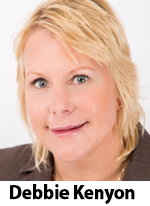 signals as WSCR-AM/FM “The Score” and news/talk WCCO-AM. Audacy president and CEO Kelli Turner comments, “Debbie Kenyon has been a pillar of our business for over a quarter century, and her elevation to regional president for our Central region is a testament to her ability to drive innovation and deliver consistent performance. Her appointment supports our commitment to empower our teams and build on our unmatched presence in local markets and communities while fully leveraging our scale and reach.” Kenyon joins Jeff Federman, Mark Hannon, Claudia Menegus and chief business officer Chris Oliviero in regional president roles overseeing key Audacy markets.
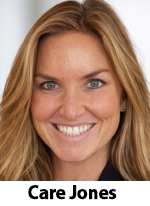 iHeartMedia division president Jeff Thomas says, “Over the past three months I have had the opportunity to work with Care and I can say without hesitation that she is the best person for this important role. Her leadership and coaching skills make her a perfect fit for the position.” Jones comments, “I’m absolutely thrilled to step into the role of market president at iHeartMedia — it’s an incredible honor and an even greater opportunity. I can’t wait to celebrate big wins, chase bold goals and grow alongside a truly exceptional team.”
 Good News/Bad News: Fender‑benders, slip‑and‑falls, and other “injuries caused by the negligent, careless, or reckless actions of others” will always happen. That’s the good news…for personal injury attorneys. Their bad news is that supply WAY-exceeds demand, and their advertising reflects it.
 Mamdani that was shown at the Inner Circle, the annual press corps roast. Some Republicans are accusing Sliwa of cozying up to the Democrat mayor who beat him in November. But Sliwa, who is now part of the WOR, New York morning show, tells The New York Times that its hypocritical of Republicans and WABC owner John Catsimatidis to complain, noting that “Mr. Catsimatidis met with Mr. Mamdani last week and that Mr. Trump has met with the mayor in the Oval Office.”
  If you work in radio, you’ve heard every flavor of AI anxiety. Some fear it will wipe out jobs. Others treat it like a super shortcut – cranking-out spots, promos, and proposals faster and cheaper. Kate O’Neill’s
 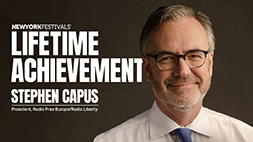 recognized alongside this esteemed community of storytellers. This honor is not mine alone, but a testament to the journalists I’ve worked with throughout my career – especially my RFE/RL colleagues who are committed to showing the world what is happening inside places like Ukraine and Iran. Their passion for excellence and dedication to the truth inspires me each day. My deepest gratitude to my family, whose support has made all of this possible.”
 Let’s start with what NOT to do, The 7 Deadly Sins Of Small Business Advertising:
 “conducting a search for a new director of sales, a dynamic leader who values their connection with the Long Island community. The ideal candidate will be a high-energy seller experienced in developing custom marketing solutions leveraging assets like broadcast media, digital capabilities, and event marketing. Leadership experience, a passion for driving results, and a talent for building strong client relationships are essential.”
  journalists. The attorney for Hoffman and co-litigants Brandi Kruse and Jonathan Choe argued that the “process used to deny them press credentials was vague and arbitrarily applied, violating their due-process rights, and withholding access because of they disagree with the lawmakers’ political views violates their constitutional rights of free speech and free press.” U.S. District Judge David Estudillo denied the TRO, saying, “The three failed to show that they are likely to succeed on their free press or due process claims, and the ‘House has a substantial interest in ensuring the reporters it permits to access the House floor meet the credential standards promulgated so the House may debate and pass laws without interruption or lobbying in that space.’” This story, as reported by KSL-FM, Salt Lake City, says, “The Washington State Capitol Correspondents Association guidelines for granting press passes says the person must be ‘a bona fide journalist’ and there must be a line ‘between professional journalism and political or policy work.’ The association shifted the credentialing process to the Legislature after the three threatened a lawsuit in 2025. The Senate eventually issued the passes, but the House took over the process and denied the pass requests.” The three say they will appeal.
 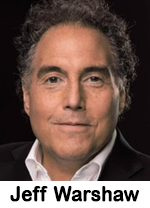 Management’s Michael Del Nin in 2022 and began working together “to try to acquiring Cox Radio, with Del Nin agreeing that Warshaw would manage the business as CEO upon successful acquisition.” While both parties were doing due diligence on the CMG deal, Warshaw learned that an Audacy majority stake holder was willing to sell its stake in the company. Warshaw says he steered SFM and Del Nin to the deal that made SFM a majority stake holder of the new Audacy in early 2024. Warshaw alleges he was promised he’d be the next CEO of Audacy or that he would get 5% of SFM’s profits from the Audacy acquisition. Later, SFM filed a motion to strike arguing that talks between Del Nin and Warshaw did not rise to the level of an employment offer. In his recent filing with the court, Warshaw says SFM reads “the Complaint in the light least favorable to Plaintiff. And they introduce new facts and make factual arguments that must be left for resolution by a jury at trial. Even so, based on the Complaint’s detailed allegations, Defendants’ arguments fall apart. Defendants ask the Court to believe that Jeffrey Warshaw, a veteran executive and dealmaker in radio, attempted to ‘cozy up’ to Defendants, newcomers to radio. But why did they seek an introduction to Warshaw in the first place? Why did they need Warshaw to source the Audacy transaction, and quickly ask him to introduce them to Audacy’s controlling debtholder? Why did Michael Del Nin call Warshaw 107 times between October 2023 and October 2024? On breach of contract, Defendants argue that the Complaint does not plead definite and certain terms of the contract between Warshaw and SFM. That ignores the definiteness of the contract terms alleged, as well as controlling precedent holding that an oral agreement is enforceable so long as missing terms can be ascertained by fair implication or industry custom. Defendants also downplay the value of Warshaw’s sourcing of the Audacy deal and his introduction of Defendants to the firm holding a controlling interest in Audacy debt.”
 AI is now embedded in the modern newsroom. Not as a headline, not as a novelty, but as infrastructure. It drafts outlines, summarizes complex reporting, surfaces background details, and accelerates prep for live conversations. For media creators operating under relentless deadlines, that efficiency is not theoretical. It is practical and daily.
 They wanted WOW but those calls were taken. Still the station was known as WOW and boasted that Johnny Carson started his broadcast career there. The station took the calls KXSP in 2005 and was broadcasting a sports talk format using ESPN content. SummitMedia sold the station’s tower land, prompting the station’s sign-off.
  brands with promotion nationally across iHeartMedia’s multi-channel ecosystem. iHeartMedia president of business development and strategic partnerships Michael Biondo states, “This partnership with the International Flag League showcases iHeart’s commitment to supporting emerging sports and the communities that champion them. By combining iFlag’s explosive growth with iHeart’s unmatched reach, we’re creating new opportunities for athletes, fans and brands to engage with the sport like never before.”
 patriotic, pro-America content that celebrates the American journey and inspires its citizens by highlighting the historic accomplishments of this great nation from our founding through the Trump Administration today.” Carr adds, “On July 4, 2026, America will celebrate the 250th Anniversary of the signing of the Declaration of Independence. That revolutionary document set forth our founding principles – including Life, Liberty, and the pursuit of Happiness – and put America on a collision course with destiny. Over the following centuries, the American story has defined modern history and spread freedom, opportunity, and prosperity across the globe. As America’s 250th anniversary approaches, it is important to reflect on the ideals and events that have defined our past while keeping an eye towards our country’s bright future. The White House is leading our national celebration of this historic event with the Salute to America 250 Task Force, which calls on the federal government, among others, to mark this momentous occasion. As part of this effort, I am calling on broadcasters to pledge to provide programming that promotes civic education, national pride, and our shared history.” Carr shares some examples stations could use, including:
 If you work in radio, you’ve heard every flavor of AI anxiety. Some fear it will wipe out jobs. Others treat it like a super shortcut – cranking-out spots, promos, and proposals faster and cheaper. Kate O’Neill’s “
 I am pleased to be speaking this weekend at the IBS New York 2026 conference in New York City. Thank you, TALKERS magazine, for being the presenting sponsor of this important, timely annual event along with the Intercollegiate Broadcasting System (IBS).
 interview due to potential implications under the Federal Communications Commission’s “equal time” rule. The rule requires broadcast licensees to provide equal opportunities to legally qualified candidates for public office if one candidate is given airtime.
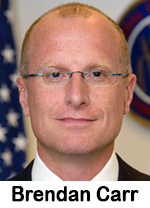 FCC Chairman Brendan Carr has indicated that the Commission is reviewing how those exemptions are applied, particularly in the context of high-profile entertainment programs that feature political figures. While no formal rule change has been adopted, CBS reportedly acted out of caution, concerned that airing the interview could trigger equal-time obligations for opposing candidates.
 Every radio conference agenda and much of what’s-up in the trade press and chat groups is about exploiting Artificial Intelligence. Often these conversations land in one of two places: fear (“Will this replace us?”) or fascination (“Look what it can do!”). Both miss the point.
 Linear broadcast media have never been more challenged. Internet video now commands far more viewing time than over-the-air TV. And their own networks are hijacking viewers! Your local NBC station tells you to watch Peacock. ABC points you to Disney+. CBS pushes Paramount+. Affiliates are effectively forced to promote their own competition.
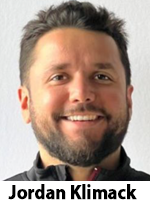 WKNR-AM “ESPN Cleveland.” The station says in a social media post, “Since joining the station in 2018, he’s played a key role in shaping programming, managing content across platforms, and helping drive the station’s expanding digital strategy. We’re excited to see Jordan lead our programming and content vision now and into the future. Well deserved!”
  serve in the public interest, the FCC yesterday issued a Guidance on Political Equal Opportunities Requirement for Broadcast Television Stations. While the memorandum is written to television stations, it obvious applies to radio stations as well. The memo ultimately addresses the 1959 order that exempts broadcasters from providing equal time to qualified candidates on any: (1) bona fide newscast; (2) bona fide news interview; (3) bona fidenews documentary (if the appearance of the candidate is incidental to the presentation of the subject or subjects covered by the news documentary); or (4) on-the-spot coverage of bona fide news events (including but not limited to political conventions and activities incidental thereto). Programs such as “The Tonight Show” and “The View” are cited as entertainment shows in which an interview segment can qualify as a bona fide news interview. Regarding this, the memo concludes with two important paragraphs:
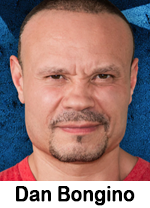 Media | Westwood One says, “The relaunch marks Bongino’s most extensive digital commitment to date, designed to meet increasing audience demand for long-form and in-depth content. The two-hour format strengthens the show’s position as a major voice in independent media, offering a highly engaging, daily destination for listeners seeking headline analysis, guest interviews, cultural commentary, and special ‘Bongino Army’ segments.” Bongino comments, “I’m excited to get back behind the mic and reconnect directly with the audience. This show has always been about cutting through the noise and talking honestly about what matters. We’re coming back bigger, bolder, and always unfiltered — exactly how people want it.” Westwood One and Cumulus Podcast Network president Collin Jones adds, “Dan Bongino is back! Few voices in talk media command the loyalty and firepower that Dan brings. His audience? Formidable. His influence? Undeniable. This promises to be an incredible journey as Dan drives the national conversation daily on the most important issues at hand, with authority that has been hard-fought and well-earned. Westwood One is beyond proud to help power the next chapter of ‘The Dan Bongino Show.’”
 Circus Came to Town.” The Minneapolis-based former DJ, programmer and radio exec tells TALKERS, “In full disclosure, this song was created on suno.com using V5. The lyrics are all mine, and the orchestration is mine too by virtue of having given all of the instructions to create the track. Regardless of how all the controversy about artificial intelligence plays out, I am releasing this opinionated and highly emotional song purely as an expression of my free speech and artistic expression – not for commercial marketing purposes.”
 dashboards and API access that support automated reporting and portfolio-level insights. The collaboration will also support select broadcast attribution initiatives within Audacy’s radio portfolio, complementing existing measurement partners. Audacy president of digital sales Michael Biemolt says, “Audacy consistently strives to deliver measurable results for advertisers, and our partnership with Podscribe further strengthens that promise. With enhanced attribution and transparency across our portfolio, we’re giving clients even greater confidence in how Audacy drives performance at scale.”