By Matthew B. Harrison
TALKERS, VP/Associate Publisher
Harrison Media Law, Senior Partner
Goodphone Communications, Executive Producer
This is the third installment of a multi-part TALKERS Legal Series on Fair Use for the Media Creator. The first installment is here. The second installment is here.
The “Nature of the Copyrighted Work” is a key factor in fair use analysis, with courts more likely to allow the use of factual works, such as news reports, than highly creative works like music or films. The landmark case Feist Publications, Inc. v. Rural Telephone Service Co. established that mere facts, like telephone numbers, cannot be copyrighted unless presented with originality. In media, factual content like news clips may support a fair use defense, while creative works like syndicated talk shows are more protected. Broadcasters should add commentary or criticism when using factual material and be cautious when reusing creative content. Understanding this factual-creative spectrum is critical for media creators navigating copyright law.
In the context of fair use, courts are more likely to allow the use of factual works, such as news reports, historical accounts, or other informational content, than highly creative works like songs, movies, or artwork. The theory behind this is that factual works generally serve a public interest – society benefits from the free exchange of information and ideas, and we want “the system” to encourage this. On the other hand, creative works involve more personal expression, and copyright law is designed to protect that artistic effort (and allow for monetization thereof.) This distinction plays a crucial role in determining fair use, as courts are more protective of creative works because they represent a higher degree of originality and personal investment.
Classic Case: Feist Publications, Inc. v. Rural Telephone Service Co. (1991)
A landmark case that helps illustrate this factor is Feist Publications, Inc. v. Rural Telephone Service Co., which asked whether copyright protection could be applied to a seemingly factual work: a telephone directory. In this case, Rural Telephone Service Co., a public utility, created a telephone directory of its customers’ names, addresses, and phone numbers. Feist Publications, a company that produced a larger, regional telephone directory, copied some of these listings and was sued by Rural for copyright infringement.
Rural argued that its directory was protected by copyright, but Feist countered that the information in the directory (names, addresses, and phone numbers) was purely factual and, therefore, not eligible for copyright protection.
The Supreme Court ruled in favor of Feist, stating that facts are not protected by copyright because they are not original to the author. The Court held that Rural’s directory did not qualify for copyright protection because it lacked creativity and originality – it was simply a compilation of facts (names and numbers). The case established the principle that mere facts are ineligible for copyright protection, even if they are compiled in an organized way.
This case is significant because it underscores that factual information, like a telephone directory, cannot be copyrighted unless there is a creative element involved in its presentation, such as an original selection or arrangement of the facts.
Application to Radio and Media:
When it comes to radio, news, or media content, the nature of the copyrighted work often comes into play, especially in cases where factual content (such as news clips or interviews) is being reused. Courts may treat factual works more leniently in fair use cases, allowing them to be repurposed for commentary, criticism, or reporting, as they serve a public interest. However, creative works, like talk shows, are given more protection because they represent original artistic expression. The more creative the work, the less likely its unauthorized use will be considered fair use.
An Example – Associated Press v. Meltwater U.S. Holdings (2013)
While not specific to radio, this case highlights the issue of using factual content in media. Associated Press (AP) sued Meltwater, a news aggregation service, for copying parts of AP’s news articles and distributing them without permission.
The court found in favor of the Associated Press, stating that even though AP’s articles contained factual information, they were written with creativity and journalistic skill – thus, they were still copyrightable. The nature of the work was not purely factual, as it involved a degree of originality in the writing and presentation. This case illustrates that while factual works may be more likely to fall under fair use, their specific presentation or creative treatment can still be protected.
Radio Case Example: Syndicated Content and Commentary
A case that touches on the nature of copyrighted works in radio can be seen in disputes over syndicated talk shows or political commentary. Stations that rebroadcast these shows without proper licensing agreements may argue fair use, but their success often depends on whether the work being used is factual or creative. For example, if a station replays a news clip or political speech, the fact that the content is factual might support a fair use defense. However, if they replay a syndicated talk show where a host offers personal opinions or creative commentary, it would be considered a more creative work, requiring higher protection. In some cases, radio stations have argued that the rebroadcasting of certain content (like portions of interviews or speeches) qualifies as fair use because it’s factual and in the public interest. Still, if the content also involves a unique editorial style or commentary, the courts may treat it as more creative and therefore not subject to fair use.
Practical takeaways for media creators:
• Factual vs. creative: When considering whether fair use applies, broadcasters should analyze whether the content they’re using is more factual or creative. Factual works (such as news reports) are more likely to be protected by fair use, while creative works (like music or dramas) are less likely.
• Add commentary or criticism: Even when using factual content, it’s crucial to add commentary, analysis, or criticism to support a fair use defense. Simply republishing factual material without transformation can still lead to copyright infringement.
• Be mindful of syndicated content: Syndicated content, such as talk shows, often involves a mix of factual information and creative opinion. Replaying such content without proper licensing can lead to legal challenges, as courts may view this as a use of creative work.
The nature of the copyrighted work plays a crucial role in fair use analysis. While factual works are more likely to be used under fair use, creative works enjoy stronger protection. Media creators, including broadcasters and radio stations, need to be aware of this distinction and ensure that their use of copyrighted material is both transformative and legally defensible. By understanding the factual-creative spectrum, media creators can better navigate the complexities of copyright law.
Media attorney, Matthew B. Harrison is VP/associate publisher, TALKERS; Senior Partner, Harrison Media Law; and executive producer, Goodphone Communications. He is available for private consultation and media industry contract representation. He can be reached by phone at 724-484-3529 or email at matthew@harrisonmedialaw.com
Share this with your network



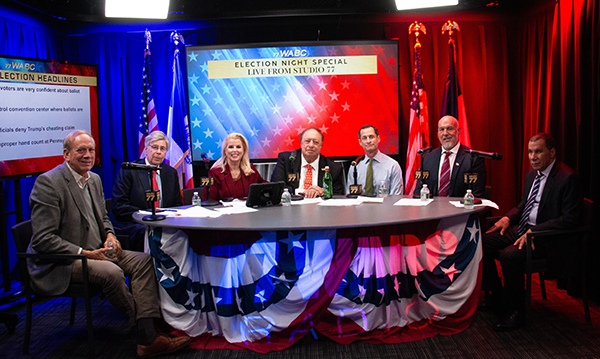
 As the practice of “clip jockeying” becomes an increasingly ubiquitous and taken-for-granted technique in modern audio and video talk media, an understanding of the legal concept “fair use” is vital to the safety and survival of practitioners and their platforms.
 As media creators in radio and podcasting explore ways to legally incorporate external audio, the fair use factor of “purpose and character” is crucial. This factor assesses whether the use is “transformative”—adding new expression or meaning—or merely reproduces the original’s essence, potentially infringing on copyright.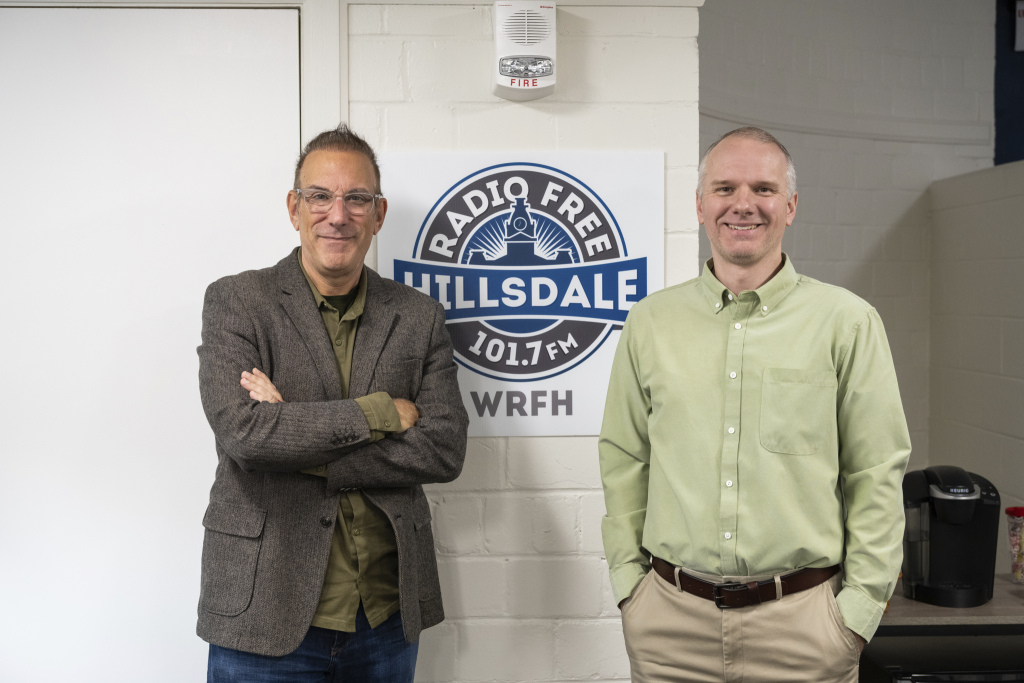
 Take advantage of the new media order. Initially, TiVo was a hit because you could pause live TV and go to the bathroom whenever you wanted. Bathroom breaks while watching live TV was a revelation. As you were going to the bathroom, your relationship with media was being re-wired in your brain. In a matter of months, you were able to watch what you wanted, whenever you wanted. DECADES of TV scheduling strategies became anachronistic. It’s November. Do you know when your favorite shows are airing on TV? No! No need you’ll watch them whenever you want!
 Cumulus Media, which describes itself as a top “audio-first” media company, and TuneIn, self-proclaimed world’s leader in “live audio,” today (10/29) announced that they have renewed and expanded their existing content partnership. Under the terms of the deal, TuneIn will continue to make Cumulus Media’s local sports, news, talk and entertainment programming available to its 75 million monthly global listeners. The extended agreement also includes a new, non-exclusive sales and supply partnership to optimize digital audio advertising monetization for Cumulus’ diverse radio stations. Cumulus owns and operates 400 radio stations across 84 markets with an extensive collection of nationally syndicated sports, news, talk and entertainment programming.
 As part of the agreement, audio streams of Cumulus stations and podcasts, which includes popular stations like WBAP, Dallas; WLS, Chicago; and KNBR, San Francisco will remain available 24/7 through TuneIn. “TuneIn naturally aligns with our strategy to expand our digital footprint and extend the reach of our diverse programming to a global audience,” said Brian Philips, chief content officer of Cumulus Media, telling TALKERS, “TuneIn offers significant global reach that makes it possible for listeners to easily discover our extensive collection of radio stations and podcasts almost anywhere through the TuneIn platform and 200+ connected devices.” “We are excited to continue to expand our long-standing partnership with Cumulus to extend the reach of their comprehensive content offerings,” said Rich Stern, CEO of TuneIn. “This partnership allows us to bring high-quality content to our listeners while also helping Cumulus monetize its digital audio advertising inventory effectively. It’s a win-win for both companies and our audiences.”
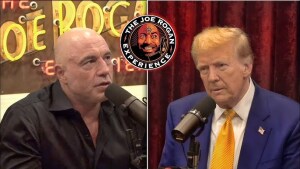 At the Monday morning (10/28) TALKERS editorial meeting, Harrison said, “The hoopla over this podcast appearance and its enormous profile within election news coverage clearly indicates we have arrived at a point where the terms ‘mainstream,’ ‘legacy,’ ‘alternative,’ ‘grassroots,’ and the like have to be reevaluated in conveying impact and importance – both individually, and certainly collectively – in the marketplace of ideas and the industries that serve it.” Harrison added, “This is especially true of Rogan’s individual impact as indicated by 1) the deference he was paid by a former president and major party candidate in showing up three-hours late for a live rally attended by thousands in which he actually implied that this podcast interview was a priority and more important to ‘winning’ than arriving on time for the event; 2) the tsunami of news coverage this podcast generated; 3) the passive aggressive irreverence granted a somewhat oblivious Trump by Rogan both during and following the interview; and 4) the sheer enormity of Rogan’s raw numbers on Spotify and YouTube, unfettered by FCC regulation.”


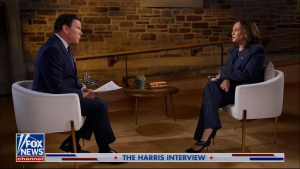 Ideology and, as Michael Harrison calls it, “the daily dance of affirmation” aside – perhaps there’s something to be said about booking “opposition” political luminaries as guests on our industry’s highly “targeted” venues. FOX News Channel’s (FNC) “Special Report with Bret Baier” delivered 7.8 million viewers and 1,126,000 in the 25-54 demo during anchor Bret Baier’s exclusive interview with VP Kamala Harris from 6:00 pm – 6:30 pm ET this past Wednesday (10/6), according to Nielsen Media Research. The interview marked the highest rating of the Harris-Trump political season, outrating Harris’s individual appearances on “60 Minutes,” “The View,” “The Late Show with Stephen Colbert,” CNN and MSNBC. For the full 6:00 pm ET hour, “Special Report” drew 6.7 million viewers and 901,000 in the 25-54 demo. Combined with the show’s midnight airing 12:00 midnight -12:30 am ET, the interview with VP Harris nabbed 9.2 million viewers and 1.4 million in the 25-54 demo, beating ABC’s interview with President Joe Biden before he dropped out of the race (8.5 million viewers).
 Triton Digital has just released its
  Starnes Media Group is hosting a live, six-hour Election Night special for radio stations across the nation.
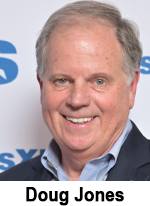 “The CloakRoom with Former Senator Doug Jones” will air live tomorrow from 6:00 pm – 8:00 pm ET on channel 127. According to company sources, with just a few weeks remaining before the November 5 elections, Senator Jones will engage with Progress listeners, taking calls to discuss the pressing news stories of the day. He’ll also leverage his personal political experience to analyze the key senatorial races, as well as the presidential election. In addition, the former senator will be joined by Julie Chavez Rodriguez, VP Kamala Harris’s campaign manager, as well as a surprise guest. “The stakes in this election could not be any higher,” Jones tells TALKERS. “I can’t think of a better way to talk directly with voters nationwide and have real conversations about the issues at the top of their minds as we head into Election Day. As a regular guest on SiriusXM’s Progress channel, I know they have a passionate audience with a lot of important, fresh subjects to discuss, so this should be a lot of fun.” The show will have its first run live during the usual time slot of “The Dean Obeidallah Show.”
  The special will also replay multiple times throughout the week and will be available anytime on demand on the SiriusXM app. Progress is SiriusXM’s channel dedicated to amplifying progressive viewpoints. The channel features a wide range of voices including Zerlina Maxwell, Stephanie Miller, Thom Hartmann, Michelangelo Signorile, Dean Obeidallah, John Fugelsang, and more. Photo by Joy Asico-Smith / AP for SiriusXM.
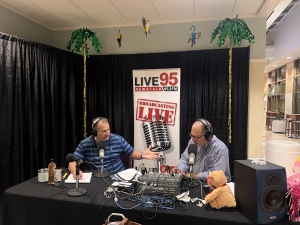 The 22nd annual Children’s Miracle Network Radiothon benefitting McLeod Children’s Hospital was recently held in Florence, SC. During the Radiothon, Community Broadcasters’ stations WWKT 99.3 The Cat, (news/talker) WFRK Live 95.3, WPDT Almighty 105.1 and WSIM 93.7 Frank FM hosted live broadcasts from McLeod Children’s Hospital. Pictured above: former SC Lt. Gov. Ken Ard and station VP operations Dave Baker (r) during broadcast on news/talk Live 95. “As always, at Community Broadcasters, we are always doing our best to live up to our name, and stand for the communities that we broadcast in,” company VP Wayne Mulling tells TALKERS. “And we are proud of what we have been able to do in hosting the Children’s Miracle Network Radiothon each year to raise funds for McLeod Children’s Hospital and Children’s Miracle Network. We are humbled by the amount of people that have been helped directly through the years by these organizations, and glad to play a small part in keeping this active and ongoing to continue to help others every year. We invite you to be a part as well.” DJs and talk show hosts asked listeners for donations in support of the programs and technology that McLeod offers to families in the Pee Dee. Listeners also had the opportunity to hear real stories from those who have benefited directly from the McLeod Children’s Hospital, in addition to interviews with doctors, nurses and employees who all share the same passion. “What an exciting Radiothon we had this year raising more than $127,000 for the McLeod Children’s Hospital!” says Davis Sawyer, Children’s Hospital fund manager. “The hard work and dedication from all involved truly make a difference in the lives of the children treated in McLeod Children’s Hospital. I value the partnership and friendship we have with Community Broadcasters and look forward to growing this partnership as we continue to impact the children we serve.” There was also a live auction throughout the week, with some bids surpassing $500. Auction items were donated from collegiate and professional sports teams, nationally known musicians and local businesses. At the conclusion of the Radiothon, this year’s donations equaled $127,098. All donations will remain here in the Florence area to help fund life-saving McLeod programs, and purchase new technology to better serve the Pee Dee families. To learn more about the annual Radiothon, check out this year’s sponsors, or make a donation, visit
  According to a report in The Forum, Fieldstone Group, which owns Fargo heritage radio station “The Flag” at AM 1100 / FM 92.3, is planning to purchase WDAY Radio from Forum Communications, owner of WDAY-TV and The Forum. In November 2020, Fargo-based Fieldstone Group began managing WDAY. If the sale is approved by the FCC, Fieldstone will own the 102-year-old AM radio station, its online properties, social media accounts, and transmitter/tower site. Terms of the sale were not immediately disclosed by the buyer or the seller. “We are thrilled to see this day arrive,” said Steve Hallstrom, president and managing partner of Fieldstone Group. “We thank the Marcil family and the leaders and staff of Forum Communications for a great partnership these last four years. WDAY Radio has always had a tradition of serving the community with great news, weather, ag, and sports and we’ve enjoyed the journey of growing those elements with the help of our friends and partners at Forum Communications.” Hallstrom said it’s been important to have WDAY Radio “serve the community with quality local programming from sunrise to sunset, which is becoming a rarity in our business. I also want to thank our listeners for their loyalty and the many local businesses and organizations that have trusted us with their advertising and marketing dollars.” Fieldstone Group also owns KTGO “The Flag” in Tioga, N.D, at AM 1090 and FM 92.7, three stations in Grand Rapids, Minn: KOZY 1320 AM / 93.1 FM, KMFY 96.9 FM and KBAJ 105.5 FM; and The McKenzie County Farmer newspaper based in Watford City, N.D. “WDAY Radio is North Dakota’s longest-serving broadcast operation,” said Scott Hennen, VP/partner of Fieldstone Group and general manager of WDAY Radio from 2001-2009. “It is an honor to take ownership of this iconic community source of information.”
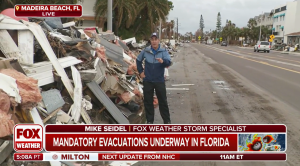 Storm specialist Mike Seidel is currently reporting from Madeira Beach, FL while correspondent Robert Ray is in Fort Myers Beach, FL. On Tuesday, Seidel will report from St. Petersburg, FL with Ray remaining in Fort Myers. FOX Weather will also deploy meteorologists Britta Merwin and Steve Bender to Sarasota, FL, Bob Van Dillen to Tampa Bay and Haley Meier to Daytona Beach, FL while meteorologists Michael Estime, Craig Herrera, Ari Sarsalari, Ian Oliver and Kiyana Lewis will anchor coverage from FOX Weather headquarters in New York. FOX Weather hurricane specialist Bryan Norcross will also provide continuous updates from New York. FOX Weather Digital will provide comprehensive coverage of Hurricane Milton, available 24/7 on FOXWeather.com and in the FOX Weather app, including the exclusive Hurricane HQ tab. FOX Weather Digital will include leading meteorological analysis, exclusive expertise from Norcross, coverage from all FOX Weather field resources and related content of every angle related to US impacts of the storm.
 With its state-of-the-art technology capabilities that includes satellite and IP distribution and live sports production, the company is available to offer additional services to those in need. “At Skyview Networks, our top priority is the safety of our partners and the continuity of their operations,” Aaron Mellis, VP, business services, Skyview Networks tells TALKERS. “With Hurricane Milton approaching, our team is fully prepared and ready to step in with services to support our clients’ needs, ensuring they are met seamlessly.” For inquiries on extended services in preparation of Milton, please contact
 Departments, sheriff of Bernalillo County, head of public safety for the State of New Mexico under Governor Gary Johnson. Cumulus Albuquerque vice president and market manager Jeff Berry states, “I am SO excited for Darren’s return to Cumulus Albuquerque as program director. His passion for radio and vision for the future are contagious. We are fortunate to have someone with his background re-join our industry in a leadership position. Welcome home, Darren!” White comments, “I am honored to accept the position of program director for News Radio KKOB and KNML the Sports Animal, and I am humbled by the confidence Cumulus Media has placed in me for this exciting new challenge. Having been a part of Cumulus for over a decade, I have seen firsthand the incredible dedication and talent of the teams at both stations. With a proven history of delivering provocative, engaging, and informative radio that is second to none, I look forward to building on that legacy by attracting new listeners and continuing to bring dynamic programming to our loyal radio family.”
 has amassed “a combined 12 million subscribers across platforms. ‘The Benny Show’ has become a go-to platform for the next generation of news consumers and creators alike. The program features commentary and exclusive interviews with special guests including presidential candidates, world leaders, cultural icons and Hollywood actors.” Under Westwood One’s leadership, the Cumulus Podcast Network distributes, markets, and monetizes “The Benny Show” exclusively with this new partnership. WWO president Collin R. Jones says, “As the Cumulus Podcast Network further expands into video, ‘The Benny Show’ is a natural addition to our portfolio of personality-driven talk shows. Benny is well known on YouTube as a strong and independent voice in conservative talk. He challenges mainstream opinions with cutting-edge insight and straightforward questions, capturing both listeners and partners with his streamlined, frank approach.”
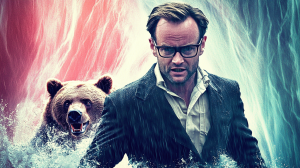 WOR, New York morning co-host Michael Riedel returned to the airwaves yesterday morning (10/1) after a camping trip to North Carolina that turned into a rather harrowing experience due to Hurricane Helene.
  Riedel arrived in North Carolina last Tuesday and learned from his group’s guide that the forecast was rain for the entire duration of their trip. At that point, no one connected the rain with the hurricane, however. When their time on the mountain first began, Michael and his fellow hikers may have thought their near run-in with a bear was going to be the craziest part of their trip, but after two days of near-steady rain, Riedel’s group’s guide made the decision to end the hike and come down the mountain to seek safety. “The guide said if we don’t get down to the road…the river is going to flood and we will be trapped,” Riedel told his co-host Len Berman and morning news anchor Larry Mendte. “[But] all of the little streams and the creeks that we crossed on the way up…were now raging torrents of water, and we had to find places to cross. And when we crossed the streams, we all had to, like, hold on to each other to form a chain so that the water wouldn’t wash us away…and we had to do that three times.” Even though they were without electricity, internet, or phone service and had virtually no food and were down to just four bottles of water to share among 10 group members, Riedel and his group found a bed and breakfast in downtown Asheville that despite calls for evacuation was willing to take them in. “You know, I have to say I was very lucky,” Riedel reflected. “There was a woman who worked [there who] took water from the Creek behind the B&B and… made vegetable soup [using vegetables from their garden]…to feed us.” Ultimately, after three days of being stranded, Riedel was able to share a ride to the airport with another guest at the bed and breakfast and landed back at LaGuardia airport Monday evening (9/30). Talk about home sweet home. To hear more about Riedel’s adventure,