


Remembering Jerry Springer: Coming To America
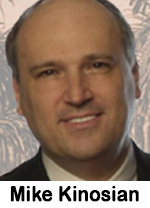
By Mike Kinosian
TALKERS magazine
Managing Editor
 Notwithstanding the enormity of accomplishments that enveloped this exceptionally bright and learned broadcaster, Jerry Springer remained as humble and refreshingly an “ah shucks” individual as you’ll ever hope to meet.
Perhaps that speaks to the somber circumstances that brought him to this country at the tender and innocent age of five.
It’s a borderline crime that many people think the Tulane University (B.A. in Political Science, 1965) and Northwestern University (1968 Law degree) graduate’s resume consisted solely of watching people verbally and physically beat each other to a pulp on a daily, hour-long television show that carried his name for 27 years, starting in September 1991.
It was only natural that this passionate political voice for domestic and international issues – who was a leader in lowering the voting age from 21 to 18 with the 1971 passage of the 26th Amendment – be offered a meaningful podium to air his views.
Many observers, though, were stunned when – in January 2005 – Springer actually agreed to weave a daily radio talk show into his already hectic media schedule.
Field of dreams leveled
Barely two weeks into Springer’s local run on Clear Channel Cincinnati flagship WCKY “The Revolution Of Talk Radio” and Clear Channel Detroit’s WDTW “Detroit’s Progressive Talk,” Air America Radio picked up his 9:00 am – 12:00 noon “Springer On The Radio” talkfest.
The experience had the resplendent one positively beaming. “Frankly, I’m just as excited as I can be,” he remarked to me. “Politics and public issues have always been my main interest. [It’s exciting] to have an opportunity to be part of the American conversation at a time when there is clearly a need for other points of view. Talk radio is overwhelmingly dominated by conservative ideas. There’s a place for that, of course, but we also need to hear other ideas and other points of view. Perhaps this is an area in which I can make a contribution.”
Off-and-on discussions had been held between Springer and Air America even before the network’s March 31, 2004 sign-on. The former Cincinnati Mayor, however, confided he wasn’t thoroughly convinced he was ready to commit to doing a daily radio show. “With this last presidential election, I realized that, until we level the playing field, there’s not going to be any hope of having a more progressive government,” Springer proclaimed. “That’s when it suddenly became a priority for me. I’ve only been on Air America [since January 2005], but the early ratings returns are great; apparently, we’re doing well.”
Life progresses
Every Top 10 market except No. 2 Los Angeles carried “Springer On The Radio” and the overall affiliate count quickly grew to 50 outlets. “Our biggest non-Air America Radio station is [Clear Channel Cleveland news/talk] WTAM,” he pointed out. “It’s a powerhouse station and the interesting thing there is that I lead into [Premiere Radio’s] Rush Limbaugh. In some markets, I lead into [Air America’s] Al Franken and in others, I lead into Rush – talk about whiplash.”
The majority of the American populace, of course, knew Springer as the 14-year host of a show that wasn’t much of a threat to win many Peabody awards.
Approximately 10 years prior to his national exposure, though, Springer was an anchor/political reporter/commentator on Cincinnati television, proudly notching seven Emmy Awards for his nightly commentaries. “I loved doing it and don’t have any bad memories, but I’m in a different point in my life now,” Cincinnati Magazine’s five-time “Best TV Anchor” recipient commented. “Life moves on and I’m onto something else and I’m not sure I’d go back to that anymore.”
Stone cold memories
Some would ascribe Chicago (the base of his TV show); New York; or Cincinnati as Springer’s birthplace. All would be incorrect, as he was born in London (1944) when his family successfully escaped the holocaust.
They arrived in New York City on January 24, 1949 and it is without any hesitation the usually glib Springer blurted out that particular date in reverence and sincere reflection. “I didn’t specifically go through Ellis Island,” he recounted in a markedly softer tone. “My parents and I had a five-day journey on the Queen Mary and I remember being called up on the top deck as we passed the Statue of Liberty. It didn’t mean that much to me, since I was just five years old and freezing cold. I do, however, remember being scared because I saw all those people huddled together. The other memory I have is that it was stone silent – nobody said a word.”
Radio’s role in the Americanization process
In later years, his mother (Margot) told her son that he’d asked her why everyone was looking at the Statue of Liberty and what it meant. “She said in the German that she spoke at the time that one day it will mean everything,” Springer recalled still touched with emotion. “She was right. My family went from holocaust to this ridiculously privileged life I live today in one generation, so I know the ‘American Dream’ can work.”
The first year he and his family were immigrants, Springer lived in Manhattan’s now defunct Whitehall Hotel near Amsterdam Avenue.
One year later, they moved to a rent-controlled apartment where his parents would live for the next 32 years. “Everyone was trying to learn English,” emphasized Springer, who established a scholarship fund at Chicago’s Kellman School that serves inner city youth. “I was five years old, but my parents wanted me to become Americanized so we listened to the radio all day. One of my earliest memories as a little boy was listening in the morning to [Roger] Gallagher & [Joe] O’Brien [on New York City’s WMCA]. Some of my Americanization – including the news, sports, idioms, music and sense of humor – came through the radio.”
Compelling dialogue
Utterly and genuinely masterful at what he’s accomplished on television, a low-key Springer modestly admitted he tried to learn a little something from certain radio personalities, without consciously copying anybody. “I just turn on the microphone and talk,” he stated with simplicity. “Obviously, Rush and [ABC Radio’s/Fox News Channel’s] Sean [Hannity] are at the top of the heap, simply because they’ve been doing it for so long. I think [Air America’s] Randi Rhodes is just wonderful on the radio and Al Franken has a great sense of timing.”
Many on the right claim liberal-leaning talkers have heretofore failed in our medium because they lack the entertainment factor. If anyone knew how to present an entertaining product, it was the extremely adept Springer who flatly asserted, “The conversation has to be interesting – period. That can be in the way it’s presented; the way we accept different callers; or with little skits we do. People must feel they have to listen, but it doesn’t have to be entertaining in the ‘ha-ha’ sense all the time. To be honest, not every conservative show is entertaining – some aren’t interesting at all.”
The question of whether a program holds one’s interest or has a significant entertainment quotient has virtually nothing to do with a particular political philosophy, but rather, as Springer explained whether the host is capable of putting on a good show. “The reality is conservatives took to radio 20 years ago when liberals weren’t looking at that as an economic marketplace. Someone figured out that conservatives could really find an audience in radio because you were dealing, at that time, with angry white men going to work. You get them when they’re driving to [their jobs]. Clearly, Rush filled a void and is a tremendous talent. When people saw that, the industry moved in that direction.”
The face of liberal America
Firmly contended that conservatives did well on radio in large part because the liberals won, Springer opined in my 2005 interview, “America is far more liberal today than it ever was. I know we elect conservatives from time to time, but clearly in terms of the critical issues of the day, no one could look at America and say we are not liberal. The protest came from the right.”
Conservatives though were in charge when he was growing up and dissent came from the left.
Protests were for such noble movements and causes as civil rights, anti-war, women’s rights and the environment. “Finally, the liberals won and their agenda is how most Americans live,” Springer contended. “Even if you call yourself a conservative, chances are your kids are listening to the same music, going to the same movies and wearing the same clothing. The culture is clearly more liberal than it ever was. We don’t even blink if we see interracial dating or interracial marriage; it’s not an issue. We’ve clearly moved to the left. Since America is now so liberal in terms of its everyday living, the protest is coming from the right.”
TV show proves to be a non-issue
That’s certainly more than a plausible reason to explain the widespread success enjoyed by conservative talk radio. “With the emergence of the Christian right or whatever in the last couple of years, liberals have been getting nervous again,” Springer speculated. “You’ll start to see the emergence of liberal radio. Radio will always be the response to what’s going on in society. People aren’t going to call up [talk shows] if they’re happy with everything; they’ll get on with their lives. People who call are the ones who are upset. That’s why you’ve seen this trend in radio from liberal to conservative back to liberal.”
Listener feedback to the engaging Springer was gratifying and, on at least one level, elicited a curious result. “We don’t get any calls – and I mean none – that comment on the [television show],” he stressed. “I sometimes wonder if they even know that it’s me or if they think I’m a guy with a similar name. From whatever side of the spectrum they’re from, no one seems to make reference to the television show. It’s a non-entity in terms of radio.”
Not a perfect fit
Those unaware of Springer’s legitimate political acumen could be caught off-guard by hearing him as the front person of an issue-charged talk program, but the host adamantly maintained, “Within 18 seconds of hearing the show, you’re going to realize it’s different. You may not agree with what I’m saying, but it’s impossible to listen [and not have an opinion].”
Commanding center stage approximately eighteen years ago were such topics as the war in Iraq; terrorist bombings in London; potential Supreme Court nominees; Social Security; and other pertinent headlines of the day. “Even if you were inclined to call and razz me about the [TV] show, it’s pretty hard to do,” Springer contended. “You’d be embarrassed because everyone else is talking about a woman crying because her son is fighting in Iraq and the next caller [weakly] says, ‘Hey, Jerry, I love those transvestites.’ It wouldn’t fit and we’ve found, for some reason, it also doesn’t exist.”
Mindless to mind-provoking
Juggling both the radio and high-profile syndicated television show proved to be admittedly rough for Springer – who was generally up at 5:30 am. “I spend two hours at the studio going over my notes from the night before and checking if there’ve been any changes from [overnight]. I do the [radio] show and then we immediately have a 30-minute meeting. We tentatively pick a couple of subjects to talk about [on the next broadcast] and people start doing research.”
If it happened to be a television-taping day, he rushed to that studio to do shows at 3:00 pm and 6:00 pm and was usually back home by 9:00 at night.
Over dinner, he checked to see if there were any changes or breaking news.
“Springer On The Radio” was produced in Cincinnati, but the television show required the host to be in Chicago. “I also have a place in Sarasota; I’ve been in New York; and just recently did the show from London,” he pointed out. “It’s a lot of work and it’s a real job. I devote a couple of hours a week to the television show and the thing I do is mindless, but the radio show is real work.”
Tongue tied
On-air radio elements consisted of Springer and caller interaction, with no emphasis placed on guests. “I’m not rushing to do it, but won’t say I’ll never do it,” he put forth. “I’m more comfortable with [the way it’s been going] and don’t want this to be a show from the top down. The idea is to have this be a middle-America show, a [program] where regular folks can [share] what they’re thinking.”
That philosophy didn’t preclude certain luminaries from voluntarily calling in, as Springer discovered when he was discussing the energy issue.
A caller identified himself to the screener as “Robert Kennedy” and it, indeed was the Robert F. Kennedy Jr. “My two idols were my father [Richard, a street vendor who sold stuffed animals] and, in terms of my political conscious, [RFK Jr.’s] father,” Springer noted. “It was a great thrill to talk with [RFK Jr.] – I was like a groupie.”
Link to a legend
In addition to momentous, that particular conversation had to be more than a bit surreal for Springer and not simply because it was with a famous activist/fellow Air America Radio talk host. (Kennedy co-hosted Air America’s two-hour weekend “Ring Of Fire” with Mike Papantonio).
When he graduated from college, Springer worked as a presidential campaign aide to Bobby Kennedy. After the New York Senator was assassinated inside Los Angeles’ Ambassador Hotel in June 1968, Springer joined a Cincinnati law firm and, in 1971, was elected to Cincinnati’s Council-at-Large.
With the largest plurality in the city’s history, the then 33-year-old Springer was elected Mayor of Cincinnati in 1977.
Potent platform
Air America Radio colleague Al Franken made no secret of his fervent desire to represent Minnesota in the U.S. Senate (which, of course, he did), while Springer’s name was frequently mentioned in a similar capacity in Ohio or in that State’s Governor’s office. “It’s possible that the day may come where I pursue either of those [offices],” acknowledged Springer, who made a Democratic gubernatorial bid in 1982. “I must say [though] I’m concentrating on this radio job right now. I didn’t realize it would take off this way when I started. This may turn out to be a bigger [stage] than any political office. I’m sure a year from now I’ll look at how my life is going, but I’m very excited about making this radio thing work.”
In addition to being the opening act for “Achy Breaky” Billy Ray Cyrus, Springer released his own country CD (“Dr. Talk”) and once dressed to play in the nets for the IHL’s Milwaukee Admirals.
With less and less free time, there wasn’t much for Springer to do other than be enticed by an occasional movie role (he played himself in at least a half-dozen films, including “Austin Powers: The Spy Who Shagged Me”) or television appearance. “I try to enjoy my weekends,” the steadfast New York Yankees fan confided. “It’s been depressing this year because they’ve played so abysmally [entering the 2005 All-Star break in third place, 2.5 games behind the defending 2004 World Series champion Boston Red Sox]. You reach a point in life where you make time for those things that have to do with the quality of life. I admit, however, it’s difficult because I’m carrying so many jobs at once.”
Rolling along
Being Mayor of Cincinnati – especially at such a young age – was easily one of Springer’s greatest political accomplishments, but the longtime local co-host on Jerry Lewis’ annual “Stars Across America” Labor Day Muscular Dystrophy Telethon and VP of the national MDA knew he arrived as a celebrity when he appeared on the May 14, 1998 cover of Rolling Stone Magazine. “That’s when it suddenly hit me that this is really big,” he laughed. “I’ve always kind of taken things with a grain of salt and have said that it’s only television, not life-changing.”
Email Mike Kinosian at Mike.Kinosian@gmail.com
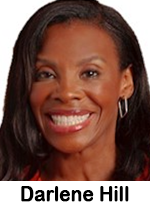 alongside Atiba Buchanan. Hill takes over for Kimberly Egonmwan who left the show to run for political office. WVON says, “Hill is a 30-year veteran journalist and a fixture in Chicago media. Her knowledge of local stakeholders, politics, and social issues makes her an asset to WVON’s news/talk format.” Hill adds, “WVON has such a rich history of being a force and a voice in Chicago this just seems right. I look forward to being part of the next generation of storytellers.”
 Silvy will also host the halftime show that Good Karma says “will provide a fresh, fan-focused take on what fans expect from a typical halftime show. The new Network Halftime Show will incorporate fan reactions to the first half of each game, as well as a new segment called ‘The Celebrity Spotlight,’ highlighting a conversation with a well-known celebrity guest with Chicago ties.” The post-game show will be hosted by John “Jurko” Jurkovic and Peggy Kusinski. Coverage will also include a daily podcast hosted by Chicago-based YouTube personality Pat the Designer with station personalities joining him on a rotating basis. ESPN Chicago director of content Danny Zederman says, “I am ecstatic for ESPN Chicago to enter a new era for exclusive Bears content 365 days a year while bringing together a diverse, energetic, and passionate group of talent with a deep knowledge of Chicago sports. Our talent has a real understanding of the importance of the Chicago Bears and what the team means to the fans because our team is made up of fans. We are counting down the days until kickoff!”
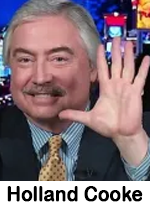 National TV advertising sells things, local radio advertising sells services. And in
 A shocking number of highly qualified broadcasters have lost their jobs. The venture capitalists that financed the big radio companies are the people who should be fired, but that’s the next column. Let’s get you a job.
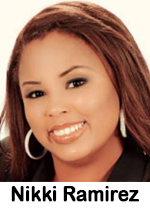 deeper understanding of market performance immediately after Nielsen’s data release.” Company CEO Marc Greenspan says, “We’re excited to leverage Nikki’s extensive radio industry knowledge and experience, both on-air and behind-the-scenes, to fuel our growth in helping radio stations across the U.S. maximize the value of data to improve both their ratings and their revenue. She joins our team at a pivotal time as we look to showcase our unique ability to help clients improve their programming effectiveness and sales success.”
 and news in the growth and development of new original podcast content for podcast studio 2400Sports and across Audacy’s 28 local newsrooms in top U.S. markets. Audacy chief digital officer and president, podcast and streaming J.D. Crowley says, “As we commit to accelerating our digital growth and enhancing performance, we’re thrilled to expand Jenna’s role to further unify and streamline our content and business efforts across our leading podcast portfolio, enabling even more rapid development of new and original IP and better leveraging our talent across the entire Audacy portfolio. Jenna’s strong leadership and deep industry relationships will propel us forward on our mission to be a leading partner of audio creators, while super-serving listeners of all backgrounds and interests and enabling our sales teams to better serve our customers and partners with unique and compelling podcast opportunities.”
 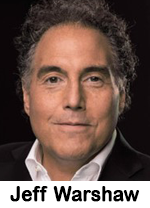 Communications Partners LP, a 39-station group which he later sold to Cumulus Broadcasting in 2000 for $258 million. At this time, he pioneered notable progress in integrating legacy media with emerging digital technology. In 2004, he formed Connoisseur Media which now operates 13 radio station brands and digital assets in five markets. Highly respected and celebrated industry-wide for his outspoken candor and bullish approach to radio station ownership, Jeff Warshaw serves on the board of directors of the National Association of Broadcasters, the executive committee of the Radio Advertising Bureau, and is chairman of the Nielsen Audio advisory council. Harrison describes Warshaw as “one of the most knowledgeable, emerging forces to be reckoned with among radio industry leaders.”
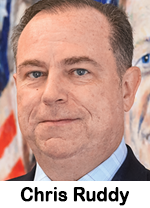 Christopher Ruddy founded Newsmax in 1998 to publish online and offline content in the fields of news, politics, health and finance. Newsmax.com ranks consistently as one of the country’s most-trafficked news websites. Newsmax TV, a cable and over-the-top media service news channel started in 2014, has shown remarkable growth becoming one of the nation’s leading television news and political opinion sources. Newsmax recently entered the field of talk radio with a syndication arm and is reportedly exploring expansion into radio station ownership. As a journalist, Christopher Ruddy previously worked at the New York Post and the Pittsburgh Tribune Review. He was also awarded a Media Fellowship at the Hoover Institution on War, Revolution and Peace at Stanford University. He holds a BA summa cum laude in history from St. John’s University and a Master’s in Public Policy from the London School of Economics. Harrison describes Ruddy as “a key player in emerging 21st century media.”
 Hains had to step away from his hosting duties after being hospitalized by a life-threatening case of West Nile Virus. Ladd – the longtime voice of the Missouri State Lady Bears – has been hosting the show in his absence and is now joined by Weber. Zimmer operations manager Don Louzader says, “I can’t think of a better team to carry the torch for Art Hains than Tom and Logan. Tom has a tremendous amount of knowledge of the local, regional and national sports scene and has broadcast just about every sport in the Ozarks. Logan has shown a tremendous passion for sports here in southwest Missouri and will be a great complement to Tom on the show.” At the same time, the station announces that “The Sports Reporters” host Ned Reynolds is being joined by co-host Scott Puryear as the show moves to the new time 7:00 am to 9:00 am weekdays. Reynolds and Puryear worked together on the show from 2000-2011. Louzader says, “The boys are back in town and our listeners are in for a real treat when Ned and Scott get behind the microphone together.”
 help retirees make sensible financial decisions in retirement. Armuth says, “Today’s investors deserve to know that investing is simple, affordable, and accessible to all! Collaborating with Senior Resource was a no-brainer for me because our missions are so similar. My podcast is dedicated to empowering and educating retirees on personal finance and investing, and Senior Resource helps me share this message with a broader audience. I’m thrilled to see my podcast has reached listeners from all across the country, and I remain steadfast in my commitment to giving real people the knowledge and tools they need to better understand investing and their finances in retirement.”
 I’m an SU fan. I’m sorry, but I bleed Orange. I’m not going to apologize for that, and I think a fair reading of the Orange is appropriate. I understand [Galaxy has] a business relationship [with Syracuse], that Coach [Jim] Boeheim and I are personal friends and he’s an investor in my company. I understand and acknowledge all of that. We’ve called it pretty fair, and I would argue we’ve been tough on SU when the on-field or off-field events warrant it. I just think over the past six months it took a different tone and became overly dark and negative. I don’t think that’s what Syracuse fans want to hear.” For his part Axe tells Syracuse.com, “I had a responsibility to give an honest, fair and thorough opinion to my audience. I certainly wasn’t perfect, but I don’t regret anything about the approach of the show. We put listeners on the air, and we gave them the opportunity to say what they needed to say. I don’t have any regrets.”
  Over the past two decades, ESPN West Palm recognized high school athletes, covered local teams, partnered with area businesses to help achieve their goals, gave back to the community, and ultimately defined West Palm Beach as a true sports town.” GKB West Palm market manager Stephanie Prince says, “Up until 2003, West Palm Beach was the largest market in the country without a sports radio station of its own. We are proud of the team, and the relationship we’ve established with our fans via the audio, event, coverage and digital platforms we have built. We are excited to celebrate and give back to the community by donating $20,000 to various local charities.” The station began a 20-hour celebratory broadcast at midnight (3/3) and Mayor Keith James is declaring today ESPN West Palm Day to recognize the station’s impact in the town in which it operates.
 The embarrassing situation and accompanying financial vulnerability being faced by our colleagues at FOX News is a high-profile example of the consequences of audience “targeting” that has become the common positioning strategy in today’s competitive media marketplace. The process is simple: You give the specifically targeted audience what it wants, not necessarily what it needs, even if what it wants is of dubious quality or unhealthy and – in the case of political talk media – untrue. It is a problematic, unsavory practice that has been brewing in our industry for years and, in the case of FOX, the proverbial toxicity has just hit the fan.
 His hall-of-fame career and love for the game are evident to anyone who has ever followed him. OutKick is and will always be the strongest proponent for smart, original, funny and authentic voices in all of sports. He’s a perfect fit for the brand and I’m thrilled to welcome him to our team.” Outkick also reports that its January 2023 digital performance, where the platform saw 311% growth year-over-year in unique visitors, marked the most growth over 2021 among its competitive set. In the fourth quarter of 2022, the platform attracted 9.1 million multi-platform average unique visitors, up 235% from the fourth quarter of the prior year, according to Comscore.
 appeared on the “Parkins & Spiegel” show. Olivia Finestead is the mother of Clevinger’s 10-month-old who went on the radio show to discuss the allegations against Clevinger, a move he called “really trashy of them. That was some lowlife material right there.” He was also quoted saying, “My lawyers are paying attention. My lawyers are getting in contact with them, and they probably already sent a cease-and-desist for defamation. So [they] just got themselves involved in this, too, so good for them.”
  Surprisingly, my company Sabo Media has bought commercial time on radio stations. It’s a surprise because brands have come to us because the word “media” is in the name. Some brands think Sabo Media is a media buying company. Hysterical.
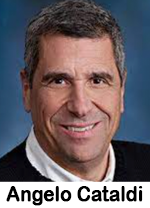 the Birds’ loss to the Kansas City Chiefs in Super Bowl LVII, Audacy tells the Philadelphia Inquirer that this Friday (2/17) will be Cataldi’s final show. On Monday, the midday team of Joe DeCamara and Jon Ritchie take over as the morning drive show. The Philadelphia Business Journal reports that WIP brand manager Rod Lakin says Cataldi’s final show will feature a career retrospective and appearances from “old friends.”
 bets in their ruthless pursuit to get new customers hooked on their products. In the years since the Supreme Court legalized sports betting, these unfettered advertisements have run rampant, with betting companies shelling out billions to ensure they reach every screen across America. These ads pose a particularly dangerous threat to adolescents and young adults unaware of the risks involved in gambling, and to individuals prone to addiction.” New York State Broadcasters
 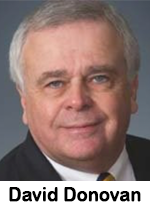 Association, Inc president David Donovan states, “We oppose legislation that bans both mobile sports and casino sportsbook advertising in the United States. Advertising is essential to educate consumers in this highly competitive market. The tax revenue generated by sports betting has helped to finance essential government services for citizens throughout New York State. It has stimulated local economies in areas lacking job opportunities. Advertising revenue from these ads helps broadcast stations meet the needs of their communities by financing local news and public affairs programs. A ban on sports wagering advertising prevents all responsible adults from receiving information about a legal product in New York, raising significant constitutional issues. There are more effective options available to address issues concerning problem gambling and protecting children. We look forward to working with Congressman Tonko to explore these options.”
 production, proposals and completing all CRM and management required reports for the company. KBLA is looking for a savvy, highly motivated sales professional to join our team selling traditional, digital, and event marketing solutions in Los Angeles for the only Black talk radio station west of the Mississippi. Our ideal candidate is a goal-oriented, relentless hunter who drives to win new business and has a track record of exceeding monthly goals. If you are passionate about selling, have a deep knowledge of marketing principles and products, and possess excellent presentation and closing skills, then we’d love to talk to you!
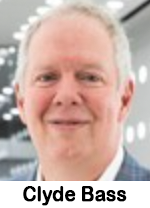 Kansas and Springfield, Missouri. iHeartMedia division president Nick Gnau says, “I am so excited to add Clyde’s leadership to an already strong cluster of markets in Texas. Clyde’s passion for our industry, his knowledge of our products and the success he has shown through many roles with iHeartMedia make him the perfect fit to lead this newly formed Area. I look forward to seeing these areas continue to succeed as one.” Bass most recently led the Arkansas Area. He comments, “It’s been my honor to be involved for the last 10 years with some of the legendary stations that I grew up listening to here in Arkansas, and now to be reunited as area president with the team in Texas makes me even more energized over what iHeartMedia provides to advertisers and listeners.”
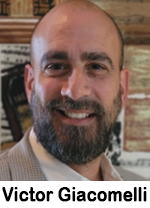 Steve DeLusant says, “Victor and Travia are the perfect combination to lead our sales efforts for ‘Power 105.1’ and the WWRL 1600 AM ‘Black Information Network.’ Both
 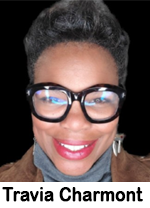 Victor and Travia have strong experience and knowledge working in the multicultural space. I am excited to have them join our team and watch them take our brands to the next level. Their additions will position our team for long-term success at iHeartMedia New York.” Giacomelli joins the iHeartMedia New York team from Audacy Denver where he was the director of sales. Charmont joins the iHeartMedia New York team from Audacy Atlanta where she was a senior AE.
 and acquisitions. Berk is currently chairman and CEO of Goodman Media Partners, investing in early-stage media and tech companies. PodcastOne co-founder Kit Gray comments, “Jim has an impressive track record of working with public companies and has extensive knowledge of our business. We are thrilled to bring his expertise back in the company and on our board during this crucial period of growth for PodcastOne as we are launching our IPO.”

 NFL, and this year’s Super Bowl coverage marks the 50th time that the network will broadcast the game. Some of the key takeaways from this study are: 1) NFL postseason AM/FM radio listeners are a desirable group of consumers: They are more likely to work full time and have higher disposable incomes compared to NFL postseason TV viewers; 2) The NFL postseason AM/FM radio audience is more engaged with sports: MRI Simmons finds NFL postseason AM/FM radio listeners attend more sporting events, seek out sports information on their phones more often, and play more fantasy sports than NFL postseason TV watchers. The higher levels of engagement translate into greater advertising effectiveness; and 3) NFL postseason AM/FM radio listeners are more likely to make purchases across key consumer categories: Compared to the NFL postseason TV audience, AM/FM radio delivers more consumers who are likely to buy a new or used vehicle, start a new business, or hire a financial advisor. You can see the complete report