


Industry Views

Monday Memo: AI Does More with Less. Radio Must, Too

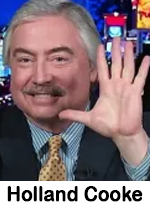
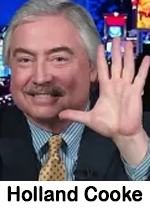
By Holland Cooke
Consultant
imgThe most important sentence in Sharon Gai’s How to Do More With Less: Future-Proofing Yourself in an AI Economy (Wiley) isn’t about technology at all. It’s about leverage. She writes that the goal is to stop being “the busy bee” and instead become “the beekeeper… someone that controls the ‘bees’ to get what you want.” That’s the wakeup call radio needs right now.

Because while our industry debates whether AI is a threat, the rest of the world has already moved on. Gai describes watching Alibaba engineers generate hundreds of thousands of ad banners in seconds – work that once required “thousands of designers” and weeks of back and forth. That moment, she says, was when she realized “the next era of work had already started.” Radio is still acting like it hasn’t. 

AI won’t replace radio. But it will replace radio people who don’t use it.

Gai is blunt: “Will AI replace workers? Absolutely.” But she adds the part radio needs to hear: it replaces tasks first, not people. The winners are the ones who learn to orchestrate the tools. For radio, that means:

  • Sellers using AI to prebuild spec spots, proposals, and category insights
  • Programmers using AI to audit clutter, analyze rotations, and tighten imaging
  • Production using AI to version spots, clean audio, and accelerate turnaround
  • Managers using AI to summarize meetings, draft memos, and model revenue scenarios

This isn’t theory. It’s survival. 

The OnePerson BillionDollar Company — and The OnePerson Radio Station

Gai cites Sam Altman’s prediction that AI will enable “one-person billion-dollar companies.” Radio should hear a different version: the one-person radio station. Not as a cost cutting fantasy — as a competitive necessity.

A single operator, armed with AI tools, can now:

  • Build a full digital presence
  • Produce daily content
  • Generate sales materials
  • Analyze audience behavior
  • Maintain advertiser relationships

Small market owners — the ones already stretched thin — stand to gain the most. 

The Real Message for Radio

Gai’s book isn’t about replacing humans. It’s about reclaiming agency in an AI-driven economy. Radio needs that mindset more than any legacy medium. Because the question isn’t whether AI will change radio.

It’s whether radio chooses to be the bee… or the beekeeper.

To read 2 sample chapters, free, click here.

Holland Cooke is a consultant working the intersection of broadcasting and the Internet. Follow HC on Twitter @HollandCooke and connect on LinkedIn
Industry News

Hubbard Names Moore to Succeed Oxley in DC

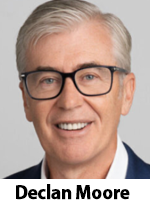
Hubbard | Media That Connects CEO Ginny Hubbard announces that former head of international for Wondery Declan Moore will take over leadership of its Washington, DC operations – including WTOP, Federal News Network and the 2060 Digital – when Joel imgOxley retires at year’s end. Moore says, “I’m honored to have the opportunity to build on the extraordinary legacy Joel Oxley has created here in Washington. WTOP, Federal News Network and 2060 Digital are exceptional brands with deep connections to the communities they serve throughout the National Capital Region. I’m energized by the opportunity to work with the talented teams here to build on those strengths and help these businesses continue to evolve and grow. I’m also enormously excited to join Ginny [Hubbard] and the Hubbard leadership team, whose commitment to impartial, trusted journalism, strong local brands and long-term thinking really resonated with me throughout this process.”
Industry News

Oxley to Receive NAB’s National Radio Award

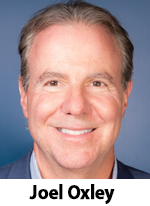
The National Association of Broadcasters will present the 2026 NAB National Radio Award to Hubbard Radio Washington DC president and general manager Joel Oxley during the 2026 NAB Marconi Radio Awards Dinner on October 20 at the Edison imgBallroom in New York City. NAB president and CEO Curtis LeGeyt states, “NAB is honored to recognize Joel Oxley for his extraordinary leadership and lasting contributions to the radio industry. For more than three decades at WTOP and Federal News Network, and over 15 years at Hubbard Radio, Joel has demonstrated an unwavering commitment to local journalism, innovation and public service. Under his leadership, WTOP has become one of the nation’s premier news operations, setting the standard for excellence in local broadcasting while serving the Washington, DC community with trusted journalism. His integrity, vision and dedication have left an enduring mark on our industry, making him a most deserving recipient of this year’s National Radio Award.”

Industry News

Edison: Conservative Podcast Study Reveals Whose Audience Has Shrunk and Whose Has Grown

Edison Research says its recent review of the audience numbers for conservative podcasts reveals the programs that have seen their audience increase and decrease from the fourth quarter of 2024 to the second quarter of 2026. Shows showing significant imggrowth include: SiriusXM’s “Megyn Kelly Show” – up 115% among weekly U.S. consumers 13+; Cumulus Podcast Network’s “Shawn Ryan Show” up 107%; “The Tucker Carlson Show” – up +13%; Premiere Networks’ “Glenn Beck Program – up 11%; and Premiere’s “Sean Hannity Show” – up +5%. Edison says its data indicates Cumulus Podcast Networks’ “Dan Bongino Show” lost the most audience – down 62% – but notes that Bongino’s leave from the business to serve as Deputy Director of the FBI is likely a factor. Elsewhere, podcasts shedding audience include The Daily Wire’s “Ben Shapiro Show” – down 19%; and Cumulus Podcast Network’s “Mark Levin Show” – down 16%. See the full story here.

Industry News

CLARIFICATION: New Bongino Show Won’t Be “Live”

In Monday’s edition of TALKERS, we wrote that the new, nationally syndicated afternoon drive show from Westwood One starring Dan Bongino and Shawn Farash would “air live from 3:00 pm to 6:00 pm ET,” giving the impression the program will be produced live during that time. To clarify, the two hours of the program hosted by Bongino are repurposed from his daily podcast – produced by Silverloch Productions and distributed and repped by the Cumulus Podcast Network – and will be delivered to affiliates during the 3:00 pm to 6:00 pm ET daypart.

Industry News

Clay Travis’ “Sport & State” Inks Deal with “The Next Round”

The new media platform being launched by Outkick founder and Premiere Networks personality Clay Travis is striking a deal with “The Next Round” for national distribution. Travis’ new venture – “Sport & State” – officially debuted today (8/19). “The Next Round” is a product of DBL Down Media led by former WJOX, Birmingham imgbroadcasters Jim Dunaway, Ryan Brown and Lance Taylor and will officially join “Sport & State” on August 24. “The Next Round” president and general manager Bo O’Neal states, “‘The Next Round’ has proven that a great live sports show doesn’t have to be confined by a radio signal or a geographic market. What Jim, Ryan and Lance have built is pretty remarkable. They’ve created independent, personality-driven sports content with an audience that reaches well beyond Alabama. What Clay is building with Sport & State aligns perfectly with who we are and feels like the natural next step for us. We’re not changing what The Next Round is. We’re giving it a much bigger stage. It’s an incredible opportunity for the guys, our team, our advertising partners and everyone who has played a part in making ‘The Next Round’ successful.”

Industry News

TALKERS News Notes

Dr. Daliah Joins WFEA, Manchester. The Talk Media Network syndicated program “The Dr. Daliah Wachs Show” is joining the weekend schedule at Saga Communications’ news/talk WFEA, Manchester, New Hampshire.

KUT Names Philpott Morning Edition Host. Public radio outlet KUT, Austin names journalist Ben Philpott the new local host of NPR’s “Morning Edition.” KUT says, “Ben has been with KUT News since the newsroom launched in 2002 and was its first political reporter, covering eight Texas legislative sessions and presidential campaigns before becoming managing editor. He succeeds Jennifer Stayton, who steps away from ‘Morning Edition’ after 22 years to lead KUT News’ reporting initiative on aging in Central Texas.”

WUSF Welcomes Ira Glass. Public radio station WUSF, Tampa is bringing “This American Life” creator and host Ira Glass to town for an in-person solo show at the Tampa Theatre on December 5.

WNYC Adds Council Speaker Segment. WNYC, New York’s “The Brian Lehrer Show” is adding a “Speak with the Speaker,” interview and call-in segment with New York City Council Speaker Julie Menin. Lehrer says, “We’re excited that Speaker Menin will be joining our show more regularly, offering New Yorkers insights into the work of the City Council. We’re dedicated to offering listeners an opportunity to both hear from their elected officials in their own words and ask their own questions about the issues that matter most.”

Industry Views

After Warning Talk Radio, ABC Sues the FCC

By Matthew B. Harrison
TALKERS, VP/Associate Publisher
Harrison Legal Group, Senior Partner
Goodphone Communications, Executive Producer


imgABC warned that the FCC’s scrutiny of “The View” could reach talk radio. Now the eight ABC-owned television station licensees have taken the agency to court. But the immediate lawsuit is not asking a judge to decide whether “The View” qualifies as news.
Rather, it challenges the FCC’s decision to force those local stations into license renewal years ahead of schedule. On April 28, the FCC’s Media Bureau invoked a rule allowing early renewal when it considers that step essential to an investigation. The stations filed under protest, and on August 18 asked a federal court to halt the proceeding before the FCC can designate it for a hearing.

The FCC says it is investigating possible unlawful discrimination in ABC’s employment practices and whether the stations have served the public interest. ABC calls that explanation a pretext, pointing to public demands that it fires Jimmy Kimmel, threats against its licenses, criticism of its editorial decisions, and the separate proceeding involving “The View.” No license has been denied, and the FCC has not yet answered the lawsuit.

The ABC network does not hold one national broadcast license. Its local stations hold the licenses, and the same federal licensing structure covers terrestrial radio. An online-only show has no FCC broadcast license for the agency to call in.

ABC’s legal argument is that the process itself can punish speech. A costly, open-ended license proceeding may chill hosts, producers and programmers before a regulator ever issues a censorship order. For talk radio, the question is not whether you like ABC; it is whether the government may use threats to a station’s license to influence who gets booked, what gets asked, or which opinions reach the air.

Matthew B. Harrison is a media and intellectual property attorney who advises radio hosts, content creators, and creative entrepreneurs. He has written extensively on fair use, AI law, and the future of digital rights. Reach him at Matthew@HarrisonLegalGroup.com or read more at TALKERS.com.

Industry Views

Who talks like THAT???

img

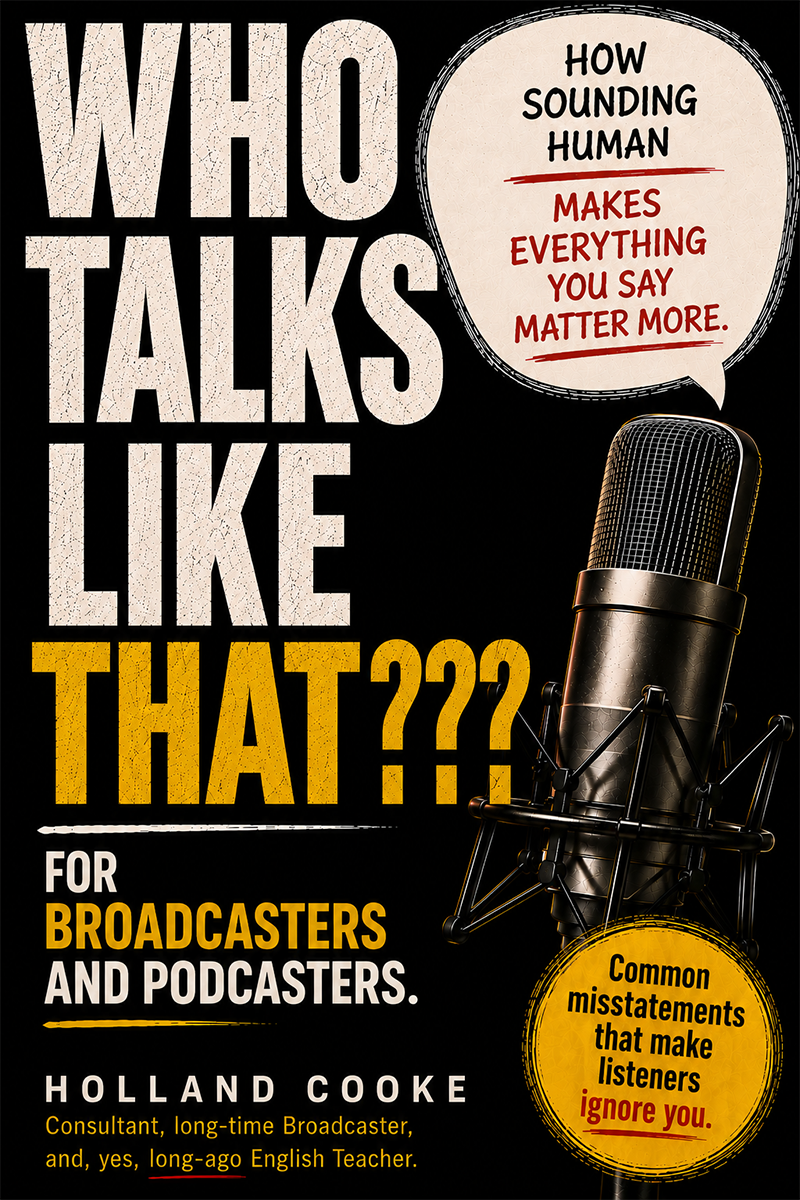
At the end of the day, when all is said and done, broadcasters and podcasters should avoid clichés like the plague. And redundancies, “Period, full stop.”

Consultant, longtime TALKERS columnist – and, yes, long, long-ago English teacher – Holland Cooke has been collecting verbal misdemeanors for decades. His new quick-read e-book Who Talks Like That??? skewers broadcast-ese, bloated wording, antique vocabulary, redundancies, mispronunciations and other ways we accidentally make listeners notice how we’re talking instead of what we’re saying.

“Because radio and podcasts are intimate media, and unforgiving,” Cooke urges, “sound human.” Especially now that every word is competing for attention with SO many audio competitors. FREE download to TALKERS readers: https://getonthenet.com/OOPS.pdf

Industry News

Dan Bongino Returns to Radio on Syndicated Afternoon Drive Show

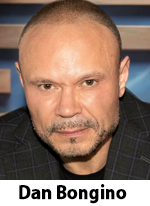
Cumulus Media’s Westwood One is launching a syndicated radio show starring Dan Bongino that will debut next Monday (8/24). The program is called “The Bongino Report PM with Dan Bongino and Shawn Farash” that will air live 3:00 pm to 6:00 pm ET. imgBongino returned to the Cumulus fold doing his podcast that’s sold by the Cumulus Podcast Network after leaving his assistant director position with the FBI. The new show will feature Shawn Farash hosting the first hour and Bongino hosting hours two and three. Bongino comments, “I’m excited to partner with Shawn to bring listeners a daily program focused on the stories that matter most. Our goal is simple: deliver honest analysis and keep ourimg audience informed and engaged. Radio remains one of the most powerful ways to connect directly with people, and I’m excited to be back on Westwood One!” Farash adds, “This is an incredible opportunity for me to connect with listeners across the country every day. Working alongside Dan and the team at Westwood One allows us to bring a fresh, energetic approach to afternoons while staying focused on the stories our audience cares about most.”

Industry Views

Monday Memo: Prospect Retailers Who Are Podcasting

By Holland Cooke
Consultant

They’re low-hanging fruit. They “get” audio, and they crave the listeners radio can bring. We train station sales reps to ask, “If we don’t tell our listeners about your podcast, how will they know you’re doing one?” Incorporate sound bites from their podcasts into their spots.

Holland Cooke is a consultant working the intersection of broadcasting and the Internet. Follow HC on Twitter @HollandCooke and connect on LinkedIn

Industry News

TALKERS News Notes

Nancy Mace Launches YouTube Show. Outgoing South Carolina Congresswoman Nancy Mace launched her new YouTube talk show on Sunday (8/16). She describes her new show as a media destination in which “a bulldog leaves Washington to take the fight to the people.”

Leyden Joins AdLarge. AdLarge appoints Nicole Pezzola Leyden vice president, brand partnerships, in which she’ll “focus on developing strategic sponsorship opportunities and integrated marketing programs for advertisers.” Has served with organizations including TED, Scripps Networks, Discovery, and the NHL.

The Big Ten and Compass Renew. The Big Ten Network and Compass Media Networks agree to a multi-year extension for the exclusive national audio rights to the TIAA Big Ten Men’s Basketball Tournament and Discover Big Ten Football Championship Game along with the expansion of rights to include the exclusive rights to broadcast the Allstate Big Ten Women’s Basketball Tournament.

Industry News

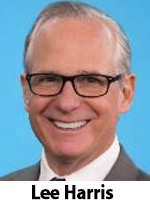
Lee Harris Exit from Red Apple Media Triggers Dust Storm of Mystery

The story of noted radio news executive Lee Harris‘s surprising departure (8/12) from his role as senior vice president of news and programming at Red Apple Media’s WABC, New York and its Worldwide News Network (WWNN) has left a dust storm of conflicting details and speculation in its aftermath on radio message boards, social media and industry trades.

imgHarris joined Red Apple Media on May 4 as VP of news for WABC and the new Worldwide News Network, which launched May 23. Six weeks later, Red Apple promoted him to SVP of news and programming, expanding his authority across WABC, WWNN and Red Apple Audio Networks. On August 12 – roughly 100 days after his hiring – company CEO / owner John Catsimatidis announced Harris’s departure. Catsimatidis stated he had requested Harris’s resignation following a dispute involving a longtime employee returning from medical leave. Red Apple later attributed the separation to differences involving “leadership style.” Harris said he had decided to return to his longtime independent business developing broadcast technology products, but neither side identified a replacement nor fully explained in detail whether Harris resigned voluntarily or was dismissed.

Seasoned radio industry veterans know that it is a common practice for the actual details of such endings of employment to remain ambiguous. It is also known that strong-minded members of a company’s staff in both talent and management can be prone to butt heads within the minefield of corporate structure.

In this story, everything beyond that remains unproven. Early forum speculation suggested political or ideological incompatibility, but no reporting supports that theory; available off-record information specifically contradicts it. The returning employee’s identity also remains unconfirmed, as does the precise sequence of resignation and dismissal. The safest conclusion is that this was an internal management conflict subsequently framed by Red Apple as a personnel-related termination and by Harris as a voluntary career change.

2012 Heavy Hundred – 1-10

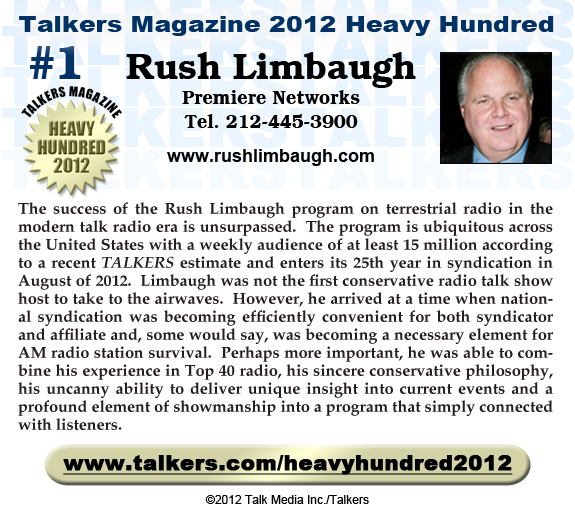
TALKERS 2012 Heavy Hundred #1: Rush Limbaugh, Premiere Networks

1. Rush Limbaugh – Premiere Networks

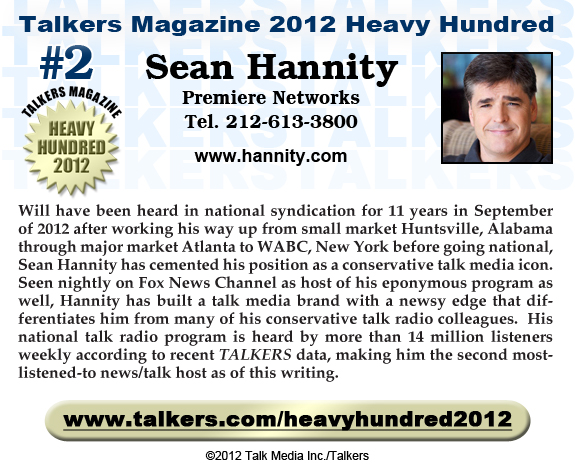
TALKERS 2012 Heavy Hundred #2: Sean Hannity, Premiere Networks

2. Sean Hannity – Premiere Networks

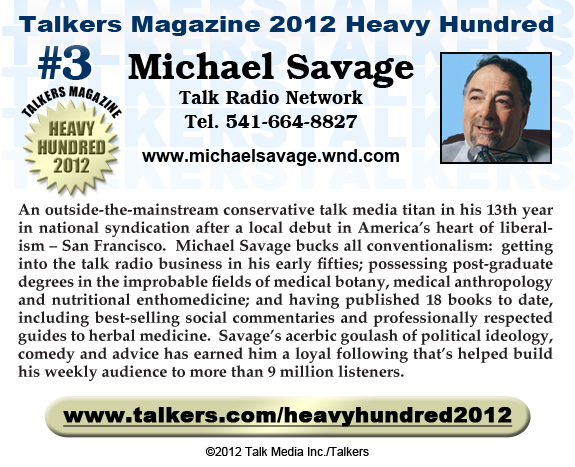
TALKERS 2012 Heavy Hundred #3: Michael Savage, Talk Radio Network

3. Michael Savage – Talk Radio Network

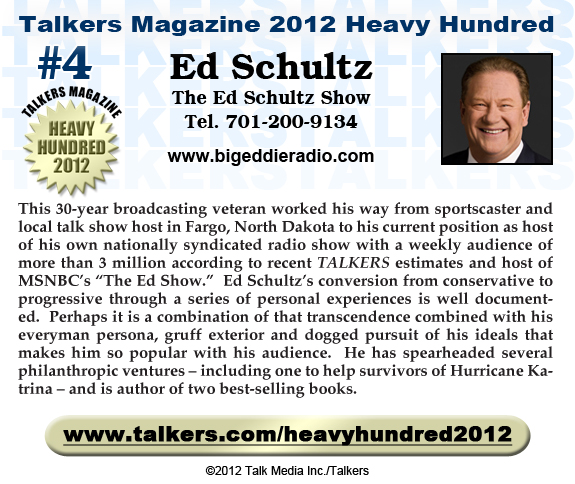
TALKERS 2012 Heavy Hundred #4: Ed Schultz, The Ed Schultz Show

4. Ed Schultz – The Ed Schultz Show

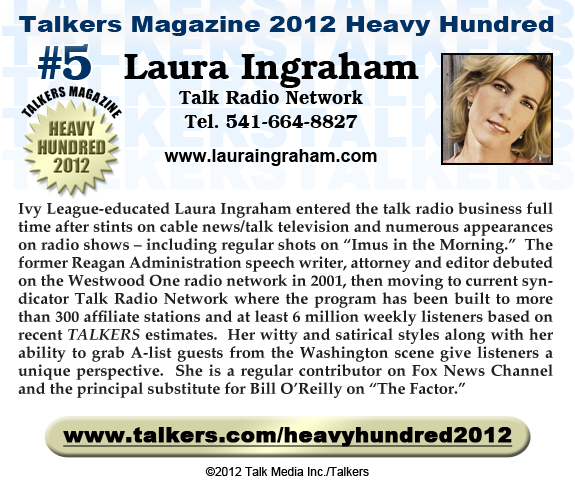
TALKERS 2012 Heavy Hundred #5: Laura Ingraham, Talk Radio Network

5. Laura Ingraham – Talk Radio Network

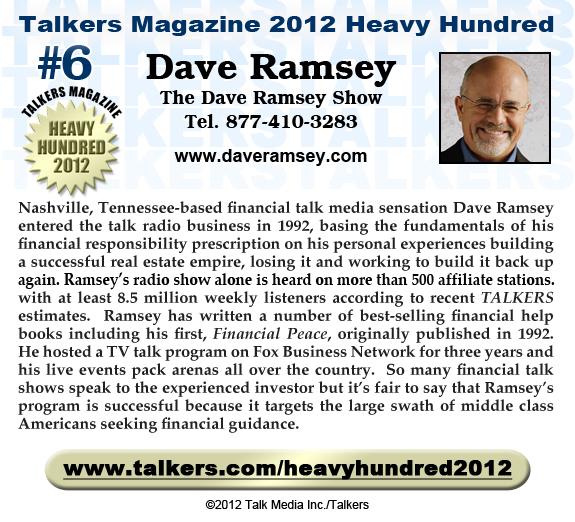
TALKERS 2012 Heavy Hundred #6: Dave Ramsey, The Dave Ramsey Show

6. Dave Ramsey – The Dave Ramsey Show

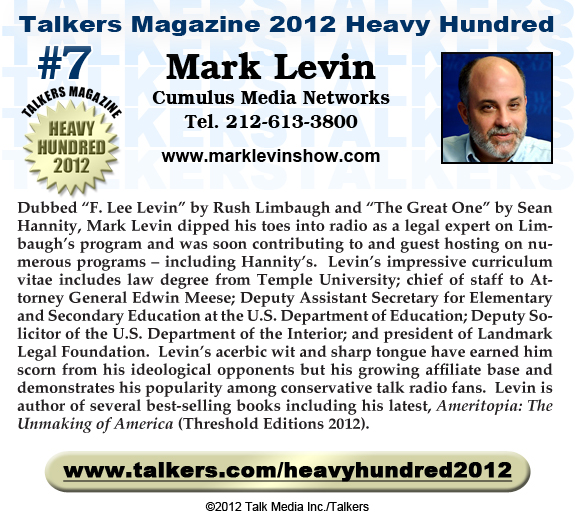
TALKERS 2012 Heavy Hundred #7: Mark Levin, Cumulus Media Networks

7. Mark Levin – Cumulus Media Networks

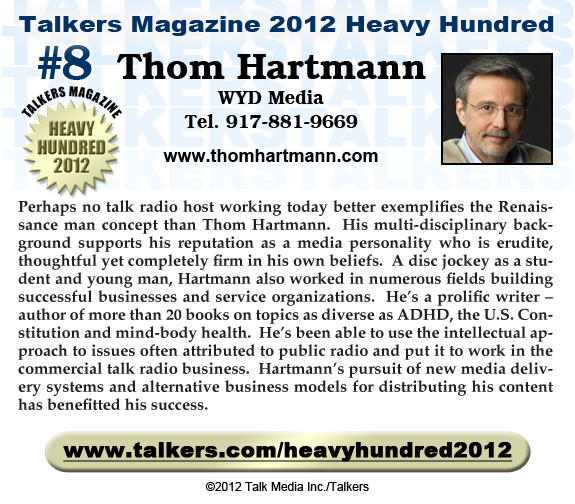
TALKERS 2012 Heavy Hundred #8: Thom Hartmann, WYD Media

8. Thom Hartmann – WYD Media

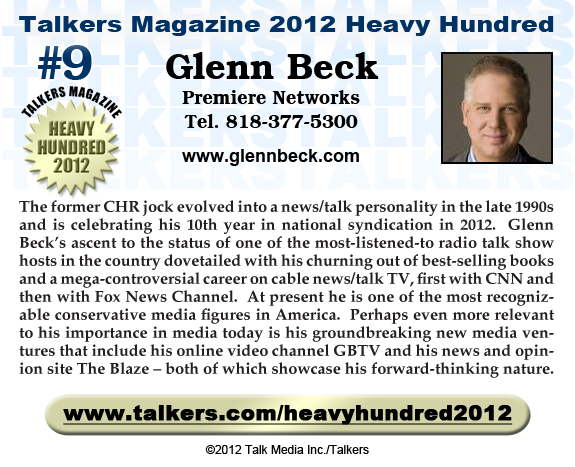
TALKERS 2012 Heavy Hundred #9: Glenn Beck, Premiere Networks

9. Glenn Beck – Premiere Networks

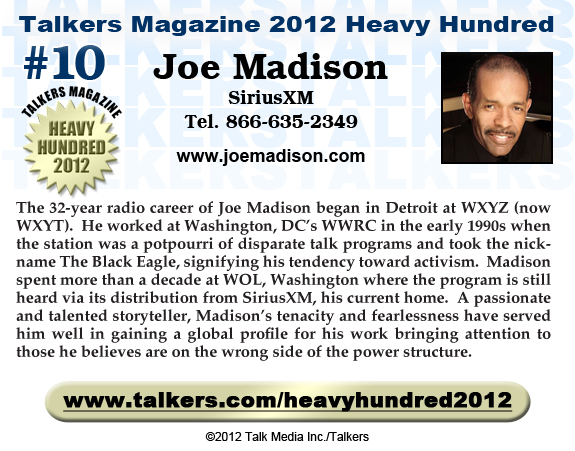
TALKERS 2012 Heavy Hundred #10: Joe Madison, SiriusXM

10. Joe Madison – SiriusXM

1 – 10 | 11 – 20 | 21 – 35 | 36 – 50 | 51 – 65 | 66 – 80 | 81 – 95 | 96 – 100

Industry News

iHeartMedia Posts Consolidated Q2 Revenue Up 4.7%

It’s second quarter earnings season and iHeartMedia reveals that its Q2 consolidated revenue was $977 million, an increase of 4.7% over the same period a year ago. The company posts a net loss of $82.4 million, down 1.3% from the $83.5 million is posted in Q2 of 2025. iHeartMedia reports financial data by segments and its Multiplatform Group (which includes broadcast radio and network radio) saw revenue fall 2% to $536 million. Broadcast radio revenue for the quarter was $397.6 million, up 0.5% from Q2 of 2025, and network revenue was $103.7 million, down 3.8%. The imgcompany’s Digital Audio Group revenue was $364 million, up 12% over Q2 of 2025, with the podcast segment rising 21% on revenue of $162 million. iHeartMedia chairman and CEO Bob Pittman comments, “We’re pleased with our second quarter results, generating Adjusted EBITDA of $152 million, slightly above the midpoint of our previously provided guidance range. Our consolidated revenue was $977 million, up 4.7% compared to the prior year quarter and above our guidance. Our podcast revenue momentum continues, up 20.7% compared to prior year, and in addition to helping propel our growth as the #1 podcast publisher, our broadcast radio assets have also allowed us to develop and drive the new video podcast marketplace – an incremental growth opportunity for us, including on streaming video services including Netflix and Disney+ and Hulu, which we announced today. And our work in building our digital assets continues to pay off; this is the sixth consecutive quarter in which the Digital Audio Group Adjusted EBITDA is larger than the Multiplatform Group Adjusted EBITDA.”

Industry News

Shawn Ryan and Ezra Klein Rise in Podtrac’s July Podcast Ranker

There are no changes at the top of Podtrac’s July 2026 Top Podcasts ranker (based on U.S. unique monthly audience); audiochuck’s “Crime Junkie” remains #1, followed by The New img York Times’ “The Daily” at #2, and NPR’s “NPR News Now” at #3. Movers in the top 20 include Cumulus Podcast Network’s “The Shawn Ryan Show,” which climbs three places to #12; The New York Times’ “The Ezra Klein Show,” which rises six places to #17; and Los Angeles-based comedian Tim Dillon’s eponymous show, which jumps five spots to #19.  See the chart here.
Industry Views

Monday Memo: Radio’s New Fall Season

By Holland Cooke
Consultant


imgAs TV is touting its coming attractions, take a step back. We – inside the box – live-and-breathe radio.
Listeners have their hands full just living and breathing. Their day is time-crunched and financially-challenged, and we want to be its soundtrack. But listening is free, unlike umpteen other purchase decisions they agonize. So what’s high-stakes to us is low-stakes to them.

We only matter if we matter, and we’ve never had so much audio competition.

  • This month, as the school year begins in so many places, the listeners local retailers want as customers revert to “normal.” Their tempo changes, and builds to a holiday season climax. Do they know who you are and how you can help?
  • Off-air promotion (remember that?) merely says give-us-a-try. When they do, does what they hear deliver? Even with scant (or no) off-air promotion, much of what you can do to become more habit-forming costs nothing. As consultants do, I’m talking about “the fundamentals,” the blocking-and-tackling stuff. For starters, think: recognition and relevance.

Who are you?

  • Are call letters or station nickname delivered frequently? PPM myth: call letters matter less. Baloney. Awareness drives use. Ditto your dial position(s) and how to listen via smartphone, smart speaker, and streams. Name-and-address.
  • As your listeners cume 3 stations this week, help ’em remember yours more than the other 2 (not to mention streams and satellite radio and podcasts). And are you selling — or merely reciting — call letters, dial position, and slogans? This is often an issue with veteran talent, creatures of habit.

“Who cares?”

Or as my WTOP successor Jim Farley (RIP) asked: “W.G.A.S.?” He hung a sign in the newsroom there, meaning “Who Gives A Shit?”

  • Are topics relatable and useful? Enable listeners with helpful information, and they’ll keep coming back.
  • Do you say “you” and “your,” a lot? It’s a litmus test for relevance.
  • Do you keep setting the stage as audience tunes in? Someone JUST got in the car.
  • Are you teasing the next quarter hour? And what you’ll offer same-time-tomorrow?
  • Even with apps in the dashboard, weather and traffic are super-local and can be super-impactful.
  • Is your on-air imaging about the station? Or about listeners’ lives? “Because ONE traffic jam can jam-up your whole day…”

There’s more from radio’s right-now To-Do list at HollandCooke.com

Holland Cooke is a consultant working the intersection of broadcasting and the Internet. Follow HC on Twitter @HollandCooke and connect on LinkedIn

Industry News

Sabo Sez: Mitch Reed’s Deserved Award

imgBy Walter Sabo
A.K.A. Walter Sterling
Host, The Other Side of Midnight
WABC, New York / Red Apple Audio Networks

The Radio Hall of Fame has just announced their “Legends” inductees, and it includes B. Mitchell Reed. YES!

One of the minor injustices of radio is the curious legacies of Tom Donahue and B. Mitchell Reed relative to the creation of free-form progressive rock radio. They were best friends with parallel careers. Both were top-of-their-game “screaming” Top 40 DJs. Tom in San Francisco, Mitch in LA and NYC. Top earnings, ratings, and both around 40 when they went to the Monterey Pop Festival. There they learned that their teens were changing fast. Harder rock, anger about Vietnam, and drugs. They knew their style of radio was out of synch with the moment.

Every day on his way to work in LA, Mitch drove past the Pasadena Presbyterian church and noticed a radio antenna on the grounds.

The tower was pumping out an FM signal that covered Los Angeles, broadcasting from the basement of the church. Underground. Mitch talked to the preacher he met along the way. And he bought time on the station at night and experimented with playing hard rock and a new form of presentation. His friend Donohue sent tapes from San Francisco, and the two of them created “free form” radio (also referred to as “underground” radio) from the basement of the church. The frequency became KPPC-FM.

Note: both of them created free-form radio at risk to their careers and income while over the age of 40. Tom continued as a progressive rock jock in San Francisco, and Mitch became an icon in Los Angeles as an album rock jock on KLOS and KMET. Oddly, Tom gets more of the image and credit, but they were very much partners.

BMR MH
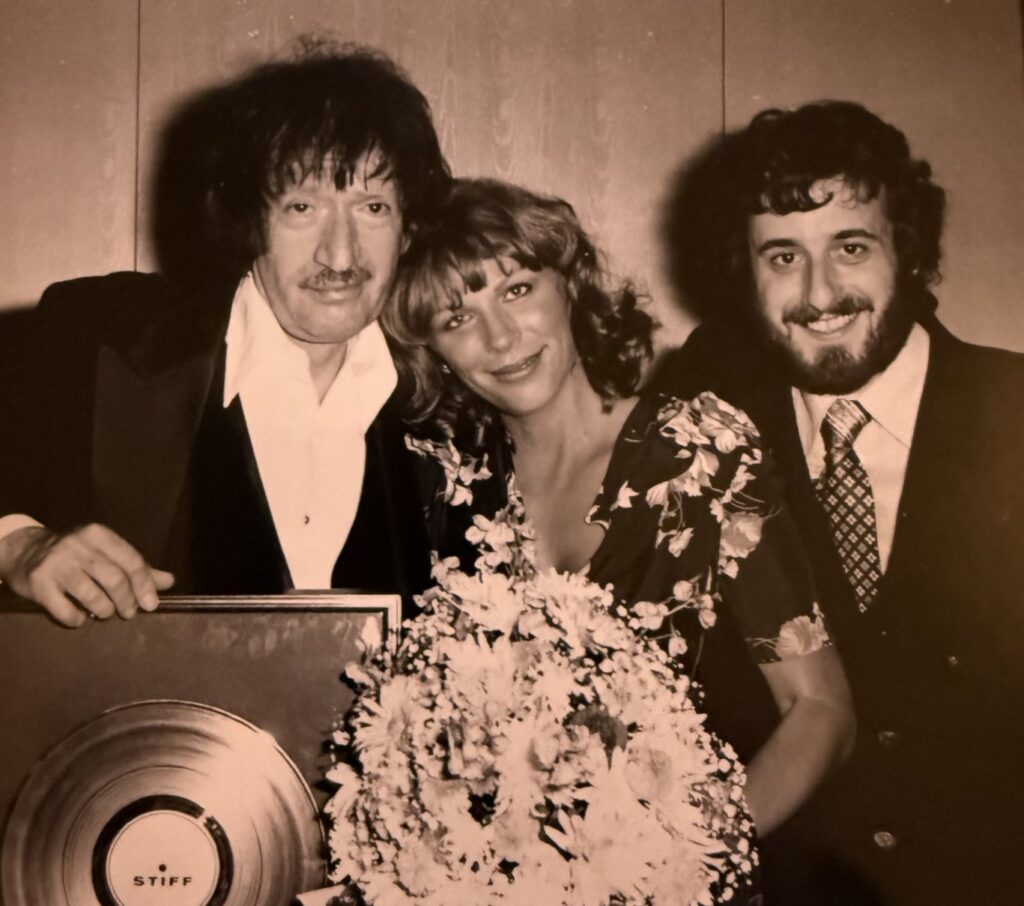
B. Mitchell Reed (l), his wife Carol (c), and Michael Harrison (r) at KMET, Los Angeles in the late seventies.

Walter Sabo has been a C-Suite action partner for companies such as SiriusXM, Hearst, Press Broadcasting, Gannett, RKO General, and many other leading media outlets. His company, HITVIEWS, in 2007, was the first to identify and monetize video influencers. His nightly show “The Other Side of Midnight” is heard on WABC, New York and the Red Apple Audio Network 1:00 am – 5:00 am. His syndicated show, “Sterling On Sunday,” from Talk Media Network, airs 10:00 pm – 1:00 am ET, and is now in its 10th year of success. He can be reached by email at sabowalter@gmail.com. He can be phoned at 646-678-1110.

Industry News

Dickey Broadcasting Announces Expanded Lineup on Sports Radio 680 The Fan

680 the fan logo vertical1200x1200 300x300Dickey Broadcasting Company announces, “an exciting new chapter” for Sports Radio 680 The Fan in Atlanta as veteran broadcaster John Kincade joins Matt Chernoff weekdays from 2:00 pm to 6:00 pm for the all-new “Kincade & Chernoff Show.” The pairing brings together two of Atlanta’s most respected and recognizable sports radio personalities. The new show will feature the latest sports news, interviews, and debate.
As part of this programming change, station personality Chuck Oliver will continue to play an “impactful” role on The Fan while expanding his focus on “The Chuck Oliver Show,” heard across the Southern Sports Today Network. According to station management, Oliver remains an integral part of 680 The Fan’s programming and will continue to provide the station’s signature college football coverage and analysis through exclusive segments, special features, and fan-favorite promotions including “Win Chuck’s Dinner.”  With his nationally recognized expertise, Oliver will also devote additional attention to growing “The Chuck Oliver Show,” further expanding coverage of SEC and ACC football, the College Football Playoff, recruiting, and the biggest stories from across the college football landscape throughout the Southeast.

“This is an exciting opportunity for all of our brands,” said David Dickey, president of Dickey Broadcasting Company. “John and Matt are an outstanding combination for afternoon drive, and our listeners should know that Chuck Oliver isn’t going anywhere. Chuck remains a huge part of The Fan and will continue to be our premier voice for college football through regular appearances, features, and promotions, while also expanding the reach of ‘The Chuck Oliver Show’ across the Southern Sports Today Network. These moves strengthen our commitment to delivering best-in-class sports programming both locally and throughout the Southeast.”

Industry News

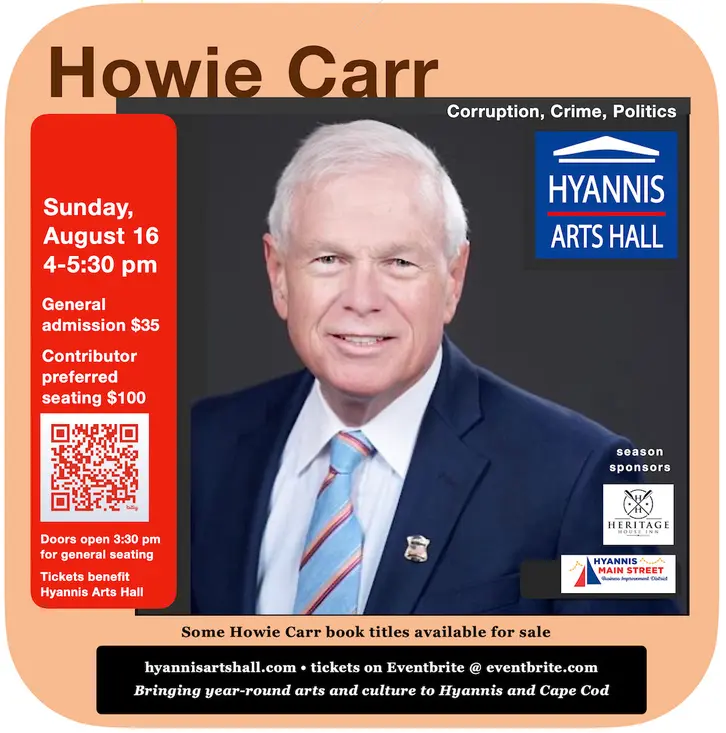
New England Talk Radio Icon Howie Carr to Give Public Talk on Corruption, Crime, and Politics at Hyannis Arts Hall

03211822259Long known as the kind of radio talk show host who can “draw a crowd,” legendary New England personality, best-selling author, newspaper columnist, and broadcasting entrepreneur Howie Carr will bring his passion, wit, and personal experiences in journalism to the Hyannis Arts Hall stage on Sunday, August 16, where he will speak from 4:00 to 5:30 pm.  Carr, host of the largest regionally syndicated talk radio show in New England, will bring his unmistakable blend of outspoken passion and confrontational conservative politics to what is expected to be a sellout live audience. Tickets are available on Eventbrite.com. In 2015, Howie Carr launched The Howie Carr Radio Network, the first major host-owned radio network in New England. Carr quickly grew his network from a few stations in Massachusetts to more than 20 terrestrial radio stations across New England. The Howie Carr Radio Network is the only radio network reaching a majority of the 14 million people living in New England. Carr has authored numerous books, including the bestselling The Brothers Bulger, Hitman, and other works focused on Boston’s underworld and political corruption. Copies of some titles will be available for sale at his appearance.
Industry Views

The Algorithm is Listening

1527a63f d481 4de5 8636 2bcf88a23c44

img

By Matthew B. Harrison
TALKERS, VP/Associate Publisher
Harrison Legal Group, Senior Partner
Goodphone Communications, Executive Producer

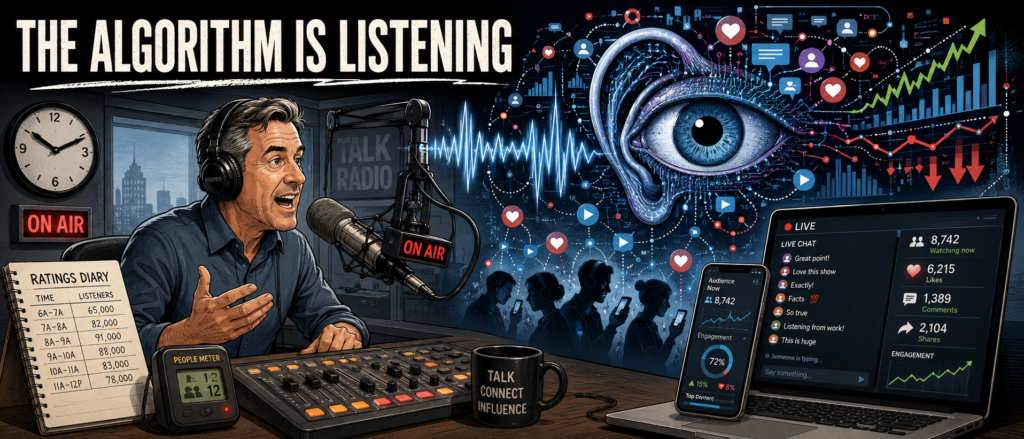
Radio once measured the audience… now digital platforms use the audience to decide what happens next

Radio programmers have always watched the audience. The difference for programmers today is that the audience can now watch back, respond instantly, influence the show, and determine whether the next person ever receives it.

That is the practical meaning of an algorithm for a broadcaster. It is not a mysterious robot hiding inside the black box of an enigmatic social platform. It is a set of instructions used to make decisions. On YouTube, Facebook, TikTok, Spotify, Twitch, and other services, those instructions help determine which content gets shown, to whom, in what order, and under what circumstances.

Radio has used simpler forms of algorithmic thinking for decades. A music clock is a set of instructions. So is a rule prohibiting two songs by the same artist within a specified period. Or two female vocals in a row. A programmer who schedules news at the top of the hour, traffic twice an hour, and the strongest feature before a commercial break has created a decision system.

Digital algorithms do something more consequential. They do not merely organize the program. They organize the audience around each individual piece of content.

From diaries to PPM

The traditional radio diary asked selected listeners to record what they heard and when they heard it. Nielsen defines the diary as a measurement method in which respondents manually record their listening habits. Those reported habits are then used to estimate listening across a larger market.

The system was necessarily crude. A diary could show that someone reported listening to a station during morning drive. It could not reliably establish whether that person loved the program, ignored it, hated it, stayed because the station was playing in a waiting room, or simply remembered the call letters incorrectly.

Still, the diary produced an enormously valuable number. Ratings influenced advertising rates, station formats, talent contracts, syndication opportunities, and management decisions. The ratings service measured the audience, but the station still controlled the programming and the transmitter.

The Portable People Meter changed the speed and granularity of that feedback. PPM panelists carry a small device that detects inaudible identification codes embedded in participating broadcasts. Instead of relying entirely on a listener’s memory and written entry, the meter passively detects exposure to encoded audio.

That gave programmers something closer to immediate feedback. They could study audience movement within smaller portions of a show, identify apparent tune-out points, compare features, evaluate commercial breaks, and make changes much more quickly.

PPM therefore became the bridge between traditional ratings and algorithmic distribution. The diary remembered the audience. PPM observed the audience more closely. Both still produced information for human beings to interpret.

A programmer could see a decline and decide to shorten a segment. The meter did not shorten it. A consultant could conclude that a feature hurt retention. The PPM system did not prevent tomorrow’s listeners from hearing it.

The algorithm closes that gap.

(more…)

Industry News

Salem’s WNYM, New York (AM 970 The Answer) Teams with Hofstra’s WRHU-FM to Produce Series of 9-11 Tributes

Annie SiddiqueIn an impressive example of the productive synergy that can be generated by the teaming of campus and professional spoken word radio organizations,

Jim Berghorn

Salem’s WNYM, New York (AM 970 The Answer) is running a series of vignettes collectively titled “Courage, Sacrifice and Commitment” during the months of August and early September, featuring tributes to 9-11 first responders. These short form productions highlight stories of New York City’s heroes and give first-person perspectives on what happened the day of and after 9-11. The stories are being produced by Hofstra University / WRHU-FM student journalist Annie Siddique, who has developed into what has been described by WNYM and WRHU management as a “master interviewer” in organizing and producing this campaign. To sample an episode of the program featuring a profile of retired FDNY Lt. Jim Berghorn, please use player below, or click here.

.

Industry Views

Monday Memo: Trust is the New Currency

By Holland Cooke
Consultant

Holland Cooke

It is now the ultimate competitive advantage, and for broadcasters it’s a survival strategy. In The Five-Year Century: Bold Leadership and Accelerated Outcomes in the Age of AI, Mihir Shukla and Nancy Hauge explain how—as artificial intelligence accelerates change and demographics reshape the audience—trust becomes the only durable asset radio and television can bank on.

The book describes a 2026 world where the “twin engines” of growth—population and productivity—have stalled. Birth rates are plunging, workforces are shrinking, and productivity has flatlined across most industries. Meanwhile, AI is compressing decades of innovation into months. This collision creates what the authors call “The Five-Year Century,” in which the pace of change overwhelms institutions built for slower times—broadcasting, for instance.

Radio and television were built on industrial-era assumptions: mass audiences, standardized programming, rigid schedules, and hierarchical decision-making. Those assumptions worked when the audience was broad, predictable, and captive. On February 9, 1964, the Beatles tripled Ed Sullivan’s ratings. Back to the future…

AI is rewriting the rules of content creation, distribution, and consumption. Personalized news feeds, customized ad loads, and algorithmic programming are expectations. Younger audiences don’t wait for a newscast; they expect a feed. They don’t tune in; they scroll. They don’t accept one-size-fits-all; they demand one-size-fits-me.

In this environment, trust becomes the new currency because it’s the one thing AI cannot manufacture.

Broadcasting’s advantage has always been credibility. When a storm hits, people still turn to local radio. When a shelter-in-place alert hits their phone, they still switch on local TV. That instinct is powerful, but it’s not permanent. Trust must be earned continuously, especially as AI-generated misinformation floods the ecosystem.

The book’s chapter on the “Trust Economy” makes a critical point: trust accelerates outcomes. High-trust organizations move faster, innovate more boldly, and adapt more effectively. For broadcasters, trust accelerates audience loyalty, advertiser confidence, and community relevance. But trust now requires new behaviors.

It requires transparency about how AI is used in newsrooms. It requires clarity about what is human judgment and what is machine assistance. It requires authenticity as AI-generated talent becomes increasingly commonplace—and increasingly convincing.

Trust requires broadcasters to lean into what humans do best: context, empathy, moral reasoning, and community connection. The book reminds us that “work worthy of human potential” is work that machines cannot replicate. For broadcasters, that means storytelling, accountability journalism, and the human presence that makes local media local.

By all means, assign AI the routine tasks: editing, logging, transcription, versioning, and production. Then reinvest the human time you save in the relationship between a station and its community. In The Five-Year Century, trust isn’t just a virtue. It’s a conspicuous differentiator. It’s the currency that will determine which broadcasters thrive and which fade into the noise of an algorithmic world. As our industry suffers workforce cutbacks, we risk downsizing trust.

To read two sample chapters and watch a short video interview with the authors, click here.

Holland Cooke is a consultant working at the intersection of broadcasting and the Internet. Follow HC on Twitter @HollandCooke and connect on LinkedIn.

Industry News

Radio Hall of Fame Announces “Legends” Inductees

imgThe Radio Hall of Fame announced today (8/3) the selection of nine 2026 Legends inductees. These individuals were selected by the Radio Hall of Fame’s 2026 Nominating Committee, which meets annually to recognize deceased individuals who made significant contributions to the radio industry. The Radio Hall of Fame is housed within the Museum of Broadcast Communications in Chicago.
The following nine radio legends take their place in the Radio Hall of Fame immediately:

  • Lin Brehmer — on-air personality
  • Vivian Carter — on-air personality and record company executive
  • Dale Dorman — on-air personality
  • Gary Krantz — network radio and syndication executive
  • Wink Martindale — on-air personality, game show host, and television producer
  • B. Mitchell Reed — on-air personality
  • Pierre Robert — on-air personality
  • Polito Vega — on-air personality
  • D.E. “Duke” Wright — radio station owner and executive

Dennis Green, co-chair of the Radio Hall of Fame, tells TALKERS: “The Radio Hall of Fame is proud to honor this year’s Legends inductees, whose extraordinary careers have helped define the history and enduring impact of radio. From iconic on-air personalities to visionary executives, each has left an indelible mark on our industry and earned their rightful place in the Radio Hall of Fame.”

Kraig Kitchin, co-chair of the Radio Hall of Fame, adds: “It’s an honor and privilege to witness the induction of these radio industry legends. We hope this recognition of their industry contributions benefits their family, colleagues, friends, and listeners.”

The Radio Hall of Fame will recognize its 2026 class of inductees at the 2026 Radio Hall of Fame induction ceremony on Thursday, October 8, 2026, at the Fairmont Chicago. Tickets are on sale now at RadioHallOfFame.com. A portion of each ticket purchase is a tax-deductible charitable donation to the Museum of Broadcast Communications.`

Industry News

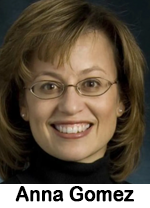
FCC’s Gomez Comments on ABC-Disney Case After Public Comment Period Closes

FCC Commissioner Anna M. Gomez continues to address the Commission’s forcing ABC/Disney to go through an early license renewal for its eight owned-and-operated television stations ostensibly for “news distortion.” After the recent close of the public comment period in the matter, Gomez states, “When given the imgchance to weigh in on whether to allow the FCC to continue its campaign of censorship and control, the American public showed up in a big way, and the vast majority who spoke up delivered the same message. They believe in the value of their local news, they trust those who cover their communities, and they understand that the FCC has no business deciding who is a journalist and what counts as real news. A small number of partisan voices tried to hijack this process into a referendum on a network they dislike, but the public refuses to let local stations become collateral damage in the FCC’s political games. The FCC has no authority to police the ideological balance of the airwaves, and no matter what this Commission does next, the record now makes clear that this was never a genuine search for the public interest.”

Gomez’s press release adds, “In the docket covering the early license renewal proceeding, the agency received more than 150,000 comments. In the docket covering the FCC’s effort to unwind a more than two-decade old precedent recognizing the interview portion of ‘The View’ as a bona fide news program, the agency received nearly 80,000 comments. In both dockets, totaling more than 230,000 comments, the vast majority of commenters defended the stations and rejected the FCC’s attempt to use its licensing authority to punish constitutionally protected speech.”