By Matthew B. Harrison
TALKERS, VP/Associate Publisher
Harrison Media Law, Senior Partner
Goodphone Communications, Executive Producer
 Every talk host knows the move: play the clip. It might be a moment from late-night TV, a political ad, or a viral post that sets the table for the segment. It’s how commentary comes alive – listeners hear it, react to it, and stay tuned for your take.
That simple act is powered by a fragile piece of legal machinery known as the Fair Use Balancing Act. Without it, half of talk radio, podcasting, and online news/talk commentary wouldn’t exist. Fair Use allows creators to quote, parody, or critique copyrighted material without permission – but only when the new use transforms the old. It’s the backbone of what we now call “react” or “remix” culture.
Fair use isn’t a license; it’s a defense. When you rely on it, you admit you used someone else’s work and trust that a judge will see your purpose – criticism, news, education – as transformative. That’s a high-wire act few think about when the mic is hot.
The doctrine works on a sliding scale: courts weigh four factors – purpose, nature, amount, and market effect. In plain English, they ask, Did you change the meaning? Did you take too much? Did you cost the owner money? There are neither checklists nor guarantees.
That flexibility is what makes American media vibrant – and also what keeps lawyers busy. Each decision takes time, context, and money. The price of creative freedom is uncertainty.
The same logic now drives the debate over AI training and voice cloning. Machines don’t “comment” on your broadcast; they absorb it. And if courts treat that as transformative analysis instead of reproduction, the next generation of “hosts” may not need microphones at all.
For broadcasters, that’s the new frontier: your archives, tone, and phrasing are training data. Once ingested, they can be repurposed, remixed, and re-voiced without violating traditional copyright rules. The Fair Use Balancing Act may protect innovation – but it rarely protects the innovator.
Fair use was designed to keep culture evolving, not to leave creators behind. It balances a creator’s right to profit against society’s right to build upon shared work. But balance only works if both sides know the weight they’re carrying.
Every time you play the clip, remember you’re exercising one of the oldest and most essential freedoms in media. Just make sure the next voice that plays you is doing the same thing – for the right reasons, and under the same rules.
Matthew B. Harrison is a media and intellectual property attorney who advises radio hosts, content creators, and creative entrepreneurs. He has written extensively on fair use, AI law, and the future of digital rights. Reach him at Matthew@HarrisonMediaLaw.com
Share this with your network




 results has made her an invaluable leader within iHeartMedia.” Blazer has been with iHeartMedia since 2013 and serves as national news, talk, and sports brand coordinator, news director for the Florida News Network, program director for Miami’s WIOD and WINZ, and program director for Tampa’s WFLA. Market president Shari Gonzalez adds, “At iHeartMedia Miami, we’re fortunate to have exceptional programming leadership, and Grace is a shining example of that excellence. With 12 years of unwavering passion, strategic vision and meaningful impact across our organization, Grace has consistently raised the bar. We’re thrilled to recognize her achievements and promote her to lead our dynamic cluster into the future.” Blazer comments, “I’m incredibly proud and excited to step into my new role at iHeartMedia Miami. iHeartMedia is a powerhouse of creativity and bold ideas, and I’m energized by the opportunity to help shape our Miami brands growth and collaborate with some of the most extraordinary programmers in the industry.”
  Tragically, I was none of those things. Fortunately, I had the support of those who believed I had potential and encouraged me to follow a slightly different path — to morning radio. And while I never envisioned eventually moving from music to talk radio, the transition has been the most rewarding experience of my life, and these last three years at Civic Media have been the proudest of my 40-plus year career.” Prior to joining Civic Media, Matenaer served with Good Karma Brands’ news/talk WTMJ, Milwaukee in the newsroom and in morning drive. She adds, “As I head toward retirement, I want to take this moment to thank my current and former colleagues and mentors. You are among the most talented, dedicated and hilarious people on the planet. Thank you to Civic Media, for believing in a 60-something woman to host her own show and for your commitment to community-based radio and to a healthy democracy.”
 brands. Gould comes to iHeartMedia from Metamorphosis.Digital where she was chief revenue officer and VP of sales. iHeartMedia division president Kris Foley says, “Annalee’s ability to build trust, navigate change, and deliver creative, cross-platform results makes her the ideal leader for our San Francisco sales team. Her experience and relationships in the Bay Area will be instrumental as we continue to grow our presence and impact.” She comments, “Audio is one of the most powerful and evolving channels in media today and nowhere embodies creativity and innovation quite like the Bay Area. I’m excited to join iHeartMedia and work with a team that understands how meaningful human-generated content continues to drive trusted marketing. In a time when that connection feels increasingly rare, radio and podcasts remain deeply human, built on authentic voices, real stories, and companionship.”
  them achieve their business objectives through effective radio and digital advertising. The ideal candidate will possess excellent communication skills, have an enthusiastic and outgoing personality, along with a drive to succeed. Most importantly – we are looking for hard-working salespeople who want to have FUN at work, make money, and help local businesses grow.
 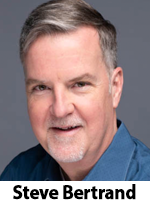 WGN VP and general manager Mary Sandberg Boyle says, “From joining WGN Radio in 1985 during the Wally Phillips era to anchoring news on the ‘Lisa Dent Show’ today, throughout his 40 eventful years here Steve has faithfully maintained the highest standards of journalistic integrity, combined with his own unique gift for playful on air banter which is sure to be missed by colleagues and listeners alike.” Bertrand comments, “I feel like I’m the luckiest guy in the history of radio. As a kid, I dreamed of one day living in Chicago. I never imagined I’d be part of her daily conversation. I will forever be grateful to the legends I worked with and, most especially, the listeners who made it all happen. I’ve had the privilege of being part of a pretty amazing family for 40 years.”
 Ciattarelli at the Crystal Point Yacht Club in Point Pleasant. The one-hour town hall will focus on the top issues impacting New Jersey and the proposed policies that Ciattarelli would implement across the state. Additionally, FNC’s Harris Faulkner will join Hannity and Ciattarelli to discuss the issues that matter most to New Jersey ahead of the upcoming gubernatorial election. FNC national correspondent Bryan Llenas will also be on site providing live updates on the event.
 Award-winning journalist Indira Lakshmanan is the new co-host of “Here & Now,” debuting in Late November alongside Scott Tong and Robin Young. Additionally, Peter O’Dowd, the senior editor who has stepped in regularly as a host for several years on “Here & Now,” takes on a new role as correspondent and regular fill-in host. And international news industry pro Allan Price joins to lead the team as the new executive producer. NPR says that according to Nielsen ratings data, “Here & Now” is the third most-listened-to NPR news program after “Morning Edition” and “All Things Considered.”
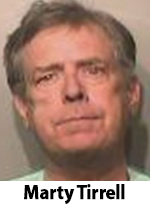 in which Tirrell used the proceeds for personal expenses and gambling. Now, prosecutors say Tirrell has done pretty much the same thing again, getting investors to give him money to buy luxury tickets for events like the U.S. Open tennis tournament, Taylor Swift concerts, Indiana Fever games and football and baseball playoff games. Tirrell was to sell the tickets and pay investors their original investment plus a share of the profits. Prosecutors say Tirrell did pay some investors back but did so with money from new investors. In fact, they say Tirrell never made the ticket purchases and instead used the money for personal expenses and gambling. Tirrell worked as a sports talk host at KXLQ-AM, Des Moines and later at KXNO, Des Moines.
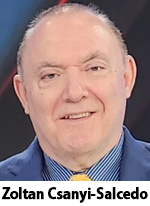 as news director at KRGV-TV, Weslaco “ABC 5” in Texas’ Rio Grande Valley, where he led a bilingual newsroom. Cumulus Albuquerque OM and program director Aaron “Buck” Burnett says, “Zoltan is exactly the kind of newsroom leader Albuquerque needs right now — grounded, relentless, and passionate about storytelling that matters. He’s built winning, trusted newsrooms in every market he’s touched, and we’re thrilled to have him guiding KKOB’s next chapter.” Zoltan Csanyi-Salcedo comments, “KKOB has always been a trusted voice for New Mexico, and my mission is to strengthen that trust every day. This newsroom will focus on local truth first — fast, fair, and useful information that helps our audience make sense of what’s happening in their communities.”
 revocation of accreditation for Nielsen Audio Diary markets as reported in the RMR and TAPSCAN Web including Bryan College Station, Texas; Hudson Valley; Killeen-Temple, Texas; Odessa- Midland, Texas; Portsmouth-Dover-Rochester, New Hampshire; Reno; and Trenton. At the same time, the MRC has approved accreditations for all of Nielsen’s 28 PPM markets.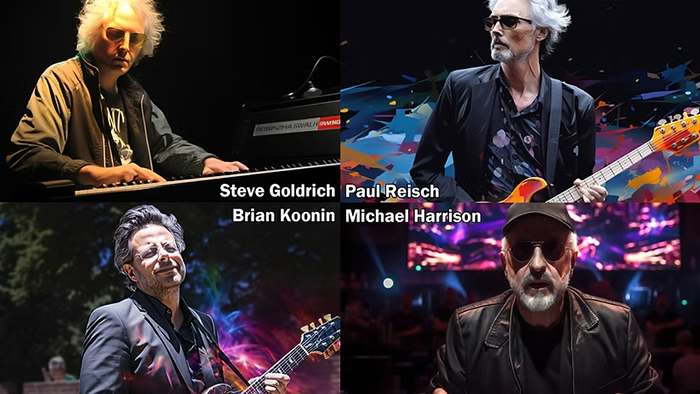
 and the gut-wrenching chaos of informational overload. Non-partisan lyrics cry out: “Too much information clogging up my brain… and I can’t change the station; it’s driving me insane!” Co-written and performed by band members Steve Goldrich, Paul Reisch, Brian Koonin, and Michael Harrison, the dramatic images accompanying the music include a dynamic montage of exasperated people being driven to the brink of madness by the pressure of what feels like non-stop, negative NOISE. Produced by
 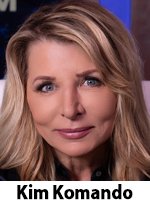 The Museum of Broadcast Communications announces that Kim Komando will serve as emceefor the 2025 Radio Hall of Fame induction ceremony being held on October 30 in Chicago. Radio Hall of Fame co-chair Kraig Kitchin says, “We’re grateful to Kim Komando for helping us to create a most special evening for each of our 2025 inductees. She knows the hard work and dedication it takes to achieve the recognition of such an induction.”
 Mansour go as part of the company’s nationwide reduction in force. Mansour has been with the station for the past 18 years, most recently as senior executive in audio and digital marketing. He posted to social media, “What a ride it’s been. From creating dynamic content and marketing some of the biggest brands and personalities in the Twin Cities, to leading teams, driving revenue, and collaborating with some of the most talented people in media, I’ve learned, grown, and had an absolute blast along the way.”