

NAB Goes to Bat for Removal of Ownership Caps
The National Association of Broadcasters is testifying on behalf of over-the-air broadcasters who would like to see the Federal Communications Commission’s radio and television station ownership caps eliminated. In lengthy testimony regarding the 2022 Quadrennial Regulatory Review – Review of the Commission’s Broadcast Ownership Rules and Other Rules Adopted Pursuant to Section 202 of the Telecommunications Act of 1996, NAB says that, unlike those arguing to keep or even strengthen ownership caps, those asking for their removal are providing real-world testimony. The NAB writes, “They documented in detail the vast competition local radio stations today face for audiences and vital advertising revenues from online and satellite content providers and digital ad platforms not subject to any comparable restrictions on their scale and scope; the dire negative effects that consumer and advertiser substitution of competing digital audio content and advertising for traditional radio has had on the listenership and advertising revenues garnered by local radio stations, including in mid-sized and small markets; and how the retention of asymmetric ownership restrictions has prevented radio broadcasters from gaining local scale to take advantage of important economic efficiencies, obtain investment capital, and better compete for audiences and advertising revenues, and thus enhance – or even maintain – their provision of news, emergency information, and valued entertainment and sports programming in local communities across the country at no cost to the public.” Responding to testimony from musicFirst Coalition and the Future of Music Coalition – referred to as the Coalitions – NAB writes, “First, the fact that the Coalitions continue to hold themselves out as protectors of small, local independent broadcasters not just borders on the absurd but crosses over into full-blown absurdity. The Coalitions represent the interests of the music industry, which is dominated by three consolidated international record labels. Compared to even the largest radio station groups, the giant record labels are the 800-pound gorillas of the music world. Those three labels earn billions more in revenue than the approximately 11,000 full-power commercial AM/FM stations combined. As NAB earlier reported, the three major music companies jointly generated about $2.9 million per hour in 2023. In remarkable contrast, in 2023 and 2024 the vast majority of radio stations garnered less – and often much less – than $2.9 million per year in advertising revenues. Needless to say, the Coalitions have never explained how local radio stations earning such low levels of revenue (and even lower, if any, profits) are supposed to keep talented employees and provide high quality programming, including popular music, sports, and informational programming, such as weather updates and emergency information, OTA and free to the public without achieving increased local scale, greater economic efficiencies, and more robust ad revenues. See the NAB’s complete testimony here.
 having a first-class digital experience alongside fantastic local programming. Audiospace understands that and they understand radio. They’re not just building apps and websites, they are helping us connect with our listeners while also unlocking new revenue opportunities for our advertisers. We thrilled to be working with Audiospace, we expect this partnership to help take Connoisseur Media’s digital game to the next level.” The first websites and apps were successfully launched in early December, with additional releases scheduled in the coming weeks.
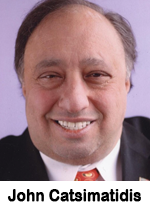 the Post that he’s “been left with ‘tears in my eyes’ amid a bitter feud with his longtime ‘brother’ Rudy Giuliani — which escalated when the former mayor filed suit against him Monday.”
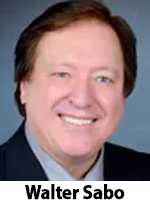 Talk show hosts are not motivated or driven like disk jockeys or salespeople. Most general managers have never managed talk show hosts. Few program directors have managed talk show hosts. My career has been blessed with daily exchanges with the best talk show hosts in history. Here are some suggestions I would like to share on how to have a superior relationship with talk stars.
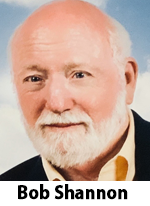 Circus Came to Town.” The Minneapolis-based former DJ, programmer and radio exec tells TALKERS, “In full disclosure, this song was created on suno.com using V5. The lyrics are all mine, and the orchestration is mine too by virtue of having given all of the instructions to create the track. Regardless of how all the controversy about artificial intelligence plays out, I am releasing this opinionated and highly emotional song purely as an expression of my free speech and artistic expression – not for commercial marketing purposes.”
 We sell advertisers the attention we earn, and earning it has never been tougher. When we design client stations’ billboards, we’re not “writing a 60” or “a 30,” or even “a 10.” It’s a one-second spot. At a glance, someone driving needs to understand what the station delivers, and why to listen.
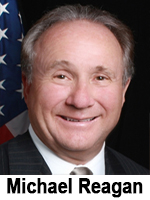 Reagan lived a life shaped by conviction, purpose, and an abiding devotion to President Reagan’s ideals.” Reagan began his talk radio career in the late 1980’s first doing commentary on KABC, Los Angeles and then hosting his own show on KSDO, San Diego. For years his radio program was distributed nationally by Radio America and then by Premiere Networks. At the time of his death, Reagan was serving as a columnist for Newsmax. TALKERS publisher Michael Harrison says, “Michael Reagan was one of the pioneering talents that launched news/talk radio to new levels of achievement and influence in the 90s, in addition to forging a successful decades-spanning career as a host and commentator. From a media industry standpoint, he was a self-made man, never leaning on his famous family connection as an advantage. Off the air, he was a regular guy. On the air, he was just plain good.”
 Every media creator knows this moment. You are building a segment, you find the clip that makes the point land, and then the hesitation kicks in. Can I use this? Or am I about to invite a problem that distracts from the work itself?
 Advice columns blanketing sites like LinkedIn, the Skimm, and Forbes 2.0 – aimed at recent graduates – encourage their readers to seek and bond with an at-work mentor. After years of skimming “5 bullet” articles, I have reached the tipping point and I’m not going to take it anymore: Seeking a mentor as a career strategy is horrible advice. Just horrible.
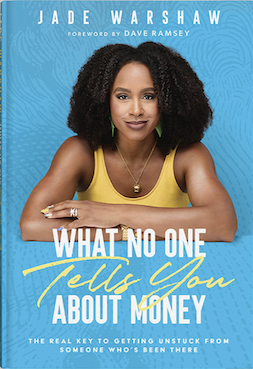 About Money, the newest release from bestselling author and “The Ramsey Show” co-host Jade Warshaw. Ramsey Press says, “Warshaw draws from her own journey of paying off more than $460,000 of debt to offer readers a clear, practical way forward. She pairs honest storytelling with simple, hands-on tools readers can use to break cycles and build confidence that lasts. Unlike traditional money books that focus only on tactics. Warshaw adds, “People don’t need just another plan — they need a way to understand what keeps pulling them off track. When you deal with the emotional weight behind your money choices, that’s when real progress starts.”
 sports talk show just a couple of weeks after being ousted from WFAN due to the return of Craig Carton to that station’s afternoon daypart. Tierney and co-host Sal Licata were let go on December 19. Tierney’s new show “BT Unleashed” is streamed on YouTube and other platforms. Tierney tells the Brooklyn Reporter, “I thought it was a pretty easy decision. I felt the iron was hot. I certainly felt a desire for more of my work and I wanted to get right back out there. People understand that it was an abrupt ending at the FAN and that this is a pretty dramatic transformation.”
 working to empower local broadcasters to serve the public interest and meet the needs of their communities. As Congress, the Supreme Court, and the FCC have all made clear, broadcasters are different than every other distributor of media. Specifically, broadcasters are required by both the Communications Act and the terms of their FCC-issued licenses to operate in the public interest. This sets them apart from cable channels, podcasts, streaming services, social media, and countless other types of distributors that have no public interest obligation. The FCC’s broadcast hoax rule, its news distortion policy, its political equal opportunity regulation, its prohibition on obscene, indecent, and profane content, its localism requirements – all of those and more apply uniquely to broadcasters. Congress has instructed the FCC to enforce public interest requirements on broadcasters. The FCC should do exactly that.
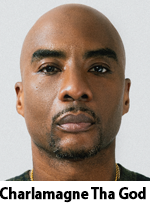 morning radio show with co-hosts DJ Envy, Jess Hilarious and Loren LoRosa. Charlamagne Tha God comments, “When it comes to iHeartMedia, gratitude will always be my attitude. They’ve created space for me to grow not just as talent, but as an executive and true partner through The Black Effect Podcast Network. To say that I’m thankful is an understatement. iHeart is the biggest and best audio company on the planet and audio is the foundation on which the whole media conglomerate will be built. Podcasting, live events, TV/film and documentaries, the sky is the limit for where we are going; and radio will always be at the core of it. Here’s to a new era of growth, impact, and prosperity.”
 rate increases. Cumulus argued, “Nielsen, a monopolist engaging in anticompetitive behavior, holds all of the power during contract negotiations, resulting in an unequal bargaining dynamic that is ripe for retaliation. For example, Nielsen can and has raised its rates significantly during negotiations.
  If identifying information is revealed to Nielsen’s businesspeople, Nielsen can retaliate with additional rate increases, resulting in manifest injustice to these third parties actively involved or who will be involved in negotiations with Nielsen.” After denying Cumulus’ request on December 4, Cumulus filed a supplemental brief and on December 15 Judge Jeannette Vargas agreed with Cumulus, writing, “Cumulus has established that sufficient countervailing factors – in particular, the privacy interests of these non-party declarants, the lack of bearing these narrowly tailored redactions have on the merits of this action, and the non-party declarants’ susceptibility to economic retaliation – outweigh the strong presumption in favor of public access to judicial documents.”
  than just retail businesses. From brands to home services to manufacturers — if your customers are shopping online, you’ll be able to find them, right at the point of purchase; 2) Move the dollars that matter. Learn why successful advertisers are shifting traditional TV budgets to Amazon DSP to reach ready-to-buy audiences more efficiently; and 3) Prove performance with clarity. See real results from local case studies that connect campaign exposure to leads, site visits, and sales.
  drive. The station says Weber will remain a contributor to WISN programming and station initiatives. Weber says, “It has been an incredible honor to wake up Wisconsin for the past 35 years, and I’m grateful to every listener who has made this show part of their morning routine. I’m not retiring – just shifting formats – and I’m excited to continue the conversation in a new twice-weekly podcast.” WISN program director Jerry Bott comments, “Jay Weber has been one of the best talk show hosts in America for a long time. He’s built a bond of trust and credibility with his listeners, and after 35 years on the daily morning clock, transitioning to a twice-weekly podcast is much-deserved while still delivering for his loyal listeners. We fully support Jay with his decision and are proud to help him continue his legacy on the iHeart podcast platform.”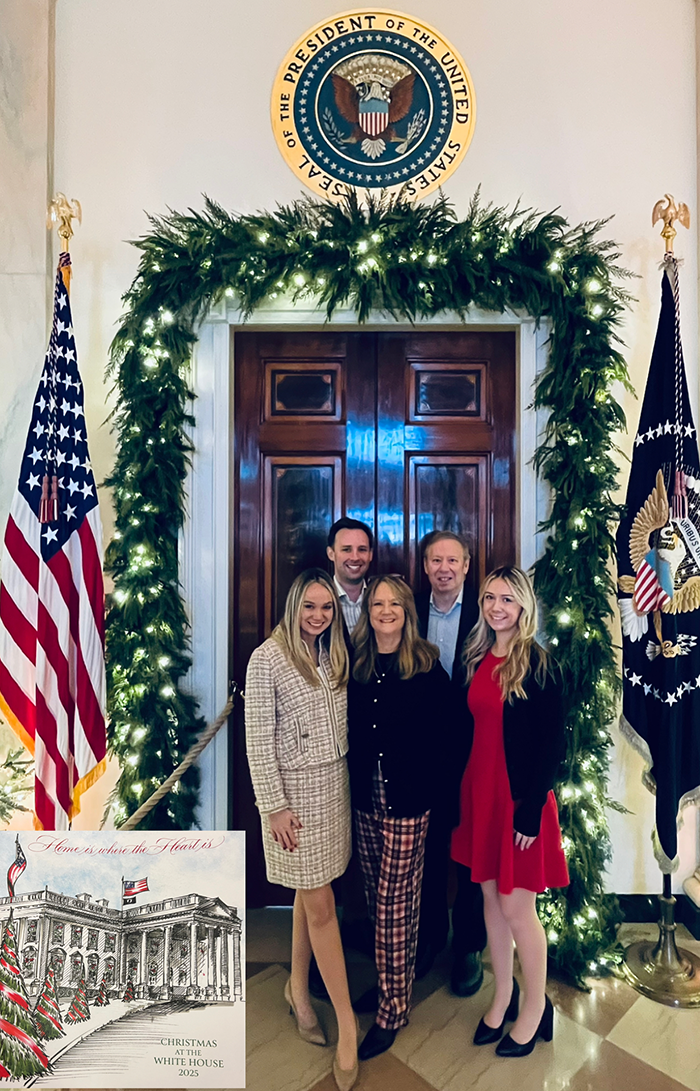
 across documentary, entertainment, news, sports, and corporate audio.” NYFestivals EVP Rose Anderson adds, “The robust world of audio storytelling today is fully represented in the 2026 edition of the Grand Jury. From audiobooks to podcasts and video podcasts, from investigative journalism to live events, and from mystery to social justice, this year’s men and women of the jury volunteer their time and lend their expertise.”
 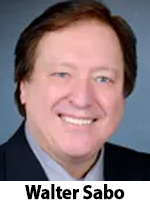 Andy Economos, the founder of Radio Computing Systems (RCS), was a leader in bringing digital tech into the radio industry. In 1980, he was leaving his position as head of technology for NBC Inc. to start his own company. I was EVP of the NBC FM stations. Andy and I were walking to lunch, crossing Sixth Avenue at 49th street and he asked me, “Is there any software your radio stations could use?”
 standard in audio, and it’s an honor to join a brand creatively steeped in sports storytelling. Not unlike the Savannah Bananas, I’m prepared to push the limits of sports talk. I’ll deliver for Jimmy in Tucson, Arizona just as much as Joe in Marshall, Texas. And for every groundbreaking Los Angeles Lakers trade, there’s a Boston College linebacker who survived cancer. You’ll hear the same fire and heart for each. We’re going to create something special; I promise you that.” Cumulus SVP sports/content & audience Bruce Gilbert comments, “Drake represents exactly what we’re building – a modern, interactive sports experience that is driven by personalities and fueled by fans – programming that breaks away from the predictable and formulaic. Drake’s ability to entertain, connect, and innovate makes him the ideal voice for mornings on Westwood One.”
 grown exponentially in the U.S., so much so that Edison Research just unveiled the results of a new research effort called The Infinite Scroll: A TikTok Report in a recent webinar. Edison says the webinar offered insights into how often U.S. users engage with TikTok, their perceptions of the platform, ad recall on TikTok, if they spend too much time on the platform, and more.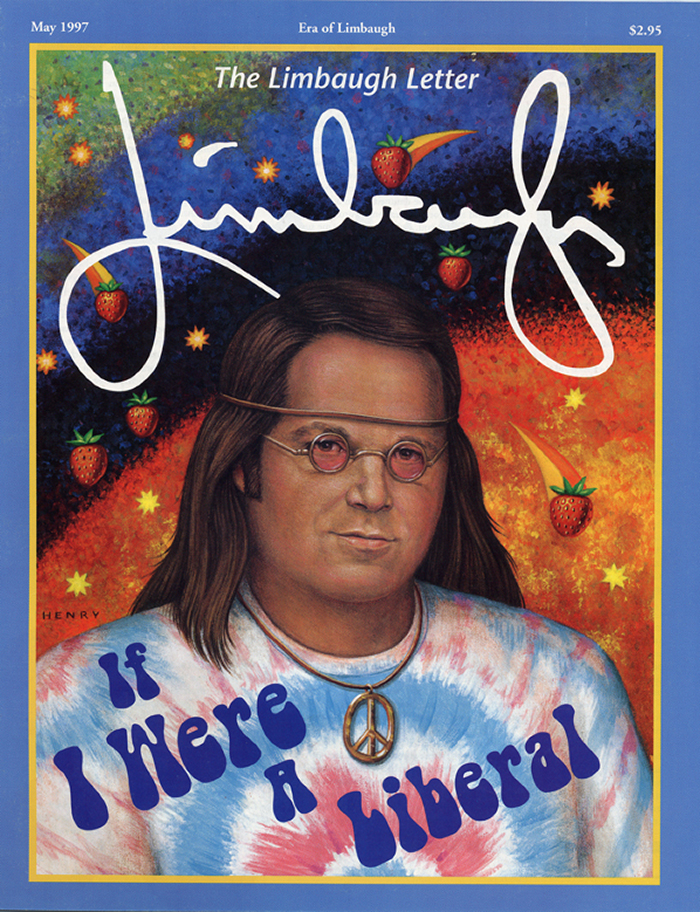
 My introduction to Rush Limbaugh begins in the fall of 1992. I began listening to Rush’s radio show after seeing him campaigning on stage with George H.W. Bush during the 1992 fall presidential election. Bill Clinton would win the election and so would begin the greatest, media political rivalry ever between Rush Limbaugh and Bill Clinton. Rush’s middle America authentic voice was cutting through the mainstream media noise of the day from a generationally unique perspective. He was the perfect counterculture combatant to Bill Clinton’s political philosophy. Being a baby boomer myself and two years younger than Rush, I was immediately hooked on the EIB radio network!
 says, “I’d like to break some news before anybody else can break my news. I’m officially done as the nighttime host at WFAN. It has been four calendar years, Friday was my last nighttime show as the full-time nighttime host. Before anybody else can hijack the story and say I was fired or my contract was up, I wasn’t fired, I’m not quitting, my contract is not up, I’m shifting… I’m making a personal change that was necessary for myself and my family. I just took my son to school, just saw my wife leave for work and got a minute to sit here before the day gets rolling… but breaking news this Monday going into Thanksgiving, I am no longer the full-time nighttime host on WFAN.” In November of 2021, McPherson took over the evening show from longtime WFAN personality Steve Somers.
  Running a successful radio station, hosting a show, or producing a podcast is a lot like hosting Thanksgiving dinner. You need a plan. You need to deliver something satisfying to a crowd with varying tastes. And most of all – if you get it right – you’ll have leftovers you can turn into even more value long after the main event.
 regularly listen to AM or FM.” Company SVP of research Elizabeth Falke states, “The bottom line here is just how much people value having easy access to both AM and FM radio in their cars. Consumers want radio for a variety of different reasons that are largely unique to local radio – everything from discovering what new music matters to weather updates, the latest sports reports and local news and events.” As the AM Radio for Every Vehicle Act of 2025 makes its way through congress, Falke says its important that manufacturers understand the absence of radio would also influence new car purchasing decisions. The study found that 96% of Americans would miss radio if it were removed and 89% say the lack of a radio would likely keep them from buying that vehicle. She concludes, “This research is crucial for car manufacturers as we see that, immediately, half of consumers wouldn’t even look at buying a car without a radio. The ease and simplicity of radio is embedded in the lives of drivers consuming various forms of audio in their cars.”
 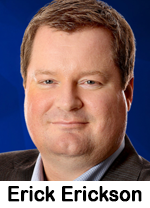 holiday dinners – including turkey or smoked ham, sweet or mashed potatoes, macaroni and cheese, green beans, rolls, and pie – to families who might otherwise go without. Erickson says, “Every year, my listeners remind me why this show exists – not just to discuss the issues of the day, but to drive real change in people’s lives. In these tough times, knowing we’ve put food on the table for thousands of families fills me with gratitude. This isn’t about politics; it’s about compassion, faith, and stepping up for our neighbors. Hungry for a Day makes it seamless, and our audience makes it extraordinary with an impact from coast to coast.”