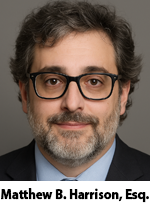
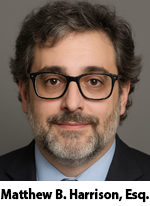
By Matthew B. Harrison
TALKERS, VP/Associate Publisher
Harrison Media Law, Senior Partner
Goodphone Communications, Executive Producer
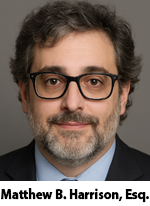 Every media creator knows this moment. You are building a segment, you find the clip that makes the point land, and then the hesitation kicks in. Can I use this? Or am I about to invite a problem that distracts from the work itself?
That question has always lived at the center of fair use. What has changed is not the question, but the context around it. Over the past year, two federal court decisions involving AI training have quietly clarified how judges are thinking about copying, transformation, and risk in a media environment that looks nothing like the one for which these rules were originally written.
Fair use was never meant to be static. Anyone treating it as a checklist with guaranteed outcomes is working from an outdated playbook. What we actually have is a 20th century rulebook being used to officiate a game that keeps inventing new positions mid-play. The rules still apply. But how they are interpreted depends heavily on what the technology is doing and why.
That tension showed up clearly in two cases out of the Northern District of California last summer. In both, the courts addressed whether training AI systems on copyrighted books could qualify as fair use. These were not headline-grabbing decisions, but they mattered. The judges declined to declare AI training inherently illegal. At the same time, they refused to give it a free pass.
What drove the analysis was context. What material was used. How it was ingested. What the system produced afterward. And, critically, whether the output functioned as a replacement for the original works or something meaningfully different. Reading the opinions, you get the sense that the courts are no longer talking about “AI” as a single concept. Each model is treated almost as its own actor, with its own risk profile.
A simple medical analogy helps. Two patients can take the same medication and have very different outcomes. Dosage matters. Chemistry matters. Timing matters. Courts are beginning to approach AI the same way. The same training data does not guarantee the same behavior, and fair use analysis has to account for that reality.
So why should this matter to someone deciding whether to play a 22-second news clip?
Because the courts relied on the same four factors that govern traditional media use. Purpose. Nature. Amount. Market effect. They did not invent a new test for AI. They applied the existing one with a sharper focus on transformation and substitution. That tells us something important. The framework has not changed. The scrutiny has.
Once you see that, everyday editorial decisions become easier to evaluate. Commentary versus duplication. Reporting versus repackaging. Illustration versus substitution. These are not abstract legal concepts. They are practical distinctions creators make every day, often instinctively. The courts are signaling that those instincts still matter, but they need to be exercised with awareness, not habit.
The mistake I see most often is treating fair use as permission rather than analysis. Fair use is not a shield you invoke after the fact. It is a lens you apply before you hit publish. The recent AI cases reinforce that point. Judges are not interested in labels. They are interested in function and effect.
Fair use has always evolved alongside technology. Printing presses, photocopiers, home recording, digital editing, streaming. AI is just the newest stress test. The takeaway is not panic, and it is not complacency. It is attention.
If you work in the media today, the smart move is to understand how the rulebook is being interpreted while you are busy playing the game. The rules still count. The field just looks different now.
Matthew B. Harrison is a media and intellectual property attorney who advises radio hosts, content creators, and creative entrepreneurs. He has written extensively on fair use, AI law, and the future of digital rights. Reach him at Matthew@HarrisonMediaLaw.com or read more at TALKERS.com.
Share this with your network



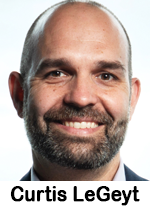 $12.54 billion – with $10.15 billion from over-the-air revenue and $2.39 billion from digital revenue. NAB president and CEO Curtis LeGeyt comments, “No other industry gives more to Americans for free. Local stations provide trusted journalism, life-saving emergency alerts and the sports and entertainment that bring our communities together. This report reinforces that broadcasters are not only essential to our democracy and daily lives, but to the strength of our economy, as well.” The study goes on to reveal that “local broadcasting’s economic ripple effect extends deep into other sectors — from construction to retail — adding another $134 billion in GDP and supporting nearly 776,000 additional jobs.” LeGeyt adds, “Broadcasting is more than a business model; it is a civic model. This industry stands alone in its mission to inform, protect and uplift every community in America, regardless of zip code or income level.”
 Evidence that your correspondent is a nerd: my airplane read for my CES back-N-forth was Successful AI Product Creation: A 9-Step Framework by Shub Agarwal (Wiley). If you haven’t got time for all 307 pages, here’s what I gleaned, pertinent to radio:
 Circus Came to Town.” The Minneapolis-based former DJ, programmer and radio exec tells TALKERS, “In full disclosure, this song was created on suno.com using V5. The lyrics are all mine, and the orchestration is mine too by virtue of having given all of the instructions to create the track. Regardless of how all the controversy about artificial intelligence plays out, I am releasing this opinionated and highly emotional song purely as an expression of my free speech and artistic expression – not for commercial marketing purposes.”
 With the conclusion of 2025 at hand, we are entering the second half of the third decade of the 21st century. It will be a remarkably transitional period for the talk radio industry and its closely associated fields in talk media, as well as media-in-general.
 addition to their existing audio distribution. When this video feature launches, creators will be able to upload their podcast episodes, including full-length video versions, through their standard RSS feeds for seamless distribution in iHeartRadio.” The company goes on to say that this feature will 1) allow podcasters to control how their content is presented; 2) allow creators control over their monetization, with no revenue share required to iHeart; and 3) give them the freedom to have their videos hosted and served from wherever they want and not be tied to an iHeart-owned hosting provider. iHeartMedia chairman and CEO Bob Pittman explains, “While audio remains the backbone of the podcast medium, as well as its primary source of audience connection and the reason for the industry’s explosive growth, video podcasting is now emerging as a completely separate and incremental form to audio, in the same way that podcasting evolved as a new layer on top of broadcast radio. At iHeartMedia creators come first. Providing this new video distribution capability for free to our creators is an additional testament to our continuing focus on creators’ success and is consistent with how and why the podcast industry was built to begin with.”
 we are coming back for three years. Thanks to the good folks here at SiriusXM, who I told you, I really do adore. I was able to create Robin [Quivers] a more flexible schedule and so we’ll be back. I know you and I have talked about it privately Robin, even though you’re pretending you didn’t know the announcement. But I did check with my Robin to see that she was up for it as well because if Robin wasn’t up for it, then I wasn’t going to do it. I still do love being on the radio. I think the show is better than ever, I really do believe that in my heart.” Stern’s five-year, $100 million contract ends this month and speculation about whether he and SiriusXM would be able to come to terms on a new deal or even if Stern wanted to continue began last summer with many media pundits predicting the end of their relationship.
 At the very first CES in 1967, audio cassettes were disrupting 8-track tapes. Back to the future: Artificial Intelligence now threatens to disrupt almost everything.
 If you missed yesterday’s webinar, look for the replay which will be posted today at
  and how Fisher House plays a role in their journey. Fisher House Foundation provides a home away from home for families of patients receiving medical care at major military and VA medical centers. Fisher Houses provide temporary free lodging so families can be close to their loved ones during medical care. Fisher House says, “This informational talk show will leave listeners feeling inspired during the entire Holiday Week, sharing stories of amazing service members, veterans, and their families. Your audience will hear stories of heroic service members injured in combat or during training exercises as well as veterans who need long-term medical care over the course of their lives. Whether it’s a complicated birth of a child or a devastating head injury from a motorcycle accident, Fisher House is there for the spouses, parents, and children of America’s service members every step of the way. For more information on this radio special, contact Larry O’Connor at 562-665-9537 or
  Andy Economos, the founder of Radio Computing Systems (RCS), was a leader in bringing digital tech into the radio industry. In 1980, he was leaving his position as head of technology for NBC Inc. to start his own company. I was EVP of the NBC FM stations. Andy and I were walking to lunch, crossing Sixth Avenue at 49th street and he asked me, “Is there any software your radio stations could use?”
 formats. The program is available in three versions: three-hour, one-hour, 25-minutes and 30-minutes and are hosted by radio personality Larry O’Connor, morning drive host at WMAL-FM, Washington, DC. It features stories of America’s military heroes, the families who serve by their side, and how Fisher House plays a role in their journey. Listeners will hear their emotional stories fighting for our freedoms, how they sustained their injuries, and the welcoming homes Fisher House provides for them and their loved ones while they endure their painful and painstaking recoveries. This year’s program features a special focus on the incredibly inspiring victories our wounded warriors enjoy on the field of competitive, adaptive sports. Fisher House supports the Wounded Warrior Games and the lnvictus Games as a vital part of the physical, emotional, and mental healing process for our wounded veterans. For more information on this radio special, available cash and barter free, contact Larry O’Connor at 562-665-9537 or
  Amendment protects journalistic choices from government intimidation. Nevertheless, this FCC has deployed a vague and ineffective News Distortion policy as a weapon to stretch its licensing authority and pressure newsrooms. The First Amendment is a pillar of our democracy. As federal regulators, we must respect the rule of law, uphold the Constitution, and ensure that a free press is never subjected to regulatory interference by the FCC.” The FCC’s News Distortion Policy was created in 1949 and has been criticized from time to time over the years. It has rarely been invoked until now. A Petition for Special Relief before the FCC signed by 11 people, including former FCC Chairman Thomas E. Wheeler, asks that the Commission repeal the news distortion policy. They cite case law, saying, “In Moody v. NetChoice, LLC, the Supreme Court, applying the First Amendment, reaffirmed that the government has no role in ‘un-biasing’ the media. In direct contradiction to that decision, the news distortion policy seeks to mold the speech of private broadcasters to the FCC’s own view of what is correct, complete, and accurate news. The First Amendment forbids the government from embarking on such a project.”
 stories of America’s heroes, the families who serve by their side, and how Fisher House plays a role in their journey. This program is appropriate for the entire Veterans Day Weekend and is a fitting, patriotic, and inspirational holiday programming alternative for all formats. Listeners will hear their emotional stories fighting for our freedoms, how they sustained their injuries, and the welcoming homes Fisher House provides for them and their loved ones while they endure their painful and painstaking recoveries. This year’s program features a special focus on the incredibly inspiring victories our wounded warriors enjoy on the field of competitive, adaptive sports. Fisher House supports the Wounded Warrior Games and the lnvictus Games as a vital part of the physical, emotional, and mental healing process for our wounded veterans. Listeners will hear about the riveting war stories detailing the injuries these heroes sustained, the ensuing medical and therapeutic healing process, right through the triumph on the field of international sports, as these brave veterans continue their dedication of service, representing America in international competition. For more information on this radio special, available cash and barter free, contact Larry O’Connor at 562.665.9537 or
 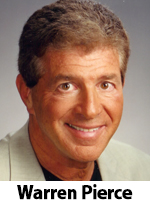 to have interviewed tens of thousands of celebrities, authors, politicians and other assorted newsmakers during his long radio career.” The Free Press obit states, “He filled a variety of roles for WJR across the decades beginning in the 1970s. Whether hosting a weekday morning or afternoon slot or doing a weekend shift, he drew fans with his friendly, upbeat style and filled ‘The Warren Pierce Show’ with a mix of interviews, movie reviews, news and weather. A dedicated fan of University of Michigan football, Pierce also did sideline reporting for WJR’s coverage of Wolverines games during the era of coach Bo Schembechler.” He left WJR in 1993 and joined WJBK-TV, Detroit as a morning news anchor.
 Confidence is down. Costco is mobbed.
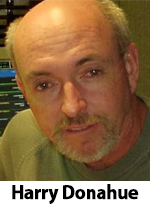 reporter in 1974 and became an anchor in 1979, beginning a 35-year run as a morning drive and sports anchor. Countless Philadelphians came to know Donahue’s voice as he brought the news, traffic, weather, and much-longed-for snow days over the airwaves in his time at the station. He was also a fixture in the city’s sports radio scene, doing play-by-play for the Philadelphia Stars — the city’s USFL team in the 1980s — and was the TV and radio voice of Temple football and basketball for more than two decades.” Donahue retired from KYW in 2014 and was promptly inducted into the KYW Newsradio Hall of Fame. In 2000, he was inducted into the Pennsylvania Sports Hall of Fame.
 platforms like radio, podcasts, streaming music services and satellite radio, with ad-supported audio representing 64% of total listening.” Breaking that down further, the study reveals that within the ad-supported audio universe,
  consumers spent 62% of their daily time with radio, 20% with podcasts, 15% with streaming audio services and 3% with satellite radio. Among 18-34 year-olds radio accounted for 43% of daily ad-supported audio time, where podcasts accounted for 31%. And adults 35+ spent 69% of daily ad-supported audio time listening to radio and only 16% listening to podcasts. Looking at listening based on radio formats (Nielsen PPM Cross-Market AQH Share. Q3 2025. Mon-Sun 6a-Mid), news/talk garnered a 10.6 share for Persons 18+ and a 12.0 share for Persons 35+, and a 6.1 share in the 25-54 demo.
 Microsoft CEO Steve Ballmer retired with enough do-re-mi to indulge two passions. He bought the NBA Los Angeles Clippers (for a record $2 billion). And he built
  Every talk host knows the move: play the clip. It might be a moment from late-night TV, a political ad, or a viral post that sets the table for the segment. It’s how commentary comes alive – listeners hear it, react to it, and stay tuned for your take.
 CNN, FOX News Media, NBC News, and Newsmax are declining to sign the agreement. A joint statement from ABC News, CBS News, CNN, FOX News Media, and NBC News says, “Today, we join virtually every other news organization in declining to agree to the Pentagon’s new requirements, which would restrict journalists’ ability to keep the nation and the world informed of important national security issues. The policy is without precedent and threatens core journalistic protections. We will continue to cover the U.S. military as each of our organizations has done for many decades, upholding the principles of a free and independent press.” Newsmax adds, “We are working in conjunction with other media outlets to resolve the situation. We believe the requirements are unnecessary and onerous and hope that the Pentagon will review the matter further.”
 eldest son, FNC is in the doghouse. Newsmax published an account of the interview which quotes Trump Jr. saying, “Honestly, I don’t watch it anymore because it is so ridiculous. They try so hard to be unbiased that they’re actually biased against conservatives at this point. But this shouldn’t be surprising. These are networks that banned me for two-and-a-half. I’m barely on anymore. I know my father was banned.” However, TALKERS has learned that Donald Trump Jr. appeared on FOX News Channel four times recently – on August 13 and September 3, 11, and 12. He told Salcedo
  “FOX’s approach has left conservatives silenced while Democrats and establishment figures get free rein.” The president recently complained about FNC in a post on Truth Social in which he singled out White House correspondent Peter Doocy for talking to Arizona Senator Mark Kelly about his healthcare agenda. He wrote, “Why is Fox News and Peter Doocy putting on Democrat Senator Mark Kelly to talk about, totally unabated or challenged, Healthcare?” SiriusXM’s Megyn Kelly recently complained about FOX News Channel’s coverage of Charlie Kirk’s slaying, saying, “It’s really bothering me how FOX News is talking about Charlie, like he was theirs — he wasn’t. It’s a lie. Just stop.”
 director, I have submitted my notice. I’m grateful to Connoisseur Media, a fantastic company that, at the time, owned WFMD, and to Frank Mitchell, who hired me and trained me, for the opportunity to be part of this legendary station, and to my close friend and mentor, Bob Miller. My passion for radio is strong, and I look forward to returning to the airwaves as soon as my time at WFMD comes to an end. I love the radio industry. Who knows where this journey will take me next, but I hope it will still be in this area. You will hear me on the air again one day, because my radio career is NOT over. I still have a month here, and I am looking forward to finishing my time here. Primarily working with the fantastic team that I get to work with every day.”
 unapologetically conservative, culturally aware, and authentically Black voices to the forefront – voices that have been ignored for far too long. This show is about faith, family, freedom, and fearless truth-telling. I’m proud to be part of a network that values bold ideas and real conversations, and I can’t wait to shake things up.” Separately, Cumulus announces that “The Next Role with Vernon Davis” also joins the Cumulus Podcast Network. Former NFL star and Super Bowl champion turned actor and producer Vernon Davis’ podcast focuses on career transition and reinvention. Davis says, “The Next Role is more than a podcast – it’s a movement. I created this show to highlight the courage it takes to reinvent yourself, especially after a career in the spotlight. Partnering with the Cumulus Podcast Network gives me the platform to amplify these powerful stories and connect with listeners who are navigating their own transitions. I’m excited to bring these conversations to life and inspire others to embrace their next chapter.”
  Jimmy Kimmel’s first monologue back after the recent suspension had the audience laughing and gasping, and, in the hands of countless radio hosts and podcasters, replaying. Within hours, clips of his bit weren’t just being shared online. They were being chopped up, (re)framed, and (re)analyzed as if they were original show content. For listeners, that remix feels fresh. For lawyers, it is a fair use minefield.
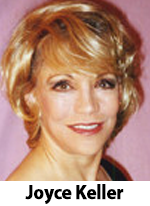 host on WGBB-AM, Freeport, New York (Long Island) for more than 35 years. She appeared on major television programs including, “The Oprah Winfrey Show” and “Good Morning America.” She also served as a columnist for Lifetime Television since. Keller’s long-running radio program with international reach established her as an enduring voice in the metaphysical and self-help space.
 launch of Freedom Journeys, a new multimedia storytelling initiative celebrating pivotal figures in Philadelphia’s past and present. Freedom Journeys, created in partnership with Renee Chenault Fattah and Love Now Media, will highlight 250 iconic Black Philadelphians — living and deceased — whose lives and work have helped shape the city. WURD president and CEO Sara M. Lomax says, “Founder’s Day will be a wonderful evening in a beautiful setting — where we will celebrate my father’s life and legacy, have great food, amazing live music and soul-filling affirmations of our culture. But we also aren’t going to shy away from what’s happening in this country. WURD has never done that, and this year’s Freedom Journeys is both celebration and resistance.”
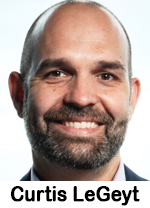 our airwaves free from government influence. The First Amendment affords our stations – and all Americans – this fundamental right, and the mere perception that broadcasters acted because of undue pressure is a problem for our credibility and the trust we have built with our audiences.
 Federal Communications Commissioner Anna M. Gomez issued a statement criticizing the Commission’s threats against ABC that, in part, led to the suspension of the “Jimmy Kimmel Live!” program. Her statement is as follows: “We cannot allow an inexcusable act of political violence to be twisted into ajustification for government censorship and control. First, an ABC reporter was told that his coverage amounted to hate speech and that he should be prosecuted simply for doing his job. Then, the FCC threatened to go after this same network, seizing on a late-night comedian’s inopportune joke as a pretext to punish speech it disliked. That led to a shameful show of cowardly corporate capitulation by ABC that has put the foundation of the First Amendment in danger.