By Matthew B. Harrison
TALKERS, VP/Associate Publisher
Harrison Media Law, Senior Partner
Goodphone Communications, Executive Producer
 Mark Walters didn’t expect to lose private-figure legal protections over something he never talked about – especially since the thing he never talked about never even happened. A nationally syndicated radio host and outspoken Second Amendment advocate, Walters is publicly known, but in a specific lane. He never discussed nonprofits, financial misconduct, or legal ethics. Yet when ChatGPT hallucinated a claim that he had embezzled from a charity, a Georgia court ruled he was a public figure – and dismissed his defamation suit.
The logic? Walters had a platform, a following, and a history of public commentary. That was enough. The court held that his general media presence elevated him to public-figure status, even though the allegedly defamatory statement had nothing to do with the subject matter of his actual work. wasn’t defamed about what he’s known for—but his visibility was used against him anyway.
The case didn’t just shut down a complaint. It opened a wider question: who qualifies as a public figure in the modern media era – and when does that designation apply to topics you never touched?

Why Public Figure Status Matters
Defamation law protects people from false, reputation-harming statements – but not equally. A private figure needs only to show that the speaker was negligent. A public figure, by contrast, must prove actual malice – that the speaker knew the statement was false or recklessly disregarded the truth.
This high standard, first articulated in New York Times v. Sullivan, was intended to protect freedom of speech and the press. But in the age of digital publishing and algorithmic reach, it’s increasingly used to deny protection to people who never thought they were stepping into the spotlight.
What Makes Someone a Public Figure?
Courts recognize two main categories:
– General-purpose public figures are household names – people famous across all topics and platforms.
– Limited-purpose public figures are individuals who have voluntarily entered public controversy or engaged in widespread public commentary on specific issues.
Here’s where the modern problem begins.
Thanks to blogs, newsletters, podcasts, and social media, it’s easier than ever to participate in public dialogue – and harder than ever to keep that participation confined to just one topic.
Post a viral thread on immigration?
Host a weekly podcast about school choice?
Weigh in on TikTok about local politics?
You may have just stepped into “limited-purpose public figure” territory – whether you intended to or not.
The Walters v. OpenAI Case – Now the Law
In Walters v. OpenAI, the court didn’t question whether the claim was false – only whether Walters could meet the public figure burden of proof. The court held that he could not. Despite the fact that he had never discussed the subject matter in question, his general visibility was enough to require that he prove actual malice. And he couldn’t.
The decision came with no trial, no settlement – just a dismissal. It now stands as legal precedent: having a public voice on one issue may cost you private-figure protections on others.
Microphone, Meet Microscope
This shift affects:
Independent journalists
– Podcast hosts
– Niche content creators
– Local activists with modest but vocal platforms
They may not feel “public,” but courts increasingly view them that way. And once that threshold is crossed, the burden in a defamation case becomes dramatically harder to meet.
he more you speak publicly—even on one topic—the more legally exposed you are everywhere else.
That wasn’t the intent of Sullivan. But in today’s fragmented, always-on media culture, visibility leaks- and so do legal thresholds.
Final Takeaway
You don’t need to be famous to be “public.” You just need to be findable.
Whether you’re behind a mic, a blog, or a camera, your platform may elevate you into public figure status – and bring defamation law’s toughest burdens with it. If you’re defamed, you’ll have to prove the speaker acted with knowing falsehood. If you’re doing the speaking, your target’s legal classification could determine how costly a misstep becomes.
In 2025, every microphone is also a microscope. Know what the law sees before you go live.
Matthew B. Harrison is a media and intellectual property attorney who advises radio hosts, content creators, and creative entrepreneurs. He has written extensively on fair use, AI law, and the future of digital rights. Reach him at Matthew@HarrisonMediaLaw.com or read more at TALKERS.com.
Share this with your network



 Salzone to operations manager for the 10-station cluster. Salzone will take over for Chris Allinger who is retiring at the end of August. Cayuga Media Group president and GM Chet Osadchey says, “Joe is an incredibly hard-working and knowledgeable broadcast professional. He will be a guiding force in our continued evolution as a local media source.”
 and actions prior to the Paramount-Skydance merger. Paramount’s CBS agreed to a settlement with President Donald Trump over a Kamala Harris interview on “60 Minutes.” The complaint says, “Everyone from U.S. senators to CBS employees to a dissenting FCC commissioner has said the settlement appears to have been a bribe to grease the wheels for Carr’s FCC to approve the merger. Even putting Paramount aside, Carr has pursued numerous other frivolous and unconstitutional legal proceedings and threatened more of them in furtherance in his efforts to intimidate broadcast licensees to censor themselves and fall in line with Trump’s agenda.” It goes on to say, “Carr’s actions brazenly violate legal and ethical standards that govern the practice of law and public officials, undermining the First Amendment, the FCC’s credibility, and the laws he is trusted to administer. His abuse of his office to force an unwarranted settlement of a private lawsuit is shameful and warrants disbarment.”
 Reviewing radio’s challenges:
 of Atlanta. And raised an event record of more than $2.1 million. WSB director of operations Ken Charles says, “95.5 WSB has the most generous listeners in the country, without them this is not possible. I am blessed to work with the most passionate, dedicated and hardworking team in the business. I couldn’t be prouder of what we achieved over these incredible and inspirational 38 hours.”
 media users, and linear TV viewers. Ad-supported audio listeners are more likely to be Amazon Prime members, spend more, and were more aware of Amazon Prime Day 2025; 2) Ad-supported audio (AM/FM radio, music streaming, and podcasts) are ideal media platforms for retailers and e-commerce brands: Heavy audio listeners are more likely to shop online. Heavy AM/FM radio and podcast listeners spend more online than TV viewers; 3) AM/FM radio makes your TV better – “20 gets you 50”: A 20% shift of a TV media budget to AM/FM radio generates a +50% increase in campaign reach. Nielsen Media Impact campaign optimizations reveal shifting media weight to AM/FM radio generates significantly more reach, especially among younger 18-49 demographics. AM/FM radio does an extraordinary job in increasing campaign reach among light TV viewers who will not see retailer TV ads; and 4) Audio holiday AM/FM radio campaigns work: Consumers exposed to an Amazon holiday AM/FM radio campaign have higher brand equity (awareness, ad recall, prior purchase, and purchase intent). Nielsen sales effect studies reveal AM/FM radio campaigns for retailers generate significant return on advertising spend: $15 dollars of incremental sales for every dollar of AM/FM radio advertising.
 for free markets, Gomez called out the FCC’s role and Paramount for “cowardly capitulation.” Trusty said, “This transaction reflects the free market at work, where private investment, not government intervention, is preserving an iconic American media institution. During its review of the transaction, the Commission determined the merger was lawful and would serve the public interest. This deal brings fresh
  leadership, new capital, and a clear plan to compete with dominant tech platforms.” Gomez stated, “In an unprecedented move, this once-independent FCC used its vast power to pressure Paramount to broker a private legal settlement and further erode press freedom. Once again, this agency is undermining legitimate efforts to combat discrimination and expand opportunity by overstepping its authority and intervening in employment matters reserved for other government entities with proper jurisdiction on these issues. Even more alarming, it is now imposing never-before-seen controls over newsroom decisions and editorial judgment, in direct violation of the First Amendment and the law… The Paramount payout and this reckless approval have emboldened those who believe the government can – and should – abuse its power to extract financial and ideological concessions, demand favored treatment, and secure positive media coverage. It is a dark chapter in a long and growing record of abuse that threatens press freedom in this country.”
 iHeartMedia Norfolk announced today (7/25) the debut of BIN 92.1 FM, Norfolk’s Black Information Network, effective immediately. The Black Information Network has transitioned from 105.3 FM (WNOH) to its new home at 92.1 FM (WHBT), where it will continue delivering what is described as “nonstop, reliable news coverage shaped by the Black community.” According to iHeartMedia Norfolk market president, Denene Moore, “Listeners can count on the same high-quality journalism, in-depth reporting, and culturally relevant storytelling—now on 92.1 FM and available on the iHeartRadio app.” Moore continues, “BIN has become a vital voice in communities across the country, and we’re proud to continue that trusted news and perspective here in Norfolk. This move ensures that our listeners have access to the stories that matter most, told through a lens that reflects their experiences and voices.”
 by President Trump’s claims of liberal bias at NPR, voted to strip public broadcasting of all federal funding. But Chapin says the choice was hers and not driven by the action in Congress. Chapin says, “I have had two big executive jobs for two years, and I want to take a break. I want to make sure my performance is always top-notch for the company. NPR CEO Katherine Maher says, “Edith has been an indispensable partner during my first year at NPR, a steady leader for a large part of this organization, and a fantastic collaborator as a member of the executive team.”
 Conventional industry wisdom: “If our morning star leaves, we’re dead. How could we replace them?”
 SVP of sales for the station group. This move comes after the recent retirement of Jeff Tyler. iHeartMedia division president Nick Gnau comments, “Over the past two years, Dan has consistently demonstrated exceptional performance and a deep understanding of the market, earning him this well-deserved promotion to market president. His leadership as the sales lead has been instrumental to our success, and we are confident that both our team and partners will benefit even more from his expanded role.”
 the country, particularly in rural and underserved areas. However, Americans are increasingly skeptical of media institutions, with trust in media at historic lows. That reality cannot be ignored. It is not unreasonable for taxpayers to expect transparency, accountability, and balance from any outlet receiving federal support. Nor is it unreasonable for Congress to reassess whether public funding models established in a different media era remain justified today, especially when Americans have more access to more content from more sources than ever before. This action does not signal the end of public media. Instead, it presents an opportunity for innovation, partnerships, and more localized decision-making. As a regulator, I will continue to support policies that promote access and competition in media, without presupposing that one model of funding or content creation should be immune from public scrutiny or reform.”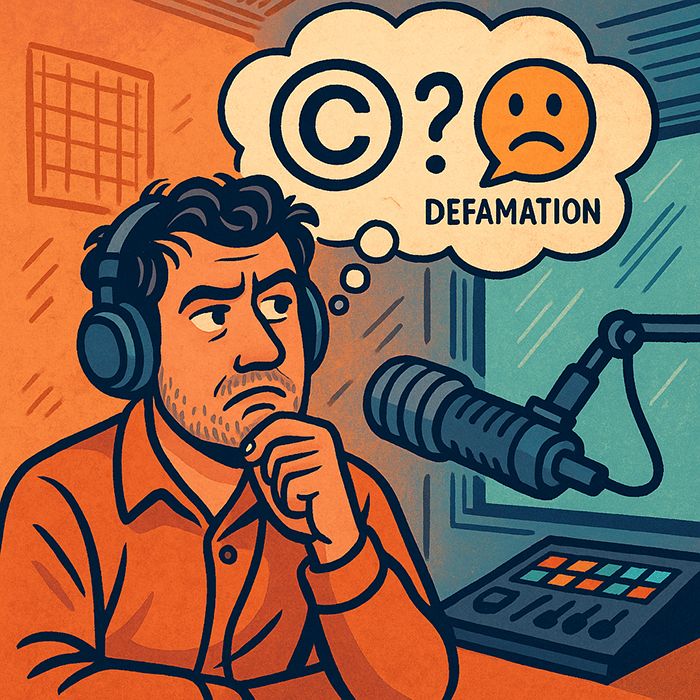
 that Audacy bargain respectfully and in good faith as we work to improve our salaries, benefits, pathways to promotion, workplace safety, remote work options, preserve severance, and protect against the growing threat of artificial intelligence.” Regarding the issue of safety, WGAE president Lisa Takeuchi Cullen says, “1010 WINS runs 24/7 and requires people to commute to the office at all hours. The station’s journalists have been threatened and even attacked. Audacy needs to take responsibility for the safety of its employees and our members. This is one of the many issues that management still needs to address in a fair and equitable contract.”
  receive on our mobile phones. With underlying frameworks that are 31 and 13 years old respectively, we think it’s time to explore if structural changes to these systems are needed, with an eye towards making sure we are leveraging the latest technology to save lives. Similarly, we will also vote to initiate a review of our system for collecting real-time data on network outages and restoration during and after major disasters. Since its inception in 2007, our Disaster Information Reporting System (DIRS) has proven to be a valuable tool for collecting actionable information to help with recovery efforts. While the DIRS reports are valuable, they can be time-consuming to produce, drawing resources away from responding to an ongoing disaster. The Commission will vote on reforms to streamline DIRS to make sure that its benefits outweigh its burdens. We’ll close our August meeting by removing unnecessary regulations and injecting common sense across the Commission’s policies—critical features to streamline the implementation of our Build America Agenda.”
  “Eric from Dominion saying he was going to make sure President Trump lost the 2020 election.” That was picked up and broadcast by OAN network and further repeated by the Trump campaign and Trump attorneys Rudy Giuliani and Sidney Powell. Coomer also sued MyPillow CEO Mike Lindell and won a $2.3 million judgement. Courthouse News also reports that Coomer is also suing Salem personality Eric Metaxas who recently filed with the court to settle and is awaiting approval from the court. Interestingly, Corporon – a practicing attorney – is representing Gateway Pundit owner James Hoft who is also being sued by Coomer for defamation. That case is scheduled to go to trial in April of 2026.
  and NPR’s most popular podcasts – “NPR News Now” and “Up First” – maintain their first and second-place finishes, respectively. Changes of note from May to June include Salem Podcast Network’s “The Charlie Kirk Show” rising three places to #5, Cumulus Podcast Network’s “VINCE” rising one spot to #10, and iHeartRadio’s “Clay Travis & Buck Sexton” falling two places to #16.
  operations for the cluster that includes sports talk KILT-AM, sports betting KIKK-AM and four music brands. Logan says, “I’m so excited to be returning to Audacy and Houston! Thanks to Sarah Frazier, Brian Purdy, Tim Roberts, Dave Richards, Jeff Sottolano and Chris Oliviero for once again handing me the keys to these legendary Houston brands. I know Houston is hot, I know it’s where to find the best queso in the world, and I know how to help teams achieve success! We start immediately.”
 is a return to WABC. Red Apple owner John Catsimatidis says, “As Red Apple Media continues to enlarge its footprint in radio, we recognized a need for an engineering specialist with insights that will bolster our growth strategy as we identify properties for our expansion. Bert’s experience made him the perfect choice.” Goldman comments, “I’m eager to come home to 77WABC and join Red Apple Media as it enters its next growth phase. John has revived AM talk radio with big-name hosts and created renewed excitement for broadcast radio overall.”
 How obsolete does this sound? “Newsweek magazine.” News, gathered during most-of the week, had to be frozen by week’s-end, on deadline, to roll the presses in time for hard copy to be delivered in Monday’s snail mail. Back then – picture people dressed like “Mad Men” characters – enough subscribers felt informed-enough to deliver Return On Investment for the magazine’s advertisers. Seems antique. Now, news is reported moment-to-moment, on any device. And newsweek.com is there… along with everyone else competing for attention.
 There are two broad categories of thought: Task. Creative. When in creative mode, a person innovates, imagines, plans, and solves problems. An idea bank is a bank! Money grows from the results of imagination: new products, new music, new formats, new sales strategies. Business growth depends on new!
 Internet adopted under the Biden Administration and network interconnection. FCC chairman Brendan Carr says, “We’re continuing to clean house at the FCC, working to identify and eliminate rules that no longer serve a purpose, have been on our books for decades, and have no place in the current Code of Federal Regulations. Today’s action is just the latest step the FCC is taking to follow the Trump Administration’s effort to usher in prosperity through deregulation. And it’s just one of many, with more on the horizon, so stay tuned.”
 Let’s discuss how CBS’s $16 million settlement became a warning shot for every talk host, editor, and content creator with a mic.
 tirelessly reporting from along the river between Kerrville and Centerpoint, Texas, “delivering succinct and informative reports on NewsRadio 1080, additional Audacy stations, and various CBS affiliates across the country. His Texas State Network reporting includes hourly newscasts reaching over 100 affiliates in 86 markets.” KRLD brand manager and Audacy news/talk foremat vice president Drew Anderssen says, “‘NewsRadio 1080’has been a critical lifeline for Texans. Our commitment to timely and essential news, weather and traffic information never wavered in the early days of this tragedy, over the 4th of July holiday weekend, and we are committed to continuing our compassionate and impactful coverage in the days ahead.”
 and the “AAR Daily Defense Hour” join the programming at Omni Broacasting’s WTKE in the Ft. Walton Beach-Destin, Florida market. Additionally, the “Armed American Radio” show is being distributed by CRN Talk to cable systems operated by Cox Communications, Optimum TV, and Xfinity Stream.