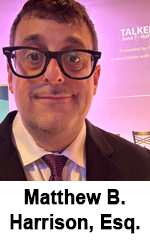
By Matthew B. Harrison
TALKERS, VP/Associate Publisher
Harrison Legal Group, Senior Partner
Goodphone Communications, Executive Producer
This is the third installment of a multi-part TALKERS Legal Series on Fair Use for the Media Creator. The first installment is here. The second installment is here.
The “Nature of the Copyrighted Work” is a key factor in fair use analysis, with courts more likely to allow the use of factual works, such as news reports, than highly creative works like music or films. The landmark case Feist Publications, Inc. v. Rural Telephone Service Co. established that mere facts, like telephone numbers, cannot be copyrighted unless presented with originality. In media, factual content like news clips may support a fair use defense, while creative works like syndicated talk shows are more protected. Broadcasters should add commentary or criticism when using factual material and be cautious when reusing creative content. Understanding this factual-creative spectrum is critical for media creators navigating copyright law.
In the context of fair use, courts are more likely to allow the use of factual works, such as news reports, historical accounts, or other informational content, than highly creative works like songs, movies, or artwork. The theory behind this is that factual works generally serve a public interest – society benefits from the free exchange of information and ideas, and we want “the system” to encourage this. On the other hand, creative works involve more personal expression, and copyright law is designed to protect that artistic effort (and allow for monetization thereof.) This distinction plays a crucial role in determining fair use, as courts are more protective of creative works because they represent a higher degree of originality and personal investment.
Classic Case: Feist Publications, Inc. v. Rural Telephone Service Co. (1991)
A landmark case that helps illustrate this factor is Feist Publications, Inc. v. Rural Telephone Service Co., which asked whether copyright protection could be applied to a seemingly factual work: a telephone directory. In this case, Rural Telephone Service Co., a public utility, created a telephone directory of its customers’ names, addresses, and phone numbers. Feist Publications, a company that produced a larger, regional telephone directory, copied some of these listings and was sued by Rural for copyright infringement.
Rural argued that its directory was protected by copyright, but Feist countered that the information in the directory (names, addresses, and phone numbers) was purely factual and, therefore, not eligible for copyright protection.
The Supreme Court ruled in favor of Feist, stating that facts are not protected by copyright because they are not original to the author. The Court held that Rural’s directory did not qualify for copyright protection because it lacked creativity and originality – it was simply a compilation of facts (names and numbers). The case established the principle that mere facts are ineligible for copyright protection, even if they are compiled in an organized way.
This case is significant because it underscores that factual information, like a telephone directory, cannot be copyrighted unless there is a creative element involved in its presentation, such as an original selection or arrangement of the facts.
Application to Radio and Media:
When it comes to radio, news, or media content, the nature of the copyrighted work often comes into play, especially in cases where factual content (such as news clips or interviews) is being reused. Courts may treat factual works more leniently in fair use cases, allowing them to be repurposed for commentary, criticism, or reporting, as they serve a public interest. However, creative works, like talk shows, are given more protection because they represent original artistic expression. The more creative the work, the less likely its unauthorized use will be considered fair use.
An Example – Associated Press v. Meltwater U.S. Holdings (2013)
While not specific to radio, this case highlights the issue of using factual content in media. Associated Press (AP) sued Meltwater, a news aggregation service, for copying parts of AP’s news articles and distributing them without permission.
The court found in favor of the Associated Press, stating that even though AP’s articles contained factual information, they were written with creativity and journalistic skill – thus, they were still copyrightable. The nature of the work was not purely factual, as it involved a degree of originality in the writing and presentation. This case illustrates that while factual works may be more likely to fall under fair use, their specific presentation or creative treatment can still be protected.
Radio Case Example: Syndicated Content and Commentary
A case that touches on the nature of copyrighted works in radio can be seen in disputes over syndicated talk shows or political commentary. Stations that rebroadcast these shows without proper licensing agreements may argue fair use, but their success often depends on whether the work being used is factual or creative. For example, if a station replays a news clip or political speech, the fact that the content is factual might support a fair use defense. However, if they replay a syndicated talk show where a host offers personal opinions or creative commentary, it would be considered a more creative work, requiring higher protection. In some cases, radio stations have argued that the rebroadcasting of certain content (like portions of interviews or speeches) qualifies as fair use because it’s factual and in the public interest. Still, if the content also involves a unique editorial style or commentary, the courts may treat it as more creative and therefore not subject to fair use.
Practical takeaways for media creators:
• Factual vs. creative: When considering whether fair use applies, broadcasters should analyze whether the content they’re using is more factual or creative. Factual works (such as news reports) are more likely to be protected by fair use, while creative works (like music or dramas) are less likely.
• Add commentary or criticism: Even when using factual content, it’s crucial to add commentary, analysis, or criticism to support a fair use defense. Simply republishing factual material without transformation can still lead to copyright infringement.
• Be mindful of syndicated content: Syndicated content, such as talk shows, often involves a mix of factual information and creative opinion. Replaying such content without proper licensing can lead to legal challenges, as courts may view this as a use of creative work.
The nature of the copyrighted work plays a crucial role in fair use analysis. While factual works are more likely to be used under fair use, creative works enjoy stronger protection. Media creators, including broadcasters and radio stations, need to be aware of this distinction and ensure that their use of copyrighted material is both transformative and legally defensible. By understanding the factual-creative spectrum, media creators can better navigate the complexities of copyright law.
Media attorney, Matthew B. Harrison is VP/associate publisher, TALKERS; Senior Partner, Harrison Legal Group; and executive producer, Goodphone Communications. He is available for private consultation and media industry contract representation. He can be reached by phone at 724-484-3529 or email at Matthew@HarrisonLegalGroup.com


 The “Nature of the Copyrighted Work” is a key factor in fair use analysis, with courts more likely to allow the use of factual works, such as news reports, than highly creative works like music or films. The landmark case Feist Publications, Inc. v. Rural Telephone Service Co. established that mere facts, like telephone numbers, cannot be copyrighted unless presented with originality. In media, factual content like news clips may support a fair use defense, while creative works like syndicated talk shows are more protected. Broadcasters should add commentary or criticism when using factual material and be cautious when reusing creative content. Understanding this factual-creative spectrum is critical for media creators navigating copyright law. To read entire article, please
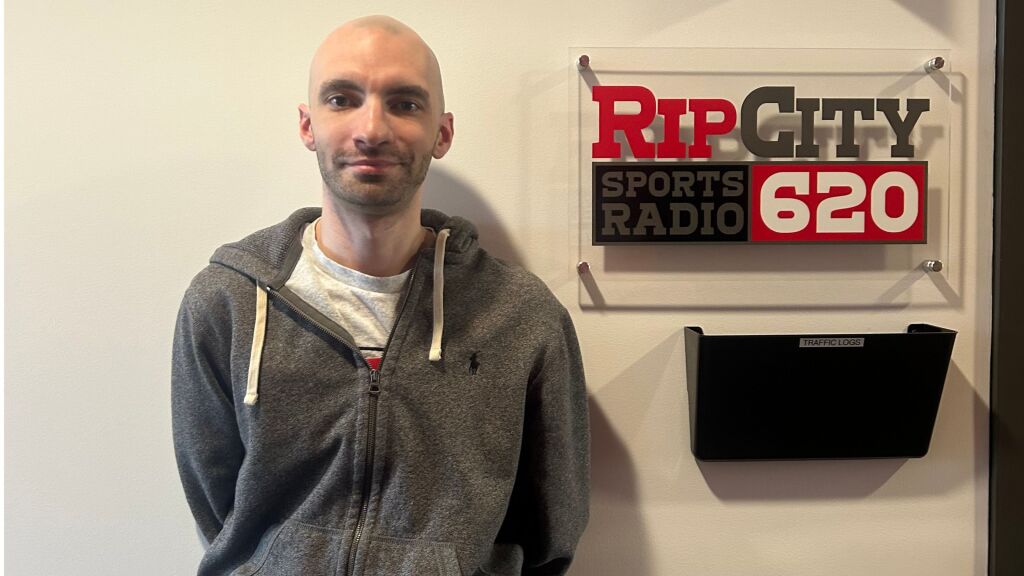 iHM Portand Adds Sean Highkin as Trail Blazers Correspondent on WPOJ-AM. iHeartMedia Portland’s Rip City Radio 620, “Your Home of the Portland Trail Blazers,” announced today (10/24) that acclaimed sports journalist Sean Highkin will join the station as the Portland Trail Blazers correspondent, effective immediately. He will provide comprehensive coverage of the games, practices, press conferences and everything revolving around the Portland Trail Blazers on their flagship station. Highkin brings over a decade of experience covering the NBA, including seven years dedicated to the Portland Trail Blazers. As a trusted voice in basketball, his experience includes contributing to national outlets such as Bleacher Report, USA Today, The Athletic and NBC Sports. In 2023, Highkin was named Oregon Sportswriter of the Year by the National Sports Media Association. “Sean’s knowledge, expertise and impressive track record will elevate and take our Trail Blazers coverage to the next level,” said Marshal Burgess, metro president of iHeartMedia Portland. “His insightful analysis and in-depth reporting have made him a respected voice in the sports journalism community, and we are thrilled to have him join the iHeartRadio Portland team.”
 New York Festivals 2025 Radio Awards Announces Distinguished Grand Jury. The New York Festivals® Radio Awards has announced its 2025 Grand Jury. The 2025 Radio Awards Grand Jury features over 100 global leaders from the radio industry across six continents. This distinguished panel comprises world-class content creators, industry visionaries, and iconic voices. Recruited from renowned companies, these directors, producers, journalists, writers, and sound artists are celebrated for their innovation and engaging storytelling. “The robust world of audio storytelling today is fully represented in the 2025 edition of the Grand Jury,” said Rose Anderson, EVP/executive director, New York Festivals Radio Awards. “From audiobooks to podcasts, from investigative journalism to live events, and from mystery to social justice, this year’s jury members volunteer their time and lend their expertise.” The New York Festivals Radio Awards provides a platform to celebrate creative storytellers from around the world. For 67 years, NYF has recognized both innovation and exceptional quality in broadcast audio content across all genres and platforms since 1957. Since 2023, The National Press Club, has partnered with New York Festivals to honor the highest scoring news program across the Coverage Of Breaking News Story, Coverage Of Ongoing News Story, Nonfiction Series, Investigative Journalism Podcast, and News Podcast categories. The winner will be announced during the 2025 Storytellers Gala in April. NYF’s Radio Awards receives entries from radio stations, networks, and independent producers from over 30 countries around the globe. The mission of the competition is to honor the achievements of the men and women who make up the global audio storytelling community. To see complete list of Grand Jurors click here
  more recognition as a (legacy) medium that’s constantly innovating and evolving to enhance the consumer experience and the advertiser opportunity. At the heart of Audio lives great storytelling. From the beginning of humankind to today’s best advertising, storytelling is the single most effective tool for sharing information and knowledge – all while entertaining, educating and yes, selling. Storytelling is a constant, but the way stories are told is shifting, driven by new technologies and approaches that allow brands to create more emotional connection, deliver more personalized experiences and scale their campaigns for maximum impact. And no medium is better equipped to do this than audio.”
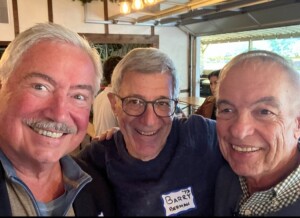 Old Friends and Colleagues Gather for CRN International Reunion. Some 50 long-ago colleagues gathered at a warm weekend reunion at a cozy restaurant in the Nutmeg State for what, in the 1970s, began as “Connecticut Radio Network.” It evolved into CRN International, a major advertising promotion agency, which ceased operations a decade ago. CRN SkiWatch reports aired across the USA, customized for each affiliate, and based on conditions reported by CRN’s army of spotters. Pictured above (l-r): consultant Holland Cooke; CRN International founder Barry Berman; and WABC, New York news personality, Joe Connolly. (NOTE: CRN International is not to be confused with long-active CRN Digital Talk Radio.)
 AdLarge Adds Innovative “CIRCLE THIS” Podcast to Client Stable. AdLarge, a pioneering podcast advertising agency, has announces the addition of “CIRCLE THIS with Andrea ‘Dre’ Bendewald” to the
 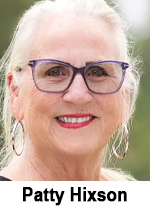 The hallmark awards ceremony, presented by CalViva Health in the New Exhibit Hall of the Fresno Convention & Entertainment Center. The awards paid tribute to 10 Central Valley women who have excelled professionally, served as role models, and given back to their communities, as well as one business honored for its support of women and women’s issues. Patty Hixson’s successful radio career spans 32 years serving the Central Valley. An active leader in the community, she has been a member of the Fig Garden Rotary Club for 30 years, serving as president in 2018, and was a longtime member of the California State University-Fresno’s Bulldog Foundation. Hixson also served on the Board of Directors of the Greater Fresno Area Chamber of Commerce. Patty Hixson said: “I’m honored and humbled to be recognized among this astute group of leaders. Giving back to the community is a central part of my DNA, and I thank the Marjaree Mason Center for this award and for its important efforts supporting all women in our community.”
 The agreement extension will feature Jeff Lewis expanding his popular show, “Jeff Lewis Live” to two hours a day giving listeners more of Jeff Lewis promoted as “just the way you want him…live and uncensored.” Lewis tells TALKERS, “SiriusXM has given me the freedom to build a show that is unfiltered, unapologetic, and morally corrupt. I’m grateful for the opportunity to grow my show and my cult…I mean, listeners.” The show will now air Monday through Fridays from 12:00 noon – 2:00 pm ET on SiriusXM’s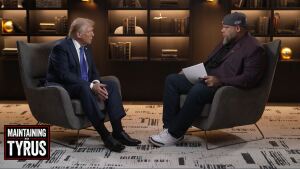
 Andrea Mitchell to Receive Prestigious Award. Alliance for Women in Media (AWM) has announced that Andrea Mitchell, NBC News chief foreign affairs correspondent and chief Washington correspondent, will be honored with the prestigious Gracies Icon Award at the 2024
 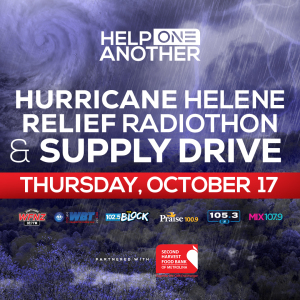 Radio One Charlotte, in partnership with Second Harvest Food Bank of Metrolina, is presenting an all-day radiothon today (10/17) to support those affected by Hurricane Helene. This event is taking place from 6:00 am to 7:00 pm across Radio One Charlotte stations: WOSF, WFNZ, WLNK, WPZS, WOSF-HD2 and heritage news/talk WBT. Marsha Landess, Radio One Charlotte regional VP, tells TALKERS, “We are focusing the power of our six radio stations to help raise funds for the relief efforts for our neighbors in the western part of our state. We know their lives have been turned upside down, and we want to do our part to assist them in rebuilding and recovering. Our goal is to raise a substantial amount to help them begin to put their lives back together. Every dollar counts, whether large or small.” Kay Carter, CEO of Second Harvest Food Bank of Metrolina, adds, “Everyone at Second Harvest Food Bank of Metrolina is so grateful to Radio One for all their efforts to assist us as we work to help the many victims of Hurricane Helene. The needs are great, and we want to thank all the radio stations and their listeners for considering a donation to the Radiothon. We promise to use the donations wisely to provide food and other supplies throughout the affected areas.”
 Even as its stations were airing hundreds of hours of continuous live news and storm coverage during hurricanes Helene and Milton, Cox Media Group (CMG) was raising nearly $1 million and providing food, water and necessities for impacted people and communities. That includes taking mobile charging stations into communities for people to charge their phones and other devices. Hurricane relief efforts took place across CMG’s southeast TV and Radio stations. “These efforts by our CMG family highlight the indispensable role of our stations – and our entire broadcasting industry – as we work together to make a powerful and positive impact on the communities we live in and serve,” said Dan York, CMG’s president/CEO. “As importantly, none of this would have been possible without the incredible support from our local partners and audiences. The response of our viewers and listeners has been nothing short of remarkable.” CMG radio stations include news/talker WDBO 107.3 / AM 580 in Orlando.
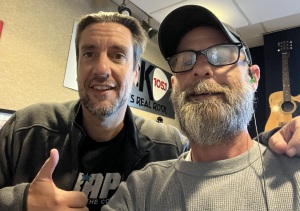 Premiere Networks personality Clay Travis co-hosted “The Clay Travis and Buck Sexton Show” live from affiliate News Radio 570 WWNC in Asheville, NC (10/11). Travis toured the area via helicopter to witness the extensive damage from Hurricane Helene in an effort to continue raising awareness, funds and volunteers for hurricane relief that will be needed for months to come. During the visit, WWNC morning host/news director Mark Starling joined the broadcast for a powerful conversation about the devastation the community has experienced. He detailed how the station covered Hurricane Helene, providing vital information to the Asheville community including coordinating rescue efforts and reuniting families. Starling, who stayed at the station for 14 days straight during the hurricane, said: “…when TV couldn’t do it, the newspaper couldn’t do it, there was nothing online, the only thing left was AM/FM radio. All seven stations stayed on the air simulcasted… we were wall-to-wall…what we wanted to do here at the radio station, at iHeart Asheville, was we wanted to show the community that we can get through this. And we’ve been kind of repeating this line: ‘community is the answer to this crisis.’ …what we have seen is the absolute best in humanity in an absolute horrific, horrific time.” Listen to their full conversation
  Starnes Media Group is hosting a live, six-hour Election Night special for radio stations across the nation.