By Matthew B. Harrison
TALKERS, VP/Associate Publisher
Harrison Media Law, Senior Partner
Goodphone Communications, Executive Producer
“Everybody’s a dreamer / And everybody’s a star.”
Ray Davies, “Celluloid Heroes,” 1972
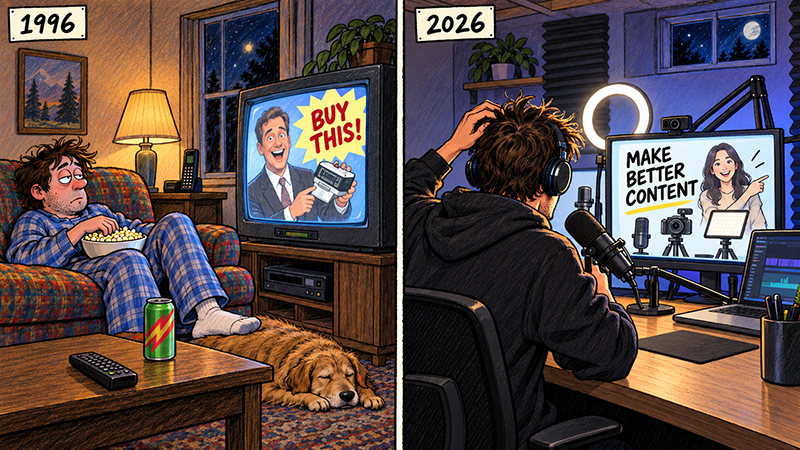
 My father recently called my attention to something hiding in plain sight. He was watching YouTube and noticed ads for StreamYard, Riverside, Sprizzy and other companies selling tools and services to people who want to produce, distribute, or promote their own media. “They are advertising on consumer venues!” he told me. That was the part that caught his attention.
It sounds obvious until you think about what it means. These companies are not merely advertising to viewers, listeners, and readers. They are advertising to viewers, listeners, and readers who also make things: podcasts, videos, livestreams, newsletters, books, music, and shows. The consumer audience now contains an enormous population of producers.
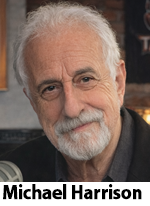
My father, TALKERS founder Michael Harrison, has a phrase for this: “The audience has an audience.” In a July interview about the modern media landscape, he put it even more plainly: “Everybody has a show.” That does not mean everybody has a large show, a profitable show, or even a particularly good show. It means that access to the means of publishing and broadcasting, once scarce and expensive, has become ordinary.
That change created an entire business layer around the aspiring and semi-professional media producer. StreamYard and Riverside sell production capability. Podbean sells hosting, distribution, and monetization tools. Sprizzy sells YouTube promotion. Beyond them are editing platforms, newsletter companies, self-publishing services, PR firms, audience-development businesses and companies willing to help almost anyone build, package and promote a media product.
The money moving around this ecosystem is no longer trivial. The Interactive Advertising Bureau reported that U.S. creator-economy advertising grew from $29.5 billion in 2024 and projected it to reach about $43.9 billion in 2026. In its September 2026 advertising outlook update, IAB reported that 54% of buyers said they were increasing their focus on creator and influencer advertising and partnerships.
For traditional broadcasters, that should change how we think about the people on the other side of the microphone. The butcher, the baker and the candlestick maker may still be members of the audience, but now the butcher has a cooking channel, the baker has a podcast, and the candlestick maker has an Etsy store, a newsletter and 14,000 followers. They may be competitors for attention, but they can also be customers, advertisers, guests, sources, affiliates, and future talent.
This does not erase the distinction between professional media and someone experimenting in a spare bedroom. Scale still matters. Skill matters. Editorial judgment matters. Broadcasters also operate under legal and regulatory obligations that do not simply transfer to someone uploading a video from a phone. But the old wall separating “the media” from “the audience” has become remarkably porous.
That may be the bigger lesson behind all those advertisements. Companies that once would have bought trade advertising to reach broadcasters, publishers or recording professionals can now advertise on consumer platforms and find millions of people with, as Michael puts it, “a toe in showbiz.” The consumer venue has become a trade venue because a meaningful portion of the consumers are also in the trade.
So where exactly is the line between our audience, our competition and our customers? Increasingly, there isn’t a very clean one. When the audience has an audience, the media business is no longer just about reaching consumers. It is about reaching people who are themselves trying to reach somebody else.
Matthew B. Harrison is a media and intellectual property attorney who advises radio hosts, content creators, and creative entrepreneurs. He has written extensively on fair use, AI law, and the future of digital rights. Reach him at Matthew@HarrisonMediaLaw.com or read more at TALKERS.com.

 “Throughout its 36-year history of service to the talk radio and associated talk media industries, TALKERS has maintained a strict policy of non-partisanship in its coverage of the field and its players. However, the single ideological orthodoxy practiced by TALKERS through this period has been uncompromising support of the First Amendment – the prime principle and foundation upon which all American freedoms and values are built. Over the years, we have bestowed our prestigious Freedom of Speech Award upon a wide variety of broadcasters from all ends of the political spectrum, and we have gone to bat in support of hosts, stations and networks – popular and otherwise, Democrat and Republican, liberal and conservative – when under fire from presidents and other governmental forces determined to quell that fundamental right. For the sake of our industry and our country, we stand in protest of the current White House press ban imposed against our colleagues and strongly encourage all practitioners of American talk media, regardless of political persuasion, to unify in opposition to this egregious aggression against our fundamental right to fulfill our core duty and promise to the people of our nation.”
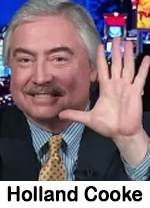 All this month, I am outlining revenue-producing strategies and tactics, proven by advertisers’ results (which pay us all). If you missed our first two installments, here are “
 KFMW-FM and KOKZ-FM in Cedar, plus KPTY-AM, and FM translators K263BZ, and K297BS in Waterloo. Civic Media is based in Wisconsin and operates stations there as well as in Minnesota and Michigan. Cedar Basin Media says, “Cedar Basin Media is a radio group built on a simple premise: communities deserve stations that are actually of and for them – good information, real conversation, and people on the air who live here, too.”
  Park,” delivered more than 70 free prostate screenings, directly addressing a critical community health gap for men facing financial barriers or a lack of insurance. WRVA morning host Rich Herrera says, “I am deeply grateful to everyone behind the scenes who worked tirelessly to bring this initiative together. Being rooted in the communities we serve is at the heart of what we do. Local radio has the power to save lives, and through this event, we helped a listener discover a cancer he didn’t know he had.”
 iHeartRadio’s “Stuff You Should Know” in the #1 position, followed by Audioboom’s “Pod Save America” at #2 and iHeartRadio’s “My Favorite Murder” at #3. Noteworthy changes from the July ranker include “Armstrong & Getty on Demand” rising five places to #11 and Salem Media Group’s “The Charlie Kirk Show” falling six places to #19.
  include: 1) Commercial stations produce news at a notably higher rate than non-commercial stations (65.7% versus 62.6%), though the commercial figure fell nearly 10 points from last year while non-commercial stations edged up slightly; 2) Locally owned stations are now nearly 40% more likely to air news than non-locally owned stations; 3) The typical (median) amount of weekday local news rose to 50 minutes, up 10 minutes from last year, though average minutes swung sharply depending on market size – major markets saw an enormous drop in average weekday minutes, which researchers attribute to unusual data the prior year rather than a real decline, while large and medium markets saw increases.
 increase in ROI since COVID but a worrying 11% erosion in advertising driven profits; 2) ROI is mistaken for business outcomes such as sales growth, profit growth, and customer growth. ROI is none of those things. It is simply a ratio of revenue/profit generated by ad spend; 3) Surprisingly, ROI and revenue/profit growth move in the opposite direction. Low profit growth produces high ROI. Strong profit growth results in lower ROI; and 4) Perception vs. reality: Marketers mistakenly believe ROI trumps budget in driving profit growth. The reality is budget is 9 times more critical than ROI in generating profit.
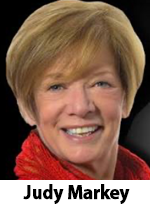 Markey was a columnist for the Chicago Sun-Times. Retired WGN news anchor Steve Bertrand – who was a regular on the “Kathy and Judy Show” – appeared on WGN’s morning show with Bob Sirott to break the news. O’ Malley addressed Markey’s passing in a post on the WGN website: “Over the years, Judy and I talked on the air several times about our support for medical aid in dying, a highly personal choice but one we felt should be available for those who chose it – and she did. With her family at her side, she peacefully ended her life at a MAID (medical aid in dying) facility in Switzerland.” Of Markey’s success on the radio, WGN notes how it all began: “On a hunch, on Super Bowl Sunday afternoon in 1989, WGN’s program director Lorna Gladstone decided to team Markey and O’Malley. No one could have anticipated they would be, as media critic Rob Feder aptly put it ‘lightning in a bottle.’ For the next two decades ‘The Girlfriends,’ as they came to be known, attracted a fiercely loyal following (of women and men) and dominated the midday ratings,” Feder wrote. “Their authentic chemistry transcended radio. No topic was off limits or too personal. Annual fan conventions and station-sponsored trips drew thousands.”
  Gen Z now consumes podcasts monthly, positioning the generation to become podcasting’s largest audience; 4) 57% of Americans both watch and listen to podcasts, underscoring the rise of the creator ecosystem across audio and video; 5) And while listeners embrace AI for behind-the-scenes production, they remain wary of AI replacing the human voice and connection at the heart of podcasting. Audacy says the takeaway from this report is that podcast advertising is shifting from buying reach to buying influence – with trust, expertise and community becoming the real currency.
  (9/14). Khan most recently served as anchor at WPTV-TV, West Palm Beach. She’d also hosted shows on Newsmax and America’s News Voice Network. KCMO program director Pete Mundo says, “KCMO Talk Radio is making a strong commitment to Kansas City by continuing to invest in live, local programming. Miranda is a smart, engaging voice who brings years of media experience and deep Kansas City roots, and she knows how to connect with listeners and drive meaningful conversations. Her addition strengthens our commitment to delivering the news, opinions, and discussions that matter most to Kansas Citians every day. We are excited to welcome Miranda home to KC.”
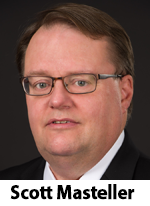 more than 45 years. Beasley Philadelphia VP and market manager Paul Blake says, “Scott has brought tremendous knowledge, thoughtful leadership and a deep commitment to excellence to ‘The Fanatic.’ He understands what makes sports radio meaningful to its audience and has always been generous in sharing his insight with those around him. Scott was key in The Fanatic’s growth, and he helped position the station well for its next chapter. We are deeply grateful for Scott’s contributions and congratulate him on an outstanding career and a well-earned retirement.” During Masteller’s career he served with are ESPN Dallas, ESPN Radio, and WBAL, Baltimore, plus stops in Portland, Salt Lake City, and Lexington, Kentucky.
 THANKS to all who offered feedback about my most recent column.
 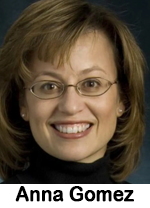 keep his interview with a Senate candidate off the air shows just how far this Administration’s campaign of censorship and control has gone. This is now the second time in a matter of months that a late-night host has disclosed they had to bury an interview because of FCC intimidation, and there is no way to know how many other editorial decisions across the country have quietly been shaped by this same pressure. No host, local affiliate, or network should have to weigh federal retaliation before booking a guest for a newsworthy interview. Any attempt to pressure broadcasters into self-censorship undermines both press freedom and the public’s right to hear from candidates in their communities seeking public office.
 at 76 after a battle with cancer. Stone hosted the station’s “Open Line” show from 8:00 am to 11:00 am daily. KSCJ program director Justin Barker tells KTIV-TV, “Charlie was always a consummate professional and did everything to the best of his ability, lit up every room and had great charisma and great talent to be able to talk to anybody, to be able to welcome anybody.”
  wide range of disciplines, from News Programs, Documentaries, and Talk Programs to On-Air Talent, Craft, and Entertainment. Specialized category groups spotlight groundbreaking work in Digital, Podcast, and Audio Book content, while Programming Formats and Promotion/Open & ID recognize the creative standards and imaging innovation driving radio forward.” New York Festivals EVP Rose Anderson says, “Here’s to Radio – the original social media. Awards do more than keep score: they honor creative excellence, mastery of craft, they can change your life, and they offer an opportunity to take your place in industry history!”
  last week after motorcycle crash. A Facebook tribute from the station for 64-year-old Steve Gretsch said, “Steve wasn’t just part of KLFD. In a lot of ways, he was the voice of it — mornings, local sports, more commercials than any of us could count. If you called in, if your kid’s game got a shoutout, if you just needed to know what was happening in this town — chances are, Steve told you.”