

Monday Memo: How You Tune Them Out?
By Holland Cooke
Consultant
 Unintentionally, your poorly phrased comment, dated reference, weary cliché, or offhand remark can at least subtly distance you from your listener and could undercut your credibility, offend, or even spark backlash.
Whether you’re a broadcaster, podcaster, newscaster, or you are crafting commercial or promo copy, take a fresh look at these often-overlooked pitfalls.
Dated references: Nothing can disrupt your listener’s day quicker than quickly changing weather. Being thought of as a weather source can advantage any station in any format. But you risk that currency by calling tomorrow “…a carbon copy of today.” Few under 50 have ever used carbon paper. And with weather more erratic lately, implying otherwise can make your forecast sound – forgive me – “like a broken record.” Also antique: “Rolodex,” now that listeners’ smartphones have “Contacts.” So, purge old-speak from “the radio dial.” Listeners (and advertisers) notice when we keep-up… or don’t.
Stereotyping:
— “Soccer mom in a SUV” sure is the retail super-consumer advertisers want to see pull-into the parking lot. Visualize her in programming and promotion planning and sales prospecting… OFF-air stuff. But reinforcing gender roles and class assumptions ON-air paints a narrow picture of parenting and lifestyle, potentially alienating women.
— “You know how Millennials are.” Yes – like “Generation X” – they dislike being typecast, and you sound out-of-touch and judgmental.
— Calling someone “a Karen” can alienate listeners who have felt ridiculed suffering a situation similar to whatever you’re describing. And there are millions in the potential ratings sample named… Karen.
— “Probably some college kid with no clue how to drive in the snow” implies incompetence based on age and background. This kind of dig can undermine younger listeners or newcomers to your market.
Stereotypes are lazy, often a shortcut to humor or imagery. Ask yourself: “Is this something I’d say to someone’s face?”

Insensitive Humor: “Looks like someone forgot their meds today!” can offend those quietly dealing with anxiety, or depression. Pandemic silver lining: Mental health is no longer a laughing matter. You may have seen TV PSAs by Howie Mandel, sharing how ADHD has impacted his life and asking that it not be a punchline.
“Potty-mouth:” Mom and Dad’s just-the-two-of-them vocabulary is different than the way they speak with kids in the car, and what they want to hear their children repeat after hearing on radio.
— “Pissed-off” has become unnecessarily familiar, particularly with recent inflation…with which we are “annoyed,” “fed-up,” and “frustrated.”
— Even if something sounds commonplace, origins or implications may make it unsuitable for all-audience radio. “Scumbag” began as a term for condom. “Sucks” and “screwed” also have sexual roots some consider vulgar.
Taboo red flags:
— “No offense, but…” or “I’m just saying…” often precede something offensive.
— “It’s just a joke!” often follows a crack at the expense of marginalized groups.
— “Everyone thinks that…” overgeneralizes and can alienate those who disagree.
— Mocking accents or speech patterns can come across as disrespectful rather than entertaining.
— “Real [men/women] do…” Gendered assumptions can feel exclusionary or outdated.
— “This [group] is always…” Sweeping characterizations often reinforce stereotypes.
Words have weight. In a medium where tone, timing, and trust matter, what we say – and how we say it – can either strengthen listener connection or erode it.
NEXT WEEK: Topics to Tune-IN the listeners you want most.
Holland Cooke (HollandCooke.com) is a media consultant working at the intersection of broadcasting and the Internet. Follow HC on Twitter @HollandCooke
 A New Jersey radio station thought they were just being clever online. They scanned a photo from New Jersey Monthly, cropped out the photographer’s credit line, and posted it on Facebook – inviting listeners to edit and reshare it for fun. ying to engage listeners to interact with the station with more than just their ears.”
 and achievements of women in media.” The Gracies Gala takes place May 19, 2026, at the Beverly Wilshire and the Gracies Luncheon happens June 16, 2026, at Cipriani 42nd Street in New York City. AWMF president Becky Brooks says, “Following a landmark 50th anniversary season, we remain inspired by the power of women’s voices in shaping our media landscape. The 51st Gracie Awards will honor the enduring influence of those who paved the way and spotlight the voices who continue to challenge, innovate, and lead. As we look to the future, we are committed to elevating the diverse and brilliant stories women bring to audiences every day.”
 company’s media platforms, bringing her energy, expertise, and signature charisma to a wide array of content.” Crull will be full-time co-host of “The Buck Belue Show” and will make regular appearances on “The Locker Room” morning show, in addition to leading efforts to expand Dickey Broadcasting’s digital footprint through original podcast content and cross-platform storytelling. Station president and GM David Dickey says, “We couldn’t be more excited to bring Kelly on board full time. She’s the kind of multi-talented broadcaster that elevates everyone around her. Whether she’s behind the mic, in front of the camera, or developing digital content, Kelly brings a passion and professionalism that align perfectly with our mission to inform, entertain, and connect with sports fans across Georgia and beyond.”
 and actions prior to the Paramount-Skydance merger. Paramount’s CBS agreed to a settlement with President Donald Trump over a Kamala Harris interview on “60 Minutes.” The complaint says, “Everyone from U.S. senators to CBS employees to a dissenting FCC commissioner has said the settlement appears to have been a bribe to grease the wheels for Carr’s FCC to approve the merger. Even putting Paramount aside, Carr has pursued numerous other frivolous and unconstitutional legal proceedings and threatened more of them in furtherance in his efforts to intimidate broadcast licensees to censor themselves and fall in line with Trump’s agenda.” It goes on to say, “Carr’s actions brazenly violate legal and ethical standards that govern the practice of law and public officials, undermining the First Amendment, the FCC’s credibility, and the laws he is trusted to administer. His abuse of his office to force an unwarranted settlement of a private lawsuit is shameful and warrants disbarment.”
 Reviewing radio’s challenges:
 media users, and linear TV viewers. Ad-supported audio listeners are more likely to be Amazon Prime members, spend more, and were more aware of Amazon Prime Day 2025; 2) Ad-supported audio (AM/FM radio, music streaming, and podcasts) are ideal media platforms for retailers and e-commerce brands: Heavy audio listeners are more likely to shop online. Heavy AM/FM radio and podcast listeners spend more online than TV viewers; 3) AM/FM radio makes your TV better – “20 gets you 50”: A 20% shift of a TV media budget to AM/FM radio generates a +50% increase in campaign reach. Nielsen Media Impact campaign optimizations reveal shifting media weight to AM/FM radio generates significantly more reach, especially among younger 18-49 demographics. AM/FM radio does an extraordinary job in increasing campaign reach among light TV viewers who will not see retailer TV ads; and 4) Audio holiday AM/FM radio campaigns work: Consumers exposed to an Amazon holiday AM/FM radio campaign have higher brand equity (awareness, ad recall, prior purchase, and purchase intent). Nielsen sales effect studies reveal AM/FM radio campaigns for retailers generate significant return on advertising spend: $15 dollars of incremental sales for every dollar of AM/FM radio advertising.
 Why we’re already seeing TV tout its coming attractions: They understand how, after Labor Day, routines settle in. Viewers will be ready to re-engage.
 for free markets, Gomez called out the FCC’s role and Paramount for “cowardly capitulation.” Trusty said, “This transaction reflects the free market at work, where private investment, not government intervention, is preserving an iconic American media institution. During its review of the transaction, the Commission determined the merger was lawful and would serve the public interest. This deal brings fresh
  leadership, new capital, and a clear plan to compete with dominant tech platforms.” Gomez stated, “In an unprecedented move, this once-independent FCC used its vast power to pressure Paramount to broker a private legal settlement and further erode press freedom. Once again, this agency is undermining legitimate efforts to combat discrimination and expand opportunity by overstepping its authority and intervening in employment matters reserved for other government entities with proper jurisdiction on these issues. Even more alarming, it is now imposing never-before-seen controls over newsroom decisions and editorial judgment, in direct violation of the First Amendment and the law… The Paramount payout and this reckless approval have emboldened those who believe the government can – and should – abuse its power to extract financial and ideological concessions, demand favored treatment, and secure positive media coverage. It is a dark chapter in a long and growing record of abuse that threatens press freedom in this country.”
 Angeles’ “Mason & Ireland” show to continue in that role. ESPN EVP, executive editor, sports news and entertainment David Roberts says, “We’re thrilled to continue our partnership with Steve and John. They bring energy, humor, and perspective that resonate with listeners across Los Angeles. There’s nothing quite like ‘Mason & Ireland’ in the market or in sports radio.”
 Mark Walters
 iHeartMedia Norfolk announced today (7/25) the debut of BIN 92.1 FM, Norfolk’s Black Information Network, effective immediately. The Black Information Network has transitioned from 105.3 FM (WNOH) to its new home at 92.1 FM (WHBT), where it will continue delivering what is described as “nonstop, reliable news coverage shaped by the Black community.” According to iHeartMedia Norfolk market president, Denene Moore, “Listeners can count on the same high-quality journalism, in-depth reporting, and culturally relevant storytelling—now on 92.1 FM and available on the iHeartRadio app.” Moore continues, “BIN has become a vital voice in communities across the country, and we’re proud to continue that trusted news and perspective here in Norfolk. This move ensures that our listeners have access to the stories that matter most, told through a lens that reflects their experiences and voices.”
 have ever consumed a podcast, 55% have consumed a podcast in the last month, and 40% have consumed a podcast in the last week, each measure being an all-time high; 2) Video podcast consumption has redefined the podcast landscape: Over half (51%) of the U.S. 12+ population has ever watched a video podcast; 37% have watched a video podcast in the last month and 26% have watched a video podcast in the last week. Those who actively watch video podcasts are younger and more diverse than those who only listen to audio-only podcasts; and 3) Podcasts offer high engagement and trust from listeners: 88% of weekly podcast consumers agree that hearing ads is a fair price to pay for free content; 68% say they don’t mind hearing ads on podcasts. You can see
  live in the 12:00 noon to 3:00 pm daypart. The show will be simulcast live on Disney+ every day and on ESPN+ during select weeks in the year. In addition to his weekday show, Eisen brings his full podcast lineup from The Rich Eisen Podcast Network to ESPN platforms. Eisen says, “Once we struck a deal with Disney for the video version of The Rich Eisen Show, it made complete sense to migrate the audio version to ESPN Radio, where I got started in the terrestrial radio world almost 30 years ago. It’s just another way to return to my roots with my old and now new friends at ESPN and GKB. I couldn’t be more excited about our future together on multiple platforms.”
 by President Trump’s claims of liberal bias at NPR, voted to strip public broadcasting of all federal funding. But Chapin says the choice was hers and not driven by the action in Congress. Chapin says, “I have had two big executive jobs for two years, and I want to take a break. I want to make sure my performance is always top-notch for the company. NPR CEO Katherine Maher says, “Edith has been an indispensable partner during my first year at NPR, a steady leader for a large part of this organization, and a fantastic collaborator as a member of the executive team.”
 Conventional industry wisdom: “If our morning star leaves, we’re dead. How could we replace them?”
 the country, particularly in rural and underserved areas. However, Americans are increasingly skeptical of media institutions, with trust in media at historic lows. That reality cannot be ignored. It is not unreasonable for taxpayers to expect transparency, accountability, and balance from any outlet receiving federal support. Nor is it unreasonable for Congress to reassess whether public funding models established in a different media era remain justified today, especially when Americans have more access to more content from more sources than ever before. This action does not signal the end of public media. Instead, it presents an opportunity for innovation, partnerships, and more localized decision-making. As a regulator, I will continue to support policies that promote access and competition in media, without presupposing that one model of funding or content creation should be immune from public scrutiny or reform.”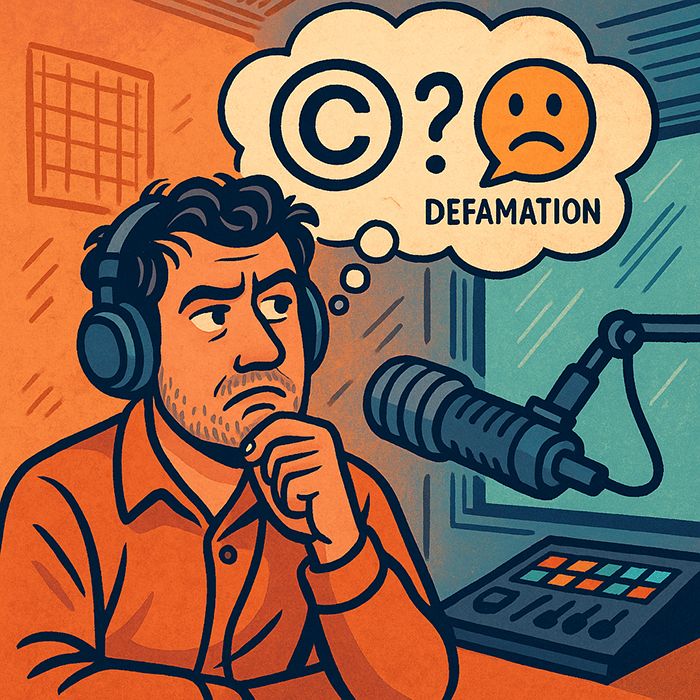
 that Audacy bargain respectfully and in good faith as we work to improve our salaries, benefits, pathways to promotion, workplace safety, remote work options, preserve severance, and protect against the growing threat of artificial intelligence.” Regarding the issue of safety, WGAE president Lisa Takeuchi Cullen says, “1010 WINS runs 24/7 and requires people to commute to the office at all hours. The station’s journalists have been threatened and even attacked. Audacy needs to take responsibility for the safety of its employees and our members. This is one of the many issues that management still needs to address in a fair and equitable contract.”
  receive on our mobile phones. With underlying frameworks that are 31 and 13 years old respectively, we think it’s time to explore if structural changes to these systems are needed, with an eye towards making sure we are leveraging the latest technology to save lives. Similarly, we will also vote to initiate a review of our system for collecting real-time data on network outages and restoration during and after major disasters. Since its inception in 2007, our Disaster Information Reporting System (DIRS) has proven to be a valuable tool for collecting actionable information to help with recovery efforts. While the DIRS reports are valuable, they can be time-consuming to produce, drawing resources away from responding to an ongoing disaster. The Commission will vote on reforms to streamline DIRS to make sure that its benefits outweigh its burdens. We’ll close our August meeting by removing unnecessary regulations and injecting common sense across the Commission’s policies—critical features to streamline the implementation of our Build America Agenda.”
  defund, or threaten news outlets that support the government’s views, and there’s a reason for that. This has never been about saving money. It’s about silencing those who report the news accurately, without fear or favor. The true cost of this one-sided attack on free speech will be felt most by small and rural communities across the country. Much like the disappearance of local newspapers, cutting off support for public stations could create a new kind of ‘news desert.’ In many hard-to-reach areas, these stations may be the only source for the public to receive emergency alerts, traffic updates, and information about local events and ways to stay engaged in their own neighborhoods. Defunding them strips away these essential services and further isolates the very communities these stations seek to serve. The FCC is playing a dangerous game with its own baseless attacks on public broadcast stations. Its role should be to protect and expand the public’s access to timely, accurate news that is free from political interference. I will continue fighting this FCC’s politically motivated efforts to investigate and harass these stations.”
  “Eric from Dominion saying he was going to make sure President Trump lost the 2020 election.” That was picked up and broadcast by OAN network and further repeated by the Trump campaign and Trump attorneys Rudy Giuliani and Sidney Powell. Coomer also sued MyPillow CEO Mike Lindell and won a $2.3 million judgement. Courthouse News also reports that Coomer is also suing Salem personality Eric Metaxas who recently filed with the court to settle and is awaiting approval from the court. Interestingly, Corporon – a practicing attorney – is representing Gateway Pundit owner James Hoft who is also being sued by Coomer for defamation. That case is scheduled to go to trial in April of 2026.
  and NPR’s most popular podcasts – “NPR News Now” and “Up First” – maintain their first and second-place finishes, respectively. Changes of note from May to June include Salem Podcast Network’s “The Charlie Kirk Show” rising three places to #5, Cumulus Podcast Network’s “VINCE” rising one spot to #10, and iHeartRadio’s “Clay Travis & Buck Sexton” falling two places to #16.
 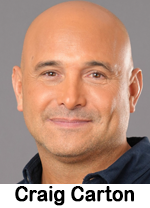 Both personalities came to television from radio – Carton from WFAN, New York and
  Parkins from WSCR, Chicago. Industry watchers are speculating whether the two, especially Carton, will return to radio. In the New York Post, sportswriterAndrew Marchand notes that after his prison stint for a fraud conviction, Audacy’s now-chief business officer Chris Oliviero was instrumental in bringing Carton back to WFAN as afternoon drive co-host. Carton did radio and the FS1 show before leaving radio to focus on the early morning TV show.
 Consumer. Edison says the webinar will cover the current size and habits of the U.S. podcast audience and explore how things have changed over time. The webinar is July 23 at 2:00 pm ET.
  In radio and podcasting, editing isn’t just technical – it shapes narratives and influences audiences. Whether trimming dead air, tightening a guest’s comment, or pulling a clip for social media, every cut leaves an impression.