


Reckless Disregard in the Age of AI: What Verification Now Requires
By Matthew B. Harrison
TALKERS, VP/Associate Publisher
Harrison Media Law, Senior Partner
Goodphone Communications, Executive Producer
 AI is now embedded in the modern newsroom. Not as a headline, not as a novelty, but as infrastructure. It drafts outlines, summarizes complex reporting, surfaces background details, and accelerates prep for live conversations. For media creators operating under relentless deadlines, that efficiency is not theoretical. It is practical and daily.
That reality raises a quiet but consequential legal question. When AI contributes to your research, what does verification now require?
Professional hosts are not reading raw chatbot answers on air and calling it journalism. That caricature misses the real issue. What is actually happening is subtler and far more common.
AI now sits inside research workflows. Producers use it for background. Hosts use it to summarize reporting. Teams use it to outline controversies or draft rundowns. Most of the time, it works. Sometimes, however, it invents.
When that invention involves a real person and a serious allegation, the legal analysis looks familiar.
For public figures, defamation requires proof of actual malice – knowledge of falsity or reckless disregard for truth. For private figures, negligence is usually enough. In both cases, the focus is not on the tool. It is on the content creator’s conduct.
AI does not change the elements. It changes the context in which reasonableness is judged.
Courts have long held that repeating a defamatory statement can create liability, even if someone else said it first. If you rely on a blog, and that blog relied on AI, and the allegation is false, the question becomes whether your reliance was reasonable.
Was the source reputable? Was the claim inherently improbable? Were there obvious red flags? Was contradictory information readily available?
AI’s reputation for “hallucinating” facts now forms part of that backdrop. Widespread awareness that these systems can fabricate citations, merge identities, or invent accusations becomes relevant when a court evaluates your verification choices.
This does not mean using AI indicates reckless disregard. It means using AI does not excuse skipping verification when the stakes are high.
The more specific and damaging the claim, the greater the duty to confirm it through independent, reliable sources. Not another prompt. Not a circular reference to the same unverified blog. Rather, a primary record, official statement, or established reporting.
Documentation matters. If challenged, being able to show that you checked multiple sources before broadcast can be decisive.
None of this is new doctrine. What is new is how seamlessly AI blends into ordinary research habits. That integration makes it easier to forget that the legal question is still about human judgment.
The law will not ask whether your workflow was efficient. It will ask whether your conduct was reasonable under the circumstances.
In the age of AI, verification is not a courtesy. It is risk management.
Matthew B. Harrison is a media and intellectual property attorney who advises radio hosts, content creators, and creative entrepreneurs. He has written extensively on fair use, AI law, and the future of digital rights. Reach him at Matthew@HarrisonMediaLaw.com or read more at TALKERS.com.
 Your prospect – or, worse, an existing advertiser with cold feet – says “We tried radio. It didn’t work.” Often, the copy is the culprit, because it’s inside-out.
 provides important benchmark measures for usage and behavior around streaming audio, podcasting, radio, smart audio, social media, and debuting this year, never-before-seen data on AI usage. Annual results and trending data from The Infinite Dial are relied upon by its audience of content producers, media companies, agencies, and the financial community.” The webinar will feature Edison vice president of research Megan Lazovick with special guest James Cridland, editor of Podnews.
 posts remain unchanged – iHeart Audience Networks’ “Stuff You Should Know” at #1 and Audacy Podcast Network’s “48 Hours.” Salem Podcast Network’s “The Charlie Kirk Show” falls only one spot to #4. Other noteworthy shows include iHeart Audience Network’s “The Clay Travis and Buck Sexton Show” rises on place to #10 and Audioboom’s “The Bulwark Takes” climbs nine places to #21.
  recent trends towards fragmentation facilitate or inhibit the ability of local broadcast television stations to meet their public interest obligations, including their production of local news and reporting? In what ways is the marketplace continuing to evolve and how will future changes impact consumer access to free over-the-air news and information, including public safety information?”
 6:00 pm to 7:00 pm, beginning March 9. The station says, “Craig is a veteran talk show host having previously worked at WGN Radio and 93 WIBC. He is also a frequent guest host with Radio America’s ‘The Dana Show’ and ‘The Chad Benson Show’ and WIBC’s ‘Tony Katz and the Morning News.’” Colling says, “How awesome is it to be at the same radio station I remember reading about in The Way Things Ought To Be! I can’t wait to get started. A big thank you to Bonny, Russell and the entire team at KSEV!”
 dominant spoken-word audio listening platform, but it was fully sixty-five percentage points higher than podcasts, which accounted for 10% of listening time back then. Quarter by quarter and year over year, time spent using AM/FM radio to listen to spoken-word audio has declined significantly and shifted to time spent with podcasts. As of Q4 2025, 40% of time spent listening to spoken-word is now spent with podcasts and 39% of time is spent with AM/FM radio. Not only does radio not beat podcasts by a significant margin, it now trails the on-demand platform for spoken-word audio listening.”
 president Julie Talbott says, “We’re deeply saddened by the loss of Rev. Jesse Jackson, and it has been an honor to work with him and his family throughout the past two decades of his ‘Keep Hope Alive’ radio show. Santita Jackson is uniquely positioned to carry forward his legacy and his unwavering commitment to community and social justice – values he championed so powerfully for listeners and stations across the country.” iHeartMedia chairman and CEO Bob Pittman adds, “Rev. Jackson has been a transformative voice in American life, and it was a privilege to work with him dating back to ‘The Jesse Jackson Show’ with Quincy Jones in the 1990s. We’ve valued our relationship with him over the years and look forward to celebrating his lasting impact on the national conversation and our culture – an influence that will continue to resonate for generations.”
 Christianity. This podcast is an extension of the conversations I’m already having – about faith, family, and what it means to live with conviction in a liberal culture. I’m excited to bring those discussions to a wider audience.” Salem Media SVP of content Phil Boyce states, “Danielle represents the next generation of conservative voices. As Salem continues to invest in new talent and new platforms, her voice reflects both where the conservative audience is headed and the future we’re building at the Salem Podcast Network.”
 patriotic, pro-America content that celebrates the American journey and inspires its citizens by highlighting the historic accomplishments of this great nation from our founding through the Trump Administration today.” Carr adds, “On July 4, 2026, America will celebrate the 250th Anniversary of the signing of the Declaration of Independence. That revolutionary document set forth our founding principles – including Life, Liberty, and the pursuit of Happiness – and put America on a collision course with destiny. Over the following centuries, the American story has defined modern history and spread freedom, opportunity, and prosperity across the globe. As America’s 250th anniversary approaches, it is important to reflect on the ideals and events that have defined our past while keeping an eye towards our country’s bright future. The White House is leading our national celebration of this historic event with the Salute to America 250 Task Force, which calls on the federal government, among others, to mark this momentous occasion. As part of this effort, I am calling on broadcasters to pledge to provide programming that promotes civic education, national pride, and our shared history.” Carr shares some examples stations could use, including:
 If you work in radio, you’ve heard every flavor of AI anxiety. Some fear it will wipe out jobs. Others treat it like a super shortcut – cranking-out spots, promos, and proposals faster and cheaper. Kate O’Neill’s “
 purchasing power – backed by a population of nearly 70 million that is a leading ethnicity in growth – has now reached $4.1 trillion and continues to grow more than twice as fast as that of non‑Latinos. iHeartMedia says, “The impact of this can only be measured in global scale: If isolated, the GDP of current U.S. Latinos would rank fifth in the world, having surged from $2.2 trillion in 2015 to $4 trillion.” iHeartLatino president and chief creative officer Enrique Santos says, “Bicultural Latinos are not just an audience — they are a cultural vanguard, driving tastes, trends and conversations across every platform while powering one of the fastest‑growing segments of the U.S. economy and redefining what it means to be American. For brands, the takeaway is clear: culture is the strategy — language is the tactic. Those who lead with cultural intelligence, not just translation, earn more than attention, they earn long-term loyalty and trust.” The study also finds that audio is important to this demographic. The study finds: “Broadcast reaches 9 in 10 Latinos monthly, according to Nielsen, and this new research shows that Bicultural Latino radio listening is diverse – 92 percent listen in English, 78 percent listen in Spanish – and 65 percent of Bicultural Latinos prefer listening to radio/music/podcasts equally in Spanish and English. Additionally, the research shows that 98 percent are listening to music weekly, 63 percent tune into podcasts weekly and 69 percent engage with live sports through audio.”
 radio industry (and its related fields) seeks to connect with and develop a next generation of professional practitioners as well as engaged audiences. TALKERS is honored to again provide financial support, encouragement, experience, and advice to the dedicated organizers of this very special event.
 I am pleased to be speaking this weekend at the IBS New York 2026 conference in New York City. Thank you, TALKERS magazine, for being the presenting sponsor of this important, timely annual event along with the Intercollegiate Broadcasting System (IBS).
 “Podcasting’s momentum strengthened in 2025, with audio remaining the foundation of the medium while video helped bring in new audiences. What’s most compelling is the diversity podcasting now delivers across content, platforms, and consumers. Triton’s report highlights where new listeners are engaging and how their evolving behaviors – including shopping and purchase intent – are creating a highly engaged audience that is increasingly attractive for brand investment.” One key finding from the study is that “consumption preferences vary sharply by genre. Categories primarily consumed via audio are Science (58%), History (56%), Fiction (54%), Arts (51%), and True Crime (50%), while Music (34%), Sports (32%), Kids & Family (31%), Comedy (30%), News (30%) skew more heavily toward exclusive video consumption. This emphasizes a need for differentiated content and monetization strategies.”
 to television and radio programming. After the back-and-forth between The Late Show’s Stephen Colbert and CBS attorneys over the interview with U.S. Senate candidate U.S. Rep. James Talarico that did not air on CBS television but was pushed out on the show’s social media accounts instead, broadcasters – including news/talk radio programmers and hosts – may be confused about how the equal time rule is being applied.
 FCC has no lawful authority to pressure broadcasters for political purposes or to create a climate that chills free expression. CBS is fully protected under the First Amendment to determine what interviews it airs, which makes its decision to yield to political pressure all the more disappointing. It is no secret that Paramount, CBS’s parent company, has regulatory matters before the government, but corporate interests cannot justify retreating from airing newsworthy content. The FCC is powerless to impose restrictions on protected speech, and any attempt to intimidate broadcasters into self-censorship undermines both press freedom and public trust. I once again urge broadcasters and their parent companies to stand firm against these unlawful pressures and continue exercising their constitutional right to speak freely and without government interference.”
 Republican or Democrat. Often, Democratic candidates balk at being interviewed by conservative hosts for fear they will not get a “friendly” interview as their Republican opponent might have. Regardless, the law is about equal time, and the matter late night shows are dealing with is assuming they qualify for the “bona fide news” exemption that excuses them from the equal time rule. Chairman Carr’s position is there is no blanket exemption; it is taken on a case-by-case basis.
 following their Super Bowl LX win, roster-building strategy, draft preparation, and the evolving landscape of the NFL. “Seattle Sports” program director Kyle Brown comments, “In the wake of an unforgettable Super Bowl run, we’re excited to give fans even deeper access to the leadership guiding the Seahawks into their next chapter. John’s perspective on team-building, the draft, and what it takes to construct a championship roster will be invaluable as the Seahawks look to build on the momentum of their 2026 title.”
 morning, we announced that we will not be renewing Alexis Thompson’s contract. Alexis has been with myTalk 107.1 for 20 years, and co-host with Jason Matheson in morning drive since 2013. Her warm, funny, and authentic personality have made her a favorite with myTalk listeners, clients and all her co-workers in the Hubbard Radio hallways. The success of the Jason & Alexis Show is well documented.” Thompson was given the opportunity to go on the air to say goodbye to her listeners but chose to have Matheson read her farewell statement that read: “Dearest myTalkers, My time at myTalk has come to an end. The station didn’t renew my contract. I’m sorry I can’t be there for a final show to say goodbye. It’s too emotional for me. I simply want to say thank you. Thank you for 20 plus years of talking pop culture and entertainment, laughing, crying and sharing our lives. We’ve grown up together. Thank you for starting your morning with a smile and a laugh with me. myTalkers, together we have raised millions of dollars and awareness for charities doing real meaningful work. I’m incredibly proud. One thing I know for sure, community is everything. And thank you for building community with me. I have been lifted by your love and trust. I’m forever grateful. Remember you be you! And when you see me, don’t forget to say, ‘Hey girl, hey!’ Let’s keep in touch and follow my adventures @lexandthecities. Love always, Alexis” Regarding their decision, Hubbard explains, “Radio is changing. The radio business is still strong, but it is changing. The audio landscape is evolving, and we have been challenged to run our operations more efficiently going forward. Sadly, in this case it came at the expense of someone we all admire and adore. We have nothing but the utmost respect for Alexis’ grace, professionalism, and her many contributions to ‘myTalk 107.1.’ Future plans for the morning show are not clear. The next few weeks we will work with Jason and [producer] Holly [Roberts] to chart a new course. The remainder of the ‘myTalk 107.1’ schedule remains unchanged.”
  times per week – Monday through Wednesday – and will be available on both YouTube and Rumble in digital video format with future expansion on other platforms. The company adds, “For the first time, Levin will offer audiences access to original digital video content via an ad-supported model, instead of a subscriber paywall. ‘Liberty’s Voice with Mark Levin’ will present exclusive, in-depth commentary from one of America’s most influential constitutional scholars and political thinkers. Sharing his intellectual rigor, brilliant wit, and signature passion, Levin will draw on history, economics, law, and philosophy as he goes beyond the headlines to examine the ideas and principles that shaped the United States – and the forces challenging them today. Each episode will deliver substantive analysis of current events, grounded in the founding ideals of liberty, limited government, and individual sovereignty, while exposing the dangers of centralized power and historical amnesia.”
 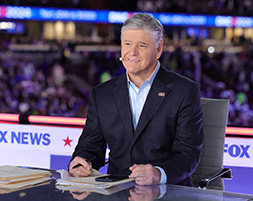 politics, and beyond. Filmed from Hannity’s new set in Florida, dubbed the personal ‘man cave,’ the show will offer a candid, behind-the-scenes look at the conversations that take place when the cameras stop rolling.” FOX News Digital and New Media president Porter Berry says, “Sean Hannity remains one of the most influential voices in media, grounded by the same values and work ethic that defined his early days. We’re thrilled to expand our podcast portfolio with one of the most accomplished broadcasters to ever pick up a microphone.” Hannity comments, “I’ve always been interested in how people got to where they are – the risks they took, the failures they pushed through, and the lessons that don’t make it on TV. This podcast is a chance to slow down and have those conversations, no scripts, no talking points, just real discussions with people who have something meaningful to say.” In addition to the podcast, Hannity will continue to host his Premiere Networks nationally syndicated radio program, “The Sean Hannity Show,” while sunsetting “Sean” on FOX Nation.
  interview due to potential implications under the Federal Communications Commission’s “equal time” rule. The rule requires broadcast licensees to provide equal opportunities to legally qualified candidates for public office if one candidate is given airtime.
 Every radio conference agenda and much of what’s-up in the trade press and chat groups is about exploiting Artificial Intelligence. Often these conversations land in one of two places: fear (“Will this replace us?”) or fascination (“Look what it can do!”). Both miss the point.
 2026, to shareholders of record on February 26, 2026. The aggregate amount of the payment will be approximately $1.6 million. The quarterly dividend will be funded by cash on the company’s balance sheet. Including this dividend, the company will have paid over $143 million in dividends to shareholders since the first special dividend was paid in 2012.
 the Lakeland-Winter Haven, Florida market from Hall Communications. The deal includes news/talk WLKF-AM (but not its current FM translator W244BJ at 96.7 MHz) country WPVC, and adult hits WONN-AM and its translators W296CS at 107.1 FM and W240DB at 95.9 FM. MARC Radio says it expects the deal to close in May, pending FCC approval.
 be celebrated on-air and transform their classrooms with a $5,000 DonorsChoose gift card. iHeartMedia president of programming operations and digital music says, “iHeartRadio’s ‘Thank a Teacher’ aims to shine a light on the quiet and positive work happening in classrooms across the country and to offer a very public thank you to the teachers who are doing so much.” Over the course of the contest 60,000 teachers were nominated for $50,000 in gift cards shared by the 10 final winners.