


Retired Radio Industry Legend Bob Shannon Creates Powerful AI Song About Minnesota Strife
Former 20-year TM Productions creative and marketing executive, Bob Shannon has written and produced – with the help of AI – a compelling ballad about the tragic drama playing out in Minnesota titled, “When the Circus Came to Town.” The Minneapolis-based former DJ, programmer and radio exec tells TALKERS, “In full disclosure, this song was created on suno.com using V5. The lyrics are all mine, and the orchestration is mine too by virtue of having given all of the instructions to create the track. Regardless of how all the controversy about artificial intelligence plays out, I am releasing this opinionated and highly emotional song purely as an expression of my free speech and artistic expression – not for commercial marketing purposes.”
Shannon continues, “Minneapolis is torn apart, and I see that it’s happening all across the country in relation to the actions of ICE. For the record, I am for a good immigration policy in this country, however the actions of this brutish force neither constitute good policy nor go anywhere towards solving our problem. As a personal note, my housekeeper’s sister-in-law was arrested by ICE at her house yesterday (1/8) morning at 6:00 am with no warrant and no reason… and taken away from her children, who were left alone. For that reason, I was compelled to create this. When my original words were complete, I went to Suno.com, the much discussed Artificial Intelligence music creator, and typed in specific music prompts about instrumentation (piano with bari-saxophones highlights), tempo (slow and evocative; a story song), key and vocal styles (I selected a single male baritone in G major). Then I instructed Suno to create an instrumentation that sonically conveyed a somber sense of sadness, loss, and deep introspection, with instructions to mix the lyrics high in the final mix.”
Shannon concludes, “My words came from a disbelieving head, from a broken heart, and from the pit of my stomach. This was my humanity shining through, and it exposed my raw and real feelings. But AI has no feelings; it’s just an algorithm that provides untrained musicians with a tool to turn original lyrics into songs. Some say that’s cheating, but that’s a discussion for another day.
To listen to “When the Circus Came to Town,” please click here.
Among his many accomplishments in the radio industry, Shannon is the author of the acclaimed book Turn It Up! American Radio Tales 1946-1996,” originally released in 2009 and updated in 2017. He can be reached by email at bobshannonworks@gmail.com or phoned at 206-755-5162.
 announcement via a post on X, saying: “I will be leaving my position with the FBI in January. I want to thank President Trump, AG Bondi, and Director Patel for the opportunity to serve with purpose. Most importantly, I want to thank you, my fellow Americans, for the privilege to serve you. God bless America, and all those who defend Her.” President Trump commented on Bongino’s departure saying, “Dan did a great job. I think he wants to go back to his show.” Now, the speculation begins as most industry watchers expect Bongino to return to the conservative talk media ecosystem, where will he resume his media career?
 been an instrumental voice on OutKick, across FOX News Media, and for women across this country. I am thrilled that she will be part of our new expansion and provide a unique and fresh perspective on everything from culture trends to current affairs and continue to be a leading voice for young conservative women.” Gaines comments, “I started this journey of simply saying men shouldn’t play in women’s sports and OutKick and FOX News Media have supported me from day one. They provided me a platform to bring national attention to the transgender issue in sports and ignite change that will forever protect women living out their dreams in athletics. I’m beyond excited to launch my new show that will cover a variety of topics and highlight the stories of women who are fighting alongside with me.”
 station featured a strong anti-communist tone. Station general manager Mike Sena says the reason for the change is financial. “Like our beautiful city, Radio Mambí, its audience and the media industry are evolving rapidly, which presents financial challenges for many in the market.” The station is continuing to broadcast, airing archived programming, music, and Spanish-language broadcasts of the NBA’s Miami Heat and MLB’s Miami Marlins. The Miami Herald says staffers that have lost their jobs include Jorge Luis Sánchez Grass, José Luis Nápoles, José Carlucho, Lilliet Rodríguez and Lucy Pereda.
 If you missed yesterday’s webinar, look for the replay which will be posted today at
 co-host of “The Bottom Line,” beginning Monday (12/8). Brenberg will continue his role with the network co-hosting “The Big Money Show” alongside McDowell, Jackie DeAngelis and Taylor Riggs. Brenberg says, “It’s been great to work with Dagen on ‘The Big Money Show’ and I am excited to join her on ‘The Bottom Line’ where we can continue our conversations surrounding the biggest market movers and business drivers that are impacting Main Street, Wall Street, and everyday Americans.”
 For most of my life, the sound of an AM signal has been my constant companion. Long before I ever spoke into a microphone professionally, I was the kid hiding under the covers with a transistor radio, slowly turning the dial, discovering voices, ideas, communities, and worlds far beyond my bedroom. AM radio didn’t just shape my career – it shaped who I am.
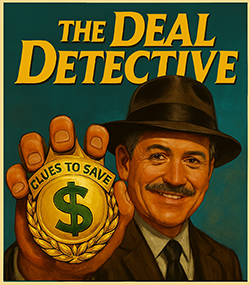 Confidence is down. Costco is mobbed.

 16% year-over-year decline in the percentage of Americans who say they get their news ‘often’ from apps like Instagram, Facebook, TikTok and X.2. In this rapidly changing landscape, consumers are increasingly turning to All News Radio for local news, trusted voices, and fact-based reporting.” Borelli cites as evidence for this Nielsen data indicating that Audacy all-news stations are up 11% versus last year and adds that’s coming off a presidential election year. Ben Mevorach is vice president of news at WINS, New York and he says, “As the number of places to get news continues to grow, the number of places to find news that is credible, trustworthy, and without bias is rapidly shrinking. People constantly tell us that 1010 WINS is their sole source for news they can trust.”
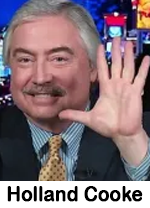 Possibly not – beginning Sunday – unless you live in Hawaii and Arizona (except the Navajo Nation) or American Samoa, Guam, the Northern Mariana Islands, Puerto Rico, or the U.S. Virgin Islands. Everywhere else, clocks will change when we “fall-back” on November 2.

 provides insights for marketers on how to curate advertising strategies that authentically connect with audiences and build trust in an increasingly fragmented and technology driven world.” The study was fielded through Critical Mass Media for iHeartMedia and found that 82 percent of respondents worry about AI’s societal impact, and 9 in 10 believe it’s important to know the media they consume is created by a real person. iHeartMedia president of insights Lainie Fertick says, “The data shows us that consumers are emotionally driven, digitally fatigued and yearning for authenticity in an increasingly algorithmic world. This is especially critical with rapid technology advancements and the growing use of AI in the media industry. For marketers, it creates both hurdles and unique opportunities to connect with audiences in this new environment.” Key findings from the study include: 1) Children are struggling to be independent in a tech-forward era; 2) Consumers are all online, but they aren’t happy to be there; 3) Trust in online information is at an all-time low; 4)
 Algorithms rule our lives, and consumers know it; 5) Media is dividing us on current events, but all agree that there’s “something going on with those Epstein files”; and 6) Though 97 percent of consumers know what AI is, with 70 percent actually using AI, distrust remains high. iHeartMedia chairman and CEO Bob Pittman comments, “It’s important for us to remember, as marketers, that we’re in a very delicate position within a turbulent time, both in America and around the world. In a world of digital saturation and AI acceleration, this study reveals that consumers are not just looking for convenience – they’re searching for meaning. Sports, radio, live media and human-led storytelling offer a rare sanctuary of trust, empathy and shared experience. Above all, we must continue listening to Americans more closely than ever before and focus on ways to foster real connection and amplify our collective humanity.”
 Every talk host knows the move: play the clip. It might be a moment from late-night TV, a political ad, or a viral post that sets the table for the segment. It’s how commentary comes alive – listeners hear it, react to it, and stay tuned for your take.
 Salem Radio Network is providing coverage of President Donald Trump’s visit to Israel as headdresses the Israeli Knesset and personally greets Israeli hostages released as part of the Israel-Hamas peace plan he negotiated. Townhall.com editor Katie Pavlich is among six American media members in the out-of-town travel pool accompanying President Trump on Air Force One. Pavlich will be filing reports as she follows Trump’s schedule.
 for the Amplified Voices Podcast Network and Amplified Voices TV. American Urban Radio Networks CEO Chesley Maddox-Dorsey says, “This launch represents a powerful evolution in our mission to serve Black audiences. By creating two distinct digital destinations under AmplifiedVoices.com — AVTV and AV Podcasts — we are sharpening our focus to better meet the needs of our listeners, viewers and content partners.” Content will include “On the Record” with AURN News correspondent Ebony McMorris, “Café Mocha Radio,” and “reACT with Rev. Al.”
 the popularity of mobile devices for audio listening is the most dominant in urban communities. Within that audience segment, 40% of time is spent listening to audio on a mobile device, vs. 28% of time spent listening on an AM/FM radio receiver. The mobile device also holds a strong lead in suburban communities, with 36% of time spent listening on that device compared to 30% of time on a radio receiver. However, the radio receiver is strongest in rural communities where it matches the listening time of the mobile device, each receiving 34%.
 our airwaves free from government influence. The First Amendment affords our stations – and all Americans – this fundamental right, and the mere perception that broadcasters acted because of undue pressure is a problem for our credibility and the trust we have built with our audiences.
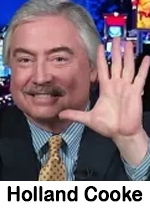 Don’t let Halloween sneak-up on you. The only holiday Americans spend more for is Christmas. So – to seem more in-touch than your robotic and/or non-local audio competitors – plan something spook-tacular.
 that listening has grown across all demographics and time periods versus the Fall 2024 Nationwide report. Some key takeaways are: 1) Among persons 25-54, total U.S. AM/FM radio AQH has grown +6%, powered by a +19% increase in the Portable People Meter markets; 2) Weekends and nights have the greatest growth compared to Fall 2024; 3) Versus Fall 2024, Spring 2025 total U.S. audience growth is greater among men versus women and has increased in older demographics; and 4) Total U.S. Spring 2025 audience growth is up significantly among college graduates and upscale $75K+ income Americans. The blog post notes that the PPM audience growth is due to Nielsen’s three-minute qualifier modernization, which provides a significantly more comprehensive and realistic definition of AM/FM radio’s audience and their listening behavior. Nielsen found 23% of PPM listening occasions were three or four minutes. Under the old five-minute listening qualifier rule, none of this tuning would have received listening credit. Effective with the January 2025 PPM survey, Nielsen began crediting tuning occasions that are three minutes or greater.
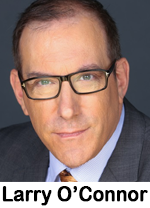 In the wake of Charlie Kirk’s murder, one would expect every company that owns a talk radio station, every network that syndicates conservative voices, and every corporation that employs talk radio hosts to issue a unified statement of defiance. This was not just an attack on Charlie; it was an attack on the entire industry of talk radio, on the free exchange of ideas, and on the First Amendment itself. Yet, shockingly, most of these companies have remained silent. That silence is unacceptable. At a moment like this, the industry should stand shoulder to shoulder and declare to the world: we will not be intimidated, we will not be silenced, and we will never abandon the microphone.