By Frank Morano
City Councilor
New York City 51st District
Staten Island
 For most of my life, the sound of an AM signal has been my constant companion. Long before I ever spoke into a microphone professionally, I was the kid hiding under the covers with a transistor radio, slowly turning the dial, discovering voices, ideas, communities, and worlds far beyond my bedroom. AM radio didn’t just shape my career – it shaped who I am.
That’s why, as both a lifelong AM radio listener and a longtime AM broadcaster (77WABC and WNYM-AM “970 The Answer”), I’m introducing legislation in the New York City Council to require that all City-owned and City-contracted vehicles continue to include functioning AM receivers. I’m proud of my work in government, but this one is personal. Because AM radio isn’t just entertainment or nostalgia – it’s infrastructure. It’s public safety. It’s the backbone of our emergency communications system. And it’s in danger.
When Everything Else Fails, AM Radio Doesn’t
We don’t have to imagine what happens when modern communications collapse. We’ve lived it.
On September 11, 2001, when cell networks jammed almost immediately, millions of New Yorkers turned to AM radio for news, instructions, and reassurance.
In the 2003 Northeast Blackout, AM signals were among the very few communications systems still functioning across multiple states.
During Superstorm Sandy, when much of the region lost power and internet for days, AM remained a critical lifeline for emergency updates, evacuation information, and weather alerts.
These weren’t theoretical scenarios. They were real moments of crisis – and AM radio proved its value every single time.
When the lights go out, AM stays on. When cell networks are overwhelmed, AM cuts through. When the internet fails, AM continues broadcasting. It is the most resilient form of mass communication ever created, and FEMA and the National Weather Service still rely on AM frequencies for a reason: they reach people when nothing else can.
AM Radio Is Still the Soundtrack of America
Beyond emergencies, AM radio remains woven into the cultural fabric of this country. It’s where Americans talk to each other – about politics, sports, faith, overnight oddities, neighborhood issues, and everything in between. It’s one of the last places where anyone can call in, join the conversation, and be part of a community.
The same AM dial that once carried the voices announcing D-Day, the moon landing, and the gritty street reporting of New York legends still carries the news, opinions, and debates that shape American life today. There is something uniquely democratic about the AM band: it is accessible, unpretentious, inexpensive, and available to everyone.
That’s worth preserving. Especially now, as some automakers – particularly in the electric vehicle space – phase AM radios out of new models, citing interference or cost concerns.
Cities and States Can Lead Where Washington Waits
Congress is considering the “AM Radio for Every Vehicle Act,” and I support it wholeheartedly. But federal action can take time. Cities and states can move faster.
New York City’s legislation can be a model:
- If municipalities require AM receivers in the vehicles they procure…
- If state governments do the same for their fleets…
- And if enough jurisdictions stand firm…
Automakers will have no choice but to keep AM radio in every vehicle they sell.
Government can’t – and shouldn’t – tell anyone what to listen to. But we absolutely can ensure that the option to listen still exists. And that, when disaster strikes, the public can rely on a system proven over nearly a century to work under the toughest circumstances imaginable.
The Signal Must Go On
AM radio isn’t a relic. It’s a lifeline. It’s a civic space. It’s one of the last great mediums that belongs to the people. As someone who owes much of his career – and much of his identity – to those airwaves, I feel a responsibility to protect them.
By acting locally here in New York City, I hope we inspire communities across the country to do the same. If we want the AM dial to be there for the next blackout, the next storm, or the next unthinkable moment, the time to act is now.
Because when everything else goes silent, AM radio still speaks.
And we need to make sure it always will.
Frank Morano was recently elected City Councilor representing New York City’s 51st district. Prior to that he forged a distinguished career in talk radio at WABC and WNYM in New York. Councilor Morano can be reached via email at frank@moranoforcouncil.com.
Share this with your network



 WTOP says its journalists will examine the following seven pillars as defining points of American progress: The Federal Workforce (WTOP reporter Jimmy Alexander), Defense (WTOP National Security Correspondent JJ Green), Energy (WTOP reporter and anchor Nick Iannelli), Transportation (WTOP aviation and transportation reporter Dan Ronan), Healthcare (WTOP producer and reporter Acacia James), Technology (WTOP anchor John Aaron) and Homeownership (WTOP reporter Linh Bui). Hubbard DC VP and general manager Joel Oxley comments, “This series reflects WTOP’s commitment to thoughtful, fact-driven journalism with national importance but more importantly, local impact. As the country reflects on 250 years of progress, we’re proud to provide context, insight, and perspective on how we got here and where we’re headed as part of the community at the epicenter of this story, our nation’s capital.”
 deal to provide a one-minute news update hosted by one of the network’s anchors to over 15,000 taxis across the country, including in New York City. In a January 21 letter to Mamdani and Taxi and Limousine Commissioner Midori Valdivia, Hoylman-Sigal stated the cabs should not carry Newsmax because of its “politically charged content.” The letter went further, stating Newsmax “is not a credible news source for New Yorkers. I urge you to summarily suspend the NYC Taxi and Limousine Commission’s partnership with Curb… and demand that Curb cease its collaboration with Newsmax as a condition of licensure given the platform’s history of misinformation and disingenuous reporting.” Newsmax says, “This is a pure act of censorship targeting a news organization reaching over 50 million Americans regularly. Newsmax plays it straight and that drives the far left crazy.”
  listening to the 10k flamethrower, with a history dating back to 1947, that blankets the Santa Cruz / Monterey / Salinas market and most of the Central California coast. Since acquiring the station, Zwerling has operated it hands-on as a conservative-leaning news-talker featuring a carefully crafted balance between local programming with a parade of hometown personalities (including local superstar Dave Michaels) and a menu of leading syndicated talent. It was one of the original affiliates of Rush Limbaugh and carried the iconic show until his passing in 2021. Zwerling tells
  TALKERS, “Back then I was 39 years old and never dreamed I’d last this long as a real broadcaster.” TALKERS publisher Michael Harrison – a longtime fan of KSCO – stated, “Congratulations to Michael Zwerling and all the folks at one of America’s most colorful radio stations, for keeping the spirit of independent local broadcasting alive through the many obstacles and changes that have proven challenging for the practitioners of this wonderful industry. They are champions of a major slice of grassroots Americana represented by the modern era of talk radio.” Today, KSCO maintains its powerful presence in the world-famous market at 1080 AM with the addition of three FM translator signals at 104.1, 95.7, and 107.9. The station still broadcasts from a historic art deco building located on the beach in Santa Cruz and continues to surprise its listeners with unexpected twists and turns in what Harrison describes as “one of radio’s longest running reality shows.”
 The plague of pessimism about the future of radio is fueled internally by radio employees. Doomsayers are logically found in the sales department. All day, salespeople meet with buyers. A buyer’s job is to negotiate a lower price by arguing radio’s negatives. The wall of negativity thrives within the work environment of a seller. Tough. But there is little or no reason for pessimism.
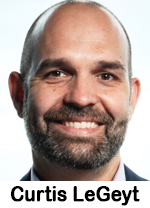
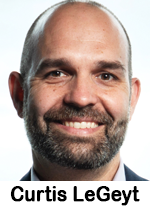 $12.54 billion – with $10.15 billion from over-the-air revenue and $2.39 billion from digital revenue. NAB president and CEO Curtis LeGeyt comments, “No other industry gives more to Americans for free. Local stations provide trusted journalism, life-saving emergency alerts and the sports and entertainment that bring our communities together. This report reinforces that broadcasters are not only essential to our democracy and daily lives, but to the strength of our economy, as well.” The study goes on to reveal that “local broadcasting’s economic ripple effect extends deep into other sectors — from construction to retail — adding another $134 billion in GDP and supporting nearly 776,000 additional jobs.” LeGeyt adds, “Broadcasting is more than a business model; it is a civic model. This industry stands alone in its mission to inform, protect and uplift every community in America, regardless of zip code or income level.”
 solutions-oriented conversations about the political, cultural, and social issues shaping Americans’ lives… expected guests in the show’s first days include James Carville, Bob Costas, Mark Cuban, former Senator Joe Manchin, Gov. Wes Moore, Sen. Rand Paul and more. Cuomo comments, “Too much of our politics is about teams instead of truth. ’Cuomo Mornings’ is going to be about breaking through those barriers, asking better questions, and bringing people into the conversation instead of talking past them. We need to prioritize common sense, accountability, and real dialogue, and SiriusXM’s P.O.T.U.S. channel is exactly where that belongs. I’m very excited to be back on the platform and to engage with callers every day. Let’s get after it.”
 Circus Came to Town.” The Minneapolis-based former DJ, programmer and radio exec tells TALKERS, “In full disclosure, this song was created on suno.com using V5. The lyrics are all mine, and the orchestration is mine too by virtue of having given all of the instructions to create the track. Regardless of how all the controversy about artificial intelligence plays out, I am releasing this opinionated and highly emotional song purely as an expression of my free speech and artistic expression – not for commercial marketing purposes.”
 announcement via a post on X, saying: “I will be leaving my position with the FBI in January. I want to thank President Trump, AG Bondi, and Director Patel for the opportunity to serve with purpose. Most importantly, I want to thank you, my fellow Americans, for the privilege to serve you. God bless America, and all those who defend Her.” President Trump commented on Bongino’s departure saying, “Dan did a great job. I think he wants to go back to his show.” Now, the speculation begins as most industry watchers expect Bongino to return to the conservative talk media ecosystem, where will he resume his media career?
 been an instrumental voice on OutKick, across FOX News Media, and for women across this country. I am thrilled that she will be part of our new expansion and provide a unique and fresh perspective on everything from culture trends to current affairs and continue to be a leading voice for young conservative women.” Gaines comments, “I started this journey of simply saying men shouldn’t play in women’s sports and OutKick and FOX News Media have supported me from day one. They provided me a platform to bring national attention to the transgender issue in sports and ignite change that will forever protect women living out their dreams in athletics. I’m beyond excited to launch my new show that will cover a variety of topics and highlight the stories of women who are fighting alongside with me.”
 station featured a strong anti-communist tone. Station general manager Mike Sena says the reason for the change is financial. “Like our beautiful city, Radio Mambí, its audience and the media industry are evolving rapidly, which presents financial challenges for many in the market.” The station is continuing to broadcast, airing archived programming, music, and Spanish-language broadcasts of the NBA’s Miami Heat and MLB’s Miami Marlins. The Miami Herald says staffers that have lost their jobs include Jorge Luis Sánchez Grass, José Luis Nápoles, José Carlucho, Lilliet Rodríguez and Lucy Pereda.
  If you missed yesterday’s webinar, look for the replay which will be posted today at
 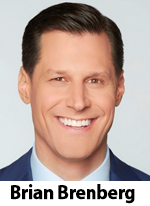 co-host of “The Bottom Line,” beginning Monday (12/8). Brenberg will continue his role with the network co-hosting “The Big Money Show” alongside McDowell, Jackie DeAngelis and Taylor Riggs. Brenberg says, “It’s been great to work with Dagen on ‘The Big Money Show’ and I am excited to join her on ‘The Bottom Line’ where we can continue our conversations surrounding the biggest market movers and business drivers that are impacting Main Street, Wall Street, and everyday Americans.”
 Confidence is down. Costco is mobbed.
 16% year-over-year decline in the percentage of Americans who say they get their news ‘often’ from apps like Instagram, Facebook, TikTok and X.2. In this rapidly changing landscape, consumers are increasingly turning to All News Radio for local news, trusted voices, and fact-based reporting.” Borelli cites as evidence for this Nielsen data indicating that Audacy all-news stations are up 11% versus last year and adds that’s coming off a presidential election year. Ben Mevorach is vice president of news at WINS, New York and he says, “As the number of places to get news continues to grow, the number of places to find news that is credible, trustworthy, and without bias is rapidly shrinking. People constantly tell us that 1010 WINS is their sole source for news they can trust.”
 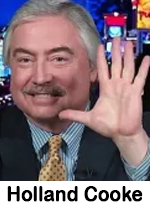 Possibly not – beginning Sunday – unless you live in Hawaii and Arizona (except the Navajo Nation) or American Samoa, Guam, the Northern Mariana Islands, Puerto Rico, or the U.S. Virgin Islands. Everywhere else, clocks will change when we “fall-back” on November 2.
 provides insights for marketers on how to curate advertising strategies that authentically connect with audiences and build trust in an increasingly fragmented and technology driven world.” The study was fielded through Critical Mass Media for iHeartMedia and found that 82 percent of respondents worry about AI’s societal impact, and 9 in 10 believe it’s important to know the media they consume is created by a real person. iHeartMedia president of insights Lainie Fertick says, “The data shows us that consumers are emotionally driven, digitally fatigued and yearning for authenticity in an increasingly algorithmic world. This is especially critical with rapid technology advancements and the growing use of AI in the media industry. For marketers, it creates both hurdles and unique opportunities to connect with audiences in this new environment.” Key findings from the study include: 1) Children are struggling to be independent in a tech-forward era; 2) Consumers are all online, but they aren’t happy to be there; 3) Trust in online information is at an all-time low; 4)
  Algorithms rule our lives, and consumers know it; 5) Media is dividing us on current events, but all agree that there’s “something going on with those Epstein files”; and 6) Though 97 percent of consumers know what AI is, with 70 percent actually using AI, distrust remains high. iHeartMedia chairman and CEO Bob Pittman comments, “It’s important for us to remember, as marketers, that we’re in a very delicate position within a turbulent time, both in America and around the world. In a world of digital saturation and AI acceleration, this study reveals that consumers are not just looking for convenience – they’re searching for meaning. Sports, radio, live media and human-led storytelling offer a rare sanctuary of trust, empathy and shared experience. Above all, we must continue listening to Americans more closely than ever before and focus on ways to foster real connection and amplify our collective humanity.”
 Every talk host knows the move: play the clip. It might be a moment from late-night TV, a political ad, or a viral post that sets the table for the segment. It’s how commentary comes alive – listeners hear it, react to it, and stay tuned for your take.
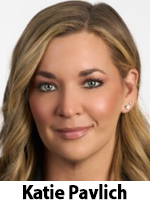 Salem Radio Network is providing coverage of President Donald Trump’s visit to Israel as headdresses the Israeli Knesset and personally greets Israeli hostages released as part of the Israel-Hamas peace plan he negotiated. Townhall.com editor Katie Pavlich is among six American media members in the out-of-town travel pool accompanying President Trump on Air Force One. Pavlich will be filing reports as she follows Trump’s schedule.
 for the Amplified Voices Podcast Network and Amplified Voices TV. American Urban Radio Networks CEO Chesley Maddox-Dorsey says, “This launch represents a powerful evolution in our mission to serve Black audiences. By creating two distinct digital destinations under AmplifiedVoices.com — AVTV and AV Podcasts — we are sharpening our focus to better meet the needs of our listeners, viewers and content partners.” Content will include “On the Record” with AURN News correspondent Ebony McMorris, “Café Mocha Radio,” and “reACT with Rev. Al.”
 the popularity of mobile devices for audio listening is the most dominant in urban communities. Within that audience segment, 40% of time is spent listening to audio on a mobile device, vs. 28% of time spent listening on an AM/FM radio receiver. The mobile device also holds a strong lead in suburban communities, with 36% of time spent listening on that device compared to 30% of time on a radio receiver. However, the radio receiver is strongest in rural communities where it matches the listening time of the mobile device, each receiving 34%.
 our airwaves free from government influence. The First Amendment affords our stations – and all Americans – this fundamental right, and the mere perception that broadcasters acted because of undue pressure is a problem for our credibility and the trust we have built with our audiences.
 Don’t let Halloween sneak-up on you. The only holiday Americans spend more for is Christmas. So – to seem more in-touch than your robotic and/or non-local audio competitors – plan something spook-tacular.
 that listening has grown across all demographics and time periods versus the Fall 2024 Nationwide report. Some key takeaways are: 1) Among persons 25-54, total U.S. AM/FM radio AQH has grown +6%, powered by a +19% increase in the Portable People Meter markets; 2) Weekends and nights have the greatest growth compared to Fall 2024; 3) Versus Fall 2024, Spring 2025 total U.S. audience growth is greater among men versus women and has increased in older demographics; and 4) Total U.S. Spring 2025 audience growth is up significantly among college graduates and upscale $75K+ income Americans. The blog post notes that the PPM audience growth is due to Nielsen’s three-minute qualifier modernization, which provides a significantly more comprehensive and realistic definition of AM/FM radio’s audience and their listening behavior. Nielsen found 23% of PPM listening occasions were three or four minutes. Under the old five-minute listening qualifier rule, none of this tuning would have received listening credit. Effective with the January 2025 PPM survey, Nielsen began crediting tuning occasions that are three minutes or greater.
  In the wake of Charlie Kirk’s murder, one would expect every company that owns a talk radio station, every network that syndicates conservative voices, and every corporation that employs talk radio hosts to issue a unified statement of defiance. This was not just an attack on Charlie; it was an attack on the entire industry of talk radio, on the free exchange of ideas, and on the First Amendment itself. Yet, shockingly, most of these companies have remained silent. That silence is unacceptable. At a moment like this, the industry should stand shoulder to shoulder and declare to the world: we will not be intimidated, we will not be silenced, and we will never abandon the microphone.