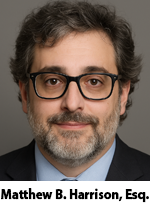
By Matthew B. Harrison
TALKERS, VP/Associate Publisher
Harrison Media Law, Senior Partner
Goodphone Communications, Executive Producer
 The Problem Is No Longer Spotting a Joke. The Problem Is Spotting Reality
Every seasoned broadcaster or media creator has a radar for nonsense. You have spent years vetting sources, confirming facts, and throwing out anything that feels unreliable. The complication now is that artificial intelligence can wrap unreliable content in a polished package that looks and sounds legitimate.
This article is not aimed at people creating AI impersonation channels. If that is your hobby, nothing here will make you feel more confident about it. This is for the professionals whose job is to keep the information stream as clean as possible. You are not making deepfakes. You are trying to avoid stepping in them and trying even harder not to amplify them.
Once something looks real and sounds real, a significant segment of your audience will assume it is real. That changes the amount of scrutiny you need to apply. The burden now falls on people like you to pause before reacting.
Two Clips That Tell the Whole Story
Consider two current examples. The first is the synthetic Biden speech that appears all over social media. It presents a younger, steadier president delivering remarks that many supporters wish he would make. It is polished, convincing, and created entirely by artificial intelligence.
The second is the cartoonish Trump fighter jet video that shows him dropping waste on unsuspecting civilians. No one believes it is real. Yet both types of content live in the same online ecosystem and both get shared widely.
The underlying facts do not matter once the clip begins circulating. If you repeat it on the air without checking it, you become the next link in the distribution chain. Not every untrue clip is misinformation. People get things wrong without intending to deceive, and the law recognizes that. What changes here is the plausibility. When an artificial performance can fool a reasonable viewer, the difference between a mistake and a misleading impression becomes something a finder of fact sorts out later. Your audience cannot make that distinction in real time.
Parody and Satire Still Exist, but AI Is Blurring the Edges
Parody imitates a person to comment on that person. Satire uses the imitation to comment on something else. These categories worked because traditional impersonations were obvious. A cartoon voice or exaggerated caricature did not fool anyone.
A convincing AI impersonation removes the cues that signal it is a joke. It sounds like the celebrity. It looks like the celebrity. It uses words that fit the celebrity’s public image. It stops functioning as commentary and becomes a manufactured performance that appears authentic. That is when broadcasters get pulled into the confusion even though they had nothing to do with the creation.
When the Fake Version Starts Crowding Out the Real One
Public figures choose when and where to speak. A Robert De Niro interview has weight because he rarely gives them. A carefully planned appearance on a respected platform signals importance.
When dozens of artificial De Niros begin posting daily commentary, the significance of the real appearance is reduced. The market becomes crowded. Authenticity becomes harder to protect. This is not only a reputational issue. It is an economic one rooted in scarcity and control.
You may think you are sharing a harmless clip. In reality, you might be participating in the dilution of someone’s legitimate business asset.
Disclaimers Are Not Shields
Many deepfake channels use disclaimers. They say things like this is parody or this is not the real person. A parking garage can also post a sign that it is not responsible for damage to your car. That does not absolve them when something collapses on your vehicle.
A disclaimer that no one negotiates or meaningfully acknowledges does not protect the creator or the people who share the clip. If viewers believe it is real, the disclaimer (often hidden in plain sight) is irrelevant.
The Liability No One Expects: Damage You Did Not Create
You can become responsible for the fallout without ever touching the original video. If you talk about a deepfake on the air, share it on social media, or frame it as something that might be true, you help it spread. Your audience trusts you. If you repeat something inaccurate, even unintentionally, they begin questioning your judgment. One believable deepfake can undermine years of credibility.
Platforms Profit From the Confusion
Here is the structural issue that rarely gets discussed. Platforms have every financial incentive to push deepfakes. They generate engagement. Engagement generates revenue. Revenue satisfies stockholders. This stands in tension with the spirit of Section 230, which was designed to protect neutral platforms, not platforms that amplify synthetic speech they know is likely to deceive.
If a platform has the ability to detect and label deepfakes and chooses not to, the responsibility shifts to you. The platform benefits. You absorb the risk.
What Media Professionals Should Do
You do not need new laws. You do not need to give warnings to your audience. You do not need to panic. You do need to stay sharp.
Here is the quick test. Ask yourself four questions.
Is the source authenticated?
Has the real person ever said anything similar?
Is the platform known for synthetic or poorly moderated content?
Does anything feel slightly off even when the clip looks perfect?
If any answer gives you pause, treat the clip as suspect. Treat it as content, not truth.
Final Thought (at Least for Now)
Artificial intelligence will only become more convincing. Your role is not to serve as a gatekeeper. Your role is to maintain professional judgment. When a clip sits between obviously fake and plausibly real, that is the moment to verify and, when necessary, seek guidance. There is little doubt that the inevitable proliferation of phony internet “shows” is about to bloom into a controversial legal, ethical, and financial industry issue.
Matthew B. Harrison is a media and intellectual property attorney who advises radio hosts, content creators, and creative entrepreneurs. He has written extensively on fair use, AI law, and the future of digital rights. Reach him at Matthew@HarrisonMediaLaw.com or read more at TALKERS.com.
Share this with your network



 than just retail businesses. From brands to home services to manufacturers — if your customers are shopping online, you’ll be able to find them, right at the point of purchase; 2) Move the dollars that matter. Learn why successful advertisers are shifting traditional TV budgets to Amazon DSP to reach ready-to-buy audiences more efficiently; and 3) Prove performance with clarity. See real results from local case studies that connect campaign exposure to leads, site visits, and sales.
  first handed out in 1971, are among the most prestigious in journalism. In 2025, about 5,000 entries were submitted in the professional and student categories, also making it one of the most competitive.” To be eligible, work must have been published between January 1, 2025, and December 31, 2025. This year, RTDNA is offering an Early Bird Discount for entries submitted by 5:00 pm ET on Tuesday, January 20. The final entry deadline is 5:00 pm ET Thursday, February 19. Entrants can find
  Mel Robbins Podcast,” “SmartLess” and “Up First,” from NPR. Representing a mix of news, advice and celebrity interviews, they were drawn from a shortlist of 25 programs the Globes had previously deemed eligible. The nominations avoided politics or controversy by passing on popular podcasts from the shortlist, such as conservative-leaning programs ‘The Megyn Kelly Show,’ ‘The Tucker Carlson Show,’ ‘The Ben Shapiro Show,’ Candace Owen’s ‘Candace’ and, most notably, ‘The Joe Rogan Experience,’ which topped Spotify, Apple and YouTube’s list of weekly podcast charts this year. The left-leaning ‘Pod Save America’ also was snubbed, as were popular true crime podcasts like ‘Morbid’ and ‘Rotten Mango.’” Kennedy notes in his report that Ben Shapiro lobbied hard for his show. “Shapiro had launched an all-out Golden Globes publicity campaign for his decade-old podcast, on which he’s spoken with the likes of U.S. Vice President JD Vance and Ukrainian President Volodymyr Zelenskyy in the past year. In addition to making the rounds with industry publications, Shapiro also secured massive billboard space in New York City’s Times Square.”
 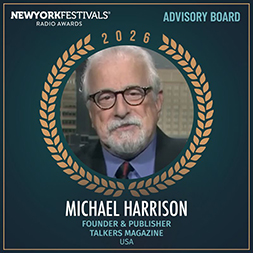 continue to be a member of the prestigious organization’s Advisory Board in 2026. Upon receiving this latest appointment (12/9), Harrison stated, “I am honored to be associated with this great group that continues to grow and inspire broadcasting artists and professionals around the world to achieve new levels of quality and positive societal influence – not to mention, unite and provide a sense of cohesiveness to the global media community.” The NY Festivals issued the statement about its Class of 2026: “We anticipate wonderful submissions from around the globe before the deadline. Our Storytellers Gala will salute Radio trophy winners in the spring. Combined with our TV & Film Winners, it will be a celebration of innovative storytellers across all platforms.”
  Andy Economos, the founder of Radio Computing Systems (RCS), was a leader in bringing digital tech into the radio industry. In 1980, he was leaving his position as head of technology for NBC Inc. to start his own company. I was EVP of the NBC FM stations. Andy and I were walking to lunch, crossing Sixth Avenue at 49th street and he asked me, “Is there any software your radio stations could use?”
 New York. Bold Gold says WDLA-AM will “broadcast Catskills News Talk, the Voice of Sullivan and the Catskills, a news and talk format featuring ‘Ciliberto & Friends’ with radio legend Paul Ciliberto.” Bold Gold Media NY region general manager Dawn Ciorciari states, “There is something truly special about turning the lights back on for a local radio station. We are beyond excited to bring local radio back to life for the people of Walton and Delaware County; to once again give this community a local voice, a source of connection, and radio stations they can call their own.”
  grown exponentially in the U.S., so much so that Edison Research just unveiled the results of a new research effort called The Infinite Scroll: A TikTok Report in a recent webinar. Edison says the webinar offered insights into how often U.S. users engage with TikTok, their perceptions of the platform, ad recall on TikTok, if they spend too much time on the platform, and more.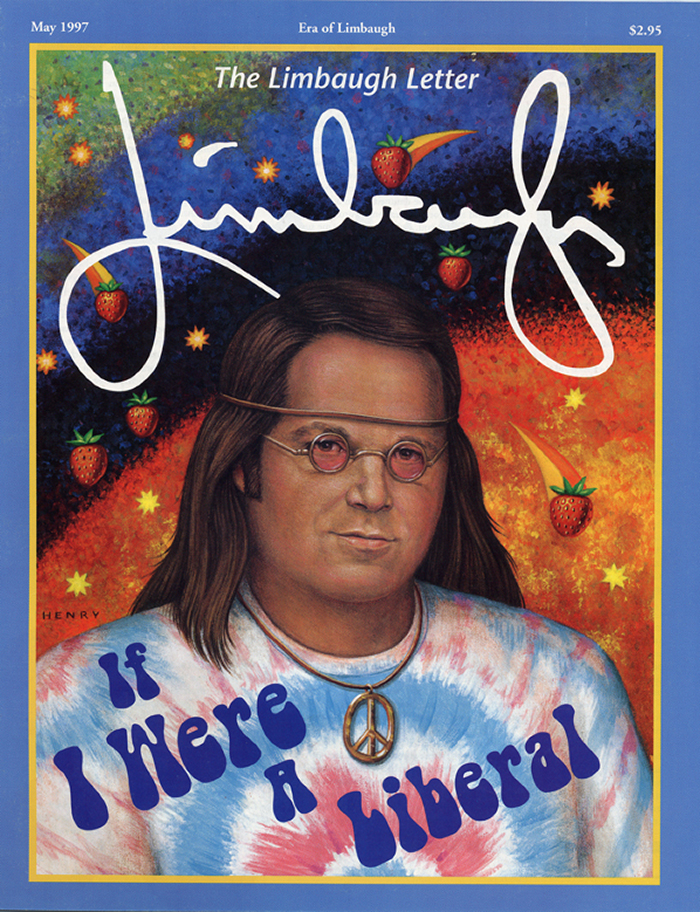
 My introduction to Rush Limbaugh begins in the fall of 1992. I began listening to Rush’s radio show after seeing him campaigning on stage with George H.W. Bush during the 1992 fall presidential election. Bill Clinton would win the election and so would begin the greatest, media political rivalry ever between Rush Limbaugh and Bill Clinton. Rush’s middle America authentic voice was cutting through the mainstream media noise of the day from a generationally unique perspective. He was the perfect counterculture combatant to Bill Clinton’s political philosophy. Being a baby boomer myself and two years younger than Rush, I was immediately hooked on the EIB radio network!
 come in every week, and we have to keep up with the demand. We cannot turn our backs on our colleagues who have worked at their local station and are now in desperate need of our help. We ask everyone in radio and television to come together to help our colleagues.” Giving Tuesday donations can be made
 Running a successful radio station, hosting a show, or producing a podcast is a lot like hosting Thanksgiving dinner. You need a plan. You need to deliver something satisfying to a crowd with varying tastes. And most of all – if you get it right – you’ll have leftovers you can turn into even more value long after the main event.
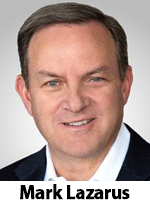 York City. The annual black-tie Golden Mic gala is the biggest fundraiser for the BFoA, which is devoted exclusively to helping radio and television professionals in need of financial assistance due to critical illness or tragedy. Lazarus says, “I am deeply honored to receive the Golden Mic Award from the Broadcasters Foundation of America, an organization that stands at the heart of our industry’s values – service, compassion, and community. Broadcasting has always been about connecting people, and the Foundation’s work reminds us of the profound responsibility and privilege we have to support one another, especially in times of need.”
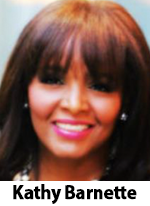 Independence Center that drew fellow Black conservatives and Democrats to discuss important issues facing families today. Barnette says, “America is at a crossroads, and I believe my voice comes at a critical time. I don’t talk about poverty or perseverance from a spreadsheet – I’ve lived it. From a pig farm in Alabama to the halls of corporate America, from serving in the military to building a national platform, I’ve seen firsthand what faith, discipline, and hard work can achieve. My show is about bringing authenticity, courage, and moral clarity back to the airwaves – and planting the kind of seeds that will offer shade for generations to come.” Barnette was the national grassroots director and senior advisor Vivek Ramaswamy’s presidential campaign and is the author of Nothing to Lose, Everything to Gain: Being Black and Conservative in America (2020, Center Street).
 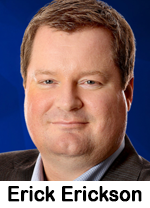 holiday dinners – including turkey or smoked ham, sweet or mashed potatoes, macaroni and cheese, green beans, rolls, and pie – to families who might otherwise go without. Erickson says, “Every year, my listeners remind me why this show exists – not just to discuss the issues of the day, but to drive real change in people’s lives. In these tough times, knowing we’ve put food on the table for thousands of families fills me with gratitude. This isn’t about politics; it’s about compassion, faith, and stepping up for our neighbors. Hungry for a Day makes it seamless, and our audience makes it extraordinary with an impact from coast to coast.”
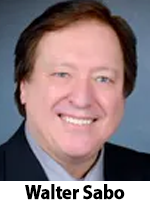 Finally. Not by Facebook, TikTok, Instagram, nope; I was banned from a WBIR anchor’s video live stream.
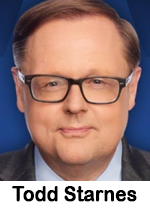 KWAM, Memphis, is offering stations a three-hour holiday special titled, “A Starnes Country Christmas.” Starnes tells TALKERS that the show will include live musical performances, special holiday guests, and Christmas trivia featuring celebrity panelists. You can get more information about carrying this complimentary program by emailing Todd Starnes at:
  Columbia. The stations are in small markets and include: KAAN-AM/FM, Bethany; KWIX-FM, Cairo; KKWK-FM and KMRN-AM, Cameron; KIRK-FM, Macon; KTCM-FM, Madison; KRES-FM and KWIX-AM, Moberly; KJEL-FM and KBNN-AM, Lebanon; and KFBD-FM, KOZQ-FM, KJPW-AM, and KIIK-AM in Waynesville. Connoisseur Media founder and CEO Jeffrey Warshaw says, “These Missouri markets did not fit into our long-term plans. We are pleased to have found a trusted buyer in Miles Carter and his family-oriented company.” Carter comments, “We have wanted to expand for a while and when the opportunity came, we were eager to talk with Connoisseur. As we look toward the new markets, our mission remains the same: bring trustworthy local news, agriculture coverage, and community-focused storytelling to areas that need a stronger voice. Expansion isn’t about getting bigger, it’s about serving more people with the kind of reliable, hometown broadcasting Carter Media was built on.”
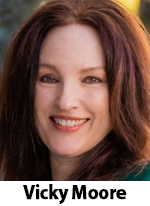 people here at KNX all around me are real. And they are people who live and work in this community. Brian Douglas and Sioux-Z Jessup, our traffic team, Sabina – they care about people driving in from places like Santa Clarita. Or when you hear sirens on the westside or Monrovia, we here at KNX are curious too! And we can joke about the differences between LA and Orange County and how Irvine is always topping the list somewhere because we are here with you in this community. We know Southern California. It has been my privilege to be part of this community and to tell you stories about things that matter, as well as things that just might brighten your day. We’ve had so much fun. It has been my absolute pleasure to meet some of you, along the way… So, I hope that you will continue to listen to KNX and enjoy my partner here and support him, Mike Simpson, and the new owner of my chair as the morning co-host, that is Margaret Carrero, we wish her well.” With Carrero’s move to mornings, Alex Silverman joins the afternoon lineup, alternating shifts with Brian Douglas.
  1320.” Madson will continue his role as co-host of “The Insiders,” that airs daily from 10:00 am to 12:00 noon. Audacy Sacramento SVP and market manager Aaron Miller says, “Since Kyle joined ESPN 1320, he has demonstrated incredible initiative and passion for sports radio. We’re excited for him to take on this new role and eager to see how he continues to contribute to the success of the station.” About his promotion, Madson comments, “I love radio. I love Sacramento. I love this station. I’m so excited to lead ‘ESPN 1320’ to the heights I know it can climb to.”
 For most of my life, the sound of an AM signal has been my constant companion. Long before I ever spoke into a microphone professionally, I was the kid hiding under the covers with a transistor radio, slowly turning the dial, discovering voices, ideas, communities, and worlds far beyond my bedroom. AM radio didn’t just shape my career – it shaped who I am.
 In an industry built on speed – breaking news, live liners, commercial deadlines – “pause” can feel like a luxury radio can’t afford. But Kevin Cashman’s The Pause Principle: Step Back to Lead Forward (Wiley) argues the opposite: pausing isn’t weakness, it’s a competitive advantage. For local radio leaders, the message couldn’t be timelier.
 About his show, McCullough says, “‘That KEVIN Show’ doesn’t whisper opinions – it detonates them. In a media world allergic to truth and humor, we bring both, with a healthy dose of common sense. I’m deeply thankful for the opportunity to grow this show with the team at Salem, and I couldn’t be more excited about what’s ahead.” McCullough is already in the Salem sphere as a columnist for Townhall.com and a regular contributor to the Salem News Channel and BizTV. Salem SVP of spoken word format Phil Boyce comments, “Kevin McCullough is one of the most engaging communicators in talk radio. He brings a bold voice with strong convictions, a great sense of humor, and a deep faith that shines through in every broadcast. We’re thrilled to welcome That KEVIN Show to SRN and know it will connect powerfully with listeners across both our news/talk and Christian talk stations.” The KEVIN Show will also produce weekend editions airing from 8:00 am to 10:00 am ET on the Salem News Channel and 9:00 pm to 11:00 pm ET on SRN Radio.
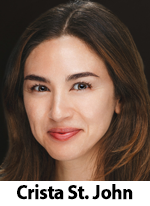 comments, “I’m honored and excited to take on this new role and continue building on the incredible momentum our teams have created. Bonneville Seattle is home to passionate, talented individuals who care deeply about our brands, our partners, and our community. I look forward to helping us grow even stronger – together.” Bonneville Seattle SVP and market manager Cathy Cangiano states, “Crista has consistently demonstrated outstanding leadership, strategic insight, and a deep commitment to relationship-building. Her promotion is a testament to the impact she’s made and the confidence we have in her ability to lead us into the future. Crista was the clear choice for this role, and I’m thrilled to partner with her as we shape the next chapter for Bonneville Seattle. Her vision and energy will be instrumental in our continued growth.”