Industry News

Media Executive and BFoA Chairman Emeritus Phil Lombardo Dies

Broadcasters Foundation of America shares the news of the passing of Philip J. Lombardo, who died early Friday (1/5) following a brief illness. Lombardo was CEO of Citadel Communications and chairman emeritus of the Broadcasters Foundation, having previously served as chairman for 15 years. The family has requested that in lieu of flowers donations be made to the Philip J. Lombardo Memorial Fund, which will be established by the Broadcasters Foundation this week in honor of Lombardo’sim dedication and service to the broadcasting industry and to the Foundation’s charitable cause. BFoA chairman Scott Herman says, “The Broadcasters Foundation and the broadcast industry lost a great man. As chairman of the Broadcasters Foundation for many years, Phil left an indelible mark. He was passionate about our mission and one of our biggest donors, giving both time and money to helping colleagues in need.” To honor his longstanding dedication to the Broadcasters Foundation, in 2000 the Board passed a near unanimous vote to rename the annual golf tournament and fundraiser, held during the NAB Show in Las Vegas, to the Philip J. Lombardo Charity Golf Tournament. The one ‘no’ vote was cast by Lombardo. The majority of Lombardo’s storied career was focused on buying, turning around, and selling TV stations for his privately held company, Citadel Communications. In 2003, Lombardo was elected to serve as joint board chairman of the National Association of Broadcasters. He was inducted into the Broadcasting + Cable Hall of Fame in October 2015.

Industry News

TALKERS News Notes

The WOKV-FM, Jacksonville-based Mark Kaye Show did a bit on Friday (1/5) in which U.S. Representative Aaron Bean from Florida’s Fourth Congressional District appeared to “take over” the show to “discuss the grim truth about Joe Biden’s open border crisis in Texas.” Bean traveled to the border recently as part of a congressional delegation led by Speaker of the House Mike Johnson. The bit continued as “eventually, Mark Kaye was able to regain control of the show, but only by agreeing to a sit-down interview hosted by Congressman Bean. Kaye said ‘It was really weird being a guest on my own show.’”

WABC, New York presented a special program on Saturday (1/6) at 4:00 pm titled, “The Left vs The Right with Anthony Weiner and John Catsimatidis.” As the show name implies, Weiner and Catsimatidis debated current events including the U.S. migrant crisis and more.

Key Networks enters into an agreement with Digitent Podcasts to serve as ad sales representative for the health and wellness influencer and podcast network. Key Networks president of sales Jason Wilberding says, “The timing for our Digitent partnership couldn’t be better, as health and wellness are top of mind in the new year for consumers and for so many of our advertisers. The highly influential Digitent hosts are eager to voice for endemic and lifestyle brands and the Key Networks team is excited for the myriad of possibilities in 2024 and beyond!”

NuVoodoo Media Services announces that it is appointing media sales pro Matt Parvis to the newly created position vice president of sales. Parvis will report to NuVoodoo founder and president Carolyn Gilbert and will be based in Los Angeles. Parvis joins NuVoodoo after 25 years as vice president of sales for AllAccess.com.

Industry News

Top News/Talk Media Stories Over the Weekend

The 2024 presidential race; former President Donald Trump’s legal battles; Defense Secretary Lloyd Austin’s hospitalization mystery; the Israel-Gaza war; Israel’s strikes on Hamas leaders abroad and the ISIS terror bombing in Iran; the Epstein files fallout; the looming government shutdown deadline; the police investigation of the altercation between Congresswoman Lauren Boebert and her ex-husband; and the in-flight fuselage break of a Boeing 737 Max 9 were some of the most-talked-about stories over the weekend, according to ongoing research from TALKERS magazine.

Industry Views

SABO SEZ: Five Golden Actions for 2024

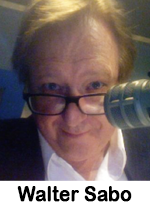
By Walter Sabo
Consultant, Sabo Media Implementers
A.K.A. Walter Sterling
Radio Host, “Sterling On Sunday”
Talk Media Network

imResearch shows that readers to trade publications like articles with five bullet points. Here are my five bullet points for 2024. If these were to be deployed, you could be thriving by the end of the year. These actions would increase sales and audience share.

1. Radio should be easy to buy. It’s not. Easy fix: Look at your website. Based on the website how would you buy time on your station? It should be as simple as a realtor’s website. Put up pictures of your salespeople with ALL of their real contact information – not a FORM. Offer their email and cell number. Offer a “tour” of the offerings with information about the talent and the audience. What does the host sell best? How about a very brief audio message from each host to your potential advertiser?
2. Every medium creates its own stars. Example – David Caruso, good on TV, bad in movies. Your hosts, good on radio, lousy at original podcasts.  Sure, edit up the interviews or bits and make them into a podcast. But don’t ask a host to get off the air and make brand new content for a podcast. Engage locals who are good at making original podcasts and offer them a stage.
3. Sell the biggest number. Your morning show probably has more listeners than the “Tonight Show” has viewers in your city. 1010 WINS has more listeners in New York than FOX News has viewers nationwide. Go check. Those are the numbers that put radio in perspective!  Stop selling the smallest number, TIME SPENT LISTENING. Who came up with that!?
4. Don’t make potential advertisers jump through hoops. If you have spent your career in programming, you may not know the tyranny of MEDIA CREDIT. New radio advertiser: Good buy, high rate, longterm business. Sounds great. Not so fast. At most companies, new business still has to go through the gauntlet of a MEDIA CREDIT CHECK. End that.
5. What’s wrong with the hosts? Many hosts use a content formula that MUST generate a diminishing audience size and older and older and older demos.  Repeat. WHY? If you start to trust that what you talk about socially, with your friends, your audience will grow and grow younger. Be more like Bruce Collins, PD at WBAP, Dallas. Bruce just hired James Parker who has been featured for years on “Sterling On Sunday.” James is going to talk about life, fatherhood and funny. He joins “New Jersey 101.5” alumnus, Casey Bartholomew, 10:00 am – 12:00 noon, who talks about life, fatherhood and funny.  It’s working so well that WBAP will now be simulcast on Class C2 FM, KLIF.

Five bullet points. Goals: HAPPY NEW YEAR!

Walter Sabo was a founding architect of SiriusXM and began the recruitment of Howard Stern. He has consulted RKO General, PARADE magazine, Hearst Broadcasting, Press Broadcasting, and other premium brands. He launched the first company to engage online video influencers, Hitviews. As an executive, he was EVP of NBC FM RADIO giving Dr. Ruth Westheimer her first media job and fostering the creation of adult contemporary. As VP ABC Radio Networks, Sabo hired Ringo Starr to be a DJ for a 24-hour special.

Industry News

“The Greatest Game Ever Played”

imLongtime radio personality and voiceover performer Mark Wainwright writes today in a piece for TALKERS magazine about the 1958 NFL Championship between the Baltimore Colts and the New York Giants – historically billed as “the Greatest Game Ever Played.” Was it, really? Wainwright says, “On the field? Maybe. In its impact on pro football and sports broadcasting? Absolutely!” While the Colts won in “sudden death” overtime, as it used to be called, it’s important to remember that in 1958 the NFL was not the juggernaut that it is today. Major League Baseball and college football were way bigger in terms of fan interest. But this game is looked at by many as the one that began the NFL’s ascendance to its current place atop the American sports media hill. Read the full story here.

Industry News

TALKERS News Notes

The Newsweek-syndicated talk radio program “The Josh Hammer Show” adds new affiliate station KFTK-FM, St. Louis as the station airs the show on Saturdays from 1:00 pm to 2:00 pm. Hammer says, “I am absolutely thrilled to join the weekend lineup of ‘97.1 FM Talk’ in St. Louis. I grew up hearing about how my great-grandparents on my mother’s side immigrated to St. Louis from Eastern Europe, so this is personal for me. I can’t wait to take my own brand of hard-hitting, pull-no-punches conservatism to 97.1 FM Talk’s powerful airwaves.”

iHeartPodcasts announces the launch of “Native Land Pod” hosted by Angela Rye, Tiffany D. Cross and Andrew Gillum. The iHeartPodcasts president Will Pearson says, “This new, groundbreaking podcast brings together an electrifying ensemble of hosts, hailing from a wide range of media backgrounds. As we head into an election year, we’re excited to see how ‘Native Land Pod’ elevates the political discourse and empowers listeners with new knowledge and diverse perspectives.”

Audacy enters into a sales and distribution agreement with the Women’s Meditation Network. Founded by Katie Krimitsos, the Women’s Meditation Network offers 17 different guided meditation podcasts created to be easily accessible, approachable, and deeply fulfilling for people of all ages and experience levels, as well as children.

Industry News

Top News/Talk Media Stories for Week of January 1 – 5

The 2024 presidential race was the most-talked-about story in news/talk media this week, landing atop the Talkers TenTM. At #2 this week was the state of the U.S. economy, followed by the U.S. migrant crisis and the related move by House Republicans to impeach Biden administration Secretary of Homeland Security Alejandro Mayorkas at #3. The Talkers TenTM is a weekly chart of the top stories and people discussed in news/talk media during the week and is the result of ongoing research from TALKERS magazine. It is published every Friday at Talkers.com. See this week’s complete chart here.

Features

“The Greatest Game Ever Played”

im

Baltimore’s Alan Ameche plunges over the goal line for the winning touchdown!(courtesy YouTube/NFL Films)

On the field? Maybe. In its impact on pro football and sports broadcasting? Absolutely!

By Mark Wainwright

imIt was one of those indelible moments in sports history: The 1958 NFL Championship, played on December 28, 1958 at Yankee Stadium in New York. The Baltimore Colts defeated the New York Giants 23-17 in sudden death overtime. 65 years later, the events of that Sunday afternoon still resonate throughout pro sports and sports media.

In 1958, the National Football League was far from the huge phenomenon we see today. Americans generally had much more interest in baseball, and during the Fall, college football captured the attention of sports fans on Saturday afternoons. The annual Army/Navy and Harvard/Yale clashes were national news stories, and fans followed the exploits of powerhouses like Notre Dame and Michigan. For most fans, pro football was an afterthought. Even in cities with pro franchises, the NFL clubs often played runner-up to the local baseball teams.

Baltimore and New York were two exceptions. The Colts were upstarts — Baltimore didn’t get an NFL team until 1953 — and the city quickly fell in love with the Colts; on game days, Baltimore’s Memorial Stadium was described as “the world’s largest outdoor insane asylum.” Meanwhile, the Giants had been part of the NFL since 1925, and they were considered the league’s most glamorous team, located in the world’s media capital. Two very different teams, both with passionate fan bases, playing a nationally-televised title game in New York City… indeed, America was destined to notice pro football that day.

Seventeen Pro Football Hall of Fame inductees were in the stadium that afternoon, along with a Heisman Trophy winner (Baltimore running back Alan Ameche). The Colts were led by quarterback Johnny Unitas and defensive end Gino Marchetti. The New York offense revolved around halfback Frank Gifford, while linebacker Sam Huff anchored the defense.

There were all-stars in the broadcast booths, as well. NBC’s national telecast was assigned to Chris Schenkel and Chuck Thompson; both of these gentlemen are now legends of their industry. Joe Bolan and Bill McColgan called the game for NBC’s national radio feed, while Les Keiter did the play-by-play for WCBS Radio in New York. And Bob Wolff did the radio call for Baltimore’s WBAL. Wolff was assisted by an eager teenager who worked as his spotter… a young man named Maury Povich (yes, that guy).

The first half, frankly, wasn’t anywhere near “greatest game” territory. While both defenses played fairly well, the offenses looked sloppy and disorganized, and the two teams combined for six turnovers in the first thirty minutes. The Giants managed only a Pat Summerall field goal, while the Colts — almost in spite of themselves — took a 14-3 lead into halftime. It could have easily been 17-3, but Sam Huff blocked a Baltimore field goal attempt.

So, what was the halftime entertainment? Over the years, Super Bowl halftimes have featured performers like Lady Gaga and Michael Jackson. What 1950’s superstars would perform in the “super bowl” of 1958? Elvis Presley? Brenda Lee, maybe? Nope. It was the Baltimore Colts Marching Band, with their prancing majorettes looking quite fetching in their red leotards and reindeer antlers…

im

The Baltimore Colts Marching Band majorettes, in “reindeer” mode!  (courtesy YouTube/NFL Films)

Baltimore’s offensive woes continued into the second half. Early on, the Colts drove the ball to New York’s 1-yard line, but Alan Ameche was stopped for no gain on third down, then Ameche was tackled for a loss when he attempted to run wide on fourth down. In an interview decades later, Baltimore’s Lenny Moore revealed that Ameche botched the play; it was supposed to be an option pass, but Ameche didn’t hear Johnny Unitas’ signals correctly, and he ran instead of throwing a short pass to a wide open Colts receiver.

That goal-line stand awakened New York’s offense, and they needed only four plays to score their first touchdown to make it 14-10. The Giants then took a 17-14 lead early in the fourth quarter on a Frank Gifford touchdown reception, and while the Colts responded with two effective drives, they came up empty on both possessions; one ended with a missed field goal, the other ended when Unitas was sacked twice, taking the Colts out of scoring range. The Giants’ offense only needed a first down or two to ice the game, but Frank Gifford was stopped on a critical third down run. For decades, Gifford insisted he made the first down; Baltimore’s Gino Marchetti suffered a badly broken ankle in the pileup, and Gifford often said that amidst the chaos and confusion of tending to Marchetti’s injury, the officials did not spot the ball properly. However, when ESPN restored the footage for a 50th anniversary broadcast in 2008, an accident reconstruction expert analyzed the images and determined that Gifford was, indeed, just short of the first down (more about that ESPN program in our Epilogue). The Giants chose to punt the ball, and the Colts took over on their own 14-yard line.

This was the moment when Johnny Unitas began his ascent to legendary status. With just two minutes left, he moved the Colts downfield quickly. While there were several misfires, he made four critical completions, including three straight passes to his star receiver Raymond Berry. Those last three plays moved the ball 62 yards to the Giants’ 13-yard line, and with just seconds remaining, the Colts rushed Steve Myhra out to attempt a tying field goal. Myhra had struggled with field goal attempts all season, and Baltimore fans held their collective breath until the ball went through the uprights. The fourth quarter ended tied 17-17.

So… what happens next? Many of the players and coaches weren’t sure. It was not unusual for football games to end in a tie, but this game was for the NFL title. Would the teams be declared co-champions? Fortunately, the NFL had recently instituted an overtime rule for championships, and it would be decided on the field. The teams would play pure “sudden death.” The first team to score in any manner would win, and they would play for as long as it took.

The Giants won the toss and chose to receive, but they were not able to mount any kind of drive, and they punted the ball back to the Colts. Unitas now had all the time in the world, and Johnny U methodically moved the Baltimore offense to the New York 8-yard line. It was first-and-goal, and then, suddenly… the NBC Television feed disappeared! Nothing but snow on the screen!

This caused immediate panic in NBC’s control room, not to mention in homes across the nation, as viewers — particularly in Baltimore — bolted from their living rooms and scrambled to find the nearest radio. It was one of the worst possible moments to lose the live feed of a TV broadcast. And then…

A fan ran onto the field! Play was halted for nearly a full minute before New York’s Finest chased him down and escorted him to the sideline. Over the years, there has been endless rumor and speculation about this incident. Photographs show the fan was well-dressed and appeared very cooperative when the cops took him away; he certainly didn’t look like a drunken lout. Who was this guy?

Whoever he was, he is now the stuff of sports broadcasting legend. More than six decades later, it is widely believed that he was an NBC employee who realized the broadcast was interrupted and ran onto the field — or perhaps was told to run onto the field — to delay the game long enough to give the TV crew enough time to find a loose cable and fix the connection. As far as I know, he was never identified and the story has never been confirmed. One hopes the fellow received a bonus and a promotion for his quick thinking!

When the game resumed, the Colts ran two plays to reach third-and-goal from just over a yard away. A field goal attempt might have been the obvious choice, but Baltimore coach Weeb Ewbank was leery of sending a struggling Steve Myhra in to kick. Meanwhile, the coach trusted Unitas completely, and he left Johnny U and the offense on the field. A routine handoff to Alan Ameche secured a 23-17 Baltimore victory.

The game was breaking news nationwide. It was a big topic of Sunday afternoon dinner conversations, and it was headline news on front pages and in sports sections the following day. NFL and television executives soon realized that professional football could become a very valuable property, and they started making plans for increasing television coverage and boosting marketing exposure for the teams, the star players, and the sport overall. And down in Dallas, Lamar Hunt — a son of oil tycoon H.L. Hunt — started thinking about owning his own football team. Those dreams eventually led to his role in establishing the rival American Football League, which merged with the NFL just over a decade later. Historians and sportswriters have studied the 1958 title game, and they generally agree that event was the start of professional football growing into the colossus it has since become. It was the aftermath and the impact  — as much as the drama of the game itself — that led them to calling it “The Greatest Game Ever Played.”

*************************************************************************************************************

EPILOGUE

As I’ve mentioned in previous articles, television did not put a high priority on archiving sports events back then. There is no known videotape of the game; videotape was in its infancy, and while NBC presumably had one or two of the early machines available, it seems nobody bothered racking them up. There is no known kinescope film recording of the television broadcast, either. Fortunately, there was plenty of film footage of the game, both from overhead and from sideline views. This footage was shot by NFL Films, as well as various newsreel cameramen working for different organizations.

On the 50th anniversary of the game in 2008, ESPN produced a special documentary that used the old footage to re-create much of the action. The historic clips were colorized for broadcast, and the action was interspersed with comments and memories from players, fans, and broadcasters who were there. (Sadly, many of these gentlemen have passed away in the fifteen years since.) Most of Bob Wolff’s Baltimore radio broadcast was saved, and the NBC national radio call was saved almost in entirety. This historic audio was used in conjunction with the preserved video. Several versions of the ESPN special can be found on YouTube; here is a link to one of those.

Others have collaborated on an almost-complete reconstruction of the game, using the original newsreel and NFL footage, some of the colorized ESPN content, stock footage, and still photos. The audio portion uses the NBC national radio call by Joe Bolan and Bill McColgan (complete with vintage commercials!). There are several uploads of this project on YouTube, and there is also a version on the Internet Archive, available here. If you’ve never seen any of “The Greatest Game Ever Played,” punch it up on your laptop and enjoy!

Mark Wainwright is a long-time radio personality and voiceover performer. He was most recently the morning host at WSYR in Syracuse; he is also a Baltimore native and life-long Baltimore Colts fan (and he still hasn’t gotten over the Colts leaving town and moving to Indianapolis decades ago!). He can be reached at: markwainwright@earthlink.net

Industry News

Salem Announces Voluntary Delisting from NASDAQ

Salem Media Group gives formal notice to the Nasdaq Stock Market of its intention to voluntarily delist its Class A Common Stock from the Nasdaq Global Market and to deregister its Class A Common Stock under Section 12(b) of the Securities Exchange Act of 1934. As a result, the company expects that theim last trading day of its common stock on the Nasdaq Global Market will be on or about January 18, 2024. Further, prior to March 29, 2024, the company intends to file a Form 15 with the SEC to suspend its reporting obligations under Sections 12(g) and 15(d) of the Exchange Act. In June of 2023, Salem lost compliance with NASDAQ as its stock price slipped below the minimum bid price and never regained compliance and consequently Salem’s board of directors determined that the voluntary delisting is in the best interests of the company and its stockholders. Salem says it anticipates significant financial savings because of this decision. Salem expects that its Class A Common Stock will be quoted on the OTCQX or other market operated by OTC Markets Group Inc.

Industry News

Yesterday’s (1/3) Top News/Talk Media Stories

The bombing at a memorial for slain Iranian military leader Qassim Suleimani kills 84 people; Israel’s suspected assassination of Hamas leader Saleh al-Arouri in Beruit; the November presidential election; the U.S. migrant crisis and the Biden administration sues Texas over its immigration policy; the House moves to impeach Secretary of Homeland Security Alejandro Mayorkas; the unsealing of the Jeffrey Epstein Johns and Jane Does; and embattled Harvard president Claudine Gay resigns were some of the most-talked-about stories in news/talk media yesterday, according to ongoing research from TALKERS magazine.

Industry Views

Pending Business: Welcome to 2024

By Steve Lapa
Lapcom Communications Corp
President

imWhat do your New Year’s resolutions look like?

Chances are your resolutions included what I call the old reliable “mores.” Earn more, save more, exercise more, eat more of the healthier foods. Sound familiar? Do you break down the resolutions into daily goals? As in here is what I need to do today to meet my goals and fulfill my resolutions. How about the “less” category? Do you spend any time thinking about what you want to do less often? Let us start with some obvious candidates.

A recent survey by Frequence.com indicated 84% of respondents in marketing and advertising felt stress on the job. Maybe the other 16% had just taken their morning meds. Seriously, can you blame the stressed-out thousands who have spent a career working for companies that stand on the brink of financial peril, delist from the stock exchange, or initiate short-notice personnel cuts? Has anyone in the radio business reading this column ever experienced a fully stress-free experience for over 36 waking hours? If it is not work, maybe it is friends, family, travel issues, or anything else that you simply cannot stop thinking about.

“Less” resolution #1. Less stress on the job, unless you are in the parachute business or an air-traffic controller or emergency room doctor in New York or Chicago, you get where I am going with this.

The same survey showed 72% of respondents work for organizations expecting them to deliver more with less support. The last time I worked for a broadcast company that provided me with my own dedicated assistant, the Cowboys won the Super Bowl in the first ever televised in prime time. Please raise your hand if you are a seller or sales manager with your own dedicated assistant. Anybody? How about in the past 10 years?

“Less” resolution #2. Less is more. The slogan takes on new life in the remote work environment that is a norm for many in the media buyer-seller relationship. Everyone in the chain is being asked to do more, reach increased goals, and perform to a higher standard with less support. You are either on the income money flow line or the expense side. Pick your lane and try your best to deliver measurable results.

Technology is driving change in every corner of the workplace. New strategies and technologies designed to monetize media impressions are part of our culture. Surveys show anywhere from 52-70% of sellers and marketers are challenged with keeping up.

“Less” resolution #3. Prioritize your upskilling. Pick the one area that will allow you to hit your most important “more” goals and master it. Never stop learning, just adjust your learning curve to what works best for you.

Here’s to a more productive and prosperous New Year!

Steve Lapa is the president of Lapcom Communications Corp. based in Palm Beach Gardens, FL. Lapcom is a media sales, marketing, and development consultancy. Contact Steve Lapa via email at: Steve@Lapcomventures.com.

Industry News

SRN’s Mike Gallagher Raises Funds for Prison Fellowship

Salem Radio Network nationally syndicated talk radio host Mike Gallagher and his listeners have helped raise funds for the Prison Fellowship this holiday season. Gallagher tells TALKERS magazine, “Years ago, I came home from work one day very grumpy and my wife Denise said, ‘Why don’t you start doing good for people on your show? You could take the passion that your audience has all bottled upim and help people instead of just jawboning and complaining about everything.’ And she was right. So ‘Gallagher’s Heroes – The Fallen Officers Fund’ was created (which assists the families of law enforcement killed in the line of duty and publishes The First Responders Bible) as well as several other charities we help on an annual basis. Each holiday season we partner with Prison Fellowship and get Christmas presents, Bibles and a personalized message from an incarcerated parent delivered to thousands of children. So far this year, my audience has donated over $160,000 which will benefit 6,400 children of prisoners. Over the last few years, my listeners have contributed over $2.5 million to Prison Fellowship. I’m so humbled and blessed to have such a loving, generous audience. It makes it a joy to come to work. And I get to carry my late wife’s wish in my heart. I’m a lucky guy.” Gallagher is not the only SRN host helping the Prison Fellowship cause. Sebastian Gorka is also working hard to promote the organization’s efforts.

Industry News

Top News/Talk Media Stories for December 18-22

The Colorado Supreme Court’s ruling keeping former President Donald Trump off that state’s primary ballot was the most-talked-about story in news/talk media this week, landing atop the Talkers TenTM. At #2 this week was 2024 presidential race, followed by President Joe Biden’s low approval ratings at #3. The Talkers TenTM is a weekly chart of the top stories and people discussed in news/talk media during the week and is the result of ongoing research from TALKERS magazine. It is published every Friday at Talkers.com. See this week’s complete chart here.

Industry News

Broadcasters Encouraged to Participate in United Nations World Radio Day 2024 on February 13

American radio broadcasters are invited and encouraged by UNESCO to participate in the forthcoming celebration of the UN “World Radio Day (WRD) 2024” which, among a number of facets, provides the industry with the opportunity to create connections with colleagues around the globe to generate international interviews and co-productions. TALKERS readers can register their shows, stations and networks as being available for these connections and discover potential partners in the process by clicking here. https://www.unesco.org/en/days/world-radio/2024/register?hub=66636  WRD 2024 will take place on February 13.

According to TALKERS founder Michael Harrison, who is serving as this year’s executive advisor to UNESCO for World Radio Day 2024, “The time to get your platform listed on the international map of shows, stations and networks is now, while it is relatively early.  American radio professionals, as well as campus station staffers, can schedule interviews/conversations – either live or prerecorded – with their broadcast colleagues worldwide to compare and contrast the history and role of radio in their respective countries on or leading up to February 13.  These shows can be simulcast on both stations or simply be one personality interviewing another. Simply register as being open to joint initiatives for the 2024 celebration, and fill out the form that will pop up if you, your station or network would be interested in partnering with others in this exciting process. Check regularly to see fellow broadcasters or partners who will keep registering between now and February 13.”

In an era marked by the dizzying speed of technological innovation and the rapid obsolescence of one shiny new platform after another, radio is beginning its second century of service as one of the most dependable and widely utilized forms of media in the world. The theme of 2024’s installment of WRD is Radio: A Century Informing, Entertaining and Educating. Harrison says, “Radio, as a technology, science, means of communications and system of programming audio elements, has roots all the way back to the 1800s… so it can be safely said that the medium is already well into its second hundred years of existence with its footprint spanning three centuries. WRD 2024 shines a broad floodlight on radio’s remarkable past, relevant present and promise of a dynamic future.”

Harrison continues, “The opportunity provided by the 100-year-plus milestone of radio begs to be trumpeted at full volume. The century is an occasion to proudly celebrate the medium’s extensive virtues and ongoing potency. It comes at an opportune time, as radio – though statistically popular and enormously trusted by the public – faces increased challenges to audience and revenue numbers from digital platforms, pervasive social media, generational divides, the headwinds of censorship and, for some media, stifling consolidation-induced debt as well as economic hardships exacerbated by a soft advertising market. UNESCO is inviting the worldwide radio industry in all its many forms – commercial, public, non-profit – to join in this global celebration of the medium at this special and pivotal juncture in its century-spanning journey.”

WRD 2024 60-second vignettes 

In addition, broadcasters are invited to tap into preproduced “World Radio Day Minutes” – a series of 20 one-minute vignettes about radio’s past, present and future being made available license-free.  Platforms can run these commercial free as a promotion for radio or attach them for sponsorships by local advertisers.  The produced versions in English feature the voices of Michael Harrison and noted commentator Victoria Jones (of DC Radio Company).  Unvoiced scripts are available for broadcasters who choose to produce their own versions of these vignettes.  To hear and download these 20 one-minute produced programs and scripts please click here. https://www.unesco.org/en/days/world-radio/audios2024

13 ideas to celebrate WRD 2024  

Radio broadcasters are also being provided with 13 useful ideas to help them promote WRD 2024 that include ways to create sponsorship and promotional partnerships with their local communities.  These can be accessed by clicking here.  https://www.unesco.org/en/days/world-radio/13ideas

For more information regarding World Radio Day 2024 please click here. https://www.unesco.org/en/days/world-radio


Industry News

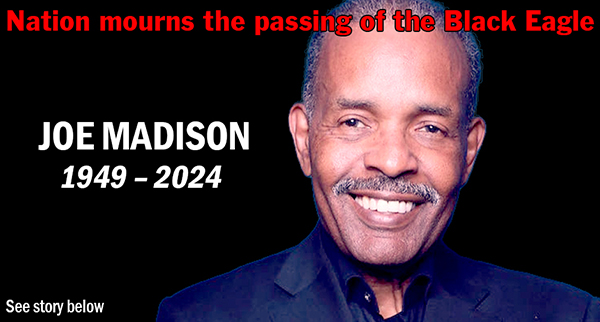
SiriusXM’s Joe Madison on Leave to Battle Cancer

Talk show host Joe Madison is on leave from his daily, morning drive show heard on SiriusXM’s Urban View to focus on his health. Madison says in a statement, “As many listeners are aware, I was diagnosed with prostate cancer in 2009. I’ve spoken candidly about my diagnosis to encourage more men to prioritize their health and talk with their healthcare providers about testing and treatments. Asim Dick Gregory once told me, ‘Don’t let fear get in the way.’ Thanks to early detection and proton treatment, my cancer went into remission for a long time. Unfortunately, earlier this year the cancer resurfaced. With the unwavering support of my wife Sherry, my family, and the incredible team at SiriusXM, I was able to continue our daily broadcasts. However, upon preparing to return from the Thanksgiving hiatus my health took an adverse turn, making it challenging to host a four-hour live show every day. Currently, I am taking time to focus on my well-being. During this time, SiriusXM will continue to air ‘Madison Classics’ at our regularly scheduled time. I am sincerely grateful for your outpouring of well wishes and support. Sherry and I are spending the holidays with our children and grandchildren.  We ask for privacy during this period and extend our warmest wishes to you all for a blessed holiday season.”

Industry News

Yesterday’s (12/20) Top News/Talk Media Stories

The Colorado Supreme Court rules former President Donald Trump is ineligible to serve as president; the 2024 presidential race and President Joe Biden’s low polling numbers; Trump’s and Rudy Giuliani’s legal battles; Trump’s rhetoric on illegal immigration and the negotiations in Congress for immigration reform and aid to Ukraine and Israel; Americans’ concerns about the economy & the Dow’s big selloff; international pressure on Israel to slow its Gaza operations; abortion legal battles; and the ongoing shortage of medications in the U.S. were some of the most-talked-about stories in news/talk media yesterday, according to ongoing research from TALKERS magazine.

Industry News

Yesterday’s (12/19) Top News/Talk Media Stories

The Colorado Supreme Court rules former President Donald Trump is ineligible to serve as president; the 2024 presidential race and President Joe Biden’s low polling numbers; Trump’s rhetoric on illegal immigration and the negotiations in the Senate to address immigration and national security along with aid for Ukraine and Israel; the pressure on Israel to temper its Gaza operations; the Houthi attacks on commercial vessels in the Red Sea; abortion legal battles; the report card on the 118th Congress as the “most unproductive” in recent history; and the proposed sale of US Steel to a Japanese firm were some of the most-talked-about stories in news/talk media yesterday, according to ongoing research from TALKERS magazine.

Features

Ladd Have Mercy

imLOS ANGELES – As students, enthusiasts and caretakers of this wonderful medium, we’re keenly aware that radio’s “Golden Age” boasted an incredible array of entertainers and broadcasters.

With lifestyles, technology and society being what they are today, it’s almost inconceivable to imagine that families would actually gather around the radio and attentively listen – and indeed hang onto – each and every word that emanated from that mysterious entertainment-laden box sitting in the living room.

Fundamentally important back then, of course, was a concept known as “Theater Of The Mind.”

No one embodied and personified it better than one of the bigger-than-life talents of that era: Orson Welles.

Most are familiar with his epic “War Of The Worlds.”

Pictures Set In Songs

The list of other outstanding “Mercury Theater” presentations Welles was responsible for is much too lengthy to cite here, but his legendary “Theater Of The Mind” mystique lived on nightly in Los Angeles, where Jim Ladd was a welcome guest for Southern California listeners dating back to 1969 and hosted a regular show on SiriusXM’s Deep Tracks channel the past 11 years.

Theater Of The Mind so perfectly describes what Ladd tried to do, although it’s not radio drama in the pure sense. “What I [attempt] at night is to show you pictures and do that by playing sets of songs,” the (then) highly popular KLOS-FM, Los Angeles 10:00 pm – 2:00 am personality remarked to me. “If you follow the lyric content of each song, as well as the song’s emotional feel, it should tell you a story with a beginning, middle and end. Thus, it’s theater.”

Throwback To Creativity

In addition to providing his special spin to Theater Of The Mind, Ladd was also responsible for keeping another bit of radio history on life-support.

Most air personalities are required to adhere to strictly enforced music lists, but Ladd’s nightly, four-hour, Los Angeles air-shift was a throwback to the days of “free-form” radio.

The result was similar to what existed in April 1967, when a new phenomenon started taking shape. “That was the beginning of FM and this multi-billion dollar industry,” Ladd recalled. “[Free-form] started on a station [KMPX, San Francisco] where the phone was literally disconnected, because they couldn’t pay the bill. [Tom Donahue] had an idea; he went there and it took off. For a while before deregulation, that’s what all FM radio did in any market. Free-form worked great, until they killed the golden goose.”

Right Place, Right Time

Southern California native Ladd was extremely fortunate to have been able to launch his radio career in the country’s second-largest market. “Part of it was timing,” he admitted. “I was at a little station in Long Beach [KNAC-FM] that decided it was going to try this new, hippie, underground thing. They didn’t know what it was, but [the feeling was to] hire some hippies and see if they could make some money with it. I happened to be right there at that time.”

A frustrated musician, who wanted to be a songwriter, Ladd recounted a life-altering conversation he and a buddy had in a car. “My friend said that I should be in radio. I was 19 or 20 at the time and your friends at that age seldom notice anything but themselves. For some reason, that stuck with me. Thank God, FM was in its infancy and they’d take complete novices like me off the street and give us shows. Owners didn’t know anything about the Grateful Dead or The Who, but we did.”

Check Mate

Instead of walking into a studio and following a computer-generated music log, Ladd was given freedom to use his imagination. His only preparation was what was happening in life.

Resulting sharp, clever music sets he composed weren’t written out in advance. “The way I work is to turn the music up loud and get the song working on me,” he commented. “Once [that happens], it keys in my mind what will fit next.”

Such an intricate process included a mental checklist. “I’ve figured out the lyrics will work, but I need to know how the song I’m playing ends and how the next song begins,” he explained. “If I’m playing a balls-out rocker, I can’t go into some acoustic piece. In that way, it’s really like a chess game. I have to plan these things to start every single segue as I’m doing it. That’s the way that works best for me.”

There were nights, however, that Ladd knew that he “[didn’t] have it,” but as he maintained, “I’ve been doing it long enough to put on a good professional show. Sometimes, I don’t have what I’m striving for, which is to make a connection with the audience. Without having to prompt them or explain anything, my audience lights up the phones. They call because they get what I’m doing. Once that connection is made, then look out, because the rocket is taking off.”

Gracefully Handling The Tragedy

Recalling the horrific September 11, 2001 “Attack On America,” Ladd noted that although it was one of the country’s greatest tragedies, “It was easy to immerse myself into something like that. It so moved me that I had no problem thinking of songs to play or what I wanted to say.”

Judy Collins’ version of “Amazing Grace” was the first song he played when he went on the air that night. “Believe it or not, it set the tone for what I did for … the next two weeks.”

As it usually did, the audience – even or perhaps especially in this painful period – stepped up to the plate. “This is the thing about free-form radio that’s so precious to me,” Ladd emphasized. “Nobody called me on 9/11 with an idiot request. When I played sets of 9/11 songs, everybody was calling in with [appropriate] suggestions. Second only to dealing with the tragedy, the hardest part was to know when I could play groups like AC/DC again. I found that very difficult; you can only feel your way through it.”

 Loyal Listeners

In his third tour of duty at (then ABC-owned) classic rocker KLOS, Ladd was a legitimate cult figure in the Southland for his work at legendary cross-town rocker KMET.

Southern California listeners were stunned on Valentine’s Day 1987 when the “The Mighty Met” (now Audacy smooth AC KTWV) – became smooth jazz “The Wave.”

Also on Ladd’s impressive resume were stints at Los Angeles outlets KLSX and KEDG.

The notion of an air personality “connecting” with the audience is both elementary and elusive. Ladd was a rare case of a non-drive time music personality who amassed a loyal, vocal following.

Grateful for such audience allegiance, Ladd didn’t take it for granted. “My audience has been that loyal from KMET to KLOS and all the [other] stations in between. My part of the bargain is that I won’t lie to them or let them down by doing a format. I was off the air twice in my career for two years each. That was very difficult, but because I did that, I’ve earned the right to do this and I think the audience responds to that.”

Offered jobs by stations that wanted the “Jim Ladd” name, he opined, “They didn’t understand what that meant. They thought they could just plug in my name, not let me do what I did and it would be the same thing.”

Your Attention Please

Evenings and nights were Ladd’s domain throughout his career. “I wouldn’t want to do middays or afternoon drive,” pointed out the personality known for his “Lord have mercy” exclamations. “Listening habits are such that you can’t sit and listen like you can at night. People are working, picking up the kids and doing life.”

Much like Welles’ Mercury Theater, Ladd’s show required attention. Otherwise, it was just like playing one song after another, without making that all-important connection. “The audience’s side of the bargain is that they have to bring their attention to the show,” he insisted. “I’ve done [6:00 pm – 10:00 pm] in my career and that worked out very well. The show is a bit different, in that, it’s not quite as eclectic. I don’t know if I’d be playing Judy Collins and Johnny Cash in [that time]; maybe – but maybe not.”

Convinced his free-form style could be utilized elsewhere, Ladd, nevertheless, pondered that to his knowledge, “I’m the Alamo – the last guy standing. That’s certainly the case in a major market. The big tragedy is that there are so many talented [personalities] who, although they wouldn’t do the same show that I do, could do free-form radio. We’re losing all that talent. I’m not the only guy in the world who can do it. I’m the one who was stubborn enough to say that I won’t follow a list – I just won’t do it.”

Powerful Trinity

Among those who influenced Ladd’s on-air style were former MTV personality and ex-KEDG program director J.J. Jackson; veteran Los Angeles air talent Raechel Donahue, who went on to do 7:00 pm -12:00 midnight in Denver at KQMT “The Mountain”; longtime KMET personality the late B. Mitchel Reed; KMET’s Pat Kelley; Cynthia Fox; Jack Snyder; and the late, underrated Mary Turner. “The wonderful, beautiful part of free-form radio – and most importantly – at KMET was that it wasn’t about being a star,” Ladd asserted. “What we were doing was our part of the ‘social revolution’ at the time. It was like a triad: The people on the street, the music, and us. We took the message of Dr. [Martin Luther] King and combined it with the music of Bob Dylan.”

One highly significant aspect in noting those former KMET staffers was that they’d each listen to everyone else’s show and it elevated their own game. “I’d hear Cynthia do a great segue, or Mary would do a great segment and that would inspire me,” Ladd enthused. “What I miss most is that kind of camaraderie – it’s just me now. I can’t tune in to hear someone else’s great segue. When I heard one of my colleagues do something that touched me, the first thing I wanted to do was to call them and tell them it was great. The second thing was that – from their subject matter – I got 15 different ideas to use when I got to work that night. That was the beauty of it.”

Role Model

National audiences became aware of the iconic Los Angeles talent through shows such as “Innerview,” “Headsets,” and “Jim Ladd’s Living Room.”

Considerably more than someone who voiced a script for a syndicated show, Ladd spent a great deal of time scrutinizing the fine art of interviewing. “I ripped off just about everything I know about interviewing people from Elliot Mintz,” he confided to me. “Elliott was my role model. He’d interview the Shah of Iran one week and John Lennon & Yoko Ono the following week. He’d talk with everyone in a warm, low-key and intelligent manner. It was completely unlike anything [else] I’d heard at the time and that really impressed me.”

The “Innerview” show had an 11-year run and was carried by 160 stations. “It was the first of its kind,” boasted Ladd, whose other syndication work involved voiceovers for an overseas television show. “I’m very proud of the work we did [on ‘Innerview’]. I did 99% of the interviews in the front room of my house in an artistic community in Laurel Canyon. People would immediately be put in a very comfortable place. It’s not a studio – it’s my home.”

The Work Is The Key

Another reason why people felt at ease was that, instead of focusing on a person’s life, Ladd addressed their work. “They loved that. Rather than talking about how many girls they had, what kind of drugs they did and life backstage, I studied every word of every lyric of the new album they wanted to talk about and grilled them about their songs on the environment. It would require six to eight hours of preparation. Then there was another 20 – 25 hours to write the one-hour show; it was a lot of work.”

Writing became such a worthwhile experience that, in 1991, he penned “Radio Waves: Life And Revolution On The FM Dial.”

As a result of these syndicated projects, this immensely respected rock personality diversified himself; the book became a big hit. “I guess I’m a radio guy who learned how to become a writer,” Ladd mused. “In order to get up enough courage to write my book, I read authors I like. I was required to do a great deal of writing for ‘Innerview’ and would write out what I’d say – which is something I never do [on my live show]. You’d also end up with two hours of tape and pick out what the person was going to say, how I was going to introduce it and what song would follow it.”

A Distant Second

Whenever anyone asked Ladd to name his favorite band, he qualified his answer by separating the Beatles.

The quartet, he stressed, had to be placed in a completely different category.

After that’s been done, he named the Doors as his favorite.

The same applied to his most memorable radio experiences, with KMET being the Beatles’ equivalent. “We were at the right place at the right time with the right people. We loved each other and there’s never been anything else like it.”

Nonetheless, he quickly stated that his favorite time is the next time he was able to sit behind a microphone. “The reason for that is [KLOS’-then program director] Rita Wilde,” he proclaimed. “I don’t know how I got so lucky to have a boss who was [such a great on-air personality] and so supportive. If it weren’t for Rita Wilde, I wouldn’t be on the air – that’s just a fact. I want to keep free-form radio alive for the audience, but I also owe her to make this happen. She’s under a lot of pressure [when it comes to my show]. When I go in at 10:00 pm, the format literally stops. I can’t think of another boss in the world who would understand that.”

Numbers Game

His multi-decade Los Angeles track record and loyal following notwithstanding, Ladd still realized that ratings played a role in dictating his employment; however, as he declared, “Rita is one of the first people I’ve ever worked for in this business I trust when she says the numbers are up or down.  Sometimes in my career I’ve found out from people who didn’t work at the station that my show was doing great. When there’s a down book, [management is usually] right there.”

Ultimate People Skills

Certain managers and programmers, he claimed, kept good books a secret from him; however, “Rita calls immediately when I have an up book. If I have a down book, I don’t hear from her; I have to call her. That says volumes to me. We’ll deal with a problem, but she doesn’t want to get me upset. She might tell me that I’m playing too much of this or not enough of that, but she never says anything [threatening]. It’s always from a helpful and suggestive [stance]. When the numbers are good, she leaves me totally alone. From my perspective, you can’t ask for more than that. Her people skills are unbelievable.”

In addition to have wanted to keep free-form radio alive as long as possible, Ladd disclosed that he wanted “to walk away before I can no longer do my job. I don’t know when it will happen, but the next stage in my life will probably be to write fulltime – I’m working on it.”

Contact TALKERS Managing Editor Mike Kinosian at Mike.Kinosian@gmail.com

Industry News

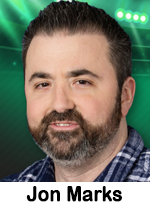
Jon Marks Announces Exit from WIP-FM, Philadelphia

As reported by Kevin Kinkead at Crossing Broad, afternoon personality Jon Marks told listeners on Monday (12/18) that he is leaving the program he co-hosts with Ike Reese after Wednesday’s show for personal reasons. He said, in part, “I mentioned this a couple of times here, over the last year plus, I’ve been doing a lot of thinking about my future here at WIP. These are conversations I’ve had withim management, with Rod Lakin and David Yadgaroff, even with you. ‘The Marks and Reese Show’ is amazing, the success that we’ve had, over 6 years now that we’ve been working together, I’ve been at WIP almost 7 years, and what we’ve done in 6 years, the community that we’ve made, the show that we’ve made has been nothing short of amazing… And as great as the show is, everything kept coming back to the hours that I’m working. I don’t work until 10 or midnight, but I’m not getting home on most nights until 7:30. As my kids get older, I’m missing all these activities – softball, soccer, basketball, even dinner every night. Since my kids have been alive, I’ve been working this shift. And I had to ask myself ‘is this something I could see myself doing for the next five years?’ The station and show deserve the commitment from somebody. It was a difficult decision and something I internally wrestled with for a really long time. And after talking to management and talking with you, and (management was amenable and asked what they could do)… I made the difficult decision to leave the Marks and Reese Show and WIP. My last show is Wednesday. It’s a very difficult decision.” Read the Crossing Broad column here.

Industry News

Legendary Radio Personality Jim Ladd Dies at 75

Rock radio personality Jim Ladd died on Saturday (12/16) at the age of 75 after suffering a heart attack. Ladd, who was a prominent figure in rock radio in the 1970s and 1980s hosting shows at KLOS-FM and KMET-FM in Los Angeles, had been hosting a regular show on SiriusXM’s Deep Tracks channel for the past 11 years. Ladd was a pioneer in talk on FM with his nationally syndicated “Innerview” program consisting of hour-long conversations with rock artists about their music and more. Read his LA Times obituary here.

Industry News

Yesterday’s (12/18) Top News/Talk Media Stories

The pressure on Israel to temper its attacks in Gaza; the 2024 presidential race; the legal battles facing former President Donald Trump; former Trump chief of staff Mark Meadows loses bid to move Georgia case to federal court; the Houthi attacks on commercial vessels in the Red Sea; the U.S. migrant crisis and the negotiations over immigration legislation in exchange for Ukraine aid; Georgia election workers sue Rudy Giuliani again; the Hunter Biden tax evasion case; the Florida GOP-Moms for Liberty scandal; and a Japanese company is set to buy US Steel were some of the most-talked-about stories in news/talk media yesterday, according to ongoing research from TALKERS magazine.

Industry Views

Pending Business: Ad Count

By Steve Lapa
Lapcom Communications Corp
President

imHow many times will we research the same subject and come to the same conclusion?

This time it is the podcast. How many ads will the average listener consider “appropriate” in a 60-minute episode?

If you read the recent research from Cumulus/Signal Hill, you know the answer. For the rest of you, survey says under four minutes per 60-minute episode. The same survey says the magic number for a 30-minute episode is under three.

How ironic is that? The typical talk radio hour runs more ads in one break than an entire 60-minute episode of a podcast. Could it be because we have been integrating radio commercials into hour-long broadcast content for over 100 years? Have we conditioned news/talk listeners to accept more commercials per hour? Our TV friends have been at for over 80 years with an even bigger hourly spot load. Anyone ever see audience research that says add more commercials?

Seriously, unless you pay for the ad-free experience of Netflix, HBO, Hulu, Spotify, Pandora, etc., like most consumers of media, you are comfortable with the ad-supported media model.

So, how has the podcast world been so successful with a model that would leave most traditional radio and TV owners, execs, and sellers dumbfounded.

Here is some insight from my experience.

1) CPM is higher in podcast. The hard facts are when you work with higher CPM you can adjust the commercial load. Demand for digital/social media and podcasts with marketable scale is greater than terrestrial radio. The demand curve for podcast advertising is greater than terrestrial radio. Time to wake up, shake up and shout out loud about our 100-year-old sleepy giant!

2) Survey said 62% of podcast listeners prefer the host read. Talk radio sellers should improve this pitch every day. Today, podcast sellers are simply better at it. Podcast sellers get the intimate relationship between host and listener better than most radio sellers get host and audience. Podcast hosts seem more one-on-one savvy. What will Joe Rogan’s next guest say? What will we hear when your talk talent interviews their next guest?

3) Quality. When your local production director is overloaded and needs to get commercials completed on the air yesterday, what wins: quantity or quality? Be honest here. Where is the next audio creative genius like Dick Orkin or Chuck Blore? Do you know those names?

4) Can you really compare ad load levels between the 60- or 30-minute podcast episode to the average three-hour daily talk radio show?

Traditional molds need to be revisited regularly. My experience with YouTube is showing me even newer models for monetization, different from audio podcasts. Does your 2024 planner have any room for innovation?

Steve Lapa is the president of Lapcom Communications Corp. based in Palm Beach Gardens, FL. Lapcom is a media sales, marketing, and development consultancy. Contact Steve Lapa via email at: Steve@Lapcomventures.com.

Industry News

Top News/Talk Media Stories Over the Weekend

The negotiations in Congress over immigration and border security; the push by Israel’s allies for it to use restraint in Gaza; the 2024 presidential race and former President Donald Trump’s speech in Nevada; the Rudy Giuliani defamation case; the Florida Republican Committee scandal; the post-Roe v Wade legal battles by women with troubling pregnancies; the Houthi rebel attacks on ships in the Red Sea; and a car slams into President Joe Biden’s motorcade were some of the most-talked-about stories in news/talk media over the weekend, according to ongoing research from TALKERS magazine.

Industry News

Top News/Talk Media Stories for Week of December 11-15

The Israel-Hamas War was the most-talked-about story in news/talk media during the week, landing atop the Talkers TenTM. At #2 this week was anti-Semitism tied with the college deans blowback, followed by the 2024 presidential race at #3. The Talkers TenTM is a weekly chart of the top stories and people discussed in news/talk media during the week and is the result of ongoing research from TALKERS magazine. It is published every Friday at Talkers.com. See this week’s complete chart here.

Industry Views

Six Reasons Radio Listeners Ignore Your Morning Show

imConsultant Gary Begin of Sound Advantage writes in a piece for TALKERS today about why some morning radio shows fail to launch. He offers six reasons for this that can be avoided if management really wants to create a successful program. Reason number one? Because the hosts are just not that good. See Begin’s complete article here.

Industry News

Yesterday’s Top News/Talk Media Stories

The House formally votes on a Joe Biden impeachment inquiry; the Israel-Hamas war and the growing rift between Biden and Benjamin Netanyahu over Israel’s tactics; the 2024 presidential race; the defamation case against Rudy Giuliani; the Fed’s anticipation of interest rate cuts in 2024; Hunter Biden to defy House Oversight Committee’s subpoena; SCOTUS to hear challenge of federal obstruction charges related to January 6; and the Trump Organization civil fraud trial were some of the most-talked-about stories in news/talk media yesterday, according to ongoing research from TALKERS magazine.

Advice

Six Reasons Radio Listeners Ignore Your Morning Show

By Gary Begin
Sound Advantage Media

imYou know the routine.

Your radio station introduces a new morning show, and you sit back and wait for the magic to happen.

And you wait…and you wait.

Still, the audience doesn’t know them, doesn’t care about them, or knows them and still doesn’t care about them.

Why is this happening?

There are six reasons:

One: Because they’re just not that good

It’s true! Radio managers are not famous for spotting and nurturing talent.

And a result: Being good is hard!

There’s a reason why Howard Stern was fired to the top. There’s a reason why it’s a safer bet to plug in Ryan Seacrest than to take a chance on somebody nobody knows (for better or worse). There’s a reason why the freshest young voice with a unique point of view prefers to launch a YouTube channel rather than work its way up the long, hard slog of the radio ladder.

Radio fans know what they like and don’t like, and everything else will likely fall in the vast, bland, vanilla middle. And while that vast, boring, vanilla middle can be tweaked with a bit of coaching or a new producer, there’s an old saying:

“You can’t polish a turd.”

Two: Because they’re not meaningfully different in a crowded field

Guy’s name and Gal’s name in the show title? Check.

Impeccable technical execution? Check.

Show producer/board op? Check.

What about plugging in all the radio morning show best practices? Check.

The problem with formulas for what makes a great morning show is that every station has access to the same procedures. And when every radio station is playing the same morning show game for the same audience at the same time using versions of the same bits, the audience will default to the show they’ve listened to longest, even if it’s not necessarily the best – because it takes a lot of time and effort to find the “best” and no time or effort at all to succumb to habit.

So why should I change the listening behavior that has served me well for years to sample YOUR show?

Three: Because listeners are barely exposed to them

It’s not only about how long a show has been on the air but also about how much exposure that show has had while it has been on.

I have a saying:

Listeners don’t listen to your morning show today; they listen to every episode of your morning show they have ever heard – today.

In other words, listeners bring their relationships with talent to each listening occasion. This makes intense morning shows powerful: They have a longstanding connection with their fans. It’s also why you can stream a market and listen to the dominant morning show without knowing why it’s so successful.

So, when you envelop your show in music, or the host opens the mic to announce a song, do a live read, announce another contest winner, check the weather, or emote some breezy phrase that dissipates into the radio ether within seven seconds, then the audience has less to know and fewer opportunities to realize it.

Why bother?

Four: Because they’re DJs and not humans

While there’s something comforting about a human voice on the radio, not every voice appears human. I’m not talking about voice-tracking here; I’m talking about content.

Humans have three dimensions – strengths and weaknesses, flaws, and blemishes. All on display.

When those dimensions are not displayed in a movie, we call the character “shallow.” And nobody (willingly) makes friends with shallow beings (although we’re happy to laugh at their expense TV).

Five: Because management doesn’t want a great morning show, they want a cheap morning show to be great

Too often, we’re not aiming for greatness; we’re aiming for extraordinary cheapness.

That’s not how Jimmy Fallon got the “Tonight Show” gig or how excellent radio talent is born. We fool ourselves into thinking the cheap voice can be better if only the audience catches on. And then we are disappointed when they never do.

This is not to say you always get what you pay for, but you certainly never get what you don’t pay for.

I recently ran into an old radio friend – a former morning host – now long out of the business. He was approached by a station in his market to do a weekend gig – live. And for this, he would be paid what he described as “the kind of money I made just out of school.”

Either he will say “no,” or the station will get from him what it’s paying for, which is precisely what it wants and much less than it pretends it wants.

Six: Because “liking them” and “listening to them” are two different things

Your new morning host may be a great guy and a model citizen, but if I’ve got 20 minutes of drive-time, I intend to spend it with the most compelling, entertaining, or informative morning show I can find, not with an audio Boy Scout.

Gary Begin can be reached at garybegin10@gmail.com.

Industry News

Townsquare Promotes Sam Gagliardi to VP of Content for New Jersey Markets

Townsquare Media officially announces the promotion of Sam Gagliardi to vice president of content for the Monmouth-Ocean and Trenton-Princeton markets. In this new role, Gagliardi has oversight of all brands in the two markets, including news/talk WKXW-FM “New Jersey 101.5” and five music brands.im Gagliardi, who goes by Sam Elliot on the air, most recently served as the director of content for Townsquare’s Monmouth-Ocean market. Gagliardi says, “I sincerely thank the leadership at Townsquare – Bill Wilson, Erik Hellum, Jared Willig, and Brian Lang — for this incredible opportunity. Collaborating with the skilled professionals at the iconic brands of ‘New Jersey 101.5’ and PST presents an amazing opportunity. I am excited about working with such a highly talented group and look forward to engaging in collaborative efforts with the fantastic on-air and online creators at the Jersey Shore.”

Industry News

KNX, Los Angeles Addresses Retail Theft in Town Hall Broadcast

Audacy all-news KNX, Los Angeles held a live, one-hour town hall event before a studio audience in the  Audacy SoundSpace on L.A.’s Miracle Mile last night (12/12) titled, “Smash and Grab: Stealing theim Season.” The station says it “featured an informative, spirited, and sometimes fiery debate about the growing problem of organized retail theft and what can be done about it.” Appearing on the panel of experts were Todd Spitzer, Orange County district attorney; Marc Beeart, director of fraud & corruption prosecutions at the L.A. County District Attorney’s office; Lt. Sergio Perez, coordinator of the California Highway Patrol retail theft task force; Tinisch Hollins, executive director, Californians for Safety and Justice; and Charis Kubrin, criminologist, UC Irvine. Check out the program here.

Industry News

Yesterday’s (12/12) Top News/Talk Media Stories

The Israel-Hamas war and the UN’s vote for a Gaza ceasefire; anti-Semitism and college deans under fire; the 2024 presidential race and the Ron DeSantis CNN town hall; U.S. House to formalize the Joe Biden impeachment inquiry; the negotiations in Washington for stricter border policies in exchange for Ukraine aid and Volodymyr Zelensky’s visit to DC; former President Donald Trump’s legal battles; and the COP28 summit calls for moving away from fossil fuels were some of the most-talked-about stories in news/talk media yesterday, according to ongoing research from TALKERS magazine.

Industry News

Yesterday’s (12/11) Top News/Talk Media Stories

The Israel-Hamas war and the humanitarian crisis in Gaza; anti-Semitism and the blowback against college deans; the Texas abortion battle; Jack Smith petitions SCOTUS on Donald Trump’s immunity defense; the 2024 presidential race; Volodymyr Zelensky’s trip to Washington; the Rudy Giuliani defamation case; the Trump Organization civil fraud case; U.S. immigration reform; and Google loses anti-trust case were some of the most-talked-about stories in news/talk media yesterday, according to ongoing research from TALKERS magazine.

Industry News

BFoA Launches “12 Days of Giving” Campaign

The Broadcasters Foundation of America launches a social media campaign today (12/11) “12 Days of Giving.” Each day features a different message, ranging from thank you notes from grant recipients toim positive statements about radio, television, and charitable giving. BFoA president Tim McCarthy says, “We need to reach radio and television professionals across every channel at our disposal ‘The 12 Days of Giving Social Media Campaign’ is a great way to raise funds and awareness of our mission, especially among junior-level people in broadcasting.” The BFoA has distributed more than $15 million dollars in aid over the past 20 years. This year, the Foundation will award approximately $1.8 million. More information about the Broadcasters Foundation, including how to make a donation or apply for aid, is available at broadcastersfoundation.org.