Industry Views

TALKERS Legal Series on Fair Use (Part 3): The Nature of the Copyrighted Work

Industry News

Radio Spokesmodel Marks First Anniversary with “75 Radio” Show

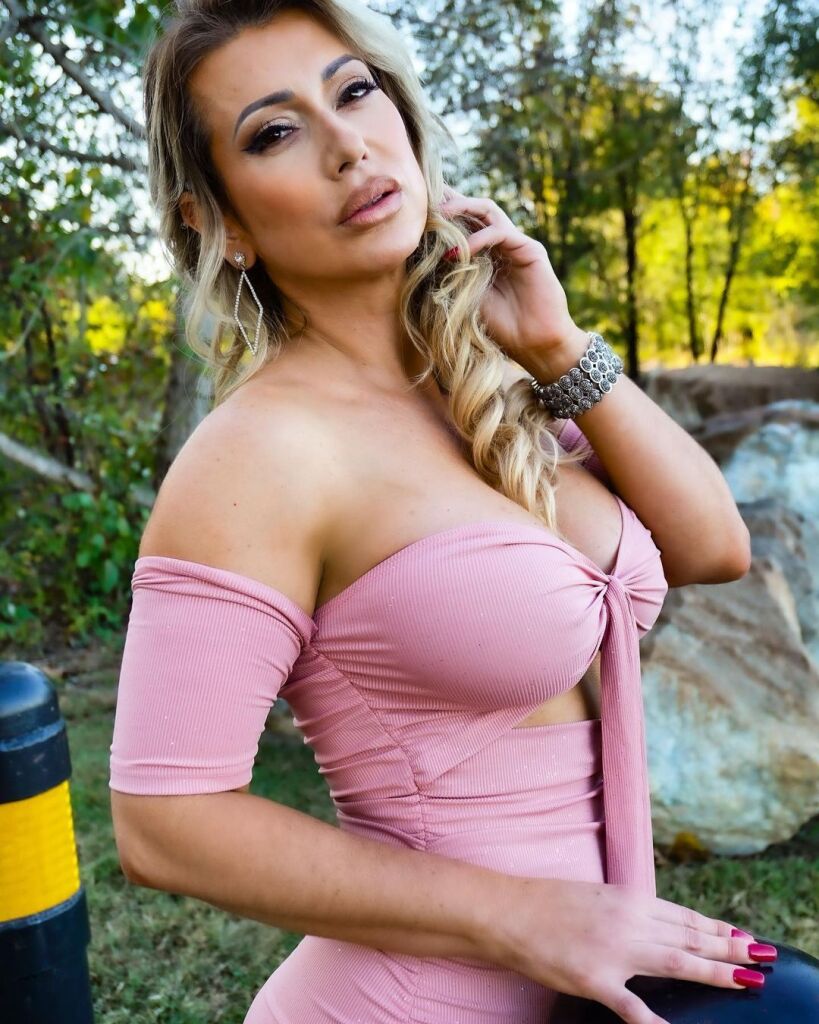
 Danila Rodrigues

The “75 Radio” Show announces the one-year anniversary of its association with what the program’s producers describe as “the world’s first radio spokesmodel,” Danila Rodrigues. Rodrigues is literally the face of “75 Radio” as her photos grace the podcast archives, YouTube, as well as all promotional material. Rodriguez helps promote “75 Radio” and its stated principles of smaller government and individual liberty. She made her debut as a member of the “75 Radio” team on October 28, 2023, when she appeared with hosts Walter Yurkiw, Peter “Scoop” Stanton and Pulitzer Prize winner and host of the “No BS Newshour,” Charlie LeDuff. Besides a radio personality, Rodrigues is also a model who has been featured in Moevir, Latinos Today, Pump, and even TALKERS. Besides modeling, Danila Rodrigues is a nurse, business owner, champion bodybuilder, fitness expert, and a mother.  “75 Radio” is a conservative talk show syndicated by Liberty News Radio Network from its flagship station WMQM-AM/W227DQ 1600 AM, Memphis. The show is also carried online via the Roku Player, Tune In app and on LibertyNewsRadio.com. All shows are uploaded to most major podcasting services including Spotify and Apple as well as archived on its website 75Radio.org all free of charge. The show is hosted by Walter Yurkiw and Peter “Scoop” Stanton. Both are former members of the New York Police Department. They can be contacted at info@75Radio.org.

Industry News

Yesterday’s (10/23) Top News/Talk Media Stories

Industry Views

TALKERS Legal Series on Fair Use (Part 3): The Nature of the Copyrighted Work

By Matthew B. Harrison
TALKERS, VP/Associate Publisher
Harrison Media Law, Senior Partner
Goodphone Communications, Executive Producer

This is the third installment of a multi-part TALKERS Legal Series on Fair Use for the Media Creator. The first installment is here. The second installment is here.

The “Nature of the Copyrighted Work” is a key factor in fair use analysis, with courts more likely to allow the use of factual works, such as news reports, than highly creative works like music or films. The landmark case Feist Publications, Inc. v. Rural Telephone Service Co. established that mere facts, like telephone numbers, cannot be copyrighted unless presented with originality. In media, factual content like news clips may support a fair use defense, while creative works like syndicated talk shows are more protected. Broadcasters should add commentary or criticism when using factual material and be cautious when reusing creative content. Understanding this factual-creative spectrum is critical for media creators navigating copyright law.

In the context of fair use, courts are more likely to allow the use of factual works, such as news reports, historical accounts, or other informational content, than highly creative works like songs, movies, or artwork. The theory behind this is that factual works generally serve a public interest – society benefits from the free exchange of information and ideas, and we want “the system” to encourage this. On the other hand, creative works involve more personal expression, and copyright law is designed to protect that artistic effort (and allow for monetization thereof.)  This distinction plays a crucial role in determining fair use, as courts are more protective of creative works because they represent a higher degree of originality and personal investment.

Classic Case: Feist Publications, Inc. v. Rural Telephone Service Co. (1991)

A landmark case that helps illustrate this factor is Feist Publications, Inc. v. Rural Telephone Service Co., which asked whether copyright protection could be applied to a seemingly factual work: a telephone directory. In this case, Rural Telephone Service Co., a public utility, created a telephone directory of its customers’ names, addresses, and phone numbers. Feist Publications, a company that produced a larger, regional telephone directory, copied some of these listings and was sued by Rural for copyright infringement.

Rural argued that its directory was protected by copyright, but Feist countered that the information in the directory (names, addresses, and phone numbers) was purely factual and, therefore, not eligible for copyright protection.

The Supreme Court ruled in favor of Feist, stating that facts are not protected by copyright because they are not original to the author. The Court held that Rural’s directory did not qualify for copyright protection because it lacked creativity and originality – it was simply a compilation of facts (names and numbers). The case established the principle that mere facts are ineligible for copyright protection, even if they are compiled in an organized way.

This case is significant because it underscores that factual information, like a telephone directory, cannot be copyrighted unless there is a creative element involved in its presentation, such as an original selection or arrangement of the facts.

Application to Radio and Media:

When it comes to radio, news, or media content, the nature of the copyrighted work often comes into play, especially in cases where factual content (such as news clips or interviews) is being reused. Courts may treat factual works more leniently in fair use cases, allowing them to be repurposed for commentary, criticism, or reporting, as they serve a public interest. However, creative works, like talk shows, are given more protection because they represent original artistic expression. The more creative the work, the less likely its unauthorized use will be considered fair use.

An Example – Associated Press v. Meltwater U.S. Holdings (2013)

While not specific to radio, this case highlights the issue of using factual content in media. Associated Press (AP) sued Meltwater, a news aggregation service, for copying parts of AP’s news articles and distributing them without permission.

The court found in favor of the Associated Press, stating that even though AP’s articles contained factual information, they were written with creativity and journalistic skillthus, they were still copyrightable. The nature of the work was not purely factual, as it involved a degree of originality in the writing and presentation.  This case illustrates that while factual works may be more likely to fall under fair use, their specific presentation or creative treatment can still be protected.

Radio Case Example: Syndicated Content and Commentary

A case that touches on the nature of copyrighted works in radio can be seen in disputes over syndicated talk shows or political commentary. Stations that rebroadcast these shows without proper licensing agreements may argue fair use, but their success often depends on whether the work being used is factual or creative. For example, if a station replays a news clip or political speech, the fact that the content is factual might support a fair use defense. However, if they replay a syndicated talk show where a host offers personal opinions or creative commentary, it would be considered a more creative work, requiring higher protection. In some cases, radio stations have argued that the rebroadcasting of certain content (like portions of interviews or speeches) qualifies as fair use because it’s factual and in the public interest. Still, if the content also involves a unique editorial style or commentary, the courts may treat it as more creative and therefore not subject to fair use.

Practical takeaways for media creators:

• Factual vs. creative: When considering whether fair use applies, broadcasters should analyze whether the content they’re using is more factual or creative. Factual works (such as news reports) are more likely to be protected by fair use, while creative works (like music or dramas) are less likely.

• Add commentary or criticism: Even when using factual content, it’s crucial to add commentary, analysis, or criticism to support a fair use defense. Simply republishing factual material without transformation can still lead to copyright infringement.

• Be mindful of syndicated content: Syndicated content, such as talk shows, often involves a mix of factual information and creative opinion. Replaying such content without proper licensing can lead to legal challenges, as courts may view this as a use of creative work.

The nature of the copyrighted work plays a crucial role in fair use analysis. While factual works are more likely to be used under fair use, creative works enjoy stronger protection. Media creators, including broadcasters and radio stations, need to be aware of this distinction and ensure that their use of copyrighted material is both transformative and legally defensible. By understanding the factual-creative spectrum, media creators can better navigate the complexities of copyright law.

Media attorney, Matthew B. Harrison is VP/associate publisher, TALKERS; Senior Partner, Harrison Media Law; and executive producer, Goodphone Communications.  He is available for private consultation and media industry contract representation. He can be reached by phone at 724-484-3529 or email at matthew@harrisonmedialaw.com

Industry News

Audacy’s Suchman: What’s Making Audio the Most Effective Ad Medium

In a piece in AdAge, Audacy chief marketing officer Paul Suchman spells out how AI and influencer marketing are transforming audio into the most effective ad medium. Suchman writes, “Audio deserves muchim more recognition as a (legacy) medium that’s constantly innovating and evolving to enhance the consumer experience and the advertiser opportunity. At the heart of Audio lives great storytelling. From the beginning of humankind to today’s best advertising, storytelling is the single most effective tool for sharing information and knowledge – all while entertaining, educating and yes, selling. Storytelling is a constant, but the way stories are told is shifting, driven by new technologies and approaches that allow brands to create more emotional connection, deliver more personalized experiences and scale their campaigns for maximum impact. And no medium is better equipped to do this than audio.” Read the full article here.
Industry News

Seven Alumni Inducted into 2024 Hofstra Radio Hall of Fame

im

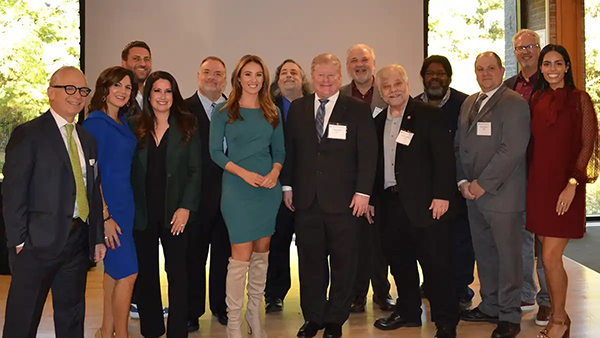
Hundreds of Hofstra alumni, students, faculty, staff, and administrators gathered to celebrate the induction of seven alumni into the University’s Radio Hall of Fame this past Saturday (10/19) at the Hofstra University Club on the school campus in Hempstead, NY. Over its 65 years, WRHU-88.7 (previously WHCH and WVHC) has won some of the industry’s most coveted awards, including four Marconi Awards for College Radio Station of the Year from the National Association of Broadcasters. Student reporters have won national and regional honors and worked alongside professional journalists in covering events ranging from political conventions, presidential debates, and inaugurations to the Super Bowl and major league playoff and championship games. At WRHU, Hofstra students create multiplatform live game content for Hofstra D1 teams and the NBA G League Long Island Nets. They produce and distribute all NY Islanders live NHL games to ESPN Radio NYC, SiriusXM, NHL.com, WRCN-FM, and WRHU-FM. Students also produce and perform on-air roles for the Long Island Ducks baseball franchise. The evening’s celebration was emceed by Lee Harris (front row, far left), a 2009 WRHU Hall of Fame award winner and recent inductee into the national Radio Hall of Fame, and Jamie Morris ’07 (not pictured), host of K-JOY, Long Island’s “Mornings with Jamie and You.” This year’s inductees for the Radio Hall of Fame are Danielle Dellilo ’01 (front row, second from left); Shannan Ferry ’14 (front row, fourth from left); Jared Greenberg ’05 (back row, far left); Damon (Dave) Mock ’00 (posthumously); Shawn Novatt ’00 (first row, second from right); Stu Rushfield ’89 (back row, second from left); and John Santucci ’11 (not pictured). Also pictured: noted agent and president of the executive board of Hofstra University’s Alumni Organization, Heather Cohen (front row, third from left); Mike Kluger (back row, third from left);  Steve Graziano (back row, third from right); George Musgrave (back row, second from right); Jim Helfgott (back row, far right); WRHU general manager, John T. Mullen (front row, fourth from right); and current president Hofstra Radio Alumni Association, Liane Sousa (front row, far right). (HRAA photo)

Industry News

Benztown Unveils List of Top Voiceover Pros

Benztown announced the release of its 9th annual Benztown 50 List of Radio’s Biggest Imaging Voices – the radio industry’s exclusive listing of the top 50 voiceover artists in the U.S. and Canada. Benztown enlisted P1 Media Group to compile and analyze industry data that was the foundation for the list. A special highlight ofim this year’s Benztown 50 is the presentation of the voiceover industry’s highest honor, the Chris Corley Lifetime Achievement Award, to Ann DeWig. Benztown president Dave “Chachi” Denes says, “We are thrilled to recognize the top 50 VO artists in the U.S. and Canada for 2024, along with the peer-voted ‘Best of Format’ honorees and the great Ann DeWig, recipient of the Chris Corley Lifetime Achievement Award. These individuals represent the pinnacle of audio branding and are synonymous with many major brands in our industry. Fifteen years ago, when we began working with VO talent, I never imagined we would collaborate with the best in North America. I am incredibly grateful for their support; without it, Benztown would not be where it is today. As we celebrate these honorees, we also honor all world-class VO talent and the emerging voices that shape the future of the industry.” See all the winners here.
Industry News

Yesterday’s (10/22) Top News/Talk Media Stories

The presidential race, including Kamala Harris’ scheduled Pennsylvania town hall on CNN and former Trump chief of staff John Kelly’s warning about Donald Trump’s “facism,” the escalation of violence in the Middle East, climate change, the economy, abortion rights, the migrant crisis, and the Russia-Ukraine war were some of the most-talked-about stories in news/talk media yesterday, according to ongoing research from TALKERS.

Industry Views

What is the Meaning of Freedom of Speech?

Industry News

TRAVELIN’ MAN: Salem Radio Network’s Greg Clugston to Channel Charles Kuralt “On The Road”

Industry Views

Part 2: Understanding Fair Use

Industry Views

Part 2: Understanding Fair Use

By Matthew B. Harrison
TALKERS, VP/Associate Publisher
Harrison Media Law, Senior Partner
Goodphone Communications, Executive Producer

Matthew B. Harrison, Esq.Incorporating copyrighted material, such as video clips or actualities, can enhance your content, but understanding fair use is critical to avoid legal trouble. Fair use permits limited use of copyrighted material for purposes like criticism, commentary, news reporting, or parody without needing permission. Courts assess fair use based on four factors: purpose and character of the use (is it transformative?), nature of the work (factual vs. creative), amount used, and the effect on the market. Learn practical tips on safely navigating fair use, including using brief excerpts, transforming content, and considering market impact.

This is the second in a series of articles addressing the broader topic of fair use for media creators. Click here for the first installment.

Understanding Fair Use: Purpose and Character of the Use. When using copyrighted material belonging to others in the creation of your own media content, it is important to understanding the concept of fair use. Fair use allows copyrighted material to be used without permission for purposes like criticism, commentary, news reporting, education, or parody. It’s not an absolute right but rather a defense you can claim if challenged. Courts assess fair use based on four key factors, all which broadcasters should carefully consider.

The first factor of fair use that courts consider is the purpose and character of the use. Specifically, is the use of the material transformative? Transformative use is a key concept that can often determine whether your content qualifies as fair use or not – and really is the heart of the inquiry.

What Does Transformative Mean? In legal terms, a use is considered transformative when it adds new expression, meaning, or message to the original work. This is different from merely copying the work or using it for the same purpose as the original creator. By transforming the material, you’re creating something that serves a different purpose or offers new insights, rather than simply replicating the original content.

Example: Auto-Tune the News. One of the most famous examples of transformative use is the Gregory Brothers’ viral “Auto-Tune the News” series, which turned news clips into catchy, auto-tuned songs. In 2010, they took an interview clip with Antoine Dodson, who was describing an attempted home invasion, and turned it into the widely popular “Bed Intruder Song.”  In this case, the original news segment was purely factual—a straightforward broadcast of a local news report. However, by remixing the clip with auto-tuned vocals and adding music, the Gregory Brothers transformed the clip into a piece of entertainment and social commentary. This new purpose—entertainment and humor—was distinct from the original intent of simply delivering news, making it a classic example of transformative use. Although the raw news footage was copyrighted, the remix was so different in tone, presentation, and purpose that it was protected under fair use. The transformation added new creative elements and reframed the original material as a humorous, catchy song.

How Does This Apply to Radio? Let’s take this concept and apply it to radio, a medium that often uses clips from other sources. Imagine you’re running a talk show, and you want to use excerpts from a political speech to make a satirical point about current events. If you simply play the speech on air without any changes, it may not qualify as fair use because you haven’t transformed the original material – you’re just rebroadcasting it. However, if you take portions of the speech and then critique, analyze, or poke fun at it, you’re more likely to be in the clear. For example, if your show involves playing clips of political speeches interspersed with humorous commentary or parody, you’re repurposing the original work in a new and transformative way—much like “Auto-Tune the News.”

Another example could be a radio show that plays clips from popular songs but recontextualizes them within a larger discussion of musical trends or cultural history. If the song clips are used to illustrate a point and not simply for entertainment value, the new purpose—educational or critical analysis—can qualify the use as fair. In cases involving parody or political commentary on radio, the fair use defense has sometimes been successful. For instance, radio shows that use short clips from speeches, interviews, or news broadcasts for commentary, satire, or criticism can invoke fair use if the content is transformed for a new purpose.

One example is when talk radio shows play brief excerpts of copyrighted works (e.g., speeches, news clips) to critique or analyze them. If the use is transformative and doesn’t replace the original work in the marketplace (i.e., people wouldn’t listen to the radio show as a substitute for the original), courts have shown a willingness to accept fair use in such contexts. However, detailed legal battles involving radio stations using copyrighted material for parody or commentary are less common than those involving music licensing.

Example: Rogers v. Koons (Rebroadcast of News Content). While not as widely reported as music-related cases, one example of a copyright infringement suit involving the rebroadcast of talk content was a case where a news organization sued a radio station for replaying portions of its copyrighted interviews and reports without permission. In cases like this, radio stations or broadcasters may try to claim fair use based on the purpose of the rebroadcast, such as using a portion of an interview for commentary, satire, or news reporting. However, if the content is used purely to replay the original, as opposed to being transformed into a new, critical, or educational piece, the fair use defense may not succeed.  For example, news stations may license their talk content (like interviews or original reporting) through syndication deals. If a radio station broadcasts this content without securing the necessary licensing agreement, they may face a copyright lawsuit.

Example: Talk Show Hosts and Syndicated Content. A real-world scenario can involve syndicated talk shows or podcasts that are copyrighted. Radio stations can face lawsuits if they replay this content without proper authorization. An example would be stations rebroadcasting popular talk radio shows or political commentaries (such as those by syndicated hosts like Rush Limbaugh or Howard Stern) without purchasing broadcast rights. This unauthorized use can lead to legal action from the copyright holders. For example, if a station replays clips of an interview conducted by NPR or a news network for entertainment or even news purposes, and it doesn’t transform the content for criticism or commentary, it may be violating copyright law. Radio companies might try to claim fair use, but the courts will look closely at whether the replay served a new, transformative purpose or was simply a verbatim rebroadcast.

Key Considerations for Broadcasters. To better understand whether your use of copyrighted content is transformative, ask yourself:

• Are you adding new meaning or message? The more your work transforms the original content – such as using it for commentary, criticism, or satire – the more likely it qualifies as fair use.

• Does your use serve a different purpose? If you’re using the content for a new purpose, like entertainment, education, or social commentary, rather than simply duplicating the original, it can be seen as transformative.

• Are you just using the original for its own sake? If the copyrighted material is used in a way that does not add new expression or meaning, it’s less likely to fall under fair use. Transformative use is a powerful defense in fair use claims, but it’s not a guarantee. Always make sure your purpose and character are different from the original intent of the work, and when in doubt, seek legal counsel.

Media attorney, Matthew B. Harrison is VP/associate publisher, TALKERS; Senior Partner, Harrison Media Law; and executive producer, Goodphone Communications.  He is available for private consultation and media industry contract representation. He can be reached by phone at 724.484.3529 or email at matthew@harrisonmedialaw.com


Industry Views

Fair Use: A Media Creator’s Guide to Using Copyrighted Content

By Matthew B. Harrison
TALKERS, VP/Associate Publisher
Harrison Media Law, Senior Partner
Goodphone Communications, Executive Producer

Matthew B. Harrison, Esq.As a media creator, incorporating copyrighted material, such as video clips or actualities, into your content can enhance your message. But when using someone else’s work, you need to consider fair use, a legal principle that permits limited use of copyrighted material under certain conditions – without needing permission from the copyright holder. Understanding when and how you can safely use this material is critical to avoiding costly liability – whether it’s a copyright strike or complicated copyright litigation.

What is fair use? Fair use is the legal principle that allows copyrighted material to be used without permission for purposes above and beyond the original version – like criticism, commentary, news reporting, education, or parody. It’s not an absolute right but rather a defense you can claim if challenged. Courts assess fair use based on four key factors, all which creators should carefully consider.

Purpose and character of the use.  Is the use of the material transformative? This means that you’re adding something new or giving it a different purpose than the original, rather than just copying it. This is more likely to be allowable. On the other hand, simply reposting someone else’s video with little change is not transformative and could be seen as infringement.

Nature of the copyrighted work.  Not all content is treated equally under fair use. Factual works (such as news reports) are more likely to be subject to fair use than creative works (like movies or music videos). Why? Courts recognize that creative works often involve a higher level of personal expression, so they deserve more protection. Plus, society has an interest in being able to quickly disseminate news and other important information – therefore, facts generally have little to no protection themselves.

Amount and substantiality. The more of the original work you use, the less likely it is to qualify as fair use. Using a brief clip or excerpt is more defensible than using an entire segment or the “heart” of a work, which is often the most memorable or critical part. This becomes less of an issue when using factual material, though immediately can get complicated if the material being used is someone elses opinion and commentary. This is where taking less is going to be more – in terms of preventing potential liability.

Effect on the market. If your use of the copyrighted material could replace the need for the original courts are more likely to see it as infringement. In other words – is your use of the material taking money out of the pockets of the original creator? This isn’t a moral judgement but purely an objective analysis. If your use does not impact the market for the original work, such as in a news or educational context, it’s more likely to fall under fair use.

Practical Takeaways for Media Creators

Use brief excerpts, not whole segments. The less you use, the more likely it’s fair use.

Make sure your use is transformative. Add commentary, criticism, or parody to distinguish your work from the original.

Be mindful of market impact. Avoid using copyrighted material in a way that competes with the original.

Credit is not enough. Even if you give attribution, it doesn’t exempt you from potential liability. Fair use depends on how you use the material, not just on crediting the original creator.

While fair use provides flexibility, it’s crucial to apply it carefully. When in doubt, consult with legal counsel to ensure your content remains within legal bounds.

Industry Views

SABO SEZ: Move or Die!

By Walter Sabo
A.K.A. Walter Sterling, Host
Sterling Every Damn Night, WPHT, Philadelphia
Sterling On Sunday, TMN

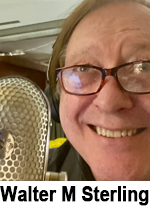
Walter M. SterlingIf a shark doesn’t swim, it dies. Radio is just fine, thank you, but it’s not swimming. Water, check. Tank, check, Sharks, check. Swimming to the next meal, nope. For the past 10 years at least, the radio show in every city is stuck in place and that sound in the distance that wakes you up at night is a death rattle.

The public perceives radio to be live, current, and local. Those three ingredients are the foundation of radio’s hundred years of success and the envy of all other media. That’s right – ALL. OTHER. MEDIA.  Radio was born with the characteristics envied by newspapers, magazines, streaming, TV… name it.

The savior of the AM band was not a three-hour-a-day-host. The savior is all-news and local live. The FM formats that thrive and grow put up a live mirror to a city’s needs and tastes.  Stations that sound like their city, and no other city, do not just win – they dominate. The radio shark is the forward momentum of urgent local information, new ideas, new jokes.

When asked, most people will say, “I don’t think I listen to the radio much…” But they do. The problem is radio is not top of mind. Why not? Because radio must demand listener attention with urgent, new ideas, entertainment, and information. “Your favorites from the 90s and today” isn’t doing that. Listen to air checks of the double-digit share legends of top 40 night-time radio. They weren’t so great. BUT in every single break they announced the names of local schools, listeners, events – every break with urgency. The more listener names, the higher their shares. Radio math. The more listener names, the more live local points of reference, the higher the audience share.

Consider the stunning ratings of too many NPR stations. What accounts for their growth trajectory? Clock the percentage of time your local NPR station spends presenting local news, local information, and new ideas.

Compare that with any other station in the city. In its own dreary way, most NPR stations deliver on the presumed benefits of the medium of radio: Local, live, urgent ideas. Yes, many commercial stations command major ratings for the same reason: All-news stations, and hybrids such as WSB, Atlanta; KRLD, Dallas; New Jersey 101.5, WABC, New York; KFI, Los Angeles; WTAM, Cleveland; WPHT Philadelphia.

It’s sacred geometry: The more often a listener hears about their local, daily life, the higher go the ratings.

Consultant Walter Sabo A.K.A. Walter M Sterling has a nightly show “Sterling Every Damn Night” heard on WPHT, Philadelphia 9:00 pm – 12:00 midnight. His syndicated show, “Sterling On Sunday,” from Talk Media Network, airs Sundays 10:00 pm – 1:00 am ET, and is now in its 10th year of success. He can be reached by email at waltermsterling@gmail.com or Sabowalter@gmail.com.

Industry News

Yesterday’s (10/21) Top News/Talk Media Stories

Industry News

New Ramsey Solutions Research Shows Nearly 80% of U.S. Adults Say They’re Worried About The Economy

Two weeks before Americans head to the polls to elect a new president, 78% of adults say they’re worried about the economy according to Ramsey Solutions’ new State of Personal Finance report for the third quarter of 2024. Ramsey SolutionsThe research notes millennials (ages 27-42) are the most concerned at 83%.  The survey finds people are feeling the effects of the higher costs of goods and services, and they remain concerned about inflation. In addition, 37% said their finances are in worse shape than four years ago. Thirty-four percent said their finances are about the same, while only 29% said they’re better off than they were four years ago. The research indicates more than half (52%) of Americans believe the U.S. presidency has a major impact on their personal finances. “We encourage every American to go out and vote,” said Dave Ramsey, personal finance expert and host of “The Ramsey Show.But remember, what goes on in your house is a whole lot more important than who’s in the White House. The research shows that less than half of Americans believe a written household budget is the way to win with money. That has to change, or nothing will.”

Other key findings include:

• 1 in 3 Americans can’t afford Christmas and plan to use credit cards to make up for the shortfall.

• Nearly half of Americans (49%) report some difficulty paying bills, with Gen Z struggling the most (69%).

• 34% said they have at least $10,000 in consumer debt.

• Only 1 in 10 U.S. adults are investing 15% or more of their income.

To see the full results of Ramsey Solutions’ State of Personal Finance report, please click here.

The State of Personal Finance is a quarterly research study conducted by Ramsey Solutions with 1,006 U.S. adults to gain an understanding of opinions and attitudes toward money in America. The nationally representative sample was fielded September 12-16, 2024, using a third-party research panel.


Industry News

Fair Use: A Media Creator’s Guide to Using Copyrighted Content

Industry News

Stephanie Miller Bringing “The Sexy Liberal Show” to the Orpheum Theater in Los Angeles (11/2)

Sexy Liberal Tour

Progressive, multi-platform talk show icon Stephanie Miller is bringing her long-running live touring review, “The Sexy Liberal Show” to the Orpheum Theater in Los Angeles (11/2). The evolving stage presentation has been selling out live theaters and pay-per-views across the nation for years in support of progressive and Democratic Party politics.  In addition to Miller, this installment will feature “Sexy” regulars John Fugelsang, Hal Sparks, and the satirical duo Frangela. Miller tells TALKERS, “This will be the perfect pre-election party to get out the vote for Kamala Harris/Tim Walz and down-ballot Democrats, adding, “We’ve got an incredible lineup of special guests: Mark Hamill, Martin Sheen, Rep. Adam Schiff, and Glenn Kirschner! With their blend of political insight and humor, this night will have you laughing and fired up to hit the polls on Tuesday!”  The show goes live at 8 pm PT and will be available on-demand for a limited time. Live tickets on sale Here. PPV tickets on sale Here.  Also available: VIP Meet and Greet tickets.

Industry News

Talk Media Industry Publicist Produces Trump Film Documentary Set for Late October Release

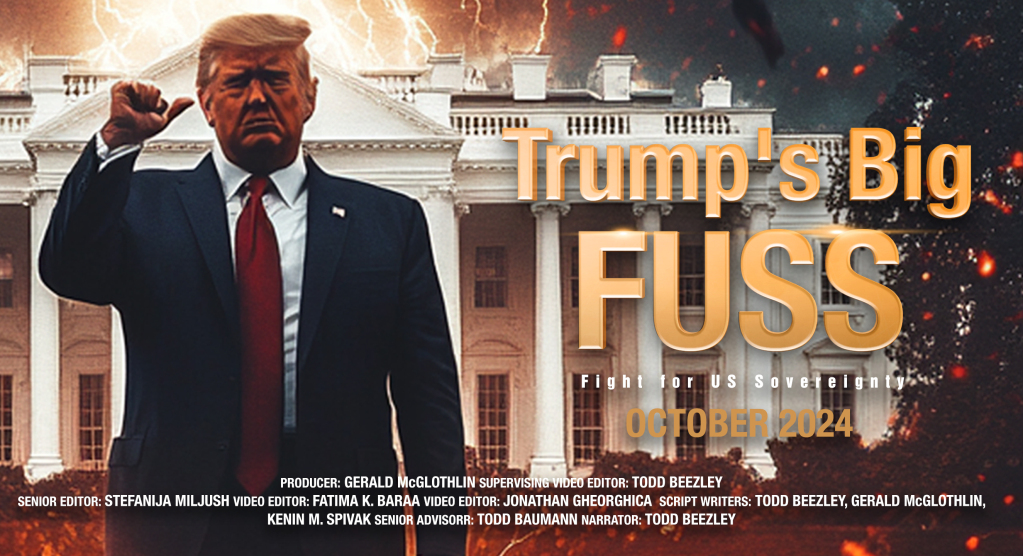
“Trump’s Big FUSS (Fight for US Sovereignty),” a film documentary written and produced by veteran talk media publicist Jerry McGlothlin – president of Special Guests – and co-written by Todd Beezley, is set for theatrical (and online venues) release in the coming days of late October to “encourage apathetic voters and undecided voters to head to the polls Tuesday, November 5.”

Trumps Big Fuss
Targeted cinemas for the release are in swing states Pennsylvania, Nevada, Arizona, Wisconsin, Michigan, Georgia, and North Carolina. The film takes a decidedly pro-Donald Trump position.  McGlothlin is available to do interviews as part of his self-described “Late October Surprise” to explain how he believes “Trump’s fight to maintain U.S. sovereignty differs from Kamala Harris’s globalist policies.”  To reach Jerry McGlothlin, call 919-437-0001 or email jerry@specialguests.com. Further information is available here.

Industry News

Top News/Talk Media Stories this Past Weekend (10/19-20)

The presidential race highlighted by scrutiny and defense over Trump’s alleged cognitive decline was the most discussed story on news/talk media this past weekend (10/19-20), followed by fear of escalating violence in the Middle East by Israel’s killing of Hamas leader Yahya Sinwar. These stories were closely followed by (or incorporated) the economy, the migrant crisis, abortion, the Russia-Ukraine war, Elon Musk’s election money activity and the MLB playoffs according to ongoing research from TALKERS.

Industry News

Harris FOX Interview Delivers Blockbuster Ratings

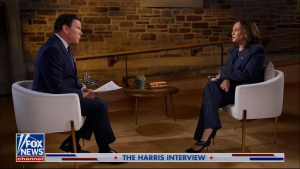
Harris on FoxIdeology and, as Michael Harrison calls it, “the daily dance of affirmation” aside – perhaps there’s something to be said about booking “opposition” political luminaries as guests on our industry’s highly “targeted” venues.  FOX News Channel’s (FNC) “Special Report with Bret Baier” delivered 7.8 million viewers and 1,126,000 in the 25-54 demo during anchor Bret Baier’s exclusive interview with VP Kamala Harris from 6:00 pm – 6:30 pm ET this past Wednesday (10/6), according to Nielsen Media Research. The interview marked the highest rating of the Harris-Trump political season, outrating Harris’s individual appearances on “60 Minutes,” “The View,” “The Late Show with Stephen Colbert,” CNN and MSNBC. For the full 6:00 pm ET hour, “Special Report” drew 6.7 million viewers and 901,000 in the 25-54 demo. Combined with the show’s midnight airing 12:00 midnight -12:30 am ET, the interview with VP Harris nabbed 9.2 million viewers and 1.4 million in the 25-54 demo, beating ABC’s interview with President Joe Biden before he dropped out of the race (8.5 million viewers). FNC averaged more than 12 million viewers on Wednesday between all three airings of its interviews with VP (6:00 pm ET and 12:00 midnight ET) and its town hall with former President Donald Trump (11:00 am -12:00 noon ET). Interestingly, according to Nielsen Media Research, Pittsburgh, PA was the top-rated market in the country for the interview.
Industry News

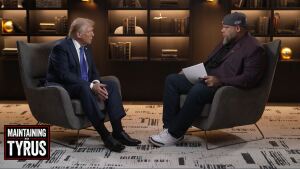
2024 Presidential Race Taking on Historic Role as Nation’s First “Podcast Election”

Tyrus and Trump

Industry News

Erick Erickson Plays Both Sides of the Field

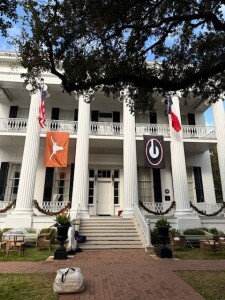
Erick 95.5 WSB, Atlanta (and nationally syndicated) TALKERS Heavy Hundred star, Erick Erickson is giving both sides an airing today (10/18) in his midday show that he’s broadcasting from the parlor in the Texas Governor’s Mansion (see pic at left) before UGA battles University of Texas tomorrow.  He tells TALKERS, he’ll have on both Governors Gregg Abbott (R-TX) and Brian Kemp (R-GA) to talk about the border, the election, and football.

Industry News

Top News/Talk Media Stories this Past Week (10/14-18)

Industry News

September 2024 U.S. Podcast Ranker Released from Triton Digital Plus New Political Podcast Data

TritonTriton Digital has just released its U.S. Podcast Ranker for September 2024. The ranker is measured by Triton’s Podcast Metrics measurement service and includes a reporting period of September 2, 2024 – September 29, 2024.

Highlights this month include:

• iHeart Audience Network was the #1 Top Sales Networks Report, SiriusXM Podcast Network came in at #2, followed by NPR at #3.

• Top podcasts based on downloads included “NPR News Now” (NPR) at #1, “Up First” (NPR) at #2, and “Crime Junkie” (audiochuck) climbing to #3.

• Top podcasts for listeners were “NPR News Now” (NPR) at #1, “Crime Junkie” (audiochuck) at #2, and “Up First” (NPR) at #3.

• Top podcast debuts included “NFL Daily with Gregg Rosenthal (iHeart Audience Network), “Where Everybody Knows Your Name with Ted Danson and Woody Harrelson (sometimes)” (SiriusXM Podcast Network), and “All In With Chris Hayes” (NBCUniversal News Group).

Additionally, Triton Digital collaborated with Signal Hill Insights to uncover political podcast downloads and audience trends as the U.S. presidential election approaches:

• Political podcasts have seen a 28% increase in year-over-year downloads with incremental increases over the last six months.

• Twice as many downloads come from Democrat-leaning podcasts as Republican-leaning ones. Although Democrat-leaning podcasts still make up the majority of the political podcast market, they saw their listenership decline from 58% to 56% year-over-year while Republican podcasts rose from 23% to 28% of total political podcast downloads.

• The demographic profile of political podcast listeners reveals an older, highly educated, and affluent audience compared to the U.S. general 18+ population: 59.7% are college graduates, 31.9% report a household income exceeding $100,000, and nearly half (47.2%) are 55 years or older.

• While still affluent and educated compared to the U.S. Population, Republican-leaning podcast listener profiles under-index compared to Democrat and Independent-leaning podcasts on these attributes. Additionally, they boast the highest proportion (89.9%) of White/Caucasian listeners among the three political leanings. Democrat-leaning podcasts have attracted the highest proportion (17.4%) of Black/African American listeners.

• Independent-leaning podcasts claim the highest proportion (16.2%) of Hispanic listeners and are 68.2% college-educated, and 62.4% male.

Please click HERE and for more details.

Industry News

Florida Association of Broadcasters Donates $25,000 to BFOA’s Hurricanes Helene and Milton Fund to Meet/Match Donation from WABC Owner John Catsimatidis

Florida Association of Broadcasters Logo BlkThe Florida Association of Broadcasters (FAB) has donated $25,000 to the Broadcasters Foundation of America (BFOA) Hurricanes Helene and Milton Fund. With the addition of FAB’s donation, BFOA has exceeded the amount necessary for the $25,000 match donation from John Catsimatidis, owner and CEO of Red Apple Media and WABC,  New York.  “The Broadcasters Foundation has been a tremendous help to individuals in broadcasting who are in the greatest need of assistance from the onslaught of these back-to-back hurricanes. On behalf of FAB’s Executive Committee and Board of Directors, we are proud to make this contribution,”  said Pat Roberts, president/CEO of FAB. im “Unfortunately, this is far from over,” he continued. “Many of our colleagues are just now discovering the extent of the damage and the cost of repairing or rebuilding. On behalf of our members and all broadcasters who are suffering from the catastrophic impact of these storms, please continue to contribute to the Broadcasters Foundation Hurricanes Fund.”  “We are so grateful to John and Pat and all the individual donors who continue to rise to the occasion and provided much-needed donations to help our colleagues, many of whom are temporarily homeless,” stated Tim McCarthy, President of BFOA. “The volume of requests that pour in every day is overwhelming. We need everyone in radio and television to give as much as they can afford. There is no such thing as a too small donation. Every dollar helps.”  The Broadcasters Foundation has temporarily adjusted its already streamlined Emergency Grant Guidelines and Application Process to make it even easier and faster to get funds into the hands of broadcasters hit hardest by these storms. Under the adjusted guidelines, broadcasters who have suffered catastrophic loss contact their market manager or GM, who then fills out the Hurricanes Helene and Milton Group Submission Form for all of those within their station who are applying. To access the new temporary application form, market or general managers may click here. To make a donation to the Broadcasters Foundation of America Hurricanes Helene and Milton Emergency Fund, please click here.

Industry News

Connecticut Broadcasters Association (CBA) Awards include Heritage News/Talk Radio Stations WTIC, Hartford and WICC, Bridgeport

Brian and Co
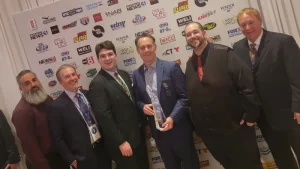
The Connecticut Broadcasters Association debuted its first station awards presentation on Tuesday night (10/15) during its annual gala dinner at the Aqua Turf Club in Southington.  The organization also welcomed six new members into its CBA Hall of Fame, including former longtime radio talker (WTIC), and current TV News 8 (New Haven-Hartford) anchor/political correspondent Mark Davis.  Heritage news/talker WTIC NewsTalk 1080, Hartford received two awards: Best Morning Show – “Brian & Company” (Brian Shactman); and Best Radio News Reporter – Morgan Cunningham.  WICC-AM, Bridgeport’s “Melissa in the Morning” (Melissa Sheketoff) received the Best Talk Show honor. Pictured above (l-r): WTIC’s Joey Bourgoin, Bob Cox, Morgan Cunningham, Brian Shactman, Matt Sirois, and Mark “The Shark” Christopher.

Industry News

NYF and PushDesign Celebrate the Power of Storytelling: Unveiling the “What Defines Greatness” Campaign

NY FestivalsNew York Festivals Radio and TV & Film Awards have launched the 2025 multi-platform call for entries campaign for the annual competitions which culminate in the Storytellers Gala every spring.  The two themes of the eight-video campaign are “What Defines Greatness” and “Sounds Over The Years.”  Together they celebrate a stand-out all-star list of innovative NYF winners through the years: My Octopus Teacher, Peaky Blinders, The Olympics, Done+Dusted, CBS Radio News, The Beatles Channel, Das Boot, A Capitol Fourth, The New York Philharmonic, CBC News, Molly Solomon, Marvin Kalb, and Donna de Varona.  “PushDesign’s Emmy-award winning creative work is a perfect match for NYF,” said Rose Anderson, EVP of New York Festivals and executive director of the TV & Film and Radio Awards Competitions. “These high energy sizzle reels let you see and hear what NYF winners are all about – enthusiasm, excitement, and excellence.”  “The New York Festivals has a global reach, is peer judged, and honors industry legends” said Rob Tobin, founder and creative director of PushDesign, “We wanted to let the programs and winners speak for themselves to inspire entrants.” The 2025 Grand Jury panel selection process is underway, and the TV & Film and Radio Grand Juries will be announced on October 23.  The New York Festivals TV & Film and Radio Awards competitions receive entries from over 50 countries.  Members of the Grand Jury panels vote to determine the Shortlists and final standings for Tower Trophies.  The 2025 Storytellers Gala will honor trophy winners of both competitions in the spring.  The official deadline to enter the 2025 New York Festivals TV & Film Awards is December 31, 2024. For more information on the 2025 TV & Film Awards visit: https://tvf.newyorkfestivals.com/. The official deadline to enter the 2025 Radio Awards is January 31, 2025. For more information on the 2025 Radio Awards winners visit: https://radiohome.newyorkfestivals.com/

Industry News

Starnes to Offer Six-Hour Election Night Special

Election Night with Todd StarnesStarnes Media Group is hosting a live, six-hour Election Night special for radio stations across the nation. The free program will broadcast from 6:00 pm – 12:00 midnight ET. The show will be hosted by nationally syndicated TALKERS Heavy Hundred personality Todd Starnes and will feature radio reporters in all seven battleground states and more than two dozen pundits and pollsters. The show will also take calls from listeners. And stations will also be able to embed a digital television broadcast of the program on their websites. For information on clocks and how to get the show, email todd@starnesmediagroup.com or call 917-331-9866.  Starnes, who also is the owner of KWAM News Radio in Memphis, was re-elected to Tennessee Broadcasters Board. He has taken a large role in lobbying Congress on keeping AM radio in cars.
Industry News

Yesterday’s (10/16) Top News/Talk Media Stories

Industry News

EDISON RESEARCH: The Race to Rogan – Who Will Candidates Reach on America’s Top Podcast?

Industry Views

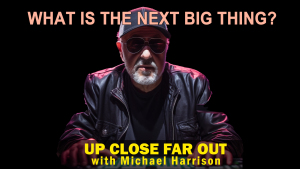
So, What Are the Next Big Topics in Talk Radio?