By Matthew B. Harrison
TALKERS, VP/Associate Publisher
Harrison Legal Group, Senior Partner
Goodphone Communications, Executive Producer
 Every media creator knows this moment. You are building a segment, you find the clip that makes the point land, and then the hesitation kicks in. Can I use this? Or am I about to invite a problem that distracts from the work itself?
That question has always lived at the center of fair use. What has changed is not the question, but the context around it. Over the past year, two federal court decisions involving AI training have quietly clarified how judges are thinking about copying, transformation, and risk in a media environment that looks nothing like the one for which these rules were originally written.
Fair use was never meant to be static. Anyone treating it as a checklist with guaranteed outcomes is working from an outdated playbook. What we actually have is a 20th century rulebook being used to officiate a game that keeps inventing new positions mid-play. The rules still apply. But how they are interpreted depends heavily on what the technology is doing and why.
That tension showed up clearly in two cases out of the Northern District of California last summer. In both, the courts addressed whether training AI systems on copyrighted books could qualify as fair use. These were not headline-grabbing decisions, but they mattered. The judges declined to declare AI training inherently illegal. At the same time, they refused to give it a free pass.
What drove the analysis was context. What material was used. How it was ingested. What the system produced afterward. And, critically, whether the output functioned as a replacement for the original works or something meaningfully different. Reading the opinions, you get the sense that the courts are no longer talking about “AI” as a single concept. Each model is treated almost as its own actor, with its own risk profile.
A simple medical analogy helps. Two patients can take the same medication and have very different outcomes. Dosage matters. Chemistry matters. Timing matters. Courts are beginning to approach AI the same way. The same training data does not guarantee the same behavior, and fair use analysis has to account for that reality.
So why should this matter to someone deciding whether to play a 22-second news clip?
Because the courts relied on the same four factors that govern traditional media use. Purpose. Nature. Amount. Market effect. They did not invent a new test for AI. They applied the existing one with a sharper focus on transformation and substitution. That tells us something important. The framework has not changed. The scrutiny has.
Once you see that, everyday editorial decisions become easier to evaluate. Commentary versus duplication. Reporting versus repackaging. Illustration versus substitution. These are not abstract legal concepts. They are practical distinctions creators make every day, often instinctively. The courts are signaling that those instincts still matter, but they need to be exercised with awareness, not habit.
The mistake I see most often is treating fair use as permission rather than analysis. Fair use is not a shield you invoke after the fact. It is a lens you apply before you hit publish. The recent AI cases reinforce that point. Judges are not interested in labels. They are interested in function and effect.
Fair use has always evolved alongside technology. Printing presses, photocopiers, home recording, digital editing, streaming. AI is just the newest stress test. The takeaway is not panic, and it is not complacency. It is attention.
If you work in the media today, the smart move is to understand how the rulebook is being interpreted while you are busy playing the game. The rules still count. The field just looks different now.
Matthew B. Harrison is a media and intellectual property attorney who advises radio hosts, content creators, and creative entrepreneurs. He has written extensively on fair use, AI law, and the future of digital rights. Reach him at Matthew@HarrisonLegalGroup.com or read more at TALKERS.com.



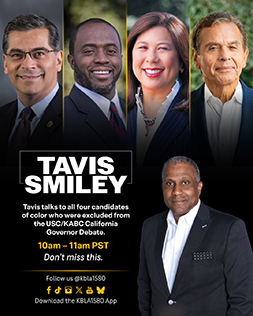 who were excluded from the recently canceled March 24 KABC-TV | University of Southern California gubernatorial debate. Smiley says he’ll speak with Xavier Becerra, Tony Thurmond, Betty Yee, and Antonio Villaraigosa separately in four 15-minute segments about the race, their campaigns, and their plans for California’s future. He adds, “It’s no coincidence that the four gubernatorial candidates who were excluded from a debate hosted by ABC7 and USC – canceled due to public outcry – are now appearing on KBLA Talk 1580, a Los Angeles-based, Black-owned, progressive radio station, to discuss their campaigns and the race for California’s top office.”


 These episodes feature Chachi’s special guests Al Roker, longtime weatherman on NBC’s The Today Show and co-anchor of the iconic morning show’s third hour, and Patsy Smullin, owner/president of California Oregon Broadcasting, and host of the successful television interview series, Up Close and Personal. Roker and Smullin will be among those honored next week as Giants of Broadcasting by the Library of American Broadcasting Foundation at the 2024 Giants of Broadcasting & Electronic Arts luncheon and awards ceremony. The event will be held on Tuesday, November 12th at Gotham Hall in New York City. To listen to these new “Chachi Loves Everybody” podcast episodes, please
 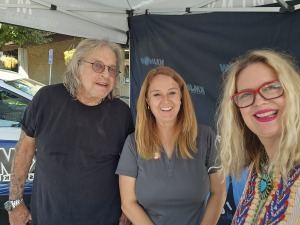 NewsTalk 580/105.9 KMJ in Fresno, CA, joined forces with local agriculture company Gar Bennett to raise funds for the Central California Food Bank through the 11th Annual Feeding Families Fund Drive (9/20). KMJ listeners responded to the one-day broadcast with generous donations to help their less fortunate neighbors, raising over $200,000 in a single day. Gar Bennett matched every donation with 50 cents on the dollar, for a grand total of $493,000 going to the Central California Food Bank. Co-sponsor Farm Credit also pitched in with a large donation to the cause. The annual one-day event has raised more than $4.5 million for the Central California Food Bank, providing 20 million meals in 11 years. This year’s record-breaking fundraising effort will feed over two million people who struggle with hunger in the Central Valley. Pictured above (l-r): KMJ’s Ray Appleton; Kym Dildyne, CEO, Central California Food Bank, and KMJ’s Liz Kern.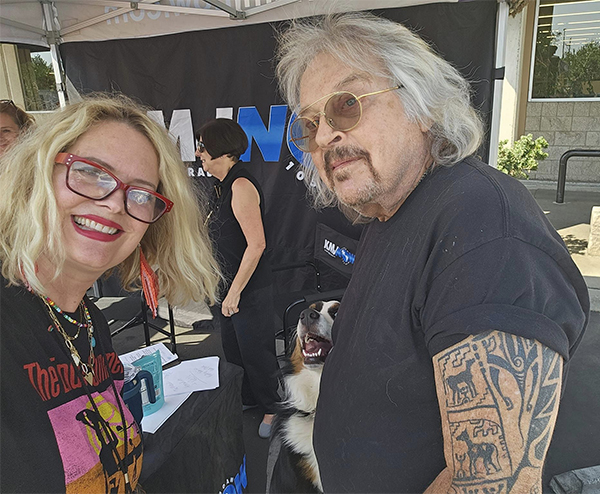
 the 2021 recall election. The story indicates that Elder “failed to disclose earnings from 10 entities on his statement of economic interest, including Salem Media, Epoch Times and Turning Point USA, according to the state election commission.” The commission found “no evidence of intent to conceal” and the financial disclosure documents have been corrected.
  cause in his new documentary, LEAVING CALIFORNIA: The Untold Story, an Epoch Original production. In the 70-minute feature-length film that premieres tomorrow (4/21) on
  residents face the prospect of leaving their beloved state. As a regular guest of the show, California Policy Center president and award-winning journalist Will Swaim says, “California’s bad ideas go national really fast. And if California fails, the United States fail.” This cautionary tale highlights crime, education, business environment, cost of living, environmental legislation and homelessness that are trending beyond California. “California Insider” is a twice weekly 30-minute podcast (Apple, etc.) and television show (in 30 million homes on NTD cable network). Episodes are also available on
 By Matthew B. Harrison
 New laws may hold AI companies responsible, but regulating machine-generated speech presents risks of its own.
 program is hosted by husband-and-wife team Jeremy and Amy Long. It is currently also heard on digital stations throughout the United States, Australia, United Kingdom, New Zealand and beyond. Seaboard marketing solutions consultant Bob Stei says, “I was hooked the moment Jeremy and I first started talking about travel. Travel is a topic people are extremely passionate about. This will go well with our growing portfolio of lifestyles shows which include a wrestling show and program about pets.”
 assumed the operations manager role at the company’s WMAL-FM, Washington. Cumulus regional vice president Larry Blumhagen states, “Art has proven to be exceptionally dedicated and creative in his years as APD for KABC. We are eager to watch him bring those qualities to the role of program director for KABC and KSFO.” Webb comments, “I’m excited to step into this role and build on the strong foundation already in place at both stations. Our focus remains on creating engaging, relevant content that truly connects with California listeners while continuing to elevate the incredible work of our talented teams. With such outstanding rosters in Los Angeles and San Francisco, I’m looking forward to sharing in much success together.”
 Wang – is heard on 790 KABC-AM in Los Angeles and 810 KSFO-AM in San Francisco daily from 12:00 noon to 3:00 pm. Phillips is also a columnist for the Orange County Register and the Los Angeles Daily News. Wang also hosts the locally focused “KABC News Blitz” daily from 5:00 pm to 6:00 pm. Cumulus regional VP Larry Blumhagen says, “We are thrilled to extend “The John Phillips Show” and will continue to have John Phillips and Randy Wang speak about accountability in California to their loyal audience.”
 Frisk is also serving the company as regional manager for Alaska and Salt Lake City. She was most recently with Cumulus Media as VP and market manager for the Oxnard-Ventura, California market. Connoisseur Western Region SVP Tina Murley says, “Sommer’s leadership, passion for local media, and her ability to connect with communities make her an ideal addition to the Connoisseur family. As we deepen presence in Palm Springs, Alaska, and Salt Lake City, Sommer’s strategic vision, commitment to local communities, and operational expertise will be invaluable.”
 listening to the 10k flamethrower, with a history dating back to 1947, that blankets the Santa Cruz / Monterey / Salinas market and most of the Central California coast. Since acquiring the station, Zwerling has operated it hands-on as a conservative-leaning news-talker featuring a carefully crafted balance between local programming with a parade of hometown personalities (including local superstar Dave Michaels) and a menu of leading syndicated talent. It was one of the original affiliates of Rush Limbaugh and carried the iconic show until his passing in 2021. Zwerling tells
  TALKERS, “Back then I was 39 years old and never dreamed I’d last this long as a real broadcaster.” TALKERS publisher Michael Harrison – a longtime fan of KSCO – stated, “Congratulations to Michael Zwerling and all the folks at one of America’s most colorful radio stations, for keeping the spirit of independent local broadcasting alive through the many obstacles and changes that have proven challenging for the practitioners of this wonderful industry. They are champions of a major slice of grassroots Americana represented by the modern era of talk radio.” Today, KSCO maintains its powerful presence in the world-famous market at 1080 AM with the addition of three FM translator signals at 104.1, 95.7, and 107.9. The station still broadcasts from a historic art deco building located on the beach in Santa Cruz and continues to surprise its listeners with unexpected twists and turns in what Harrison describes as “one of radio’s longest running reality shows.”
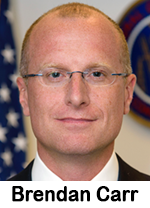 that wasn’t part of anything in that decision. It was focused on the potential misreading of precedents on the broadcast TV side. Of course, as you know, the rule applies to broadcast, radio and TV, but that one was focused on those TV precedents.” The memo to broadcast TV was relative to the 1996 bona fide news interview exemption that came about in the wake of an interview Jay Leno did with then-California Governor Arnold Schwarzenegger on “The Tonight Show.” The FCC Media Bureau ruled that “The Tonight Show” did not have to give Schwarzenegger’s opponent equal time because that interview segment qualified as a bona fide news interview. This matter doesn’t seem to be a big one for news/talk radio since news/talk stations are viewed as news outlets, on top of the fact that most talk radio hosts would love the opportunity to interview candidates with whom they might not personally agree.
  Madson and Jesse Tapia airs live from 7:0 am to 9:00 am with a replay airing from 12:00 noon to 2:00 pm the same day. The station notes that this is Tapia’s first on-air role and that he’ll continue producing the “D-Lo and KC” show. That program, starring Damien Barling & Kenny Caraway, is moving to the 2:00 pm to 6:00 pm daypart. The station adds that James Ham is expanding his role as the Sacramento Kings insider as he’ll provide breaking news updates and analysis weekly on “The Jump” and “D-Lo & KC.” Station brand manager Kyle Madson says, “Jesse brings a wealth of knowledge and enthusiasm for sports, and we’re excited to evolve our lineup with the launch of ‘The Jump,’ bringing high-energy to Sacramento mornings. By moving the unmatched wit of D-Lo & KC to the full afternoon drive and having James as our Kings Insider across all shows, we’re doubling down on the local insight and personality that defines Northern California sports radio.”
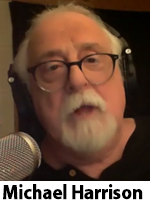 With the conclusion of 2025 at hand, we are entering the second half of the third decade of the 21st century. It will be a remarkably transitional period for the talk radio industry and its closely associated fields in talk media, as well as media-in-general.
 Carr. Facing regulatory scrutiny, the San Francisco Bay Area station demoted well-regarded journalists and sharply curtailed its political coverage for months. As pressure has eased, KCBS has gradually resumed more ambitious reporting, reflecting tensions between regulatory oversight and editorial independence.” Carr accused the station of failing to operate in the public interest and threatened an investigation. This was enough for Audacy management to back off its reporting. Tau writes, “KCBS demoted a well-liked anchor and dialed back on political programming, people said. For months, reporters were dissuaded from pursuing political or controversial topics and instead encouraged to focus on human interest stories, according to the current and former staffers.” The piece notes that anchor Bret Burkhart, the one to first present the ICE actions on the radio, was demoted. He eventually left the station for another position.