By Holland Cooke
Consultant
 Radio programmers and sales managers know the drill: The GM drops an idea, a client makes a request, or a listener offers feedback – and the reflex is to jump straight into execution. But what if the real opportunity lies not in what’s asked for, but in what’s actually needed?
That’s the premise of Bill Shander’s new book, Stakeholder Whispering: Uncover What People Need Before Doing What They Ask (Wiley, 2025). Though written for a broad business audience, its lessons resonate in broadcasting, where competing priorities and fast-moving decisions are the norm.
Shander reckons that traditional “stakeholder management” sounds paternal – corralling people to fit our plans. Instead, “stakeholder engagement,” gives them a seat at the table. This “whispering” is a deeper, two-way collaboration where probing questions and active listening uncover hidden needs and surface better solutions.

For broadcasters, this can be transformative. Consider sales. If an advertiser wants “a morning drive schedule,” a reflexive seller builds a package and fires back a rate card. But a whisperer pauses and asks: Why morning drive? Who exactly are you trying to reach? What outcome would make this buy successful for you? The conversation shifts from spots and cost to outcomes and value.
Programming is no different. Listeners may say they “want more music” or “less negativity” from talk radio. Whispering means listening past the literal request to the sentiment beneath. Is it about mood, pace, or trust? The host or PD who engages at that level isn’t surrendering control – they’re co-creating an experience listeners feel invested in.
The book also emphasizes “loss aversion” – the tendency to resist change for fear of losing control. Whispering reduces defensiveness by letting stakeholders feel ownership of solutions. In a station environment, that might mean involving talent in shaping format tweaks, or framing sales proposals as shared discoveries rather than dictates.
Stakeholder whispering is a reminder to slow down, listen more deeply, and help others articulate what they really need. For radio, it may be the difference between just checking a box and creating lasting value on both sides of the mic.
Holland Cooke (HollandCooke.com) is a media consultant working at the intersection of broadcasting and the Internet. Follow HC on Twitter @HollandCooke
Share this with your network

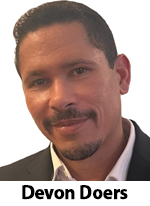 across key iHeartMedia markets including: Rochester, Minnesota; Bismarck, Minot, Dickinson, and Grand Forks in North Dakota; and Eau Claire, Wisconsin. iHeartMedia division president Shosh Abromovich says, “I’m thrilled to welcome Dee Doers as Area President over our six MidNorth markets. With nearly three decades of industry experience, Dee brings strategic vision and a proven track record of driving growth. He’s the ideal leader to take these markets to even greater heights.” Doers previously served the company’s Minneapolis market as vice president of sales.
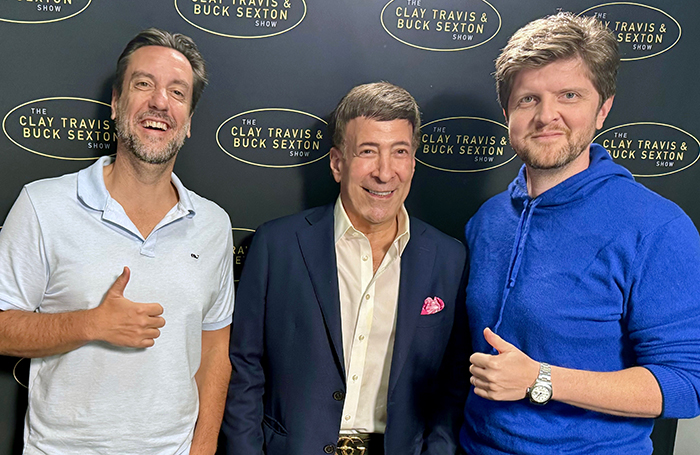
 exclusive sales rep for the Australian market. With this deal, Australian advertisers will be able to access Audacy’s titles as part of their audio campaigns. The partnership broadens the breadth of available content for LiSTNR audiences and increases the reach for clients, with access to a range of titles including “Office Ladies with Jenna Fischer and Angela Kinsley,” “Fly on the Wall with David Spade and Dana Carvey,” “Search Engine,” “The Moth” and dozens of podcasts from CBS Sports and CBS News & Entertainment.
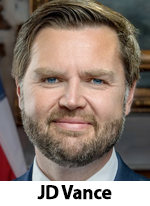 Salem Media Group announces that to honor Salem Radio Network talk host Charlie Kirk, Vice President JD Vance is guest hosting “The Charlie Kirk Show” today (9/15) at 12:00 noon ET. This special broadcast live from The White House will air on the Salem Radio Network and will be simulcast on Salem News Channel. Vice President Vance tweeted on Sunday, “I will have the honor of hosting the Charlie Kirk Show. Please join me as I pay tribute to my friend.” Salem Radio Network VP/news & talk programming Tom Tradup says, “The Vice President and Second Lady Usha Vance flew to Phoenix to be with the Kirk family immediately following last Wednesday’s assassination, and they also flew Charlie’s coffin home from Utah on Air Force Two.”

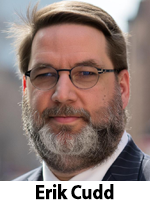 In an opinion piece for TALKERS, radio pro Erik Cudd writes, “In such a time as this, because radio is the medium I know best and love most, I write this appeal to those influential in news/talk. My hope is that you will step forward once again as the architects and innovators you have always been and raise a rallying cry for this unique moment. The freedoms and ambitions that make the format so vital also create challenges. By design, it invites sharp opinions, spirited disagreement, and cultural edge. Those qualities are its strengths. But in our current climate, they also carry the risk of drifting into tribalism and rhetoric that can spill over into something more dangerous. This is not an implication that I believe news/talk is responsible for the death of Charlie Kirk. I would like to be crystal clear. What I am saying is that a perfect storm has been gathering for many years, and no one can deny the polarized, charged landscape we now inhabit. And that storm is not radio’s sole responsibility.”


 Audacy’s WFAN, New York enters into a strategic partnership with creator-led digital sports media company Jomboy Media to air the “Talkin’ Yanks” show each Saturday at 2:00 pm ET. Audacy chief business officerand New York market president Chris Oliviero says, “WFAN and Jomboy Media both are committed to bringing Yankees fans the most relevant and engaging content of their favorite team whenever and wherever they want to consume it. Together, the combined influence and reach of both brands will elevate the experience for the pinstripe faithful and shine an even greater spotlight on New York’s all-time pastime, baseball.”

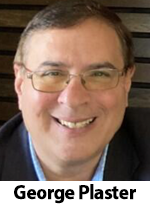 The Nashville-based “George Plaster Show,” with co-hosts Kelly Holcomb and Billy Derrick, is now heard on Saga Communications’ sports talk WKFN-AM/W281BT in Clarksville, Tennessee. Clarksville Now reportsPlaster said he’s excited for the opportunity to be here and tap into a new market of sports fans. “I’m very excited about being in Clarksville. For me, this is about adding listeners – listeners who knew me from years ago. I think we’re going to do really well here, it’s a market that has a lot of sports fans, and we just simply want to tap into it.” “The George Plaster Show” will air live from 3:00 pm to 5:00 pm Monday through Friday.
 least $3.4 million from the university to operate the station. TribLive reports, “Penn State officials said they proposed transferring the operating assets of WPSU to WHYY and provide a $17 million subsidy structured to decrease over five years, to give WHYY an opportunity to help WPSU reach a financial break-even point and continue broadcasting across central Pennsylvania.” That proposal was not accepted by the trustees.



 FOX News Channel presenting a primetime special titled, “Charlie Kirk: An American Original,” hosted by FOX News Channel’s Jesse Watters tomorrow at 7:00 pm ET with an encore presentation on Sunday (9/14) at 7:00 pm ET. FOX News says Watters “will reflect on Kirk’s extraordinary impact as a conservative thought leader, gifted communicator, and a monumental force for the MAGA movement.” Kirk colleagues and friends being featured include: Donald Trump Jr., “My View” host Lara Trump, Graham Allen, and Pastor Jack Hibbs. In addition, FNC personalities Will Cain, Laura Ingraham, Brian Kilmeade, Ainsley Earhardt and Lawrence Jones will reflect on Kirk’s impact.
 Bruce DuMont
 Cox Media Group’s Atlanta news/talk 95.5 WSB (WSB-AM/WSBB-FM) is adding Premiere Networks’ “Coast to Coast AM” hosted by George Noory to its program schedule. WSB director of branding and programming Ken Charles says, “We’re thrilled Coast to Coast AM with George Noory is joining the 95.5 WSB-AM lineup. George’s unique voice and compelling content are a perfect overnight fit for our listeners. This is a powerful addition to our lineup of live and local talent.”
 The Museum of Broadcast Communications announces the selection of eight new Legends inductees into the Radio Hall of Fame for 2025, recognizing radio broadcasters who have passed away. This year’s inductees include longtime WLS-AM, Chicago morning drive cohost Don Wade and nationally syndicated host Dale Sommers “The Truckin’ Bozo.” Radio Hall of Fame co-chair Kraig Kitchin comments, “Each of these individuals contributed to the growth and vibrance of our radio industry and are worthy of induction. I’m thrilled to see recognition for their talents and efforts and heartened that their family, friends and colleagues can witness this well-deserved honor.”


 and the countless people whose lives he touched through his words, his work, and his unwavering commitment to faith and country.” Salem CEO David Santrella is quoted saying, “Charlie was more than a broadcaster – he was a fearless defender of truth and a faithful servant of God. This assassination was not just an attack on Charlie, it was an attack on free speech and on the values Charlie championed every day. His absence leaves a tremendous void, but his legacy of faith, courage, and conviction will continue to inspire generations.” Salem Media chief strategy officer Bradley Parscale stated, “I have had the privilege of working with Charlie for nearly a decade. He was part of the Salem family. His voice was fearless, unyielding, and relentless in the defense of faith and freedom. This heinous act of evil was meant to silence him, but as Christians, we know darkness cannot overcome the light. Charlie’s influence cannot and will not be silenced.” The company added, “Charlie’s partnership with Salem Media was defined by his uncompromising defense of biblical values, liberty, and truth. Through his nationally syndicated show and podcast, he reached millions who relied on his voice to cut through lies, honor truth, and give courage to those fighting for faith and freedom.”



 intends to have the station back on the air within a few weeks and it will continue to air an oldies format. Civic Media will add W262CJ at 100.3 FM to the simulcast of talk WAUK-AM, Waukesha which is also heard on W266DR, Waukesha at 101.1 FM. The 100.3 FM signal gives the station a presence in the center of Milwaukee. Civic Media regional president Chris Moreau says, “We’re thrilled to expand our presence in Milwaukee, our largest metro market. These acquisitions allow us to better serve listeners across southeastern Wisconsin with our commitment to local news coverage and quality programming. The extended coverage area creates exciting opportunities for both our audience and advertising partners.”
 Sports talk hosts Paul Gallant and Joel Blank have exited Gow Media’s KFNC-FM, Houston ESPN 97.5 in moves they describe as budget related. Both personalities posted the news of their departure to social media. Gallant hosted the early evening show and Blank co-hosted the “Killer B’s” midday show with Jeremy Branham.

 The board of directors of the New York State Broadcasters Association names Red Apple Media CEO John Catsimatidis the New York Broadcaster of the Year for 2025. Catsimatidis will be honored at the NYSBA Broadcast Leadership and Hall of Fame Luncheon in New York City on October 22. NYSBA president David Donovan says, “We are honored to have him as NYSBA’s Broadcaster of the Year. John has had unparalleled success turning around 77WABC and expanding Red Apple Media throughout the country. He has led legislative efforts to keep AM radio in vehicles, a vital issue for all New Yorkers.” Catsimatidis comments, “Thank you, Dave and the Board of the New York State Broadcasters Association for this honor. Radio is an integral part of listeners’ lives and often the only source of information during times of disaster. I ask everyone in radio to alert their listeners that car manufacturers are risking lives by taking AM off the dashboard of new cars. Together, we can stop this, and we must stop it.” Catsimatidis entered the radio business with the purchase WABC-AM in March 2020 and has since added WLIR-FM, Hampton Bays and WRCR-AM, Haverstraw to his portfolio of stations.

 Connoisseur Media promotes Ed Oliveira to operations manager for Connoisseur Media’s Connecticut stations. Oliveira has been with Connoisseur Media for more than a decade, most recently as director of traffic & creative services. Oliveira says, “I am grateful for this opportunity and excited to take on this expanded role. This feels like a natural step for me, and I appreciate [SVP of Connecticut operations] Kristin Okesson for believing in me and my abilities. One person that has been a near-constant in my career is Keith Dakin. Having the opportunity to receive the baton from him and building on his work is a task I take on with pride. I am beyond excited to expand my role with the amazing people on this team. They are so good that operations could probably run on its own BUT I am ecstatic they chose me to oversee it.”