

SABO SEZ: Look at the Actual Numbers
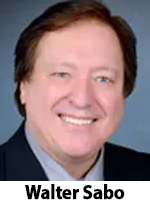
By Walter Sabo
A.K.A Walter Sterling
Host, The Other Side of Midnight
WABC, New York / Red Apple Audio Networks
 Billionaires make predominantly good investments, which is why they are billionaires.
John Malone saved Sirius with a $500 million investment just days from the company missing payroll. He remains the controlling shareholder.
Warren Buffett just made a significant investment in highly profitable SiriusXM.
George Soros owns Audacy. Audacy’s robust list of major market radio stations are jewels that require a better financial structure. Soros Fund Management bought $400,000,000 of the company’s debt and controlling ownership. Note that Soros now owns all but one of the country’s all-news stations.
Apollo Advisor’s billionaire CEO Marc Rowan – a former candidate for Secretary of the U.S. Treasury – owns Cox Radio and Television. Apollo was an original investor in Sirius.
John Catsimatidis wrote a check for WABC-AM and is buying more properties. Radio properties. Cats owns an oil refinery, land, and the Gristedes supermarket chain, but his focus is on WABC Radio.
The health of radio? The future? Those sharp investors, brutal businesspeople, determine the business future of radio, and they are apparently very optimistic!
Failing industries don’t expand
In 1970, there were 2,126 commercial stations in the U.S.
Today there are:
- AM stations: 4,342
- FM commercial stations: 6,589
- FM noncommercial (educational) stations: 4,755
Sell the biggest number
Cable channels are investor valued by “Homes Passed.” Not audience or cash flow. How many people who can see the programming rather than how many people actually see the programming. Now apply that logic to radio station values.
BILLBOARDS sell impressions. Impressions represent the total number of people who could potentially see a billboard ad. That is the biggest number by which billboard can be measured, so that’s what they sell.
DIRECT MAIL is the number one local ad medium. It is data driven beyond your wildest dreams. Direct mail automation uses real-time signals and integrated data to deliver mail at the most meaningful point in the customer journey. For example, when someone abandons a shopping cart or repeatedly views a product online, you can design a programmatic mailing campaign to automatically send print pieces in response to that specific consumer behavior.
Rather than pushing the biggest, stable number – CUME – radio sells the smallest measurements. Radio’s 100+ years of success, astonishing outlet growth, 92% penetration of American homes, 65% daily population usage deserve has earned a much higher commercial unit price.
Walter Sabo has been a C-Suite action partner for companies such as SiriusXM, Hearst, Press Broadcasting, Gannett, RKO General, and many other leading media outlets. His company, HITVIEWS, in 2007, was the first to identify and monetize video influencers. His nightly show “The Other Side of Midnight” is heard on WABC, New York and the Red Apple Audio Network 1:00 am – 5:00 am. His syndicated show, “Sterling On Sunday,” from Talk Media Network, airs 10:00 pm-1:00 am ET, and is now in its 10th year of success. He can be reached by email at sabowalter@gmail.com. He can be phoned at 646-678-1110.
 Audacy. Before he was chairman, Carr had argued that the FCC should not allow a “Soros shortcut” but must follow FCC procedure. In June of last year Carr said the FCC had never previously used the “Soros-shortcut” procedure to approve licenses to a firm with significant foreign ownership. But Audacy argued in its opposition to the Petition to Deny (filed last summer) that there is nothing unique about this request, saying that the FCC “granting a limited waiver deferring its foreign ownership review to facilitate a licensee’s prompt emergence from bankruptcy is consistent with the Communications Act.” Audacy added that the notion that the limited waiver is new “completely ignores longstanding precedent establishing the Commission-approved special warrant process used in a number of prior transactions to allow licensees to emerge from bankruptcy promptly, while affording the Commission sufficient opportunity to review foreign ownership issues post-emergence.”
 Wall Street investors do not put up money for traditional radio and television stations.
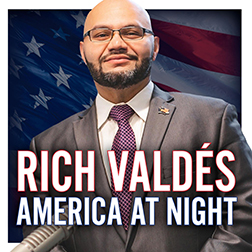 be able to alter the course of established radio stations and the marketplace of ideas before the 2024 election or even soon thereafter. Harrison told “America at Night” host Rich Valdés last night (5/22) that radio is far too idiosyncratic an industry – already run by too many people who don’t understand how it really operates – for someone (who also doesn’t really have first-hand experience in the field) to just step in and make drastic alterations to entrenched stations, formats, audiences and sponsors just to make a political statement. Harrison states, “There are more
 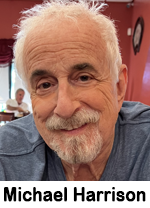 expedient uses of his money if that is his main purpose. After all, not all Audacy stations are conservative news/talkers… many are music, sports and a variety of formats. How inefficient such a move would be!” Harrison went on to say that radio is still an extremely powerful and potentially lucrative medium if only its present owners and operators believed in it and invested in its programming and marketing. He encouraged radio broadcasters to understand and believe in the “esthetic of ‘radio’ and not be so anxious to bail out into the utilitarian term ‘audio.’” Harrison and Valdés tied the discussion into the current news about the AM for Every Vehicle Act currently making its way through Congress stating that radio is still a lifeline for service to the community as a place for information, education, and entertainment and that eliminating it from automobile dashboards would be about “five to 10 years premature.”
  determined that granting a limited waiver deferring its foreign ownership review to facilitate a licensee’s prompt emergence from bankruptcy is consistent with the Communications Act.” Further, Audacy says, “According to the MRC, Audacy is attempting to employ an ‘entirely new’ and ‘vague and undefined’ special warrant process’ to delay the Commission review of Audacy’s proposed foreign ownership until ‘sometime down the road’ when the company ‘may choose’ to file a petition for declaratory ruling seeking such review. This specious claim not only mischaracterizes the company’s waiver request detailed in the Application, but completely ignores longstanding precedent establishing the Commission-approved special warrant process used in a number of prior transactions to allow licensees to emerge from bankruptcy promptly, while affording the Commission sufficient opportunity to review foreign ownership issues post-emergence.” Separately, FCC Chairwoman Jessica Rosenworcel responded to Congressman Nicolas Langworthy (R-NY) and Congressman Chip Roy (R-TX), who both wrote to her implying that the Commission is not going through “its normal, statutorily required process” and voiced concern over Soros Fund Management’s acquisition of Audacy debt. Langworthy wrote that Audacy being “owned by a deeply partisan individual [George Soros], could have a fundamental impact on the nature of local radio and potentially silence political viewpoints.” Rosenworcel’s response indicates she believes the Commission is handling the matter appropriately, saying, “The Bureau staff will review the record and decide if the transfer is in the public interest pursuant to Section 310(d) of the Communications Act.”
 Soros, would become the largest shareholder in New Audacy and that Soros would “control these radio stations to advance their particular brand of activism.” Further, MRC objects saying that the FCC has an obligation to complete a full and thorough review and that the Commission is being asked to approve the change in ownership without this review, specifically
  regarding the foreign ownership issue which the MRC says would not be handled as required by Section 310(b)(4) of the Communications Act of 1935 if the Soros Group gets what it wants. It’s asking the FCC “to waive that process and put it off until sometime down the road – indicating that those foreign stakeholders will be given ‘special warrants’ in the meantime. The Soros group says that putting off the required foreign ownership review will enable the FCC to expedite its approval of the Soros applications and thus allow them to more quickly realize their ownership interests in and take over the hundreds of local radio stations across the country.” The MRC argues that the Communications Act of 1935 “does not contain a special Soros shortcut.”
  from West Virginia to Georgia. The programming includes “The John Fredericks Show,” “The War Room with Steve Bannon,” Newsmax’s “Rob Carson Show,” and more. Fredericks states, “This West Virginia opportunity is key to our growth plan, as it dovetails nicely with our Pittsburgh footprint and reaches a very pro-populist, pro-America First and pro-Trump area of America. We are excited about offering listeners in West Virginia a choice from the stale, woke, and warmed over pablum served up every day by the corporatists and conservative Inc. bunch that regurgitate the FOX and RNC talking points of the day. Our lame and boring news/talk competition falls into one of four categories: weather on the fives and traffic on the eights, stock prices trading below fifty cents, stock de-listed off the big board, or George Soros buying up bankruptcy debt with a controlling stake to eventually take over the company and its programming.”
 Post says it confirmed the report with Audacy and the company added, “The decision by our existing and new debtholders to become equity holders in Audacy represents a significant vote of confidence in our company and the future of the radio and audio business.” The story cites an insider close to the situation who is a Republican saying he believes its “possible Soros was buying the stake to exert influence on public opinion in the months leading up to the 2024 presidential election.”
  of the conservative Radio Mambí network of Spanish-language news/talk stations from TelevisaUnivision aggravated some conservatives who petitioned the FCC to deny the license transfers. The petition was rejected. The Radio Mambí format goes back to Amancio Víctor Suárez’s launch of programming created by anti-communist Cuban exiles in the mid-1980s. The group of 18 radio stations will gradually be turned over to Latino Media Network throughout this year. Company co-founder Jess Morales Rocketto is quoted saying, “We’re not the first business owners with our own political leanings,” while adding that they are focused on commercial success and not “imposing a political agenda.”
  censorship” from conservatives. The rhetoric surrounding these deals is part and parcel of the politicized nature of media in the modern world. In the piece, Montlake observes, “The $60 million takeover – and the reactions it has sparked – is another flashpoint in the national battle to win over Latino voters, a fast-growing demographic that has long leaned Democratic but has lately grown more receptive to Republicans. So far, most Spanish-language radio in the U.S. has been focused on music and entertainment, not news or commentary. Which in the eyes of many makes it an untapped and lucrative means of political persuasion.”