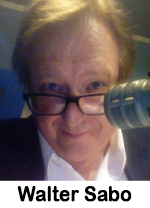
By Walter Sabo
Consultant, Sabo Media
A.K.A. Walter Sterling
Radio Host, Sterling on Sunday
 Talk show talent, program directors, show producers and broadcast business decision-makers represent the core readership of this publication. Sometimes we are so close to something that we fail to see it for what it really is. That is the case of the “talk show host” in American radio. Michael Harrison refers to the often-shameless targeting of audiences as “the daily dance of affirmation.” I view the daily process of radio talk show hosting at its very core, as “the daily dance of freedom.”
Talk show hosts are a rare breed and endangered species who enjoy a unique freedom in American radio. Hosts can actually talk about whatever they want! Of course, they are subject to both the rewards and consequences of this freedom – but the process of doing a live talk show, sparked by opinion and controversy, is so spontaneous and uniquely dynamic that it cannot be controlled on a minute-to-minute level without losing the flavor that makes it so special and long-lived.
During a decade as a top-five market and network talk show host, no one has ever told me what to talk about. And for zillions of years as a programming executive prior to that, I never told a host what to talk about on their next show.
Talk hosts are granted remarkable radio freedom! Music jocks haven’t had that freedom since the 1960s. Music jocks have to get up the courage to ask permission to merely change the order of songs on their play list. Talk show hosts “own” three or four hours a day on a significant station or stations to say whatever they wish. That’s amazing! At first that freedom was a daunting, humbling challenge for me. However, I have been guided by my experience in programming or having launched some of the world’s most successful talk stations.
Based on that experience from both sides of the mic, here’s what works: Talk can entertain a listener of any age and demographic if the host talks about the listener’s day. I talk about my day framed for a listener, one listener – water in the basement, trouble with the sister-in-law, the parent-teacher conference, more trouble with the sister-in-law, the check engine light in the car never wants to go out, life at Walmart. I talk from a place of trust.
Trust that events that poke the landscape of our lives are a very big deal. Trust that I will never find the “right” topic on any editorial page. Trust that you, dear listener, already know who you are going to vote for in any election and that this English major does not have the magic wand to change your mind. Trust that my on-air opinion must never waiver or we have no show.
Listen to talk shows and stations that reach demos under 50: WMMS, Cleveland; KFI’s John and Ken; Casey Bartholomew at WBAP, Dallas; KMBZ, Kansas City; KFBK, Sacramento; the Elvis Duran Show; and streaming with Bubba the Love Sponge or Phil Hendrie. Those successful shows embrace the scope of conversation two best friends would have on the phone today. If two best friends would discuss a topic, why wouldn’t you share it on the air? If two best friends would never discuss it, why would you ever put it on the air?
Walter Sabo, consultant, can be contacted at Sabo Media: walter@sabomedia.com. Direct phone: 646-678-1110. Check out www.waltersterlingshow.com.
Share this with your network

 Podcast” joins SiriusXM’s The Megyn Kelly Channel for same-day distribution of Carolla’s daily show, Tuesdays through Fridays at 7:00 am – 9:00 am ET. PodcastOne co-founder Kit Gray states, “PodcastOne is thrilled to extend our relationship with Adam and his ‘The Adam Carolla Show.’ Adam has paved the way for podcasters around the globe and his podcast is continuously growing with audiences and with advertisers. We’re proud to be working alongside one of the greatest in the business as he sets the tone for success in the genre.”
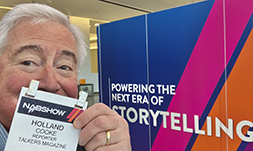 These conventions used to be about making-the-most-of those towers behind radio stations that played in several rooms at home and occupied two knobs and six buttons in the dashboard. Back to the future…
 Metrics and “Share of Ear” Report, MRI-Simmons, Screen Engine/ASI, Podscribe, and Magellan AI. Four of the key findings from this are: 1) Podcast ad campaigns are too light: No brand is coming close to “saturating” podcast audiences; Brands should allocate 5% of digital budgets to podcasting; 2) After five years with a median age of 33 to 34, podcast audiences finally age to 36, reflecting broader appeal with older audiences; 3) Screen Engine/ASI: Podcast audiences offer CTV advertisers significant incremental reach; and 4) Podcasts tighten their grip on audio audiences: Among podcast listeners, 35% of all audio time spent now goes to podcasts.
  weekly radio listeners and 80% of weekly radio streamers – are actively tuning into election news on the radio. Audacy says, “It’s more than just staying informed; these listeners are inspired to make their voices heard at the polls. Local radio is essential for these audiences, with 74% saying it helps them grasp how election results impact their communities. For many, radio is the pulse of the nation’s agenda. Nearly half (46%) of listeners have been following election news closely for over three months.”
 represents an expanded commitment to one of iHeartMedia’s most premium products allowing advertisers to engage audiences with creative, longform native content.” iHeartMedia goes on to say, “Ruby’s branded podcasts allow advertisers and their brand partners to spend upwards of 30-45 minutes with their target audience in a unique environment, with opportunities for storytelling that are not possible anywhere else in their media mix including social video. With distribution across the iHeartRadio app and all other major platforms, native podcasts from Ruby connect brands to audiences by translating brand messaging, products and services into original and engaging stories that audiences love.”
  podcast listening behaviors. “The Gen Z Podcast Listening Report” from SXM Media and Edison Research “provides an in-depth look at the podcast habits and motivations of the elusive and much-desired Gen Z listener.” Edison vice president Megan Lazovick says, “Everything we do at Edison Research works to drive the audio space forward with the highest quality data. We believe these two studies will help advertisers understand the opportunities for audio to reach these two important generations and of course help the media companies who can deliver these audiences.”
 metrics, including person-level demographic, sociographic, media behavior, and purchase intent data to further inform podcast audience development and advertising decisions. Salem CEO David Santrella says, “We are thrilled to extend our partnership with Triton Digital, which has helped drive a significant increase in digital revenue while delivering our engaging content to our growing audience. We’re looking forward to this next chapter together, gaining increased visibility and a more comprehensive understanding of the behaviors and demographics of our audiences.”