By Matthew B. Harrison
TALKERS, VP/Associate Publisher
Harrison Media Law, Senior Partner
Goodphone Communications, Executive Producer
“Everybody’s a dreamer / And everybody’s a star.”
Ray Davies, “Celluloid Heroes,” 1972
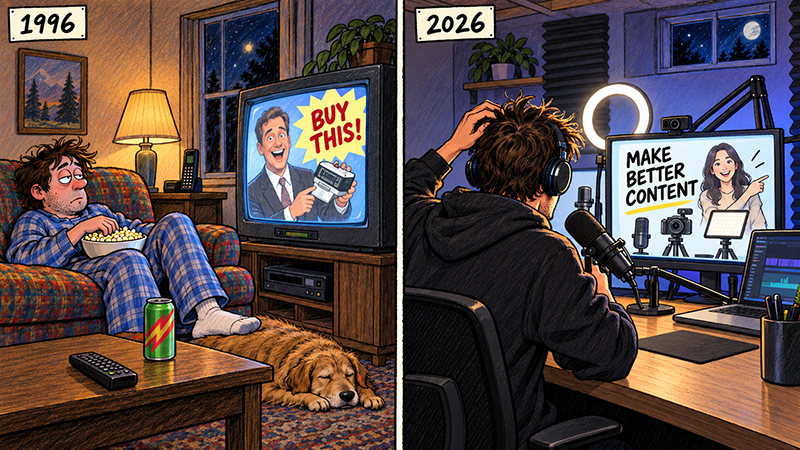
 My father recently called my attention to something hiding in plain sight. He was watching YouTube and noticed ads for StreamYard, Riverside, Sprizzy and other companies selling tools and services to people who want to produce, distribute, or promote their own media. “They are advertising on consumer venues!” he told me. That was the part that caught his attention.
It sounds obvious until you think about what it means. These companies are not merely advertising to viewers, listeners, and readers. They are advertising to viewers, listeners, and readers who also make things: podcasts, videos, livestreams, newsletters, books, music, and shows. The consumer audience now contains an enormous population of producers.
My father, TALKERS founder Michael Harrison, has a phrase for this: “The audience has an audience.” In a July interview about the modern media landscape, he put it even more plainly: “Everybody has a show.” That does not mean everybody has a large show, a profitable show, or even a particularly good show. It means that access to the means of publishing and broadcasting, once scarce and expensive, has become ordinary.
That change created an entire business layer around the aspiring and semi-professional media producer. StreamYard and Riverside sell production capability. Podbean sells hosting, distribution, and monetization tools. Sprizzy sells YouTube promotion. Beyond them are editing platforms, newsletter companies, self-publishing services, PR firms, audience-development businesses and companies willing to help almost anyone build, package and promote a media product.
The money moving around this ecosystem is no longer trivial. The Interactive Advertising Bureau reported that U.S. creator-economy advertising grew from $29.5 billion in 2024 and projected it to reach about $43.9 billion in 2026. In its September 2026 advertising outlook update, IAB reported that 54% of buyers said they were increasing their focus on creator and influencer advertising and partnerships.
For traditional broadcasters, that should change how we think about the people on the other side of the microphone. The butcher, the baker and the candlestick maker may still be members of the audience, but now the butcher has a cooking channel, the baker has a podcast, and the candlestick maker has an Etsy store, a newsletter and 14,000 followers. They may be competitors for attention, but they can also be customers, advertisers, guests, sources, affiliates, and future talent.
This does not erase the distinction between professional media and someone experimenting in a spare bedroom. Scale still matters. Skill matters. Editorial judgment matters. Broadcasters also operate under legal and regulatory obligations that do not simply transfer to someone uploading a video from a phone. But the old wall separating “the media” from “the audience” has become remarkably porous.
That may be the bigger lesson behind all those advertisements. Companies that once would have bought trade advertising to reach broadcasters, publishers or recording professionals can now advertise on consumer platforms and find millions of people with, as Michael puts it, “a toe in showbiz.” The consumer venue has become a trade venue because a meaningful portion of the consumers are also in the trade.
So where exactly is the line between our audience, our competition and our customers? Increasingly, there isn’t a very clean one. When the audience has an audience, the media business is no longer just about reaching consumers. It is about reaching people who are themselves trying to reach somebody else.
Matthew B. Harrison is a media and intellectual property attorney who advises radio hosts, content creators, and creative entrepreneurs. He has written extensively on fair use, AI law, and the future of digital rights. Reach him at Matthew@HarrisonMediaLaw.com or read more at TALKERS.com.




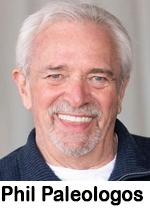 says in a memo to staffers, “Phil has been in broadcasting for more than 50 years, most of those years on morning radio, and many years feeding the people of New Bedford next to his bride, Celeste, at their Shawmut Diner. As much as Phil has to offer our community, at some point a man deserves to sleep in without worrying about pancakes or interviews. That time has come for Phil. The Morning Mayor has decided to make this Friday [5/12] his last day on the WBSM morning show… Thankfully, Phil’s WBSM story doesn’t end on Friday. He has agreed to ‘Phil’ in during vacations, and I’m trying to talk him into taking on a regular weekend shift. All in time.”
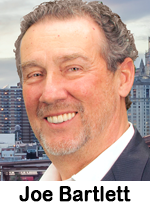 anchoring and reporting work, Bartlett has also hosted talk shows on the station, including the long-running “WOR Saturday Morning Show.” He comments, “I loved my job and have been fortunate to have been part of this great station for all these years. I could have gone on much longer, but the time had come, where I just needed more free time. Sadly, this is not a job you can do only six months a year. I have been blessed to have had a caring radio ownership, extremely talented co-workers and a very loyal audience.” Bartlett and his wife have relocated to South Carolina where he looks forward to having more time for golf, seeing his grandchildren, and supporting the New York Giants. WOR program director Tom Cuddy says, “It’s rare in this business to encounter as versatile a radio personality as Joe: anchor, news director, and talk show host…not to mention an all-around nice guy. He will be missed not just by our listeners but by our staff.”
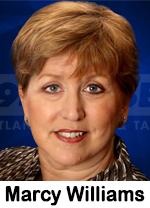 30 years as the first female co-anchor of ‘Atlanta’s Morning News.’ With a little back-of-the-envelope math, I calculate I’ve written more than 300,000 stories over those three decades. Now it’s time for me to write a new chapter.” Station news director Amanda Moyer comments, “Marcy has been a leader and an example in our newsroom for more than three decades. Her recent Gracie award win is the perfect cap to her long tenure at WSB as the first, and to this day, the only female lead news anchor on ‘Atlanta’s Morning News.’ She will be deeply missed, but our loss is her granddaughter’s gain.”
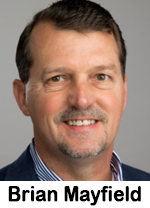 views. Dave Ramsey says, “Over the last 15 years, Brian Mayfield has truly become one of the top talk radio executives in the nation and a good friend while he has been with Ramsey Solutions. His early retirement is a loss for all of us at Ramsey and the industry.” Mayfield states, “It has been an honor to work alongside Dave and the rest of the team. I am very proud of the success we have seen to date, but I am even more excited to watch and experience the success of Ramsey Network into the future as a fan. We are sometimes faced with situations that dictate change, I’m embracing mine and looking forward to quality time with my wife and family — I’m truly blessed.” Broadcast veteran Blake Thompson, Ramsey’s first producer when the show began, was named executive vice president of Ramsey Network last year. He will continue to serve in that role.
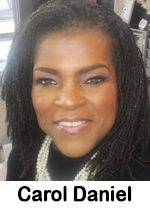 curiosity, and her work has been recognized throughout the region — she was named Press Club Media Person of the Year, she received the Greater St. Louis Association of Black Journalists Living Legend Award and the Media Hall of Fame Award, and she is a nominee for the Lincoln University Alumni Hall of Fame. Outside of her career in radio, Carol is a wife and mother, author, motivational speaker, and ministry co-leader, and looks forward to spending time with family in her retirement. Carol has produced countless impactful, in-depth interviews in her time here, most recently as the host of the expanded ‘Total Information AM.’ Her last day with KMOX is May 25. We will be sad to see her go but are so excited for her as she takes on this new chapter.”
 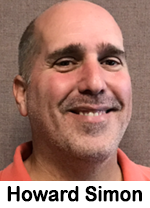 Ohio but returned to Western New York and has spent the last 18 years with Jeremy White as his co-host in mornings on Audacy’s WGR. Simon says, “I’ve been very lucky to have worked alongside some wonderful people at WJJL, WBEN, Empire Sports Network and finally at WGR. I wish I could list everyone by name, but that isn’t possible. Let me just say, thank you. Thank you, thank you, thank you to my many co-workers over the years. I’ve made some great, lifelong friendships, while getting a chance to do something I truly loved. I would like to mention my co-host for the last 18 years at WGR, Jeremy White. That is the longest I worked with anyone by far! Jeremy is super talented, extremely creative, and has a great feel for what topics will be of most interest to our listening audience.”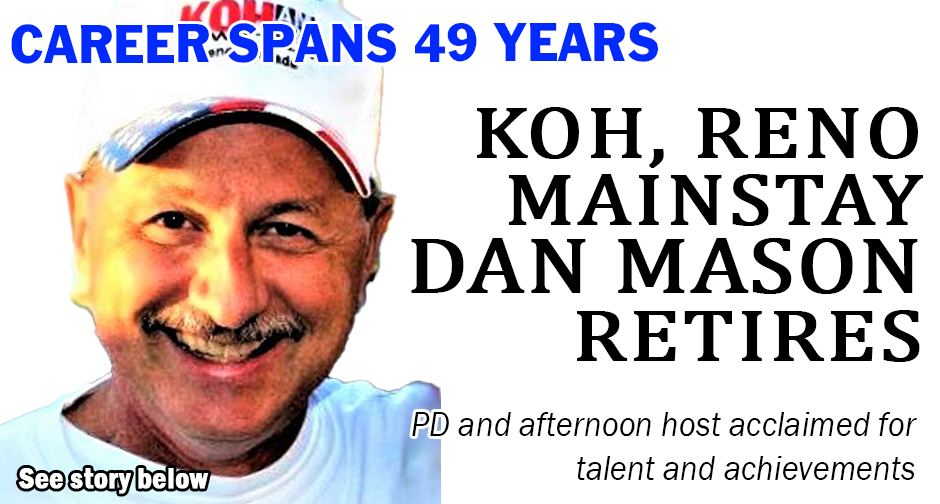
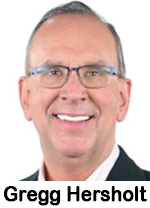 He’s retiring from Lotus Communications’ “Northwest Newsradio” after five decades on the air in Seattle. Hersholt says, “Thank you to those who have listened along the way and the many great people I have worked for. I feel truly blessed.” KNWN program director Rick Van Cise says, “Gregg gave every story he covered the importance it
 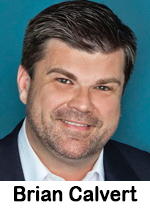 deserved. While his are big shoes to fill, we are pleased to announce the appointment of ‘Northwest Newsradio’ reporter Brian Calvert to the morning co-anchor post with Manda Factor. Brian’s engaging personality, news credibility and unique storytelling make him a great fit.” Calvert comments, “It’s been a thrill to be a part of one of the best morning teams ever in radio as a reporter, and now an honor to co-host the broadcast.”
 under an LMA. The deal is contingent upon FCC approval. The sale of Galaxy’s stations comes a little more than a month after Galaxy founder and CEO Ed Levine announced his plans to retire at year’s end. Levine says, “I have been fortunate to live out a lifelong dream of mine for the past 36 years. Time and life march on. While I will miss Galaxy and Syracuse/Utica, I could not be
 happier to hand things off to Pamal Broadcasting.” Pamal is owned by founder James Morrell and he tells Syracuse.com, “With this addition, Pamal stations cover an enormous geography ranging from New York City, Long Island and Northern New Jersey, through the entire Hudson Valley to the Capital District, up to Lake George and now out through Utica and Syracuse. It truly is a great opportunity for us all.”
  GABBY Award from the Georgia Association of Broadcasters. The honor was presented Saturday (9/26) during the annual GABBY Awards in Duluth, Georgia. WAOK brand manager Joyce Littel states, “This award is a reflection of the continued efforts and hard work of our entire team. They work hard throughout the year, and they deserve recognition for all that they do for our station and, most importantly, for the community we serve. We are extremely proud to receive this honor.”
 The Wall Street Journal recently described what it calls, “The Trillion Dollar Race to Automate Our Entire Lives.” Artificial Intelligence is rapidly evolving from something that answers questions into something that does things – researching, writing, analyzing, organizing and creating. WSJ describes a coming world of personal AI concierges capable of everything from executive presentations to filling out March Madness brackets. For podcasters, there’s opportunity here. And a warning.
 “Morning Update” program – hosted by Jeff Chidester – brought in AARP New Hampshire state director Christina Fitzpatrick and AARP advocates and volunteers Mary Roberge and Stephanie Schuyler to explore AARP’s “non-partisan voter education efforts, its work with candidates, changes to New Hampshire voting laws, Social Security, prescription drug costs, caregiving, fraud prevention, and the issues voters are raising as Election Day approaches.” Chidester told the audience, “I don’t think New Hampshire is ever out of an election cycle. Governing and elections are our sport. We get it at a very young age, and we are actively involved in it through our entire life.” WFEA program director Michael Czarnecki says, “New Hampshire voters take their responsibility seriously, and our responsibility at WFEA is to give them access to meaningful conversations and useful information. The goal of the ‘Morning Update’ is not to tell listeners what to think or how to vote. It’s to bring the people involved in these issues directly to our audience, ask good questions and give listeners the information they need to make their own decisions. This roundtable is a great example of that.”
 piece that goes against what many in the radio industry are saying about the AM Radio in Every Car Act that recently passed the House. His piece states, in part, “My employer and I don’t agree on this one. The federal government is about to impose a new rule on private enterprise, forcing automobile manufacturers to keep installing AM radios in cars and trucks…
 Park,” delivered more than 70 free prostate screenings, directly addressing a critical community health gap for men facing financial barriers or a lack of insurance. WRVA morning host Rich Herrera says, “I am deeply grateful to everyone behind the scenes who worked tirelessly to bring this initiative together. Being rooted in the communities we serve is at the heart of what we do. Local radio has the power to save lives, and through this event, we helped a listener discover a cancer he didn’t know he had.”
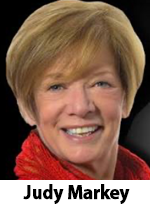 Markey was a columnist for the Chicago Sun-Times. Retired WGN news anchor Steve Bertrand – who was a regular on the “Kathy and Judy Show” – appeared on WGN’s morning show with Bob Sirott to break the news. O’ Malley addressed Markey’s passing in a post on the WGN website: “Over the years, Judy and I talked on the air several times about our support for medical aid in dying, a highly personal choice but one we felt should be available for those who chose it – and she did. With her family at her side, she peacefully ended her life at a MAID (medical aid in dying) facility in Switzerland.” Of Markey’s success on the radio, WGN notes how it all began: “On a hunch, on Super Bowl Sunday afternoon in 1989, WGN’s program director Lorna Gladstone decided to team Markey and O’Malley. No one could have anticipated they would be, as media critic Rob Feder aptly put it ‘lightning in a bottle.’ For the next two decades ‘The Girlfriends,’ as they came to be known, attracted a fiercely loyal following (of women and men) and dominated the midday ratings,” Feder wrote. “Their authentic chemistry transcended radio. No topic was off limits or too personal. Annual fan conventions and station-sponsored trips drew thousands.”
 while playing venues such as the Bitter End and TV shows like “Midnight Special,” the band has gained a multi-generational fan base over the past six years due in large part to exposure on talk radio. Talk show hosts have been attracted to Gunhill Road’s engaging themes, sharp lyrics, and provocative YouTube videos that tackle the hottest issues of the day. These include the rise of idiocy, scourge of scammers, threat of censorship, dangers of AI, noise of politics, cruelty to animals, aging, and more. Since 2020, more than 1,500 talk shows, stations, and networks have aired Gunhill Road songs in whole or part, extracted segments for bumpers, and interviewed a member about its provocative messaging.
 understand that there is a critical difference between news reporting and simple dictation, we’d love to hear from you. What will set you apart? Journalistic objectivity, understanding what makes a news story relatable, the flexibility to cover breaking news whenever it happens and, most importantly, to be a great teammate and collaborator, working with the entire WBTeam of hosts, anchors, reporters, and producers for the benefit of the Charlotte listeners. If this sounds like you, please
 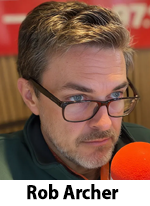 thought my time at KNX would be the capper of my on-air career — that I’d retire from there, as so many other great broadcast journalists had. But it was not to be. I got caught in the churn of staff reductions in June 2025. I stayed busy over the next year. I focused on Archer’s Line and co-hosted podcasts with Jack Messenger and my KNX colleague Charles Feldman. I started a voiceover business and anchored for Remote News Service, providing local newscasts for small- and medium-market stations across the country. I applied for as many radio jobs as I could. But given the state of an industry that was letting far more people go than it was taking on, I didn’t have a lot of hope. But life, like Loki, loves messing with your plans. I awoke one morning to a message about an opportunity — and I grabbed it. I have accepted an anchor/reporter position at 95.5 WSB Atlanta. I’ll be working with my old KNX boss, Ken Charles, beginning next month.
 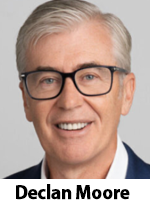 Oxley retires at year’s end. Moore says, “I’m honored to have the opportunity to build on the extraordinary legacy Joel Oxley has created here in Washington. WTOP, Federal News Network and 2060 Digital are exceptional brands with deep connections to the communities they serve throughout the National Capital Region. I’m energized by the opportunity to work with the talented teams here to build on those strengths and help these businesses continue to evolve and grow. I’m also enormously excited to join Ginny [Hubbard] and the Hubbard leadership team, whose commitment to impartial, trusted journalism, strong local brands and long-term thinking really resonated with me throughout this process.”
 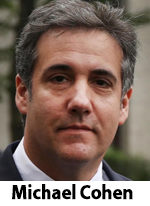 income testified against Trump in congress and in court. But Cohen says he’s spoken with Trump several times over the past year and the president agreed to do the interview. WABC says, “The coming-together of these two political heavyweights comes at a particularly intriguing time. Cohen and Trump have been publicly at odds for years, making this unexpected sit-down impossible to ignore. Whatever the answer, Cohen interviewing Trump is sure to generate attention and plenty of questions about what happened to one of the most complicated relationships in modern politics.”
 A viewer watches the same political clip three times. The platform sees a powerful signal: this person stopped, stayed, and came back. What it cannot reliably know is whether the viewer loved the argument, hated it, was factchecking it, or was showing it to someone else in disbelief. The algorithm knows a viewer watched. It does not necessarily know why. That is why YouTube looks beyond viewing itself to other signals of appeal, engagement, and satisfaction.